CMS + CRM
Business Website vs Headless CMS: Which Platform Should You Choose in 2026?
PPrem M.7 Min Read
Your website may support today’s content but will it support tomorrow’s campaigns, integrations, markets and customer experiences?
Choosing between a traditional business website and a headless CMS is no longer only a technical decision. It affects how quickly your marketing team can publish content, how effectively your website generates leads and how easily your platform can connect with mobile apps, CRM systems, commerce platforms and AI tools.
A traditional business website may be the right choice for a focused company presence. A headless CMS may be more suitable when content must support multiple websites, applications, brands or international markets.
The best platform is not necessarily the most advanced one. It is the platform that supports your current business requirements without limiting future growth.
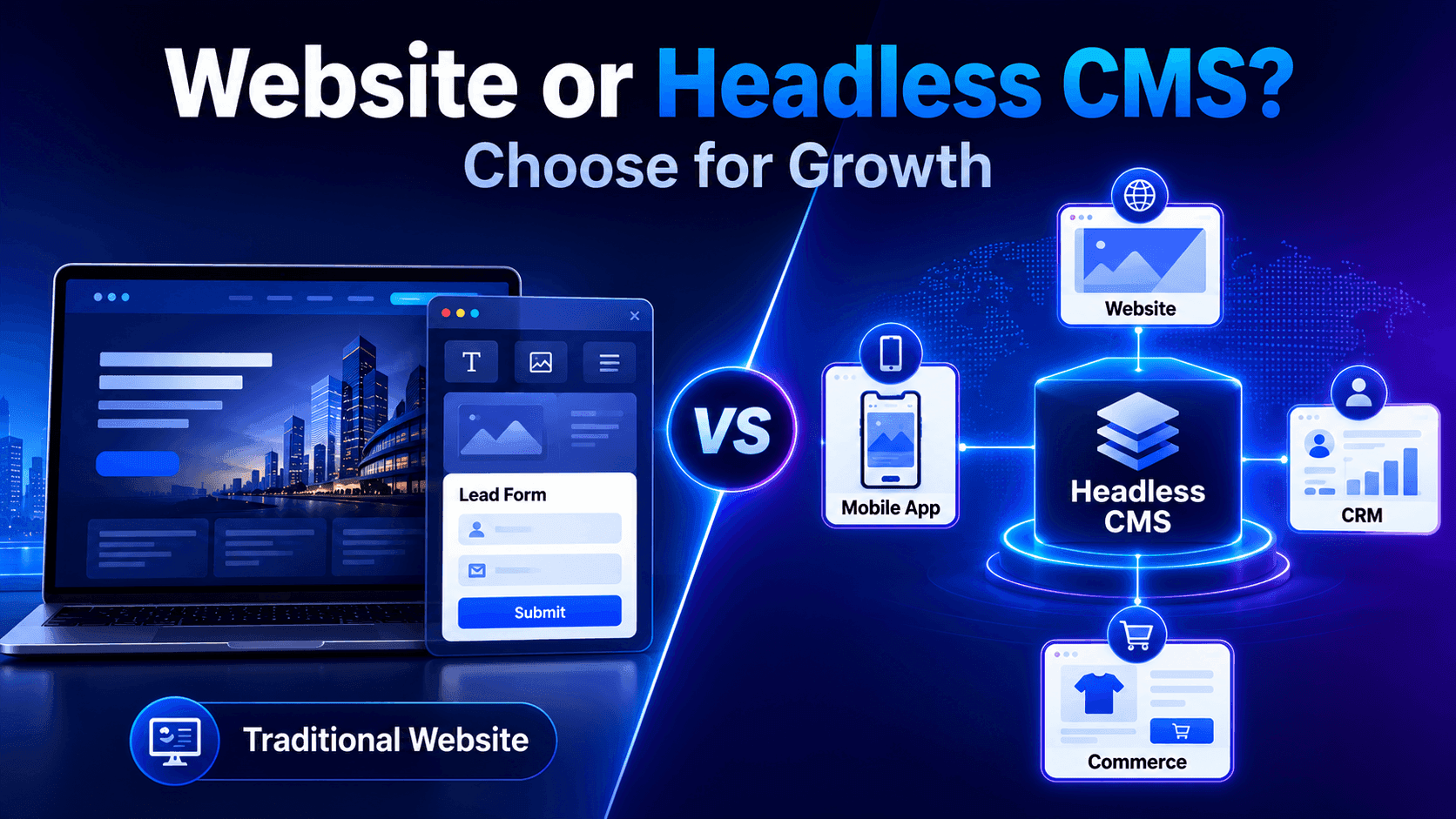
A traditional business website usually combines content management, page templates and frontend presentation within one platform.
Platforms such as WordPress and conventional Umbraco implementations allow content teams to manage pages, images, blogs, forms and layouts through one administrative interface.
Traditional business website development is often suitable for:
A traditional CMS can provide a faster initial launch because common publishing tools, templates and website features are already available.
It may be the right choice when the website is your primary digital channel, the content structure is relatively stable and your team wants to manage pages without relying heavily on developers.
A headless CMS separates content management from the presentation layer.
Editors create and manage structured content in the CMS, while a separate frontend often built with Next.js, React, Angular or Astro retrieves that content through APIs.
Instead of creating content for one fixed website, businesses can reuse approved content across:
A headless CMS gives frontend developers greater flexibility while keeping content independent from a specific design or technology.
This architecture becomes valuable when your website is part of a larger digital ecosystem rather than a standalone online brochure.
A traditional CMS generally gives editors direct control over pages, layouts and visual sections.
A headless CMS focuses on structured content. Editors manage fields such as headlines, descriptions, services, locations, authors, FAQs and calls to action. Approved frontend components determine how that content appears.
Traditional platforms may feel more familiar to content teams. Headless platforms can provide stronger consistency when managing large volumes of content across multiple channels.
A traditional CMS is generally designed around one primary website.
A headless CMS can distribute the same content to websites, applications, customer portals, commerce platforms and other digital channels.
A company operating one marketing website may not require this additional flexibility. A business managing multiple brands, regions, languages or customer platforms may benefit significantly from it.
Traditional websites can often be managed with fewer specialized development resources.
A headless platform requires a separate frontend, hosting configuration, API integration, preview workflows and ongoing engineering support.
Working with an experienced Next.js website development partner becomes important when search visibility, rendering, performance, security and editorial previews must work together reliably.
A headless CMS can support fast digital experiences through static generation, server-side rendering, caching, content delivery networks and optimized media delivery.
However, choosing a headless CMS does not automatically improve SEO.
Search performance still depends on:
A well-built traditional website can outperform a poorly implemented headless platform.
The CMS manages the content. The frontend implementation determines how effectively users, search engines and AI platforms can access it.
A traditional business website may be the better option when:
For many businesses, a well-designed traditional website remains a practical and cost-effective solution.
The platform should still include responsive design, analytics, technical SEO, security, conversion tracking and a flexible content structure.
A headless CMS may be the stronger choice when:
Our Sanity and Next.js headless CMS migration case study demonstrates how structured content, reusable components, AI-assisted content operations and a modern frontend can support marketing requirements and future platform expansion.
There is no universal winner in the Sanity vs Strapi vs Umbraco comparison. The right choice depends on your editorial requirements, technical environment, hosting preferences and long-term ownership model.
Sanity is well suited to content-rich digital platforms requiring customizable content models, real-time collaboration, visual editing and integration with modern frontends.
It can work well for:
Strapi is an open-source, Node.js-based headless CMS that can deliver content through APIs.
It can suit businesses requiring:
Our healthcare website development platform shows how a headless content layer can support healthcare services, doctor information, patient journeys, campaign content and lead-generation requirements.
Umbraco is particularly relevant to companies using .NET, Microsoft Azure and established enterprise development processes.
It can be a strong option for:
A headless CMS requires a frontend application to transform structured content into a complete customer experience.
An experienced Next.js development partner can implement:
Next.js should not be selected only because it is popular. The rendering strategy must be planned around content freshness, traffic, personalization, search requirements and user experience.
Large organizations may need more than a standalone headless CMS.
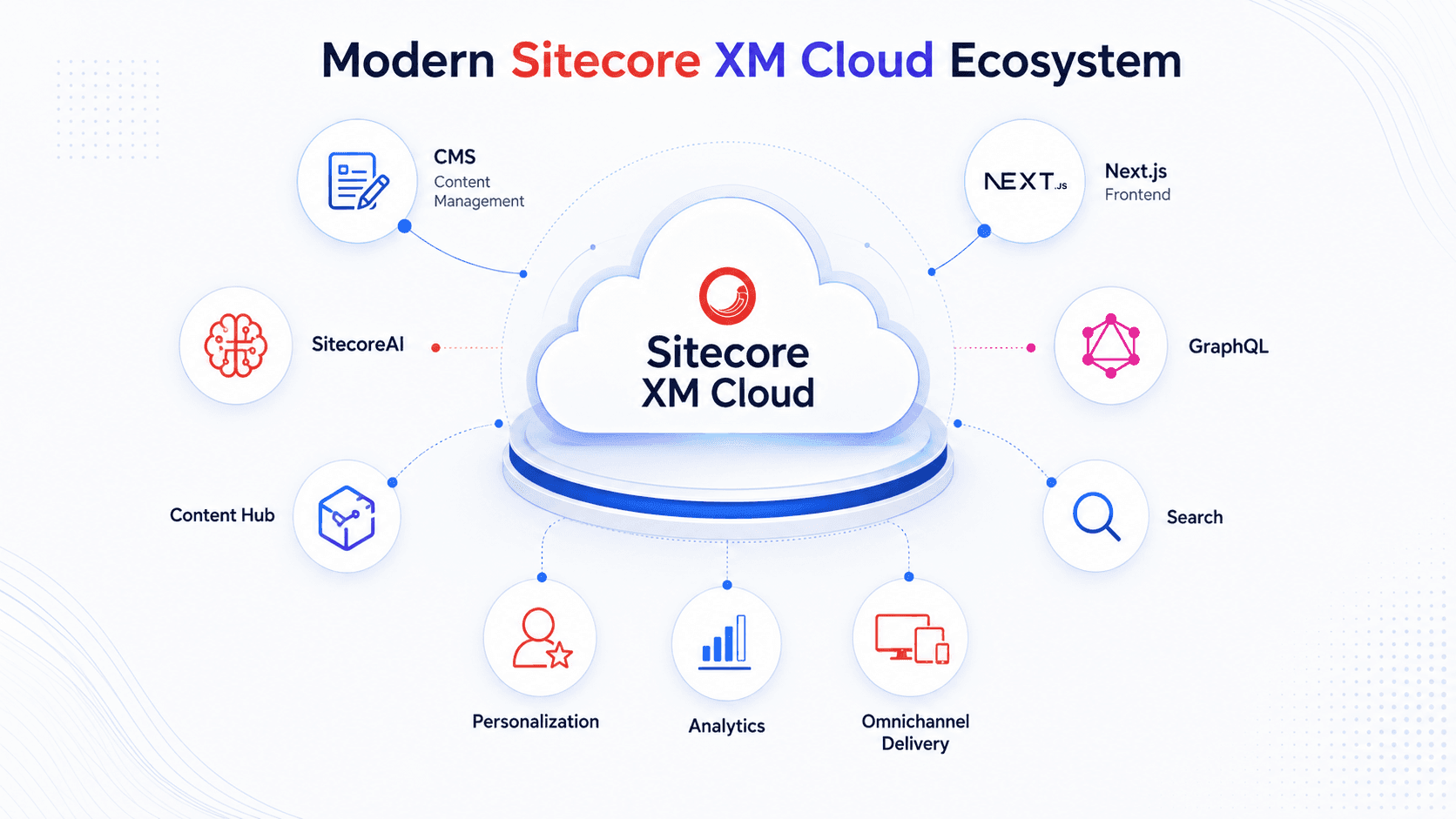
Enterprise platforms can combine content management with search, personalization, analytics, digital asset management, customer data and multi-site governance.
Our Sitecore XM Cloud healthcare platform with AI Search case study demonstrates how enterprise headless architecture can support multilingual content, reusable components, modern frontend delivery and intelligent search.
This approach is most relevant when several teams, brands, regions and customer experiences must operate through one governed digital platform.
Before selecting a website platform, ask:
A traditional CMS may be sufficient for a focused website with standard content and lead-generation requirements.
A headless CMS may provide a stronger long-term foundation when content must support several channels, integrations and evolving digital experiences.
Do not choose headless architecture only because it appears more modern.
Choose it when your business requires reusable content, frontend independence, multichannel delivery, complex integrations or future platform expansion.
Similarly, do not dismiss a traditional business website when it can meet your requirements faster and with lower operational complexity.
Murmu Software Infotech works as a business website and headless CMS development company, supporting traditional websites, Sanity, Strapi, Umbraco, Sitecore XM Cloud and Next.js platforms.
Explore the Limited Digital Product Launch Offer 2026 to discuss your content requirements, lead-generation goals, integrations and future growth roadmap.
The best website platform is not simply the newest one.
It is the one that helps your team publish confidently, generate leads, connect business systems and scale without rebuilding everything later.
A traditional business website usually manages content, templates and frontend presentation within one platform. A headless CMS separates the content repository from the frontend, allowing the same structured content to support websites, mobile apps, customer portals, commerce platforms and other digital channels.
A headless CMS is better when a business needs multiple frontends, reusable content, API integrations, multilingual delivery or greater frontend flexibility. A traditional CMS may be more suitable for a focused marketing website requiring faster implementation, visual page editing and lower technical complexity.
A business should consider a traditional website when it needs company pages, service content, blogs, landing pages, forms and lead generation through one primary website. It is often suitable when integrations are limited and the content team prefers direct visual control over page layouts.
A company should consider a headless CMS when content must support multiple websites, applications, brands, languages or markets. It is also suitable when the platform requires CRM, ERP, commerce, mobile app, AI search or third-party API integrations.
A headless CMS can support strong SEO, but it does not automatically improve rankings. SEO depends on frontend rendering, metadata, structured data, internal linking, page speed, crawlability, content quality, URL management and technical implementation. A well-built traditional website can outperform a poorly implemented headless platform.
Sanity is strong for structured content, customizable editorial workflows and modern Next.js applications. Strapi is suitable when businesses want an extensible JavaScript-based CMS with REST or GraphQL APIs and greater backend control. Umbraco is often a strong choice for organizations using .NET, Microsoft Azure and enterprise development workflows.
Next.js can transform headless CMS content into search-friendly, high-performance digital experiences. It supports static, server-side and hybrid rendering, reusable components, metadata generation, international routing, preview workflows, image optimization and integrations with analytics, CRM and commerce platforms.
A headless CMS can require a larger initial investment because the CMS, frontend, hosting, APIs, preview system and deployment workflow must be configured separately. Its long-term value can be greater when content is reused across multiple channels, brands or markets. Final cost depends on scope, integrations and operational requirements.
Yes. A traditional website can be migrated to a headless CMS, but the effort depends on content volume, data structure, media, URLs, integrations, templates and SEO requirements. A structured migration plan should preserve important URLs, metadata, redirects, internal links and existing search visibility.
Choose a partner with experience in content modelling, frontend development, CMS implementation, SEO, cloud deployment, API integration and editorial workflows. The partner should assess business goals, content-team needs, integrations, security, markets and future scalability before recommending a platform.