Get Found on Google & AI SEO, AEO + GEO Development / Cloud Computing
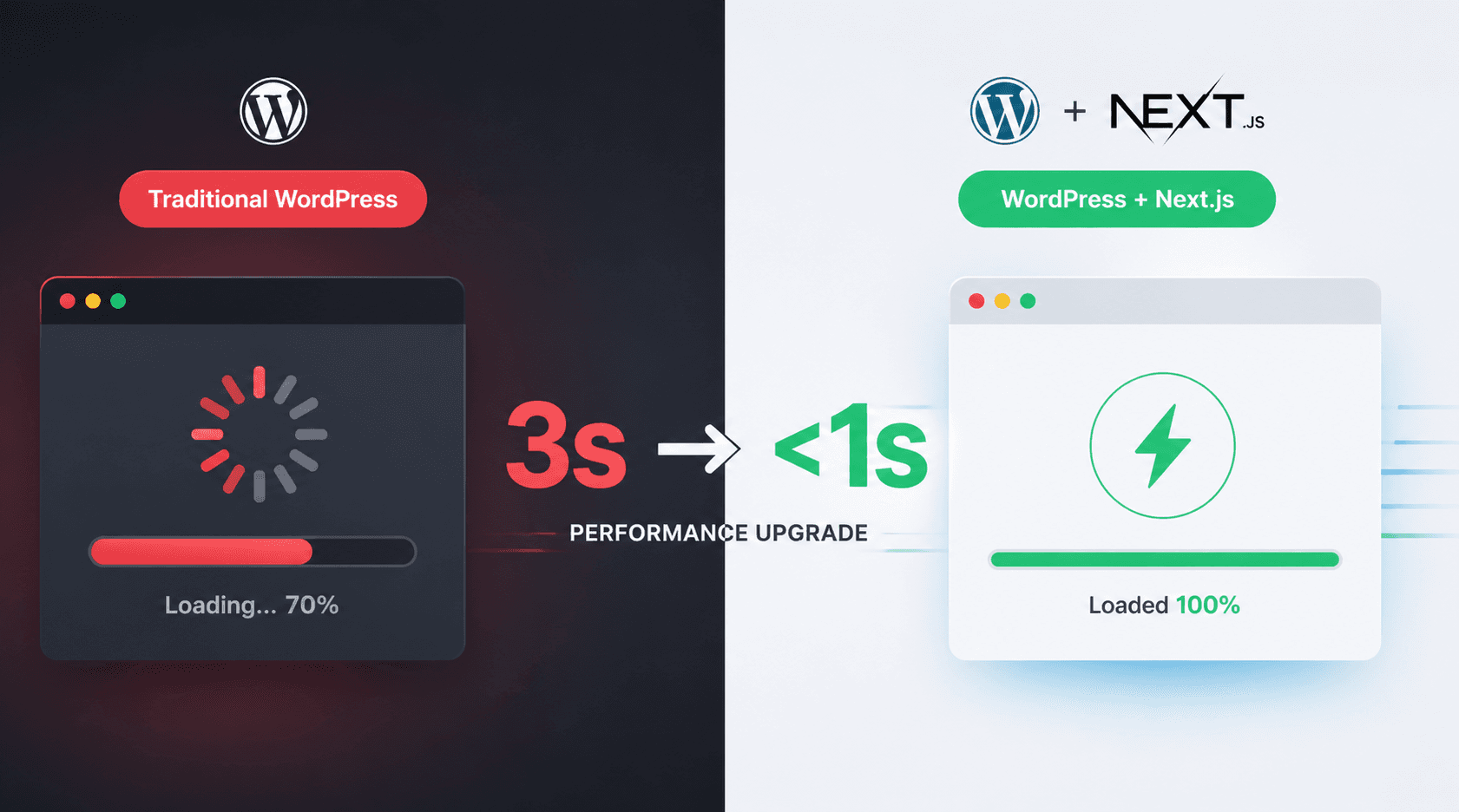
WordPress + Next.js Optimization Guide 2026: Build Turbo-Speed Websites That Rank #1 on Google
PPrem Murmu2 Min Read
In This Article
Problem: Your Website Is Slowing Down Growth
In 2026, website speed is no longer a technical metric—it’s a revenue driver.
Yet many enterprise websites still struggle with:
- Slow load times (3–6 seconds)
- Poor Core Web Vitals scores
- High bounce rates
- Low conversion rates
- Weak SEO rankings despite heavy investment
Traditional WordPress setups—bloated themes, plugin overload, and server-side rendering—are often the root cause.
For CXOs, CTOs, and digital leaders, this translates into:
- Lost leads
- Reduced ROI on marketing spend
- Lower search visibility
- Competitive disadvantage
Why It Matters: Speed = Revenue + Rankings
Google’s algorithm now prioritizes:
- Core Web Vitals
- Page Experience
- Mobile performance
A 1-second delay can reduce conversions by up to 20%.
Slow websites impact:
- Customer acquisition cost (CAC)
- Brand perception
- Organic traffic growth
- Paid campaign efficiency
Turn Website Speed Into Your Competitive Advantage
Solution: WordPress + Next.js (Headless Architecture)
The most effective approach in 2026 is combining:
- WordPress (Headless CMS) → Content management
- Next.js (Frontend Framework) → Ultra-fast delivery
This architecture decouples backend from frontend, enabling:
- Lightning-fast page loads
- Better scalability
- Improved SEO performance
Core Optimization Strategies
Replace traditional WordPress rendering with API-driven delivery:
- Use REST API or GraphQL
- Eliminate heavy theme rendering
- Reduce server load
Result: Faster response times + better scalability
2. Next.js Turbo Speed Optimization
- Static Site Generation (SSG)
- Incremental Static Regeneration (ISR)
- Server-Side Rendering (SSR) when needed
This hybrid model ensures:
- Sub-1 second load times
- Optimized performance globally
3. Edge Rendering & CDN Strategy
Deploy your Next.js frontend on edge networks:
- Serve content closer to users
- Reduce latency globally
- Edge functions
- Smart routing
- Global CDN caching
4. WordPress API Caching Best Practices
Optimize backend performance:
- Cache API responses
- Use object caching (Redis)
- Reduce database queries
Key insight:
Your frontend is only as fast as your API.
5. Improve Core Web Vitals (Critical)
- LCP (Largest Contentful Paint) → Optimize images & fonts
- CLS (Cumulative Layout Shift) → Stable layouts
- INP (Interaction to Next Paint) → Faster interactivity
- Automatic image optimization
- Code splitting
- Lazy loading
6. Next.js SEO Optimization Guide
Many assume headless hurts SEO—it doesn’t.
- Server-side rendering for crawlability
- Dynamic meta tags
- Structured data support
- Fast indexing
- Higher rankings
- Better click-through rates
- Improved visibility
7. Headless CMS SEO Strategy 2026
- Content velocity
- Technical performance
- Structured architecture
WordPress + Next.js enables:
- Scalable content publishing
- API-driven SEO automation
- Faster indexing cycles
Comparison: Traditional WordPress vs Headless WordPress + Next.js
| Feature | Traditional WordPress | WordPress + Next.js |
|---|
| Speed | Moderate | Ultra-fast |
| Scalability | Limited | High |
| SEO | Good | Excellent |
| Security | Moderate | Strong |
| Flexibility | Limited | Enterprise-grade |
Why Choose an Expert Partner
While the architecture is powerful, execution is critical.
Most businesses fail due to:
- Poor API design
- Incorrect caching strategies
- SEO misconfiguration
- Lack of edge deployment expertise
An experienced partner ensures:
- Proper architecture design
- Performance tuning
- SEO alignment
- Long-term scalability
Who Should Adopt This Strategy?
This approach is ideal for:
- Enterprises scaling globally
- High-traffic websites
- SaaS platforms
- E-commerce businesses
- Content-heavy brands
Final Takeaway
If your website isn’t optimized for speed in 2026, you're losing:
- Rankings
- Revenue
- Market share
WordPress + Next.js optimization is no longer optional—it's strategic.
Frequently Asked Questions
What is WordPress + Next.js Optimization Guide 2026: Build Turbo-Speed Websites That Rank #1 on Google?⌄
Learn WordPress + Next.js optimization in 2026 to boost speed, improve Core Web Vitals, and rank higher on Google with headless CMS SEO strategies.
Prem M.