Enterprise CMS & Headless CMS AI Readiness Assessment: Is Your Content Platform Ready for the AI Era?
In This Article
Artificial intelligence is changing the role of the content management system.
A CMS is no longer only a tool for publishing pages. It is becoming the content foundation for websites, mobile apps, customer portals, eCommerce, search experiences, copilots, AI assistants, multilingual channels, and automated content operations.
But many organizations are trying to add AI to CMS platforms that were never designed for structured content, reusable data, secure APIs, real-time integrations, or governed automation.
The result is often disconnected AI tools, unreliable content outputs, increased manual work, and expensive experiments that never reach production.

Make Your CMS AI-Ready
Assess content, APIs, governance and integrations to uncover AI-readiness gaps and build a clear modernization roadmap for your enterprise CMS.
An Enterprise CMS & Headless CMS AI Readiness Assessment helps determine whether your current platform can support intelligent content operations—and what must change before you invest further.
What Makes a CMS AI-Ready?
An AI-ready CMS must provide more than a text editor and publishing workflow.
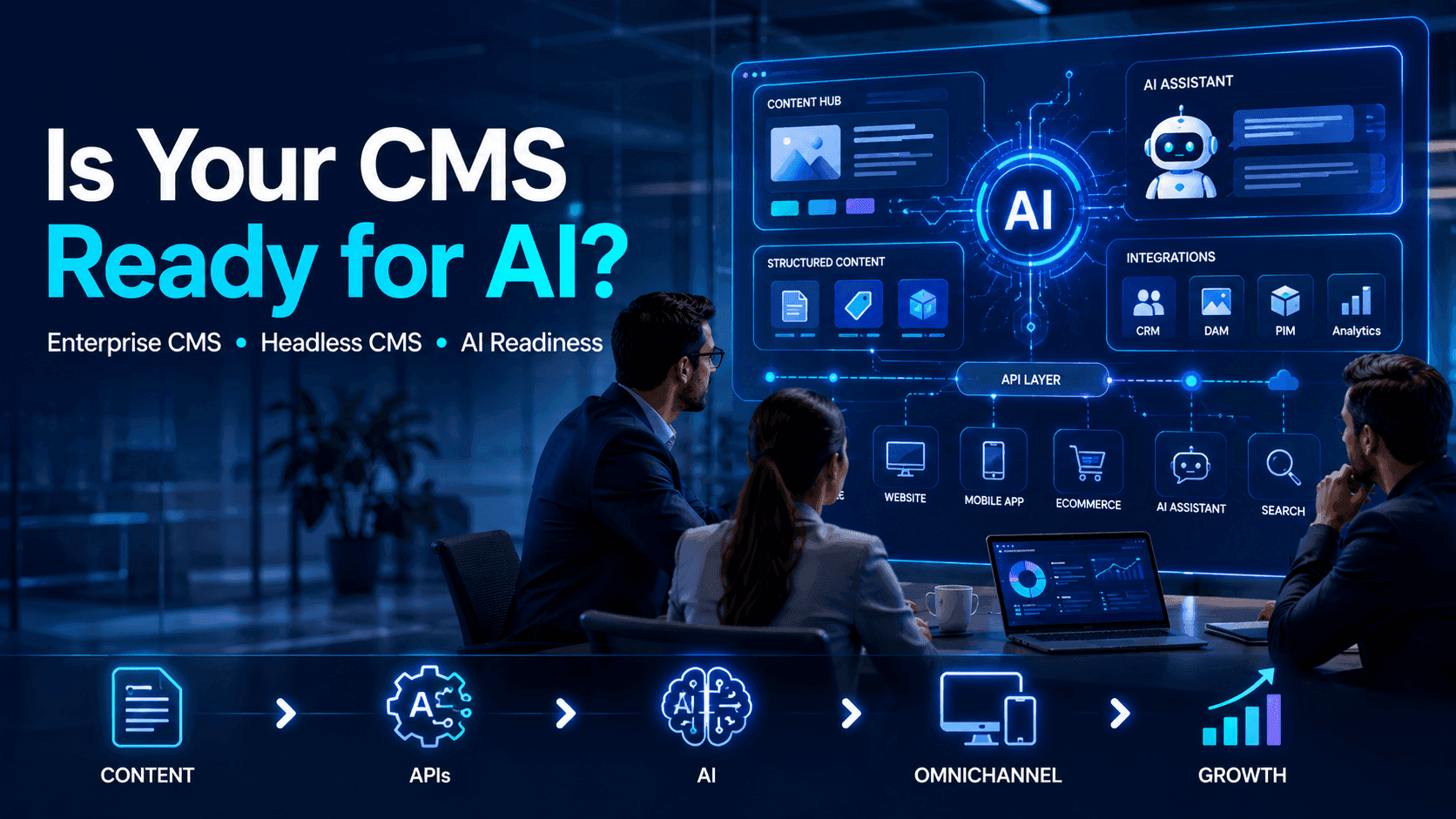
AI systems work best when content is structured, reusable, current, governed, and available through reliable APIs. Modern content platforms are increasingly expected to deliver information not only to websites but also to mobile apps, product interfaces, commerce platforms, AI assistants, and generative search experiences.
A meaningful assessment should review:
- Content models and reusable components
- Metadata, taxonomy, and semantic structure
- API and integration capabilities
- Editorial workflows and approval controls
- Multilingual and multichannel delivery
- Search and personalization readiness
- Security, permissions, audit trails, and governance
- Data quality and content freshness
- AI-assisted creation and human review
- Connections with CRM, DAM, PIM, commerce, analytics, and business systems
Discover How AI-Ready Your CMS Really Is
A CMS may be technically headless yet still not be operationally ready for AI. Poor content models, incomplete metadata, disconnected repositories, weak governance, and manual approval processes can limit the value of even advanced AI tools.
What We Assess in Your Current CMS
During the assessment, Murmu Software Infotech reviews how your current CMS supports your business today—and whether it can support your future digital and AI roadmap.
We evaluate whether content teams depend too heavily on developers, whether the platform supports omnichannel delivery, how easily systems integrate, and whether content can be safely accessed by AI assistants or automated workflows.
We also identify opportunities to improve:
- AI-assisted content creation and optimization
- Automated summaries, translations, tagging, and classification
- Brand-aware content generation
- Enterprise search and RAG-based knowledge retrieval
- Content approval and governance workflows
- SEO, GEO, AEO, and structured answer generation
- Personalized experiences across customer journeys
- Reusable content for websites, mobile apps, and AI channels
The goal is not to add AI everywhere. It is to identify where AI can reduce effort, improve quality, accelerate publishing, and create measurable business value.
Should You Improve, Modernize, or Replace Your CMS?
Not every business needs a new CMS.
Your existing platform may only require better content modelling, API development, workflow automation, search improvements, performance optimization, or AI integration.
In other cases, a monolithic or legacy CMS may restrict scalability, frontend innovation, omnichannel delivery, and integration. Headless CMS architecture separates content management from presentation, allowing organizations to reuse content across channels and evolve frontend experiences independently.
Modernize Your CMS for Smarter Content Operations
Our assessment helps you compare practical options such as:
- Enhancing your existing CMS
- Moving to a hybrid or headless architecture
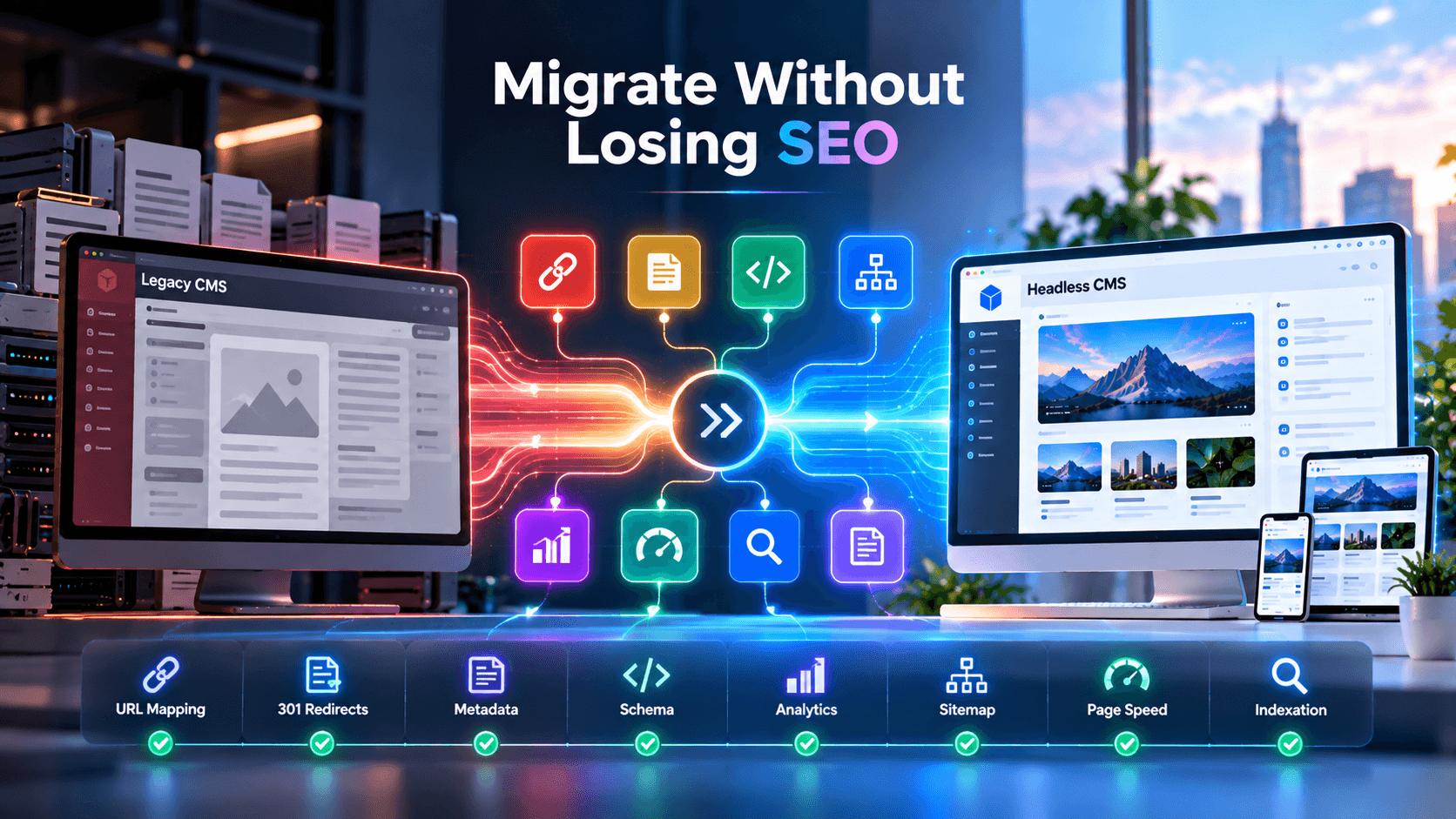
- Migrating from a legacy platform
- Building a composable digital experience stack
- Introducing an AI-ready content layer
- Consolidating multiple disconnected CMS platforms
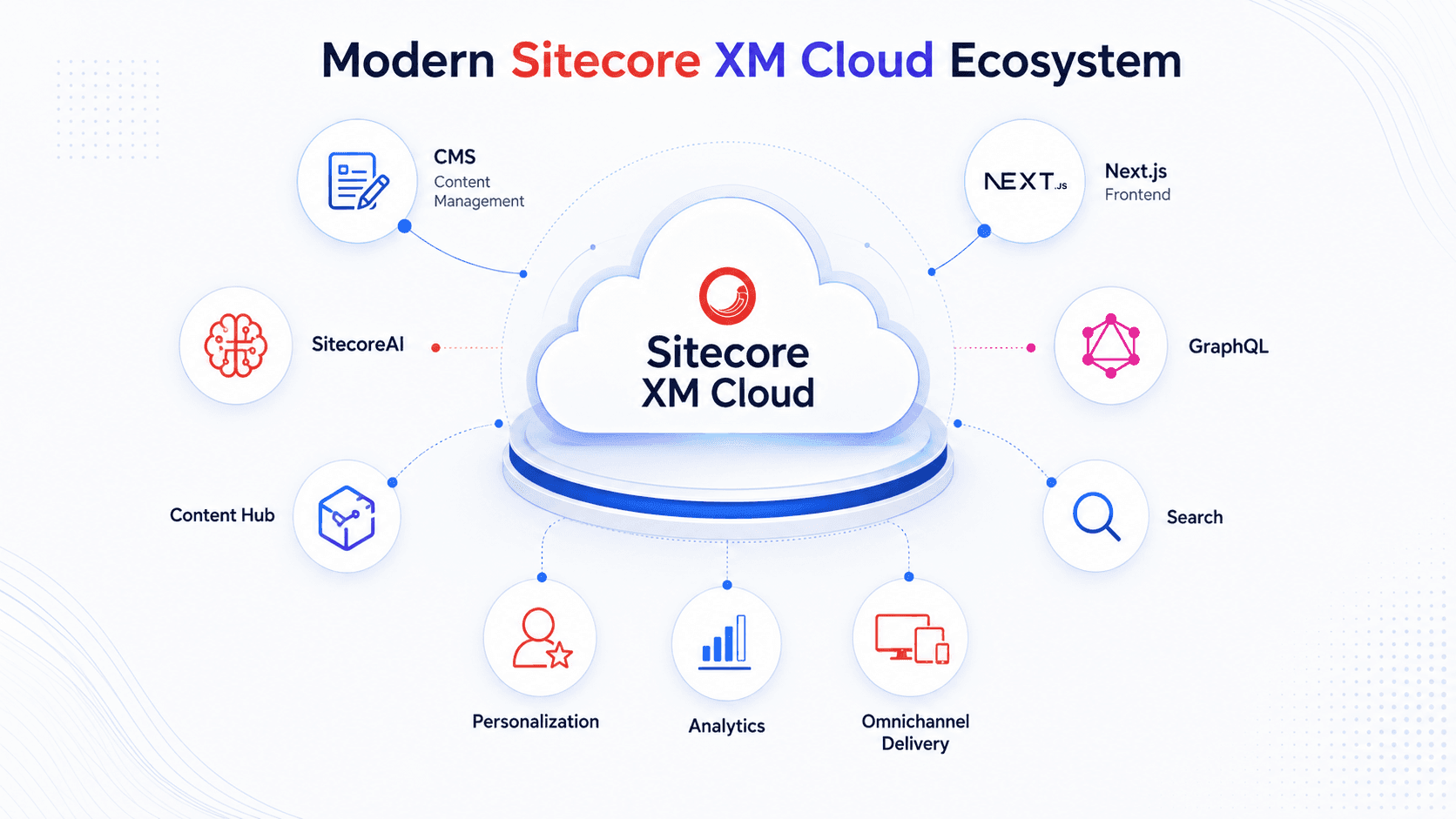
We can assess and recommend platforms including Sitecore, Sitecore XM Cloud, Sanity, Umbraco, Strapi, Contentful, Optimizely, and other enterprise or headless CMS solutions based on your business goals, editorial needs, integrations, technical ecosystem, governance, scale, and budget.
What You Receive
The assessment gives your leadership, marketing, content, and technology teams a clearer path forward.
You receive:
- Current CMS capability review
- Headless and composable readiness analysis
- AI readiness and automation opportunity assessment
- Content architecture and workflow recommendations
- CMS platform selection guidance
- Integration and security considerations
- Priority improvements and quick wins
- Migration or modernization roadmap
- Recommended implementation phases
This provides a practical decision framework before committing to a large migration, AI initiative, or enterprise CMS investment.
Start With a Free 60-Minute CMS Assessment
Your CMS should not become the barrier between your business and AI adoption.
Whether you are using a legacy CMS, evaluating headless architecture, planning a Sitecore modernization, considering Sanity, Umbraco, or Strapi, or exploring AI-powered content operations, the right first step is understanding your current readiness.
Book a free, up to 60-minute Enterprise CMS & Headless CMS AI Readiness Assessment with Murmu Software Infotech.
We will review your current platform, identify risks and opportunities, and help you define a practical roadmap for an AI-ready content ecosystem.
Frequently Asked Questions
What is an Enterprise CMS & Headless CMS AI Readiness Assessment?
An Enterprise CMS & Headless CMS AI Readiness Assessment evaluates whether a content platform can support structured content, secure APIs, automation, AI assistants, multilingual publishing, omnichannel delivery and modern digital experiences. It identifies technical limitations, operational gaps and the improvements or migration steps required.
What makes a CMS ready for AI?
An AI-ready CMS provides structured content, reliable metadata, reusable components, secure APIs, permissions, governance, current information and integration capabilities. It should allow AI systems to retrieve, generate, classify, translate or personalize content while maintaining human approval and brand control.
Can AI be added to an existing CMS?
Yes. AI capabilities can be integrated into an existing CMS for content generation, summarization, translation, tagging, search, recommendations, classification, workflow automation and knowledge retrieval. Feasibility depends on the platform’s APIs, content structure, permissions and integration architecture.
What CMS elements are reviewed during the assessment?
The assessment reviews content models, taxonomy, metadata, editorial workflows, approvals, APIs, integrations, security, permissions, multilingual delivery, search, personalization, hosting, performance, governance and readiness for AI-assisted content operations.
Should we improve, migrate or replace our current CMS?
The recommendation depends on platform limitations, business goals, editorial efficiency, scalability, integration requirements and cost. Some organizations need workflow, architecture or API improvements, while others may benefit from migration to a modern headless or composable CMS.
Which CMS platforms can Murmu Software Infotech assess?
Murmu Software Infotech can assess Sitecore, Sitecore XM Cloud, Sanity, Umbraco, Strapi, Contentful, Optimizely, WordPress and other enterprise, traditional, hybrid or headless CMS platforms.
How do you help choose the best CMS?
CMS selection is based on content volume, team structure, editorial workflows, localization, integration needs, security, scalability, development ecosystem, total cost, deployment model and future AI requirements. The goal is to select the best business fit rather than the most popular platform.
What AI automation can be implemented in a CMS?
CMS automation can include content drafting, summarization, translation, tagging, classification, metadata generation, internal linking, SEO recommendations, GEO summaries, content quality checks, approval routing, personalization and distribution across multiple channels.
What is headless CMS readiness?
Headless CMS readiness measures whether content is sufficiently structured, reusable and accessible through APIs for delivery across websites, mobile apps, portals, digital displays, commerce systems and AI applications. It also evaluates frontend independence, integration maturity and editorial usability.
Can a CMS support AI search and RAG?
Yes. A CMS can serve as an approved knowledge source for AI search and Retrieval-Augmented Generation when content is structured, current, permission-aware and accessible through secure APIs or indexed content pipelines.
How does CMS architecture affect SEO, GEO and AEO?
CMS architecture affects metadata, structured data, page performance, content freshness, internal linking, semantic structure and answer-ready content. A well-designed CMS helps teams create pages that search engines and AI platforms can understand, retrieve and cite more effectively.
What is included in the CMS assessment roadmap?
The roadmap can include immediate fixes, content modelling improvements, workflow automation, API enhancements, security recommendations, AI use cases, platform options, migration phases, integration requirements, estimated priorities and a practical implementation sequence.
Can you assess Sitecore for XM Cloud migration?
Yes. The assessment can review the current Sitecore architecture, customizations, content structure, integrations, rendering approach, search, personalization and operational dependencies to determine readiness for Sitecore XM Cloud or another modernization path.
Can multilingual content operations be automated?
Yes. AI can support translation, localization, terminology consistency, content adaptation and multilingual metadata generation. Human review, brand guidelines and approval workflows should remain part of the process for accuracy and governance.
What happens during the free CMS assessment session?
During the session, we review your current CMS, business goals, content workflows, technical challenges, integrations, AI priorities and modernization plans. We then identify key risks, quick wins and the most practical next steps for improvement, migration or AI enablement.