Hospital Software Development Mumbai: Connect OPD, Billing, CRM & Telemedicine
In This Article
- Hospital Software Development Mumbai: Connect the Entire Patient Journey
- HMS Software Mumbai: Connect OPD With Billing and Administration
- Healthcare CRM Development Improves Patient Follow-Up
- Telemedicine App Development Extends Care Beyond the Hospital
- Healthcare Software Development: What Should Be Integrated?
- Who Needs HMS Software and Patient Experience Platforms?
- Hospital Software Development Cost Considerations
- Why Murmu Software Infotech for Healthcare Software?
A patient books an appointment online, reaches reception and is asked to provide the same information again. After consultation, billing works in another system. Follow-up reminders depend on staff. If the next consultation happens remotely, yet another platform enters the process. This fragmentation creates administrative delays, repeated data entry and a poor patient experience. Hospital software development Mumbai healthcare organizations invest in should connect the complete journey not simply digitize isolated departments.
Hospitals planning broader modernization can start with MSI’s software development services in Mumbai and healthcare-focused platform capabilities.
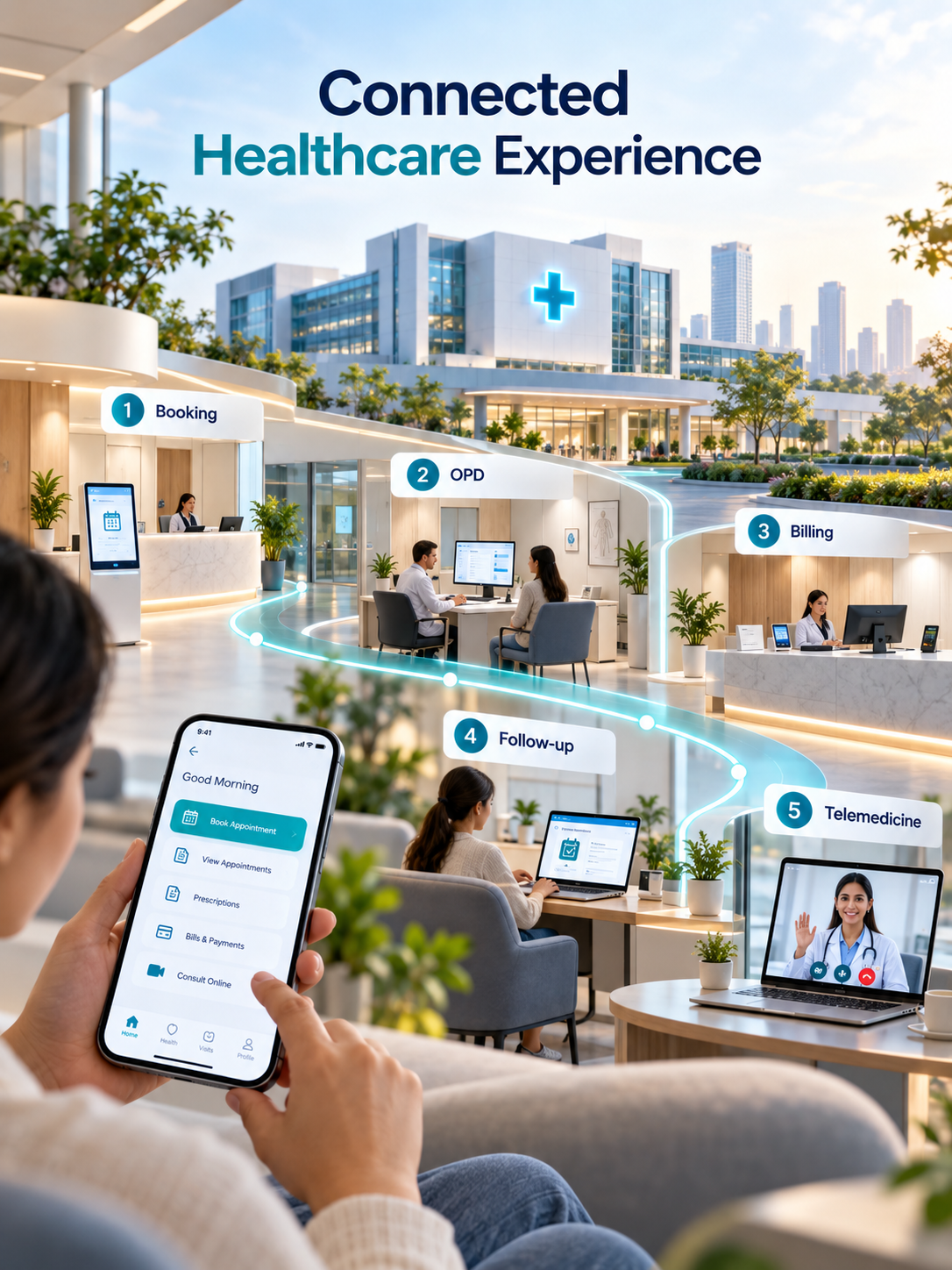
Connect Every Patient Journey
Unify OPD, billing, patient CRM and telemedicine in one scalable healthcare platform designed around your hospital’s real workflows.
Hospital Software Development Mumbai: Connect the Entire Patient Journey
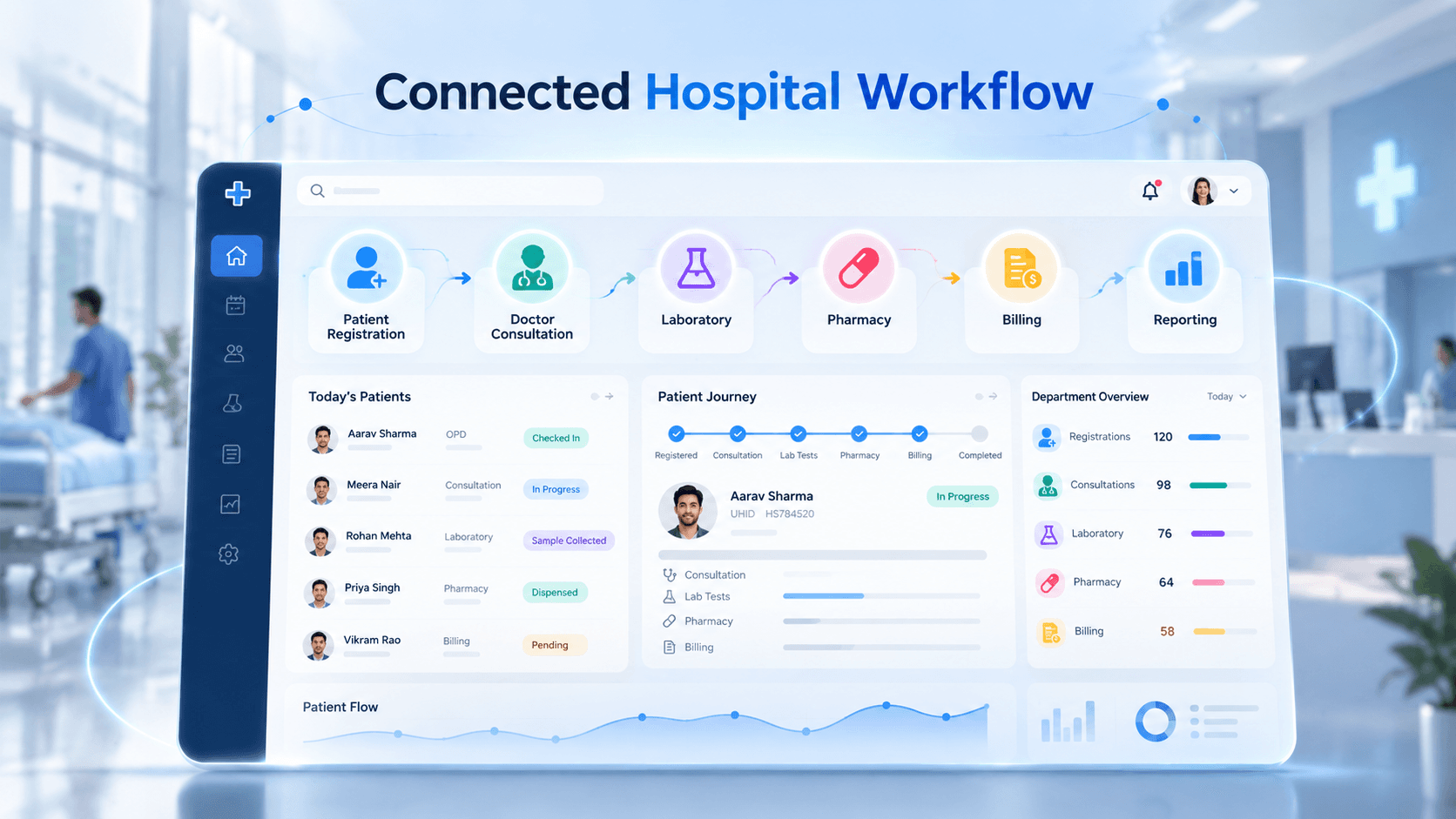
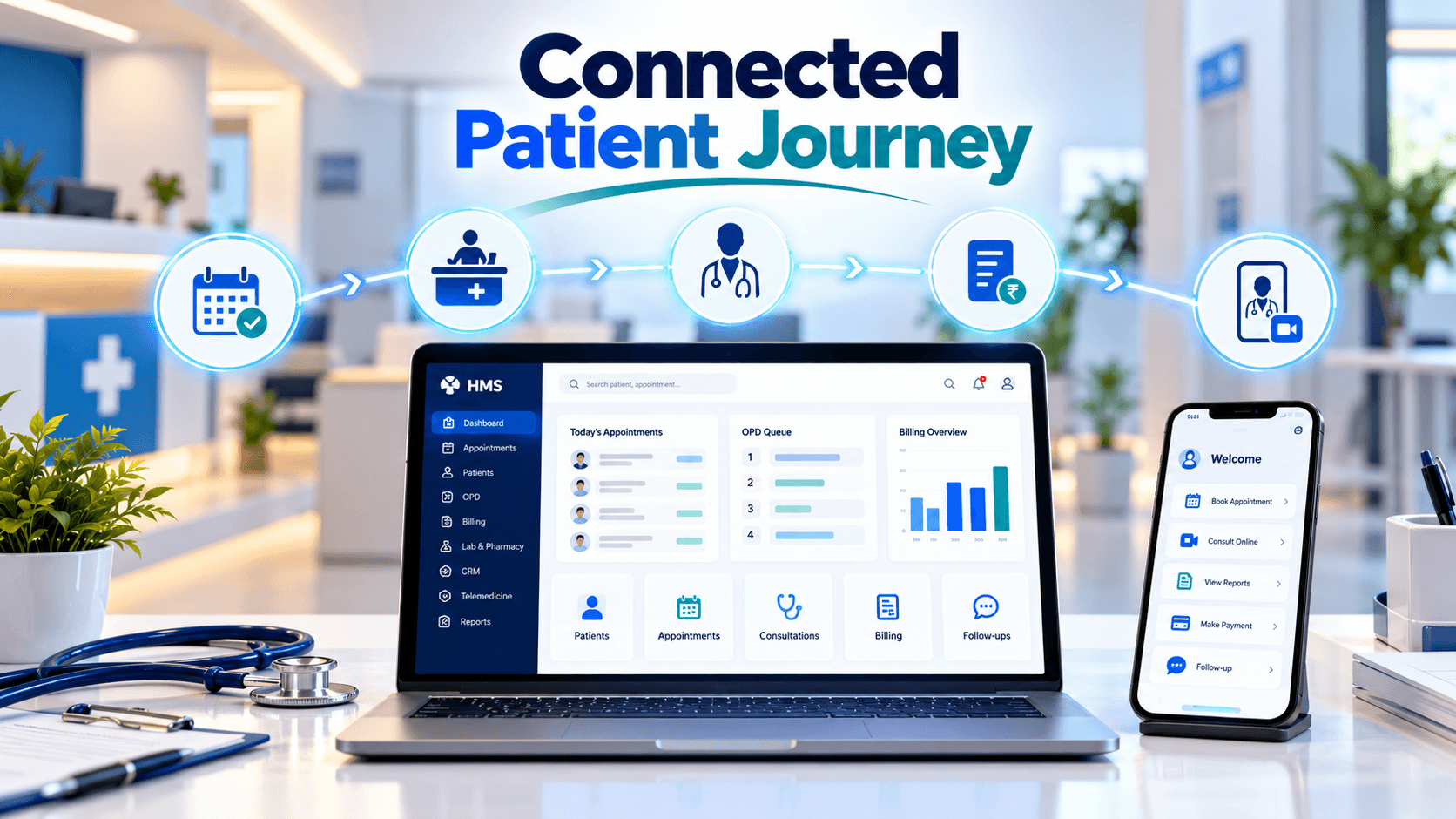
A connected healthcare platform should follow the patient from first interaction through ongoing care:
Appointment → Registration → OPD Queue → Doctor Consultation → Diagnostics → Billing → Payment → Follow-Up → Telemedicine
The objective is not to force every hospital into an identical process. The software should reflect the hospital’s actual departments, users and patient flow.
MSI’s hospital management case study documents a system built around centralized registration, appointments, OPD management, doctor dashboards, billing, payment tracking, role-based permissions and reporting. The documented workflow moves a patient from registration through consultation and billing while giving management centralized visibility.
Explore MSI’s Hospital Management System project.
Connect Every Patient Journey With One Smarter Healthcare Platform
HMS Software Mumbai: Connect OPD With Billing and Administration
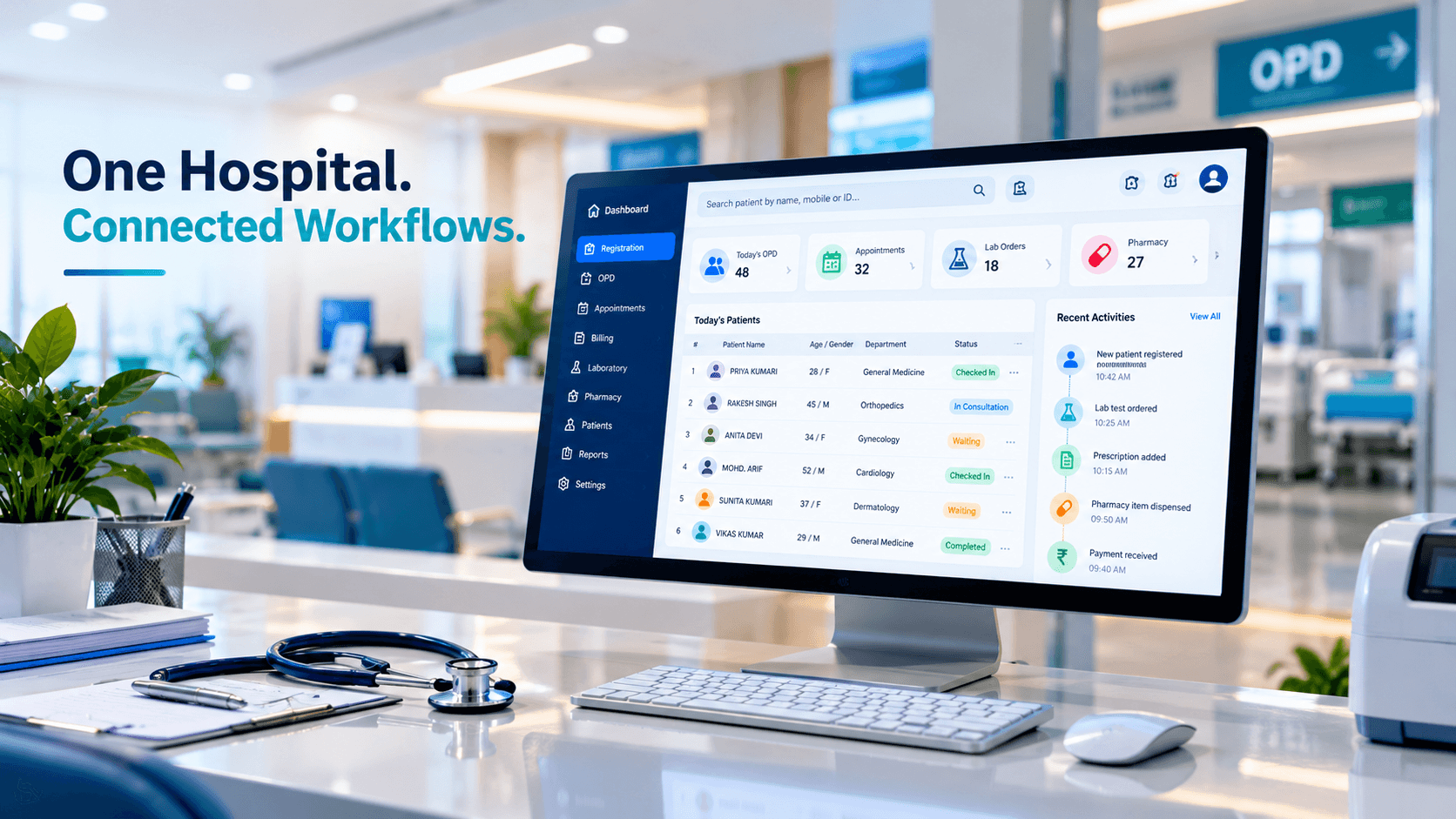
An effective HMS software Mumbai implementation should reduce the operational gaps between reception, doctors, billing and management.
Instead of this:
Reception register → OPD list → Doctor notes → Separate billing software → Manual report
A connected workflow becomes:
Patient Profile → Appointment/Token → Consultation → Services → Billing → Payment → Follow-Up
MSI’s OPD queue project shows how registration and digital tokens can connect doctor-specific queues with consultation, billing, laboratory, pharmacy and follow-up workflows.
Useful HMS modules may include:
- patient registration and history
- appointment scheduling
- OPD and queue management
- doctor dashboards
- billing and payment tracking
- lab and pharmacy integrations
- staff roles and permissions
- management reports
- patient notifications
- mobile or patient-portal access
For a broader implementation model, review MSI’s Hospital Management Software Development service.
Healthcare CRM Development Improves Patient Follow-Up
Hospital software should not stop when an invoice is generated.
Healthcare CRM development can connect patient communication with the clinical and administrative journey. Depending on the hospital’s requirements and communication permissions, workflows can support appointment reminders, follow-up scheduling, service enquiries and relevant patient communication.
For example:
Consultation Completed → Follow-Up Required → CRM Task → Reminder → Appointment → Patient Returns
This creates a structured process instead of relying on spreadsheets, personal phone reminders or disconnected messaging.
The purpose is not aggressive marketing. In healthcare, CRM should help authorized teams manage relevant patient communication, follow-ups and service relationships with appropriate privacy and consent controls.
Telemedicine App Development Extends Care Beyond the Hospital
Telemedicine becomes much more useful when it is part of the patient journey rather than a standalone video-call application.
MSI’s DOC247 work demonstrates connected web and mobile workflows covering doctor discovery, appointment booking, provider allocation, virtual waiting rooms, real-time clinic queues, video consultation and patient notifications.
A telemedicine app development project can therefore connect:
Patient App → Doctor Availability → Appointment → Virtual Queue → Consultation → Notification → Follow-Up
This makes remote care part of the hospital’s wider digital ecosystem.
Explore the DOC247 Telemedicine case study and MSI’s Telemedicine App Development Services.
Reduce Hospital Delays With Connected Digital Patient Workflows
Healthcare Software Development: What Should Be Integrated?
A connected hospital platform may need to coordinate several systems rather than replace everything immediately.
Important integration areas include:
Clinical: OPD, EMR/EHR, doctor workflows, laboratory and pharmacy.
Administrative: registration, billing, payments, insurance, staff permissions and reporting.
Patient Experience: appointment booking, mobile apps, notifications, CRM and telemedicine.
Management: operational dashboards, daily patient volumes, billing collections and department activity.
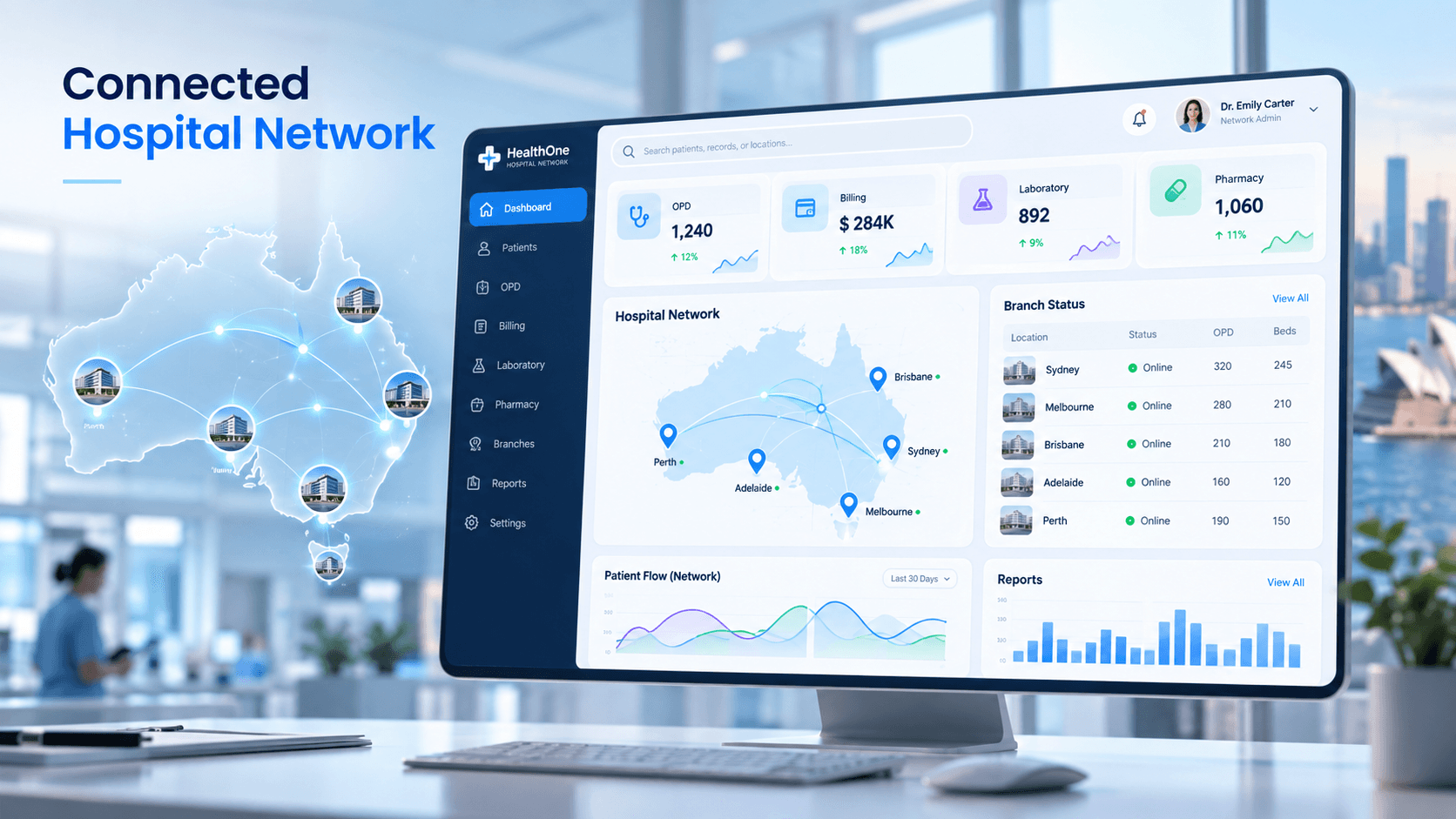
MSI’s healthcare platform positioning brings HMS, OPD automation, telemedicine, patient engagement and digital-care workflows together rather than treating them as unrelated products.
Who Needs HMS Software and Patient Experience Platforms?
This approach is particularly relevant for:
Multi-specialty hospitals that need stronger coordination between departments.
Clinic chains that require standardized booking, patient records and centralized visibility.
Diagnostic businesses connecting appointments, tests, reports, billing and patient communication.
Hospital groups that want patient-facing apps or digital follow-up journeys.
Healthcare technology managers modernizing legacy HMS modules without replacing everything at once.
Hospital Software Development Cost Considerations
There is no responsible fixed cost for a complete hospital platform.
MSI currently states that focused HMS engagements can start around ₹70,000, while final cost depends on modules, users, integrations, migration, mobile applications and deployment requirements.
A credible estimate should consider:
- number of hospitals, clinics or branches
- OPD and IPD requirements
- doctors and user roles
- existing software and APIs
- billing complexity
- lab and pharmacy connectivity
- historical data migration
- patient/mobile applications
- telemedicine workflows
- notification services
- security and access requirements
- reporting and analytics
- deployment and ongoing support
A phased approach can begin with registration + OPD + billing, then expand into CRM, patient apps, telemedicine and deeper integrations.
Why Murmu Software Infotech for Healthcare Software?
The important distinction is implementation experience.
MSI has documented both a hospital management project connecting registration, OPD, consultation, billing and reporting, and the DOC247 platform connecting digital appointments, virtual consultations and real-time care workflows.
That creates a practical foundation for hospitals that want to connect physical patient operations with digital patient experiences instead of buying another isolated software tool.
Frequently Asked Questions
What is hospital management software?
Hospital management software is a digital platform that can connect patient registration, appointments, OPD, doctor workflows, billing, laboratory, pharmacy, staff permissions and management reporting.
What does hospital software development in Mumbai include?
Custom hospital software development can include HMS modules, OPD workflows, billing, patient CRM, telemedicine, mobile apps, integrations, dashboards and modernization of existing healthcare systems.
Can HMS software connect OPD and billing?
Yes. A connected workflow can move a patient from registration and consultation into services, billing, payment, laboratory, pharmacy or follow-up without repeated manual data entry.
Can hospital software integrate with existing systems?
Yes, where suitable APIs, databases or integration options exist. Existing billing, laboratory, pharmacy, website or other hospital systems can be assessed before defining an integration plan.
What is healthcare CRM development?
Healthcare CRM development creates structured workflows for patient enquiries, appointments, follow-ups, reminders and authorized communication while connecting relevant information with hospital operations.
Can telemedicine be integrated with hospital management software?
Yes. Telemedicine workflows can be designed to connect appointment scheduling, doctor availability, virtual consultations, notifications and patient follow-up with supported hospital systems.
Do hospitals need a patient mobile app?
Not every hospital needs one immediately. Patient apps become useful when organizations want digital appointment booking, notifications, remote consultations, reports or other self-service capabilities.
How much does hospital software development cost?
Cost depends on modules, users, branches, integrations, migration, mobile apps, telemedicine, deployment and support. A workflow assessment is required for an accurate estimate.
Can existing HMS software be modernized instead of replaced?
Yes. Selected modules, interfaces, databases, APIs or mobile experiences can often be modernized in phases rather than replacing the entire system at once.
Who needs custom hospital management software?
Hospitals, clinic chains, diagnostic centres, healthcare groups and organizations with unique workflows, integrations or patient-experience requirements are common candidates for custom healthcare software.