ERP Software Development Cost in Ranchi – Full Breakdown
In This Article
- Why Businesses Are Investing in ERP Software
- Average ERP Software Development Cost in Ranchi
- Key Factors Affecting ERP Development Costs
- 1. Number of ERP Modules
- 2. Customization Requirements
- 3. Business Size & Scalability
- 4. Cloud vs On-Premise ERP
- Cloud ERP
- On-Premise ERP
- 5. Integration Requirements
- 6. UI/UX & User Experience
- 7. Security & Compliance
- ERP Development Cost Based on Industry
- Manufacturing ERP
- Retail ERP
- Healthcare ERP
- Hidden ERP Costs Businesses Often Ignore
- ERP Development Timeline
- Why Ranchi Businesses Are Investing in ERP Solutions
- How to Optimize ERP Development Costs
- Prioritize Business Goals
- Start with Essential Modules
- Choose Scalable Architecture
- Select the Right ERP Development Partner
- What CXOs Should Evaluate Before Investing in ERP
- Future Trends in ERP Development
- Final Thoughts
In today’s competitive business environment, enterprises are rapidly investing in ERP (Enterprise Resource Planning) systems to streamline operations, improve efficiency, and gain real-time business visibility. From manufacturing units and logistics companies to retail chains and service enterprises, ERP software has become a critical component of digital transformation.
However, one of the most common questions business leaders ask is:
“What is the ERP Software Development Cost in Ranchi?”
For CEOs, Managing Directors, founders, CTOs, IT Heads, and enterprise decision-makers, understanding ERP development pricing is essential before planning digital modernization initiatives.
The reality is that ERP software development costs vary significantly depending on:
- Business size
- Industry requirements
- Number of modules
- Integrations
- Customization level
- Scalability needs
- Security expectations
This guide provides a complete breakdown of ERP software development costs in Ranchi, helping business leaders make smarter technology investment decisions.
Plan ERP Investment With Confidence
Understand ERP costs, modules, integrations and scalability while building a secure, future-ready system aligned with your operations, budget and growth.
Why Businesses Are Investing in ERP Software
Modern businesses operate across multiple departments and workflows:
- Finance
- HR
- Inventory
- Procurement
- Sales
- Manufacturing
- Logistics
- Customer management
Without centralized systems, organizations often face:
- Data silos
- Operational inefficiencies
- Delayed reporting
- Poor inventory visibility
- Manual errors
- Slow decision-making
ERP software solves these challenges by integrating all business functions into a unified digital platform.
Businesses using ERP systems typically achieve:
- Improved operational efficiency
- Better data visibility
- Faster reporting
- Cost optimization
- Process automation
- Improved scalability
- Enhanced customer service
For enterprise leaders, ERP is no longer just software — it is a strategic business infrastructure investment.
Average ERP Software Development Cost in Ranchi
Modernize Your Business with Intelligent ERP Solutions
The cost of ERP software depends heavily on project scope, modules, and customization requirements.
Below is a general pricing estimate:
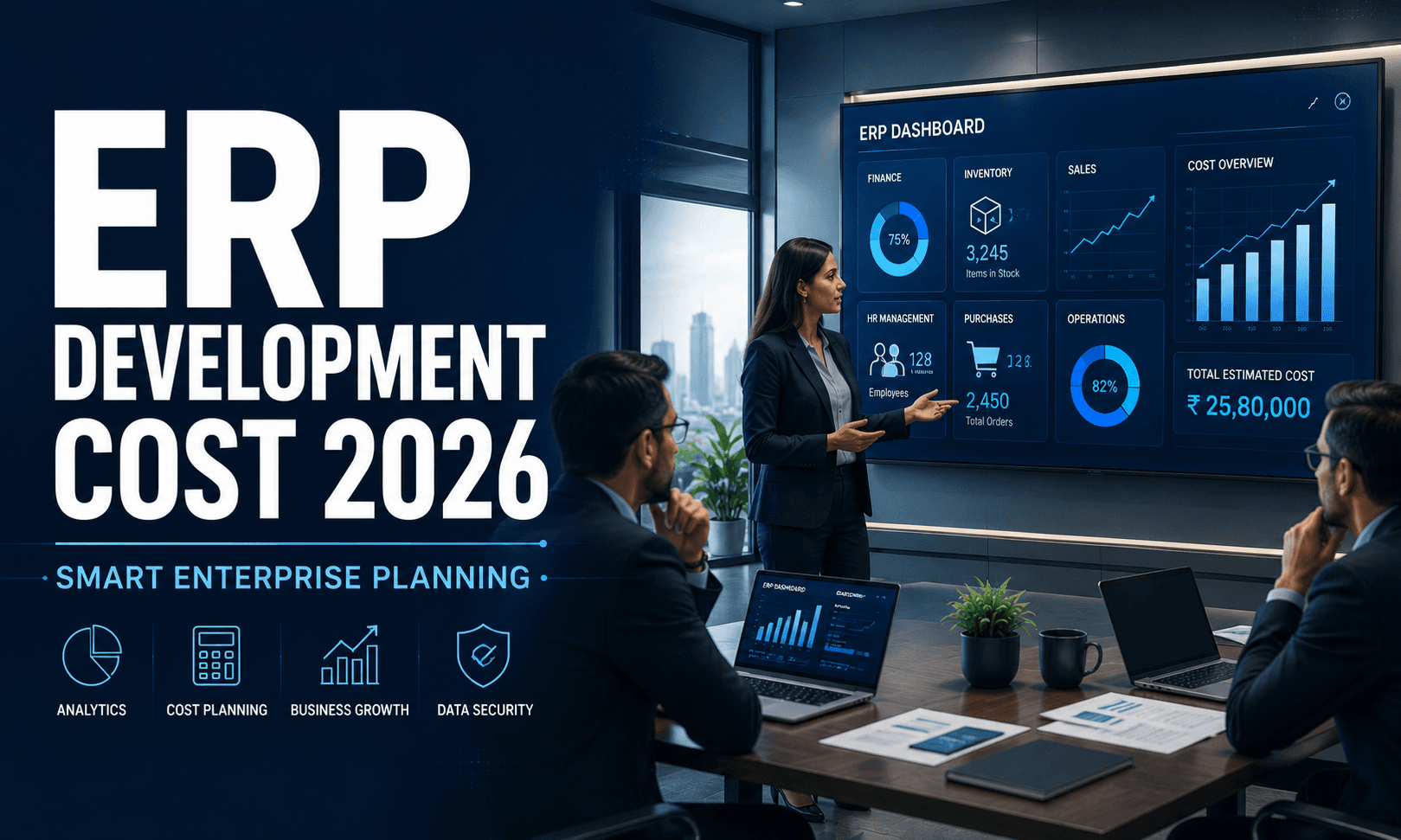
| ERP Type | Estimated Cost Range |
|---|---|
| Basic ERP System | ₹3,00,000 – ₹8,00,000 |
| Mid-Level ERP Solution | ₹8,00,000 – ₹25,00,000 |
| Enterprise ERP Platform | ₹25,00,000 – ₹1 Crore+ |
| Manufacturing ERP | ₹10,00,000 – ₹60,00,000+ |
| Cloud-Based ERP Solution | ₹8,00,000 – ₹40,00,000+ |
| AI-Integrated ERP System | ₹20,00,000 – ₹1.5 Crore+ |
These estimates vary based on business requirements and long-term scalability goals.
Key Factors Affecting ERP Development Costs
1. Number of ERP Modules
ERP pricing largely depends on the modules required.
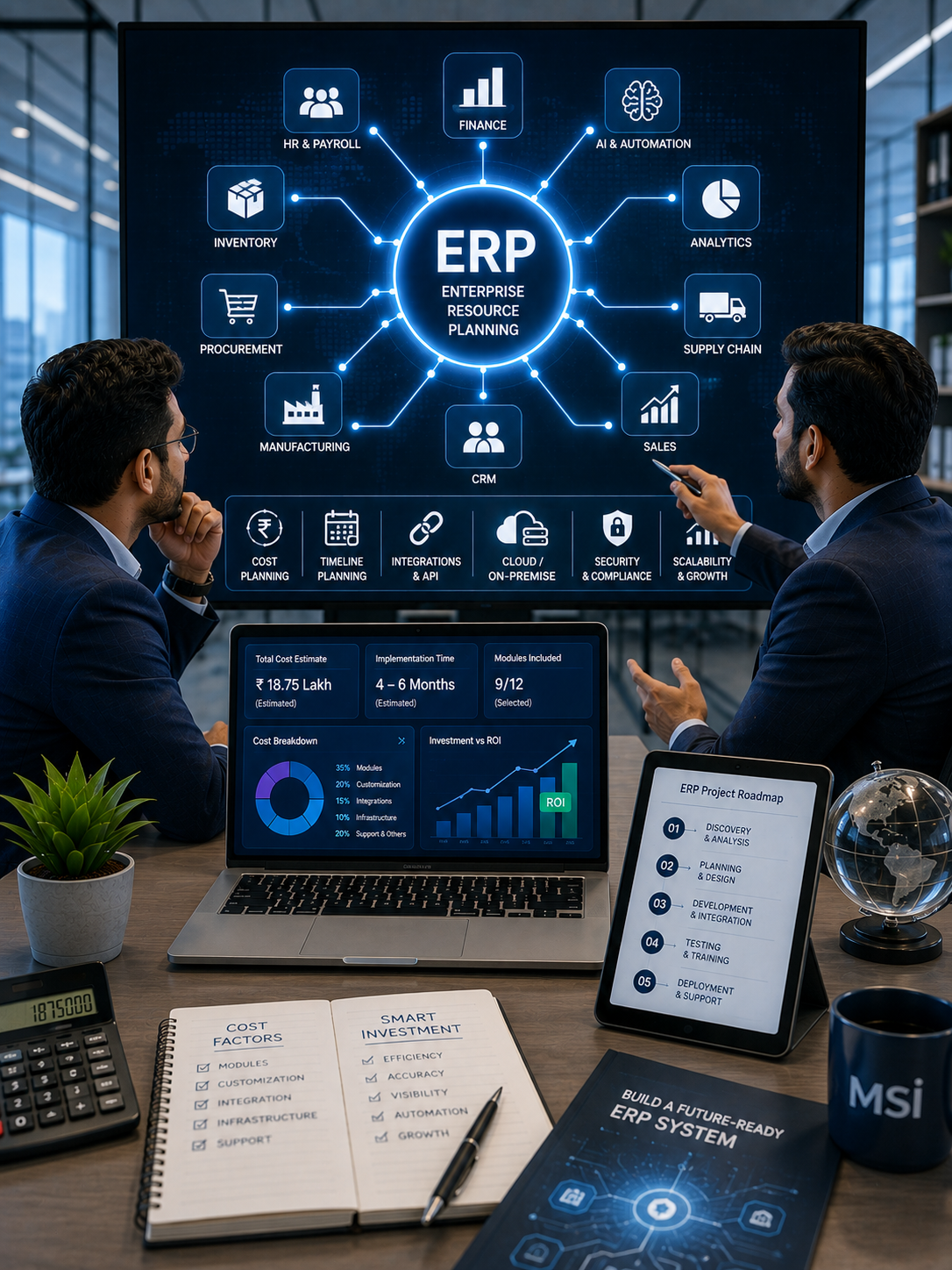
Common ERP modules include:
- Finance & Accounting
- Inventory Management
- HR & Payroll
- CRM
- Procurement
- Manufacturing
- Supply Chain Management
- Project Management
- Asset Management
The more modules required, the higher the development complexity and cost.
Organizations should prioritize mission-critical workflows first and scale gradually.
2. Customization Requirements
Every business operates differently.
Some companies require:
- Industry-specific workflows
- Advanced approval systems
- Multi-location management
- Custom dashboards
- Automated reporting
- Business intelligence integrations
Highly customized ERP systems require:
- Additional business analysis
- Workflow engineering
- Custom architecture
- Extensive testing
This significantly impacts overall ERP software development cost.
3. Business Size & Scalability
ERP systems designed for small businesses differ greatly from enterprise-grade platforms.
Large organizations require:
- Multi-user access control
- High-performance databases
- Enterprise security
- Cloud scalability
- Large transaction handling
- Multi-branch management
Scalable ERP systems require more advanced architecture and infrastructure planning.
4. Cloud vs On-Premise ERP
Cloud ERP
Cloud-based ERP systems are increasingly popular because they offer:
- Remote accessibility
- Lower infrastructure costs
- Easier scalability
- Faster deployment
- Better disaster recovery
However, they involve:
- Cloud hosting expenses
- Subscription infrastructure costs
- Ongoing maintenance
On-Premise ERP
On-premise ERP systems provide:
- Full infrastructure control
- Internal data management
- Custom security management
But they require:
- Higher hardware investment
- Internal IT management
- Infrastructure maintenance
The deployment model directly influences ERP budgeting.
5. Integration Requirements
Modern ERP systems rarely function independently.
Businesses often integrate ERP with:
- CRM platforms
- E-commerce systems
- Payment gateways
- HRMS tools
- IoT devices
- Manufacturing systems
- Logistics software
- BI & analytics platforms
Complex integrations increase:
- Development time
- API management effort
- Security requirements
- Testing complexity
6. UI/UX & User Experience
Modern ERP systems are expected to deliver:
- Easy navigation
- Mobile responsiveness
- Role-based dashboards
- Real-time reporting
- User-friendly workflows
A poorly designed ERP interface reduces employee adoption and productivity.
Businesses increasingly invest in premium UI/UX design to improve operational usability.
7. Security & Compliance
ERP systems handle highly sensitive business data.
Enterprises often require:
- Multi-factor authentication
- Data encryption
- Role-based access control
- Audit logs
- Secure APIs
- Compliance management
Industries such as healthcare, finance, and manufacturing often require enterprise-grade security frameworks.
This adds significant development and infrastructure costs.
ERP Development Cost Based on Industry
Manufacturing ERP
Manufacturing companies often require:
- Production planning
- Inventory automation
- Machine integration
- Procurement workflows
- Quality management
These systems are usually more complex and expensive.
Retail ERP
Retail ERP focuses on:
- Billing systems
- Inventory synchronization
- Multi-store management
- Customer analytics
Healthcare ERP
Healthcare ERP systems require:
- Patient management
- Data compliance
- Scheduling systems
- Secure record handling
Security and compliance significantly impact pricing.
Hidden ERP Costs Businesses Often Ignore
Many organizations underestimate post-deployment expenses.
Additional ERP costs may include:
- Employee training
- Cloud infrastructure
- Security monitoring
- System upgrades
- Data migration
- Maintenance & support
- Backup systems
- Performance optimization
Leadership teams should plan ERP budgets strategically for long-term operational sustainability.
ERP Development Timeline
ERP implementation timelines vary based on project complexity.
| ERP Complexity | Estimated Timeline |
|---|---|
| Basic ERP | 2–4 Months |
| Mid-Level ERP | 4–8 Months |
| Enterprise ERP | 8–18 Months |
Complex enterprise ERP projects often require phased deployment strategies.
Why Ranchi Businesses Are Investing in ERP Solutions
Ranchi is witnessing rapid business modernization across:
- Manufacturing
- Logistics
- Retail
- Education
- Healthcare
- Distribution networks
Organizations are increasingly adopting ERP systems to:
- Improve operational visibility
- Reduce manual processes
- Enhance productivity
- Improve reporting accuracy
- Support digital transformation initiatives
The growing demand for ERP software development in Ranchi reflects the broader shift toward enterprise digitization across India.
How to Optimize ERP Development Costs
Prioritize Business Goals
Focus on solving core operational challenges first.
Start with Essential Modules
Avoid overbuilding in the initial phase.
Choose Scalable Architecture
Future-ready systems reduce redevelopment costs later.
Select the Right ERP Development Partner
The right technology partner improves:
- Project governance
- Delivery quality
- Long-term scalability
- Security
- ROI optimization
Choosing low-cost vendors often leads to technical debt and expensive future rebuilds.
What CXOs Should Evaluate Before Investing in ERP
Before approving ERP investments, leadership teams should evaluate:
- Operational ROI
- Scalability requirements
- Integration needs
- Security standards
- Long-term support
- Vendor expertise
- Industry-specific experience
ERP implementation should align directly with business growth and operational transformation goals.
Future Trends in ERP Development
ERP systems are rapidly evolving with technologies such as:
- AI-powered automation
- Predictive analytics
- Cloud-native architecture
- IoT integration
- Real-time reporting
- Mobile ERP platforms
Future-ready ERP systems will become smarter, more automated, and deeply integrated with enterprise decision-making processes.
Organizations investing early in modern ERP infrastructure will gain stronger operational agility and market competitiveness.
Final Thoughts
Understanding the ERP Software Development Cost in Ranchi is essential for businesses planning digital transformation and operational modernization.
ERP pricing depends on:
- Business size
- Number of modules
- Customization level
- Security requirements
- Scalability goals
- Integration complexity
For CEOs, founders, CTOs, and enterprise leaders, ERP should be viewed as a strategic long-term investment rather than simply a software expense.
The right ERP solution can improve efficiency, automate workflows, reduce operational costs, and accelerate business growth.
The key is choosing the right ERP development partner capable of delivering scalable, secure, and future-ready enterprise solutions.
Frequently Asked Questions
How much does ERP software development cost in Ranchi?
ERP development costs in Ranchi vary by scope. Indicative ranges in this guide are ₹3–8 lakh for basic ERP, ₹8–25 lakh for mid-level ERP, and ₹25 lakh to ₹1 crore or more for enterprise ERP. Actual pricing depends on modules, customization, integrations, security and scalability.
How much does custom ERP software cost in Ranchi?
Custom ERP cost depends on the number of modules, business workflows, customization, integrations, users, security requirements, deployment model and scalability. A detailed requirements assessment is needed for an accurate project estimate.
What is the cost of manufacturing ERP software in Ranchi?
The guide provides an indicative manufacturing ERP range of ₹10 lakh to ₹60 lakh or more. Manufacturing ERP can cost more because it may require production planning, inventory automation, machine integration, procurement and quality management.
How much does cloud ERP cost in Ranchi?
The article provides an indicative cloud ERP development range of ₹8 lakh to ₹40 lakh or more. The final cost depends on modules, customization, integrations, cloud infrastructure, security, users and ongoing maintenance.
What factors affect ERP software development cost?
Major cost factors include the number of modules, customization, business size, scalability, cloud or on-premise deployment, third-party integrations, UI/UX, security, compliance, data migration, testing, training and post-launch support.
How long does ERP software development take in Ranchi?
Indicative timelines in the guide are 2–4 months for basic ERP, 4–8 months for mid-level ERP and 8–18 months for enterprise ERP. Complex projects may require phased implementation.
Which modules can be included in custom ERP software?
Common ERP modules include finance and accounting, inventory, HR and payroll, CRM, procurement, manufacturing, supply chain, project management, asset management, sales and reporting.
Should I choose cloud ERP or on-premise ERP?
Cloud ERP offers remote access, easier scalability, faster deployment and reduced infrastructure requirements, while on-premise ERP provides greater infrastructure control. The appropriate option depends on security, compliance, budget, IT capabilities and business requirements.
Can ERP software integrate with CRM, ecommerce and other systems?
Yes. ERP systems can integrate with CRM, ecommerce platforms, payment gateways, HRMS, logistics systems, manufacturing systems, IoT devices and business intelligence platforms through APIs and other integration methods.
How can businesses reduce ERP development costs?
Businesses can control ERP costs by prioritizing essential workflows, launching critical modules first, choosing scalable architecture, planning integrations early, avoiding unnecessary customization and selecting an experienced development partner.