XM Cloud
Sitecore XM Cloud Development Company in 2026: Choosing the Right Partner for Enterprise Growth
PPrem M.2 Min Read
In 2026, digital experience is no longer just about having a website—it’s about delivering fast, scalable, and personalized experiences across every channel.
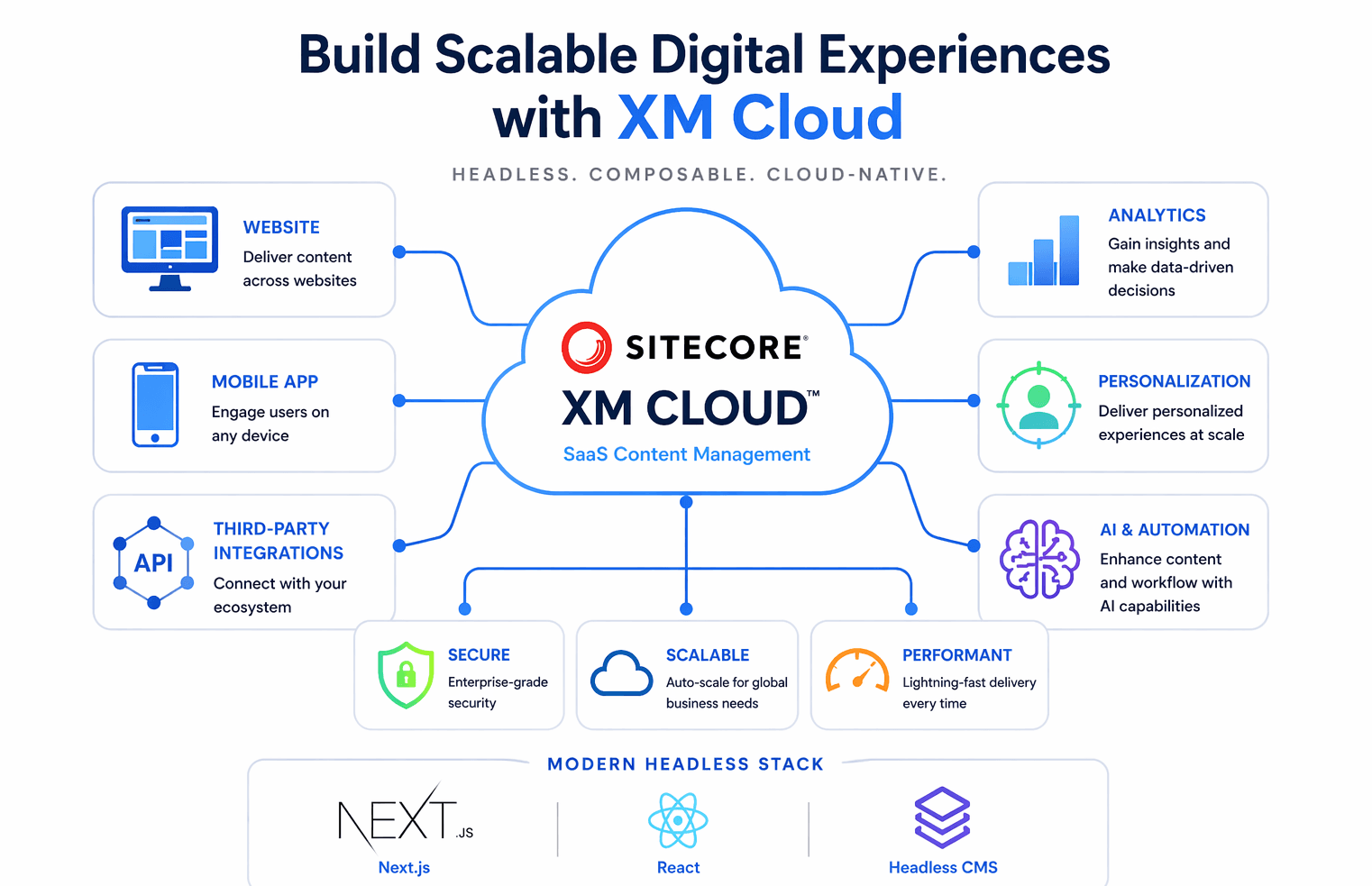
This shift has driven enterprises toward Sitecore XM Cloud, a modern SaaS-based, headless CMS designed for speed and flexibility.
But here’s the challenge:
👉 XM Cloud success depends heavily on choosing the right development partner.
Sitecore XM Cloud is a cloud-native, SaaS-based headless CMS that enables organizations to:
Unlike traditional CMS platforms, XM Cloud:
✔ Eliminates infrastructure management
✔ Supports headless architecture
✔ Enables faster deployment
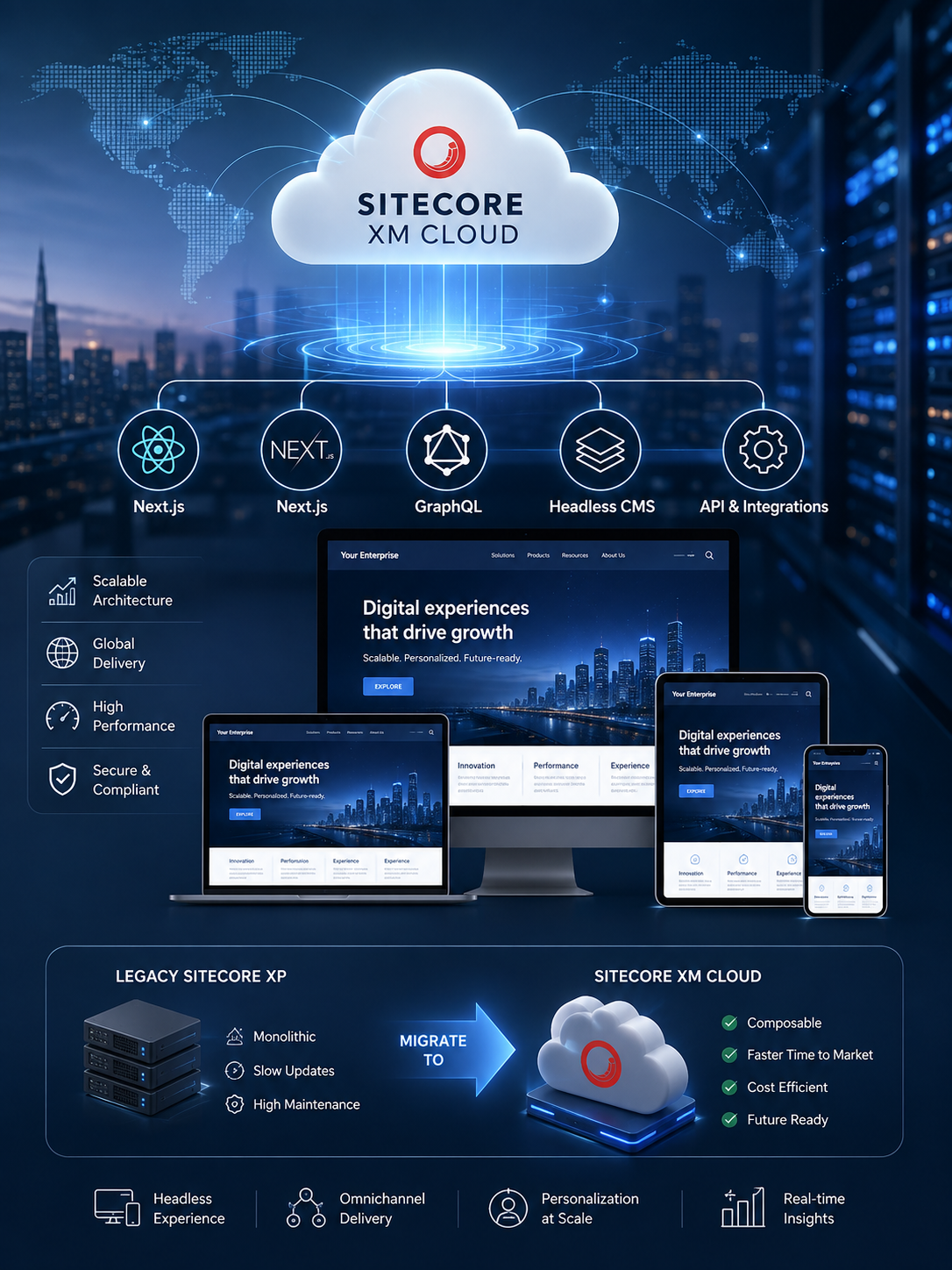
Transform your enterprise digital experience with Sitecore XM Cloud, headless architecture, Next.js expertise, seamless migration, and scalable performance built for growth.
Enterprises are moving to XM Cloud because it solves major business challenges:
XM Cloud is not just a CMS upgrade—it’s a complete architectural shift.
It requires expertise in:
Choosing the wrong partner can lead to:
✔ Next.js
✔ React
✔ Large-scale implementations
✔ Complex integrations
✔ XP → XM Cloud migration
✔ Content & data transformation
✔ Faster load times
✔ Scalable architecture
We help organizations:
✔ Implement XM Cloud architecture
✔ Build headless applications
✔ Optimize performance
✔ Scale digital platforms
Launch projects quickly
Avoid unnecessary delays
Optimized performance and scalability
Stay ahead of competition
❌ Choosing low-cost vendors
❌ Ignoring headless expertise
❌ Skipping architecture planning
Explore our Sitecore CMS development services
https://murmusoftwareinfotech.com/sitecore-cms-development-services
With the rise of:
👉 XM Cloud is becoming the standard for enterprise digital experience.
Choosing a Sitecore XM Cloud development company in 2026 is not just a technical decision.
It’s a business growth decision.
Sitecore XM Cloud is a cloud-hosted, headless content management platform designed to help enterprises manage and deliver digital experiences across channels with greater scalability, flexibility, and reduced infrastructure management.
A Sitecore XM Cloud development company helps enterprises plan, design, implement, customize, migrate, integrate, optimize, and support Sitecore XM Cloud solutions, including headless architectures, Next.js applications, APIs, content migration, and enterprise integrations.
Enterprises may migrate from Sitecore XP to XM Cloud to modernize their architecture, reduce infrastructure management, improve scalability, accelerate deployments, support headless experiences, and adopt a cloud-based Sitecore platform.
Yes. Sitecore recommends Next.js for XM Cloud headless development because it supports approaches such as static site generation, incremental static regeneration, and server-side rendering while reducing the need for a separate rendering host.
A typical XM Cloud migration involves architecture assessment, content and data analysis, headless implementation planning, JSS and frontend modernization, content transformation, integration updates, testing, deployment, and post-migration optimization.
Sitecore XM Cloud solutions commonly use Sitecore JSS, Next.js, React, GraphQL, Experience Edge, APIs, headless architecture, and composable digital experience technologies. The exact technology stack depends on the project's requirements.
Sitecore XM Cloud development costs vary significantly based on migration complexity, integrations, content volume, frontend requirements, personalization, multisite architecture, and enterprise requirements. A technical discovery and architecture assessment is recommended before estimating the project cost.
Evaluate a provider's Sitecore expertise, headless and Next.js capabilities, enterprise implementation experience, migration methodology, integration skills, performance optimization approach, QA process, security practices, communication model, and post-launch support.
Key benefits include cloud-based delivery, headless content management, scalability, faster deployment, reduced infrastructure management, omnichannel content delivery, modern frontend development, and improved flexibility for enterprise digital experiences.
Yes, an existing Sitecore implementation can potentially be modernized for XM Cloud, but the migration approach depends on the current architecture. MVC-based implementations generally require architectural and frontend changes to adopt the headless model required by XM Cloud.