Sitecore Development Support: Maintenance, Upgrade, Rescue and Performance Help
In This Article
- Is Your Sitecore Platform Becoming Harder to Maintain?
- When Do You Need Sitecore Development Support?
- Sitecore Rescue, Maintenance and Continuous Development
- Sitecore Support Model Comparison
- Sitecore Performance and Production Support
- Sitecore Upgrade or XM Cloud Modernization?
- Sitecore Support Pricing and Engagement Models
- Hourly Support
- Dedicated Sitecore Developer
- Monthly Managed Support
- Annual Managed Support
- Related Sitecore Services
- Keep Your Sitecore Platform Stable and Moving Forward
- Need Sitecore Help Now?
Sitecore development support helps enterprises keep Sitecore platforms stable, secure, fast and continuously improving. It can cover production troubleshooting, bug fixes, performance optimization, Solr and indexing issues, deployments, integrations, upgrades, Sitecore XP/XM maintenance, XM Cloud support and ongoing development without requiring a permanent specialist team.
Enterprise Sitecore platforms rarely remain unchanged after launch. New integrations, releases, content requirements, security updates and business priorities continuously introduce technical work. Without structured support, small issues can develop into unstable deployments, slow websites, technical debt and expensive emergency fixes.
Murmu Software Infotech provides Sitecore Development Support for enterprises and digital agencies across Sitecore XP, XM, SXA, SitecoreAI, XM Cloud, Next.js, integrations, DevOps and ongoing platform improvement.

Keep Your Sitecore Platform Running Strong
Get proactive maintenance, upgrades, performance optimization, troubleshooting, integrations, and continuous engineering support to keep your Sitecore platform secure, stable, and scalable.
Is Your Sitecore Platform Becoming Harder to Maintain?
Get experienced Sitecore engineers for troubleshooting, maintenance, upgrades, performance improvements and continuous development.
When Do You Need Sitecore Development Support?
Sitecore support should begin before a major production failure.
Common warning signs include:
- Slow pages, APIs or publishing
- Broken components or renderings
- Solr and indexing failures
- Unstable deployments or CI/CD pipelines
- Integration failures
- Repeated production incidents
- Growing technical debt
- Upgrade or compatibility problems
- Security updates waiting for implementation
- Overloaded internal developers
- Legacy XP/XM environments requiring modernization
- XM Cloud or headless development skill gaps
Support may involve fixing an immediate incident, but the bigger objective should be identifying why the problem occurred and reducing the chance of recurrence.
Organizations needing broader feature development or major implementation work can use our Sitecore CMS Development Services alongside ongoing support.
Sitecore Rescue, Maintenance and Continuous Development
Not every Sitecore problem requires a rebuild.
A rescue engagement should first assess the architecture, custom code, templates, renderings, integrations, search indexes, deployment pipelines, databases, configuration and frontend delivery.
Once critical issues are identified, work can move through three stages:
Rescue → Stabilize → Improve
The first priority is restoring business-critical functionality. The second is removing instability. The third is improving maintainability, performance and delivery velocity.
Ongoing Sitecore maintenance can then cover:
- Production bug fixing
- Component enhancements
- Security and platform updates
- Search and indexing support
- Integration maintenance
- Deployment assistance
- Code and configuration improvements
- Performance optimization
- Technical debt reduction
- Content-author technical support
Sitecore Support Model Comparison
| Support Model | Best For | Typical Scope |
|---|---|---|
| Emergency Support | Critical production issues | Troubleshooting, failed deployments, broken components |
| Monthly Support | Existing production platforms | Maintenance, fixes, monitoring, small enhancements |
| Dedicated Developer | Continuous technical backlog | Development, integrations, upgrades, sprint delivery |
| Managed Sitecore Support | Business-critical enterprise platforms | Ongoing maintenance, development, optimization and release support |
| Rescue Engagement | Stalled or unstable projects | Audit, stabilization, architecture fixes and recovery |
| Modernization Support | Legacy XP/XM environments | Headless planning, refactoring and XM Cloud transition |
If you already have technical leadership but need additional capacity, you can also Hire Sitecore Developers and integrate them directly into your sprint and engineering process.
Sitecore Performance and Production Support
Slow Sitecore performance rarely comes from one problem.
The complete request path may involve rendering logic, caching, databases, Solr, APIs, integrations, infrastructure, media delivery or frontend code.
Sitecore performance support can include:
- Rendering and component analysis
- Caching optimization
- Solr indexing troubleshooting
- Database and API investigation
- Image and media optimization
- CDN configuration
- Next.js frontend optimization
- Core Web Vitals improvements
- Deployment and production monitoring
For platforms where organic visibility is also affected by technical implementation, our Sitecore SEO Services cover technical SEO, performance, structured data, AEO and GEO improvements.
Sitecore Upgrade or XM Cloud Modernization?
Supporting an older Sitecore environment does not always mean continuing the same architecture indefinitely.
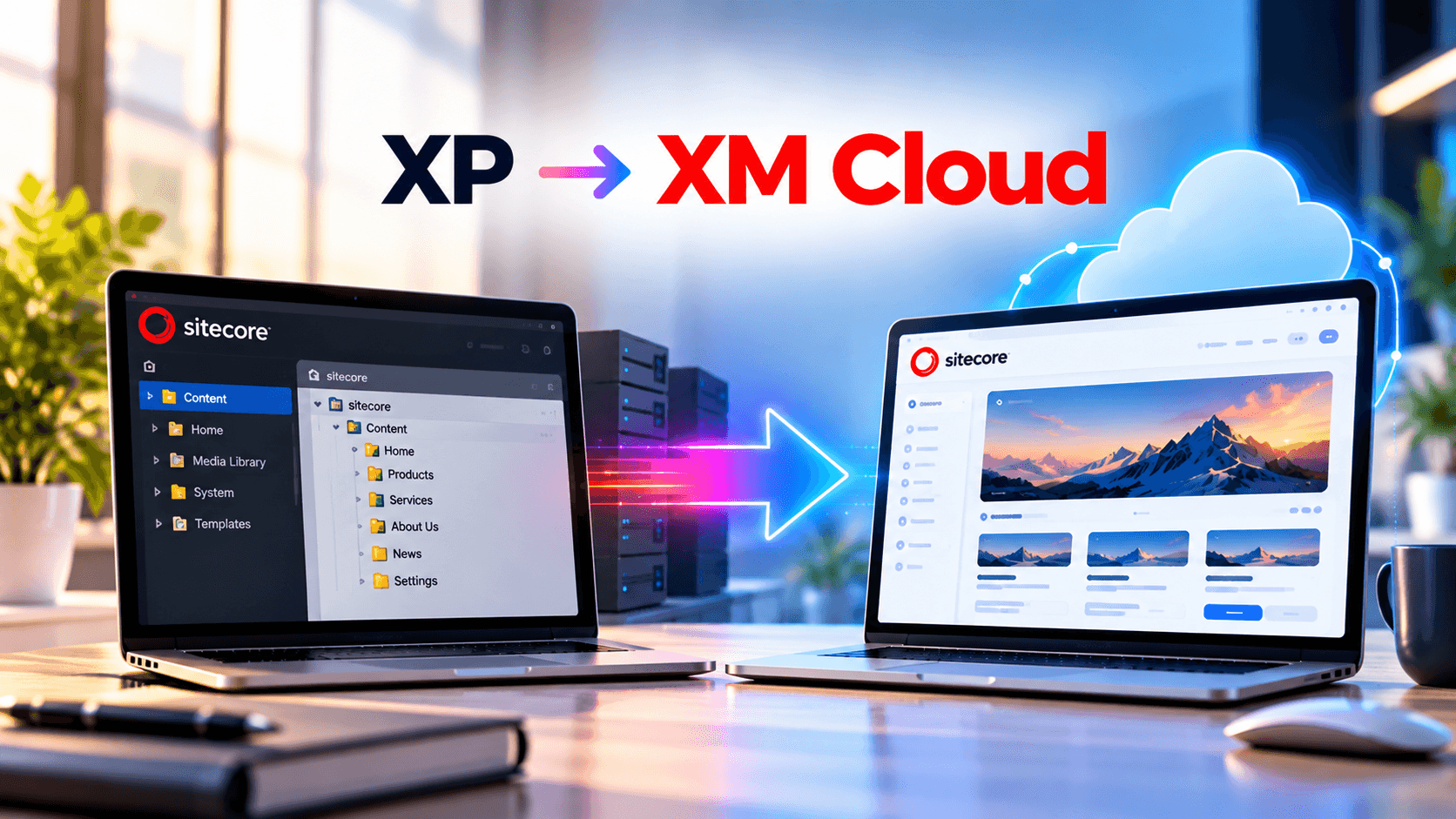
For some businesses, maintaining or upgrading the current Sitecore XP/XM implementation remains appropriate. Others may use the support engagement to identify whether legacy customizations, infrastructure overhead or frontend limitations justify a broader modernization program.
A modernization assessment should examine:
- Current Sitecore architecture
- Custom modules
- Content structure
- MVC or headless presentation
- Integrations
- Search
- Personalization
- Hosting
- Deployment pipelines
- Migration complexity
Organizations evaluating cloud-native, headless delivery can explore our Sitecore XM Cloud Development Services.
Sitecore Support Pricing and Engagement Models
Sitecore support costs depend on platform complexity, environments, SLA expectations, support hours, integrations, required skills and monthly workload.
Hourly Support
Indicative range: $15–$30/hour
Suitable for troubleshooting, maintenance, minor development and defined technical tasks. Current published support pricing uses this indicative range.
Dedicated Sitecore Developer
Approximately $20–$40/hour or from $2,500/month
Best when there is a continuous backlog of development, integrations, upgrades or production work. Current dedicated hiring offers publish these rates with a one-day trial for qualified engagements.
Monthly Managed Support
A reserved monthly capacity model can combine maintenance, production fixes, enhancements, deployments and technical improvements.
Annual Managed Support
Starting around $25,000/year
Better suited to enterprise environments requiring ongoing technical ownership, planned maintenance and structured support coverage.
Final pricing should always follow an environment and workload assessment rather than relying only on hourly rates.
Related Sitecore Services
Need more than production support?
- Sitecore Development Support - Troubleshooting, maintenance, upgrades, performance and continuous engineering.
- Sitecore CMS Development Services - End-to-end implementation, customization, integrations and modernization.
- Hire Sitecore Developers - Dedicated Sitecore engineers for existing teams and ongoing backlog.
- Sitecore XM Cloud Development Services - Headless development, modernization and cloud migration.
- Offshore Sitecore Development Partner - Extended Sitecore engineering capacity for enterprises and agencies.
Keep Your Sitecore Platform Stable and Moving Forward
Sitecore support should do more than close tickets.
The right support model should reduce recurring incidents, protect platform stability, improve release confidence and give your business continuous access to specialist Sitecore engineering.
Murmu Software Infotech supports existing Sitecore XP, XM and SXA platforms alongside SitecoreAI, XM Cloud, Next.js, integrations, upgrades, performance optimization, rescue engagements and long-term development.
Need Sitecore Help Now?
Whether you are dealing with a production issue, slow performance, upgrade risk, technical debt or an overloaded internal team, start with a technical assessment and build the support model around your actual environment.
Get Sitecore Development Support →
Frequently Asked Questions
What is Sitecore development support?
Sitecore development support provides ongoing technical help for troubleshooting, maintenance, bug fixes, upgrades, integrations, performance optimization, deployments and continuous improvement of Sitecore platforms.
What is included in Sitecore maintenance and support?
Sitecore maintenance can include production monitoring, bug fixing, security updates, search and indexing support, deployment assistance, integration maintenance, performance optimization and ongoing development.
How much does Sitecore development support cost?
Indicative hourly Sitecore support can range from approximately $15 to $30 per hour. Dedicated developers may range from $20 to $40 per hour, while managed support depends on scope, SLA and environment complexity.
Can Sitecore support include emergency production troubleshooting?
Yes. Sitecore development support can investigate production failures, broken components, deployment issues, indexing problems, integration failures, performance degradation and other business-critical technical incidents.
Can Sitecore developers improve website performance?
Yes. Performance support can evaluate caching, renderings, Solr indexes, databases, APIs, integrations, media delivery, infrastructure, Next.js frontend performance and Core Web Vitals.
Does Sitecore support include upgrades?
Yes. Upgrade support can include environment assessment, dependency analysis, custom-code compatibility, integration review, upgrade execution, regression testing, deployment planning and post-production validation.
Should we upgrade Sitecore XP or move to XM Cloud?
The right approach depends on existing architecture, customization, infrastructure, business goals and modernization strategy. A technical assessment can determine whether upgrading or moving toward XM Cloud is more appropriate.
Can we hire a dedicated developer for ongoing Sitecore support?
Yes. A dedicated Sitecore developer can work with your existing engineering team on production support, sprint backlog, enhancements, integrations, upgrades and continuous platform improvements.
Can Sitecore support include Solr and indexing issues?
Yes. Support can include Solr configuration, index rebuilding, indexing failures, search troubleshooting, query optimization and investigation of search-related performance and content-discovery problems.
Can an offshore team provide long-term Sitecore support?
Yes. An offshore Sitecore team can provide ongoing maintenance, development, troubleshooting, performance optimization, upgrades, integrations, DevOps support and continuous backlog delivery.