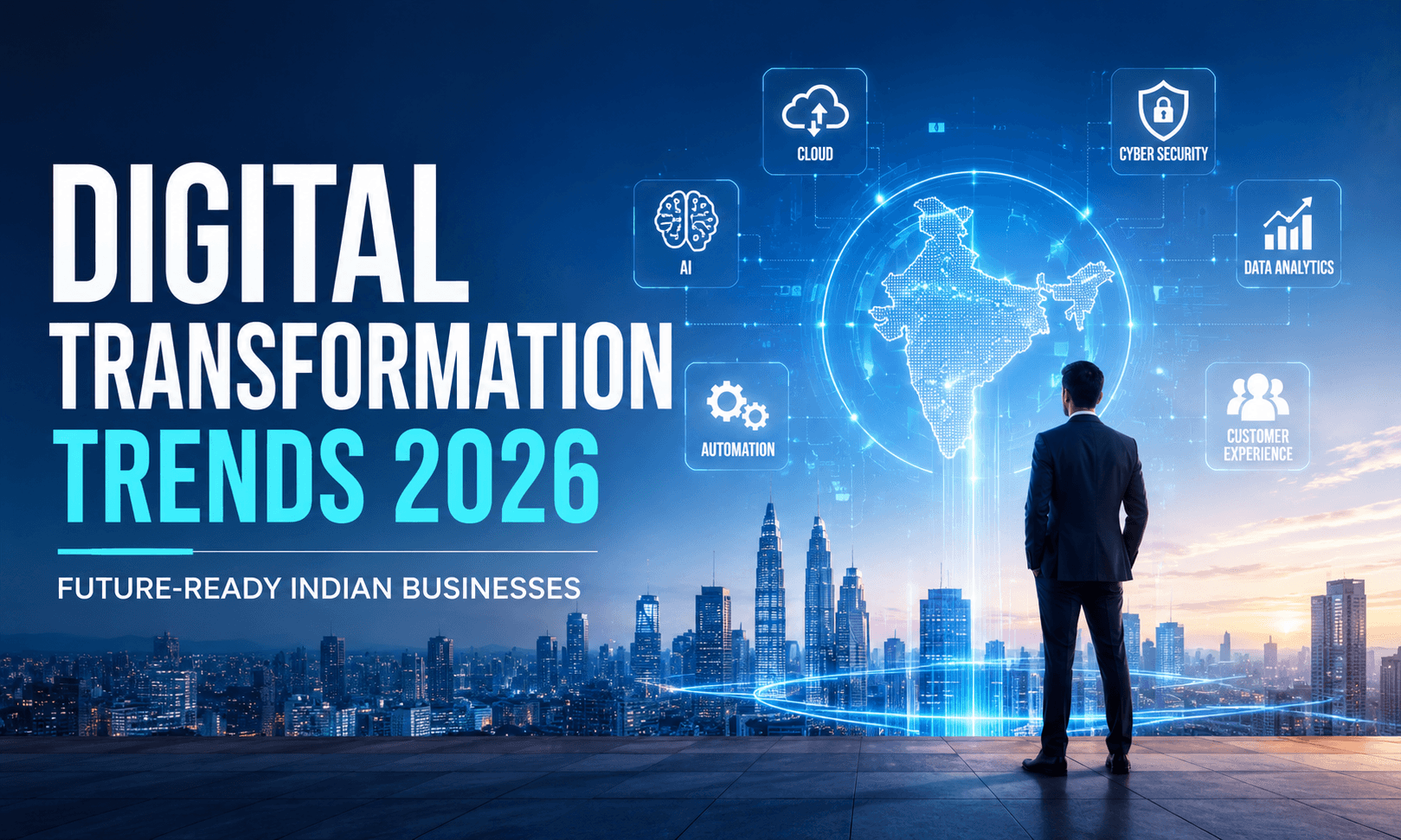
India’s business landscape is undergoing one of the most significant technology shifts in modern history. From enterprise automation and AI adoption to cloud-native infrastructure and customer-centric digital ecosystems, organizations are rapidly rethinking how they operate, scale, and compete.
For CEOs, CTOs, Managing Directors, founders, IT Heads, and enterprise technology leaders, digital transformation is no longer optional — it has become a core business strategy.
Organizations across manufacturing, healthcare, finance, retail, logistics, education, and professional services are investing heavily in modern digital capabilities to improve operational efficiency, customer experience, scalability, and long-term resilience.
But the biggest question business leaders are asking today is:
Which digital transformation trends will define the future of Indian businesses?
In this article, we explore the most impactful trends shaping enterprise innovation and business growth in India.
Why Digital Transformation Matters More Than Ever
The modern customer expects:
Faster services
Personalized experiences
Seamless digital interactions
Real-time support
Secure transactions
Omnichannel accessibility
At the same time, businesses face increasing pressure from:
Artificial Intelligence is becoming the backbone of modern enterprises in India.
Businesses are increasingly integrating AI into:
Customer support systems
Predictive analytics
Business intelligence
Process automation
Fraud detection
Personalized marketing
Enterprise workflow optimization
AI is helping leadership teams make faster, data-driven decisions while reducing operational inefficiencies.
For enterprises, AI adoption is no longer limited to experimentation. It is now directly influencing:
Revenue growth
Customer experience
Operational scalability
Strategic forecasting
As AI technologies continue to mature, organizations that adopt them early will gain significant competitive advantages.
2. Cloud-First Digital Infrastructure
Indian enterprises are rapidly moving away from traditional infrastructure toward cloud-first ecosystems.
Cloud adoption enables businesses to:
Scale operations quickly
Improve remote collaboration
Reduce infrastructure costs
Enhance security management
Improve disaster recovery
Accelerate deployment cycles
Cloud platforms are now powering:
Enterprise applications
SaaS ecosystems
E-commerce platforms
Business intelligence systems
ERP & CRM integrations
For CTOs and IT leaders, cloud transformation is critical for long-term scalability and business continuity.
The shift toward hybrid and multi-cloud environments is also helping organizations optimize performance while reducing operational risks.
3. Hyper Automation Across Business Functions
One of the biggest Digital Transformation Trends for Businesses in India is hyper automation.
Organizations are automating repetitive and manual workflows using:
Robotic Process Automation (RPA)
AI-powered systems
Workflow automation tools
Intelligent business process management
Automation is transforming:
HR operations
Finance workflows
Customer onboarding
Procurement systems
Sales operations
Supply chain management
For business leaders, automation delivers:
Faster execution
Reduced human error
Lower operational costs
Increased productivity
Improved process visibility
In highly competitive industries, automation is becoming a major operational differentiator.
4. Data-Driven Decision Making
Modern enterprises are increasingly relying on real-time analytics and business intelligence to guide strategic decisions.
Businesses are investing in:
Advanced analytics platforms
Real-time dashboards
Predictive intelligence
Customer behavior analysis
Operational reporting systems
Data is becoming one of the most valuable business assets.
Organizations that effectively leverage data can:
Identify market opportunities faster
Improve customer experiences
Optimize operational performance
Reduce business risks
Forecast trends accurately
Leadership teams now prioritize data visibility across departments to improve agility and decision-making capabilities.
5. Cybersecurity & Zero Trust Architecture
As digital adoption increases, cybersecurity has become a boardroom-level priority.
Indian businesses are facing rising threats from:
Ransomware attacks
Data breaches
Phishing campaigns
Insider threats
Cloud vulnerabilities
This has accelerated the adoption of:
Zero Trust security models
Endpoint protection systems
Multi-factor authentication
Advanced threat monitoring
Cloud security frameworks
For enterprises handling sensitive customer and operational data, cybersecurity is now central to digital transformation strategy.
Technology leaders are increasingly focusing on proactive security rather than reactive defense.
6. Customer Experience Transformation
Customer experience has become a major competitive differentiator.
Modern businesses are investing heavily in:
Personalized digital journeys
Omnichannel engagement
AI-powered support systems
Customer self-service platforms
Mobile-first experiences
Organizations are shifting from product-centric models to customer-centric ecosystems.
A superior customer experience directly influences:
Brand loyalty
Customer retention
Revenue growth
Market positioning
For CEOs and founders, digital customer experience is now deeply connected to long-term business success.
7. Enterprise Mobility & Remote Work Enablement
The modern workforce is increasingly distributed and digitally connected.
Businesses are investing in:
Mobile enterprise applications
Remote collaboration tools
Cloud productivity systems
Secure remote access infrastructure
Digital workplace solutions
This transformation is improving:
Workforce flexibility
Employee productivity
Operational continuity
Talent accessibility
Indian enterprises are realizing that digital workplace transformation is essential for attracting and retaining modern talent.
8. Industry-Specific Digital Platforms
Businesses are moving toward specialized digital ecosystems tailored to industry-specific requirements.
Examples include:
Healthcare management systems
Fintech platforms
Smart manufacturing solutions
EdTech ecosystems
Logistics automation systems
Retail commerce platforms
Custom digital platforms provide:
Better operational control
Enhanced customer experiences
Workflow optimization
Industry compliance support
This trend is driving increased demand for custom software and enterprise web application development.
9. Sustainability Through Digital Transformation
Sustainability is becoming a strategic priority for enterprises.
Digital transformation is helping organizations:
Reduce paper-based operations
Optimize energy consumption
Improve resource utilization
Minimize operational waste
Enable smart infrastructure management
Technology-driven sustainability initiatives are now influencing:
Investor confidence
Brand reputation
Corporate governance
Regulatory compliance
For large organizations, digital sustainability is increasingly tied to long-term business resilience.
10. Integrated Digital Ecosystems
Businesses are no longer operating isolated systems.
Modern enterprises are integrating:
CRM platforms
ERP systems
HRMS solutions
Customer service platforms
Financial management tools
Marketing automation systems
Integrated digital ecosystems improve:
Operational visibility
Cross-functional collaboration
Data synchronization
Strategic planning
Customer insights
For enterprise leaders, connected digital infrastructure enables faster and smarter business operations.
How Indian Businesses Can Prepare for Digital Transformation
Successful digital transformation requires more than technology investment.
Organizations must focus on:
Strategic planning
Leadership alignment
Technology scalability
Workforce readiness
Data governance
Change management
Long-term digital vision
The most successful enterprises treat digital transformation as a continuous business evolution process rather than a one-time project.
The Future of Digital Transformation in India
India is positioned to become one of the world’s fastest-growing digital economies.
Government initiatives, startup innovation, enterprise modernization, and rising digital adoption are accelerating transformation across industries.
The businesses that will lead the next decade are those that:
Embrace innovation early
Invest in scalable technology
Prioritize customer experience
Build agile digital ecosystems
Leverage AI and automation strategically
For CXOs and enterprise decision-makers, the focus should now shift from “whether to transform” to “how fast can we transform effectively.”
Final Thoughts
The future of business in India is undeniably digital.
These emerging Digital Transformation Trends for Businesses in India are reshaping how organizations operate, compete, and deliver value in an increasingly connected economy.
For CEOs, CTOs, founders, IT Heads, and enterprise leaders, digital transformation is now a strategic growth driver — not just a technology initiative.
Organizations that invest in scalable digital infrastructure, AI-driven operations, automation, customer experience, and cybersecurity today will be better positioned to lead tomorrow’s competitive landscape.
The key is choosing the right digital transformation strategy and technology partner that aligns with your long-term business goals.
Frequently Asked Questions
What is Top Digital Transformation Trends for Businesses in India?⌄
Discover the top digital transformation trends for businesses in India, including AI, cloud computing, automation, cybersecurity, and enterprise innovation. Learn how CEOs, CTOs, and business leaders are driving scalable digital growth in 2026.