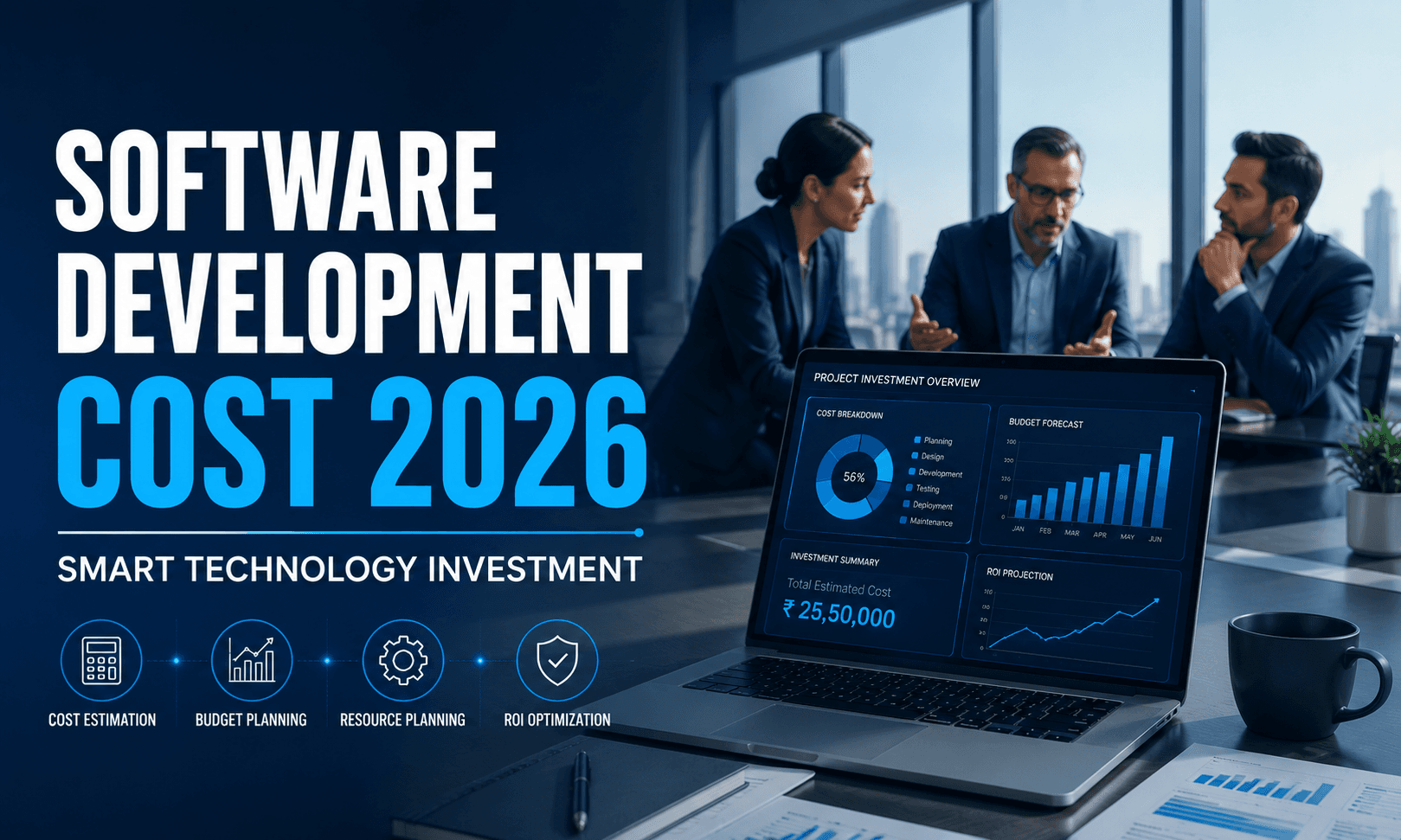
Cost of Custom Software Development in India (2026 Pricing Guide)
In This Article
- Why Businesses Are Investing in Custom Software
- Average Cost of Custom Software Development in India (2026)
- Key Factors Affecting Software Development Costs
- 1. Project Complexity
- Basic Projects
- Medium Complexity Projects
- Enterprise-Grade Systems
- 2. Technology Stack Selection
- 3. UI/UX Design Requirements
- 4. Scalability & Performance Expectations
- 5. Third-Party Integrations
- 6. Security & Compliance Requirements
- 7. Development Team Structure
- Cost Based on Development Engagement Models
- Fixed Cost Model
- Dedicated Team Model
- Time & Material Model
- Hidden Costs Businesses Often Ignore
- Why India Remains a Global Hub for Software Development
- How to Optimize Software Development Costs
- Define Clear Business Objectives
- Start with MVP Development
- Prioritize Scalable Architecture
- Choose the Right Technology Partner
- What CXOs Should Evaluate Before Approving Software Budgets
- Future Trends Influencing Software Development Costs in 2026
- Final Thoughts
As businesses accelerate digital transformation initiatives, custom software development has become a strategic investment rather than a technical expense. From enterprise automation platforms and SaaS products to customer portals and AI-powered business applications, organizations across India are increasingly investing in tailored software solutions to improve efficiency, scalability, and competitive advantage.
However, one of the most common questions business leaders ask is:
“How much does custom software development cost in India in 2026?”
For CEOs, CTOs, founders, Managing Directors, IT Heads, and enterprise decision-makers, understanding software development pricing is essential for budgeting, vendor evaluation, and long-term digital planning.
The reality is that software development costs vary significantly depending on business requirements, project complexity, scalability expectations, security standards, integrations, and technology architecture.
This guide provides a detailed breakdown of the Cost of Custom Software Development in India (2026 Pricing Guide) to help leadership teams make informed technology investment decisions.
Why Businesses Are Investing in Custom Software
Modern businesses are moving beyond generic software tools because they often fail to support unique operational workflows and scalability requirements.
Custom software allows organizations to:
- Automate business processes
- Improve operational efficiency
- Enhance customer experience
- Integrate enterprise systems
- Increase scalability
- Strengthen security
- Gain competitive differentiation
Industries investing heavily in custom software include:
- Healthcare
- Manufacturing
- Logistics
- Retail & E-commerce
- Fintech
- Education
- Real Estate
- Enterprise Services
For growing enterprises, custom software is becoming a critical driver of long-term digital transformation.
Average Cost of Custom Software Development in India (2026)
The cost of software development depends heavily on the scope and complexity of the project.
Below is a general pricing estimate for businesses in India:
| Software Type | Estimated Cost Range |
|---|---|
| Basic Business Website/Application | ₹1,50,000 – ₹5,00,000 |
| Medium Complexity Web Application | ₹5,00,000 – ₹15,00,000 |
| Enterprise Software Solutions | ₹15,00,000 – ₹75,00,000+ |
| SaaS Product Development | ₹10,00,000 – ₹1 Crore+ |
| AI-Powered Platforms | ₹20,00,000 – ₹2 Crore+ |
| ERP/CRM Custom Solutions | ₹12,00,000 – ₹80,00,000+ |
| Mobile App + Backend Ecosystem | ₹8,00,000 – ₹50,00,000+ |
These estimates vary based on features, integrations, compliance requirements, and scalability expectations.
Key Factors Affecting Software Development Costs
Turn Your Software Vision Into a Scalable Digital Product
1. Project Complexity
The biggest cost driver is complexity.
Basic Projects
Simple platforms with limited functionality:
- Informational portals
- Internal dashboards
- Simple workflows
These projects require less development time and lower infrastructure investment.
Medium Complexity Projects
These include:
- Customer portals
- E-commerce systems
- Workflow automation
- Multi-user applications
They involve integrations, databases, APIs, and advanced UI/UX design.
Enterprise-Grade Systems
Large-scale enterprise applications require:
- High scalability
- Complex architecture
- Advanced security
- Multi-system integrations
- Real-time processing
- Large user management systems
These projects involve significantly larger budgets and longer timelines.
2. Technology Stack Selection
The technologies used directly influence pricing.
Modern software solutions may involve:
- React / Angular frontend
- Node.js / Python / .NET backend
- Cloud infrastructure
- AI & machine learning modules
- API integrations
- Data analytics systems
Enterprise-grade technologies require experienced architects and senior engineering teams, which increases overall development costs.
However, investing in scalable architecture reduces long-term operational expenses.
3. UI/UX Design Requirements
For customer-facing platforms, user experience is critical.
Premium UI/UX design includes:
- User research
- Wireframing
- Interactive prototypes
- Conversion-focused design
- Responsive experiences
- Accessibility optimization
Businesses targeting premium customer experiences often invest significantly in design strategy because it directly affects engagement and conversion rates.
4. Scalability & Performance Expectations
Scalable systems cost more initially but save major redevelopment expenses later.
Businesses planning rapid growth often require:
- Cloud-native infrastructure
- Load balancing
- Microservices architecture
- API-first development
- Distributed databases
- Enterprise monitoring systems
For CTOs and IT leaders, scalability should always be part of the initial planning stage.
5. Third-Party Integrations
Modern business platforms rarely operate independently.
Custom software often integrates with:
- ERP systems
- CRM platforms
- Payment gateways
- HRMS software
- Logistics systems
- Marketing automation tools
- Analytics platforms
Every integration adds development and testing complexity, impacting the overall project budget.
6. Security & Compliance Requirements
Security is becoming a major investment area in software development.
Industries handling sensitive data require:
- Advanced authentication
- Encryption standards
- Secure APIs
- Compliance frameworks
- Audit systems
- Data protection measures
Enterprise-grade security significantly increases development effort but protects organizations from operational and reputational risks.
7. Development Team Structure
Software pricing also depends on the type of team involved.
A typical enterprise project may require:
- Business analysts
- UI/UX designers
- Frontend developers
- Backend engineers
- QA specialists
- DevOps engineers
- Project managers
- Security experts
Highly experienced teams generally cost more but reduce long-term project risk and technical debt.
Cost Based on Development Engagement Models
Fixed Cost Model
Best suited for:
- Clearly defined requirements
- Small to medium projects
- Predictable timelines
Advantages:
- Budget clarity
- Defined deliverables
- Lower management overhead
Dedicated Team Model
Ideal for:
- Long-term projects
- Product development
- Enterprise modernization
Advantages:
- Scalability
- Flexibility
- Continuous improvement
- Better collaboration
This model is increasingly popular among startups and growing enterprises.
Time & Material Model
Suitable for:
- Evolving requirements
- Agile product development
- Innovation-driven projects
Advantages:
- Flexibility
- Faster iterations
- Better adaptability
Many enterprise digital transformation projects now prefer agile engagement structures.
Hidden Costs Businesses Often Ignore
One of the biggest mistakes organizations make is underestimating post-development expenses.
Additional costs may include:
- Cloud hosting
- Security monitoring
- API licensing
- Maintenance & support
- Software updates
- Performance optimization
- Infrastructure scaling
- Backup & disaster recovery
Leadership teams should plan for long-term operational budgets, not just initial development costs.
Why India Remains a Global Hub for Software Development
India continues to be one of the world’s leading destinations for custom software development because of:
- Large skilled talent pool
- Cost efficiency
- Strong engineering expertise
- Enterprise technology capabilities
- Global delivery experience
- AI and cloud innovation adoption
Indian software companies now serve:
- Startups
- SMEs
- Fortune 500 enterprises
- Global SaaS companies
- Healthcare organizations
- Financial institutions
For international businesses, India offers an excellent balance of quality, scalability, and cost optimization.
How to Optimize Software Development Costs
Business leaders can reduce unnecessary expenses by focusing on strategic planning.
Define Clear Business Objectives
Avoid feature overload by prioritizing:
- Core workflows
- Business KPIs
- Customer experience goals
Start with MVP Development
Launching a Minimum Viable Product (MVP) helps validate ideas before full-scale investment.
Prioritize Scalable Architecture
Future-ready systems reduce redevelopment costs.
Choose the Right Technology Partner
The right development company improves:
- Project governance
- Delivery quality
- Scalability
- Security
- Long-term ROI
Choosing low-cost vendors often leads to technical debt and higher future expenses.
What CXOs Should Evaluate Before Approving Software Budgets
Before investing in custom software, leadership teams should evaluate:
- Business impact
- ROI potential
- Operational efficiency gains
- Scalability requirements
- Security implications
- Integration needs
- Long-term maintenance strategy
The most successful enterprises treat software development as a strategic business investment rather than a procurement expense.
Future Trends Influencing Software Development Costs in 2026
Several emerging trends are reshaping software pricing:
- AI-powered development tools
- Cloud-native architecture
- Low-code/no-code acceleration
- Enterprise automation
- Cybersecurity investments
- AI integration demand
- Real-time analytics systems
Businesses adopting future-ready technologies today will gain stronger scalability and operational efficiency tomorrow.
Final Thoughts
Understanding the Cost of Custom Software Development in India (2026 Pricing Guide) is essential for making smarter technology investment decisions.
Software development costs are influenced by:
- Project complexity
- Scalability goals
- Security standards
- Technology stack
- Team expertise
- Long-term business vision
For CEOs, CTOs, founders, and enterprise decision-makers, the goal should not be finding the cheapest development option — it should be selecting the right technology partner capable of delivering secure, scalable, and future-ready digital solutions.
Organizations that strategically invest in custom software today will be better positioned to lead tomorrow’s digital economy.
Frequently Asked Questions
What is Cost of Custom Software Development in India (2026 Pricing Guide)?
Discover the latest custom software development costs in India for 2026. Explore pricing for SaaS, enterprise applications, AI solutions, ERP systems, and scalable business software for startups and enterprises.