Why US and UK Businesses Are Moving From Traditional CMS to Sanity CMS
In This Article
- Traditional CMS Architecture Can Become Restrictive
- Sanity Treats Content As Structured Data
- Faster Publishing without Sacrificing Structure
- Sanity and Next.js Create a Modern Frontend Stack
- Content Reuse Becomes Much Easier
- Structured Content Supports AI Search Readiness
- Migration Requires More Than Copying Pages
- Protect SEO During Headless CMS Migration
- When Should Businesses Consider Sanity?
- Choosing the Right Sanity Development Partner
For years, traditional content management systems have provided businesses with a practical way to create websites, publish pages and manage digital content.
But the way in which companies use content is changing.
US and UK based businesses now need to publish across websites, landing pages, mobile applications, product experiences, regional sites, search platforms and increasingly AI powered interfaces. Marketing teams demand faster publishing and developers require more flexible architecture and improved frontend performance.
This trend is driving more organisations towards Sanity CMS development and modern headless architecture.
Moving to Sanity is not simply about replacing one CMS with another but about transforming how content is structured, managed, reused and delivered.
Traditional CMS Architecture Can Become Restrictive
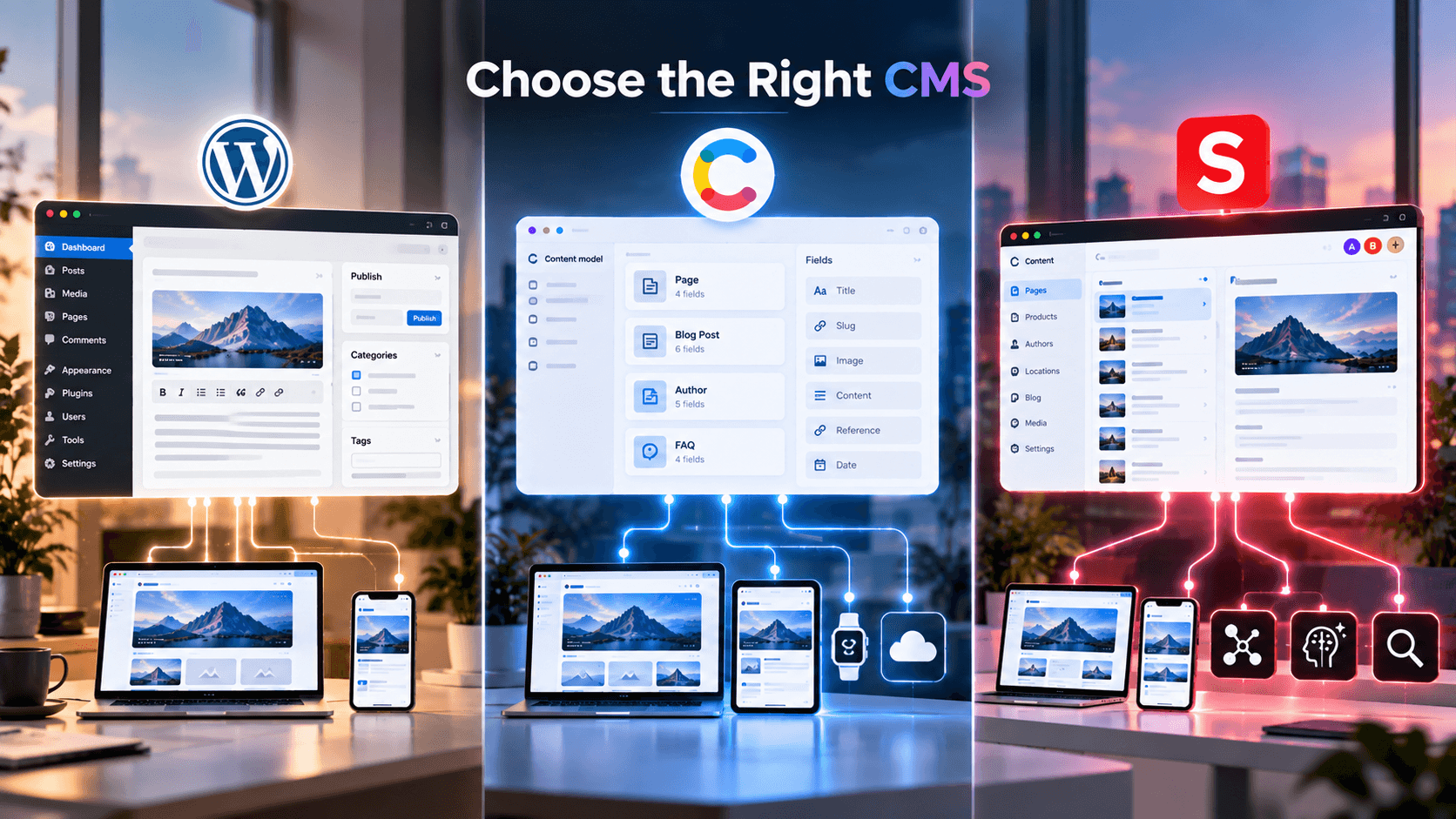
Traditional CMS platforms couple content management intrinsically to the website presentation layer.
This approach can work very well for smaller websites, but as digital demands grow, enterprises may find themselves wrestling with issues such as:
- Content being tied to specific page templates
- Duplication of content across channels
- Plugin or theme dependencies
- Drawn-out development cycles
- Challenging frontend modernization
- Mounting maintenance overheads
- Limited content reuse
- Complicated integrations
All these factors can significantly impede marketing and engineering for businesses that have to manage multiple websites, products, markets or digital channels.
A headless CMS migration decouples the content management layer from the frontend.
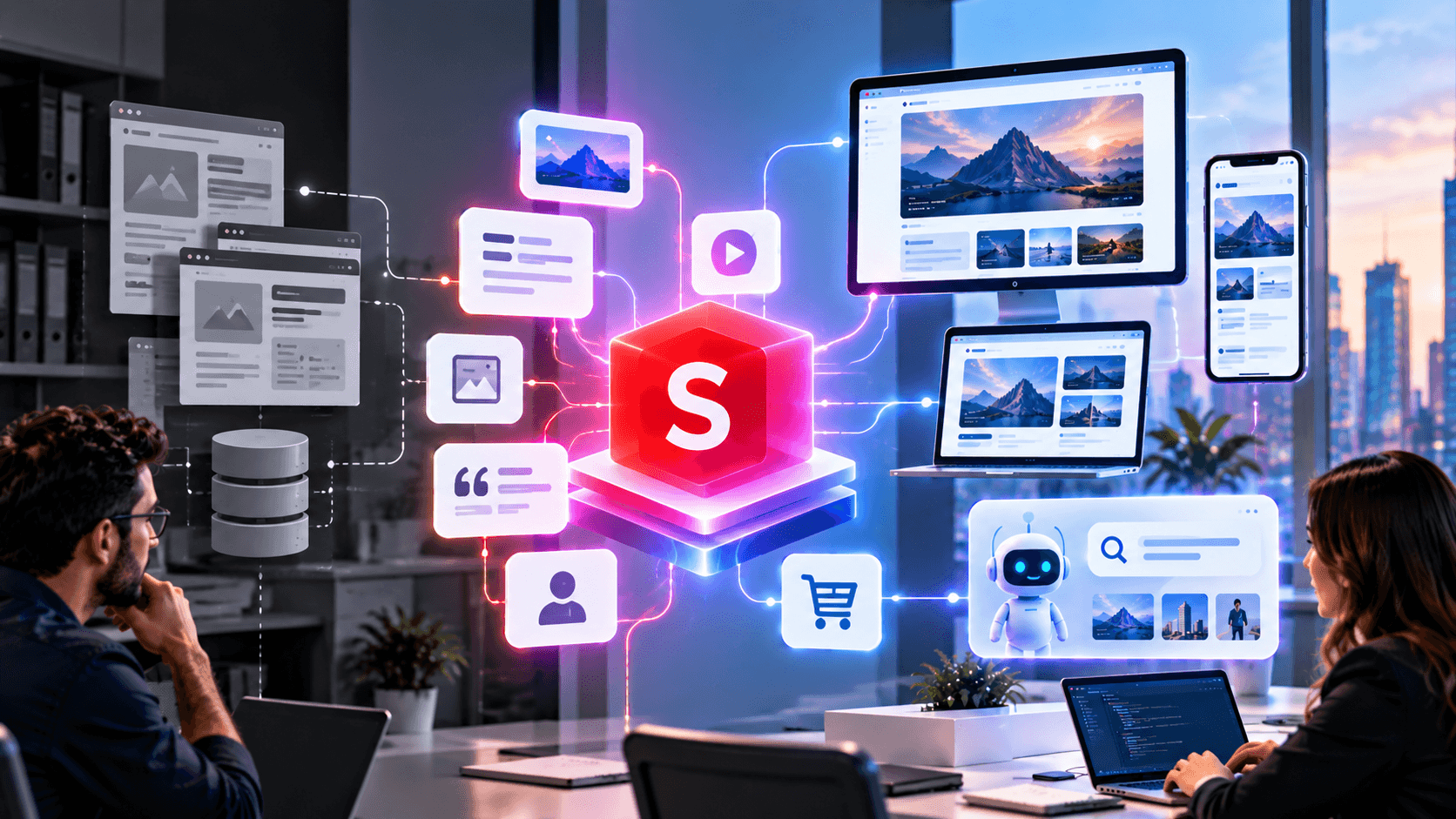
Instead of being stored as finished web pages, content can be organised as reusable objects to be consumed across applications
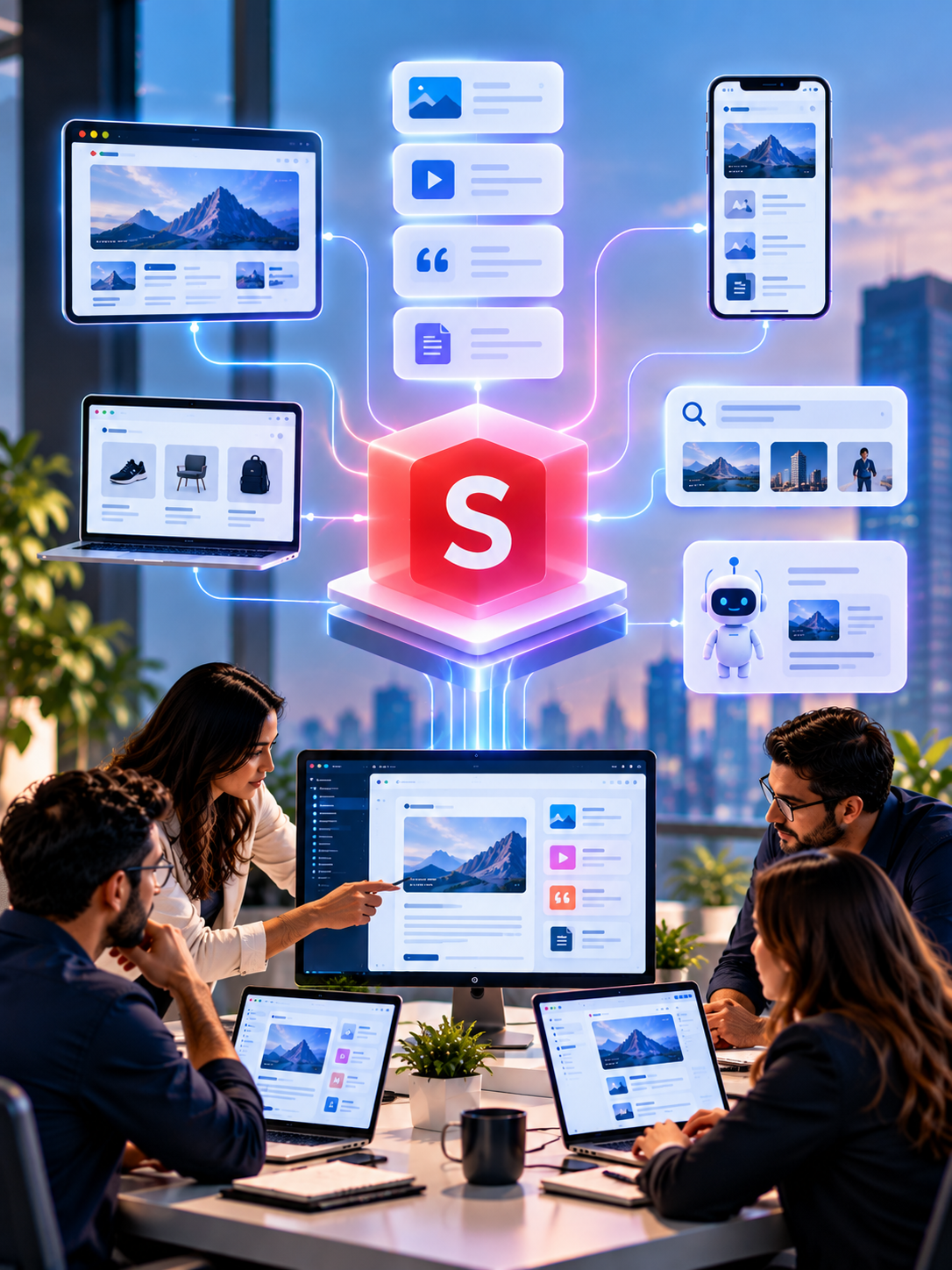
Modernize Content With Sanity
Build faster, reusable, AI-ready digital experiences with structured content, Next.js performance, flexible APIs, and scalable headless architecture.
Sanity Treats Content As Structured Data
One of the most significant differences is in the approach to content.
Rather than being constrained by pages, enterprises can create structured content objects such as:
- Products
- Services
- Authors
- Locations
- FAQs
- Case studies
- Testimonials
- Events
- Industry information
- Calls to action
- Navigation
- SEO metadata
These content objects can then be used across all the enterprise’s websites, apps, and experiences.
For example, a service description could be used for a service page, an industry landing page, a mobile app, a comparison experience, an AI assistant, or some other digital interface without having to maintain multiple copies of the same information.
This makes structured content ideal for enterprises that need to deliver content across multiple sites or markets.
Organizations that are considering this approach can get more information on Sanity CMS development services for US businesses, including help with structured content, Next.js, migrations, and AI-ready implementations.
Faster Publishing without Sacrificing Structure
Speed of publishing is not simply a matter of how quickly an author can click 'Publish'.
It is about how efficiently content can be created, reviewed, reused, localized, approved, and distributed.
A Sanity Studio can be customized around the organisation's actual editorial workflows rather than forcing editors into generic page building structures.
This may include:
- Custom editorial fields
- Content validation
- Previewing
- Roles and permissions
- Reusable components
- Localization management
- Structured SEO controls
- Content relationships
Designed correctly, and marketing teams can update information in one place and have it reused across multiple digital experiences, reducing repetitive work and reliance on developers for simple content updates.
UK organisations considering this approach can also review these Sanity CMS development services for UK businesses for additional implementation considerations.
Sanity and Next.js Create a Modern Frontend Stack
The frontend is another important consideration for organizations that want to choose Sanity.
Since it is headless, developers will not have to work within a CMS-controlled theme or traditional rendering system.
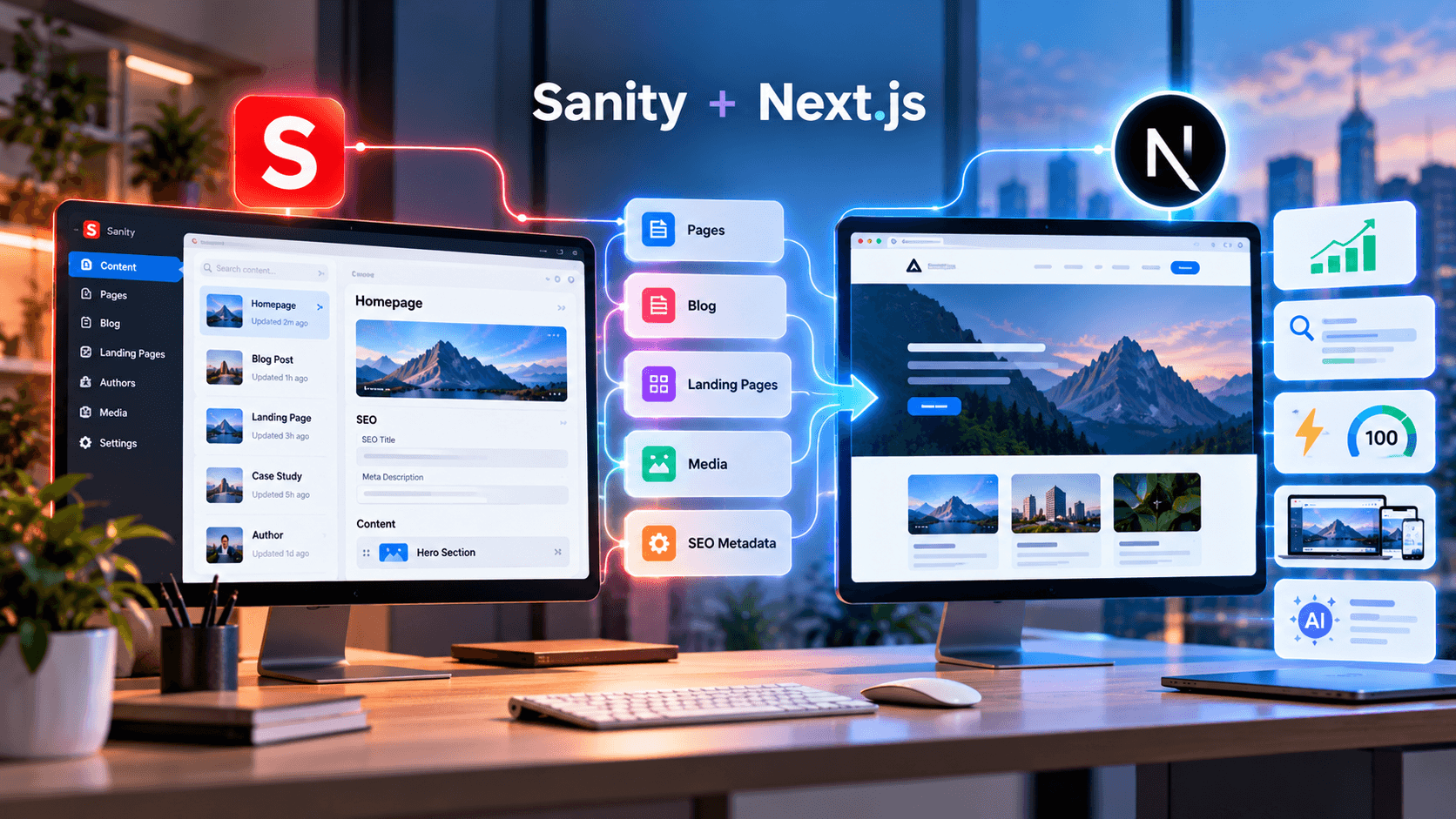
Many projects use a combination of Sanity plus Next.js.
In this case, the CMS manages information, APIs provide it to the requesting services, and Next.js renders the digital experience.
This approach gives development teams more flexibility with regard to their frontend architecture and the performance, deployment, caching, components, and integrations associated with them.
In terms of SEO-friendly websites, the same stack often includes server-rendered components, static generation, optimized assets, metadata, and other modern performance tactics.
That said, using Next.js will not necessarily improve a site’s rankings or make it faster.
Image optimization, JavaScript, caching, third-party tools, component architecture, hosting, data fetching, and overall engineering all play a role in these outcomes.
Content Reuse Becomes Much Easier
Traditional CMS projects often duplicate the same information across multiple pages.
A company may maintain the same biography, product specification, location information, disclaimer, or FAQ in several places.
When that information changes, editors need to find and update every copy.
Structured content provides another model.
Create the information once, reference it wherever necessary, and update the source when something changes.
This becomes particularly valuable for businesses managing:
- Multiple brands
- US and UK websites
- Regional variations
- Multilingual experiences
- Large product catalogs
- Franchise or location pages
- Applications and websites
- Campaign microsites
For enterprises, content reuse can improve consistency while reducing editorial overhead.
Structured Content Supports AI Search Readiness
AI search is also changing how enterprises should think about CMS architecture.
Traditional page-centric content can contain valuable information, but important entities and relationships may be buried inside large blocks of presentation-driven copy.
Structured content makes those relationships clearer.
For example, instead of storing everything inside one service page, an organisation can maintain separate structured entities for services, locations, industries, FAQs, people, products, and related resources.
That architecture can make content easier to distribute to search engines, internal search systems, APIs, recommendation systems, AI applications, and emerging answer engines.
It does not automatically guarantee visibility in AI platforms.
But clean structure, useful metadata, strong entity relationships, factual content, and accessible delivery create a stronger technical foundation for AI-ready content operations.
Find CMS SEO Risks Before Your Headless Migration Begins
Migration Requires More Than Copying Pages
Businesses planning to migrate to Sanity CMS should avoid treating migration as a simple content-transfer exercise.
A successful migration usually starts by auditing:
- Existing content
- Page templates
- URLs
- Metadata
- Internal links
- Media assets
- Integrations
- Forms
- Analytics
- Redirect requirements
The next step is determining what should become reusable structured content.
This is where an experienced Sanity CMS agency can add significant value. Simply recreating every legacy page inside a new CMS carries old architectural problems into the new platform.
Migration should simplify the content model, remove outdated material, consolidate duplication, and create reusable schemas.
Protect SEO During Headless CMS Migration
SEO is one of the primary concerns during migration. New CMS architecture may impact URLs, metadata, rendering, internal linking structure, structured data, images, sitemaps, canonical tags, and page performance. Before deployment, it is essential to inventory critical URLs with high traffic and organic search value.
The migration strategy should address the following elements:
- Redirects management (301 redirects)
- Metadata migration
- Canonical tags
- Structured data migration
- XML sitemap creation
- Robots.txt optimization
- Internal linking strategy
- Image metadata and Open Graph tags
- Analytics implementation
- Search Console verification
A technically excellent migration campaign should also ensure that the new website architecture will be properly crawled and indexed by search engines.
When Should Businesses Consider Sanity?
Sanity may be worth considering when your organisation needs more than a simple website CMS.
It can be a strong fit when you need structured content, multiple digital channels, modern frontend development, content reuse, custom editorial workflows, regional expansion, or an architecture designed for future AI integrations.
If the existing CMS works well for a small, straightforward website with limited growth requirements, migration may not be necessary.
The decision should follow business requirements rather than technology trends.
Choosing the Right Sanity Development Partner
If you plan to hire a Sanity CMS developer or development team, look beyond basic platform familiarity.
A capable partner should understand:
- Content modelling
- Sanity Studio customization
- GROQ
- Next.js development
- Visual editing and preview
- API integrations
- SEO architecture
- CMS migrations
- Deployment
- Performance optimization
- AI-ready content modelling
- Long-term support
For businesses moving from a mature traditional CMS, migration experience is particularly important.
US and UK companies evaluating a modern content platform can work with a Sanity CMS development company for US, UK and European businesses to plan architecture, migration, Next.js development, integrations, SEO, and ongoing support.
The goal is not simply to move content into another CMS.
It is to create a content architecture that lets your business publish faster, reuse information more effectively, improve digital performance, and prepare for the next generation of search and AI-driven experiences.
Frequently Asked Questions
Why are businesses moving from traditional CMS platforms to Sanity?
Businesses are moving to Sanity to separate content from presentation, create reusable structured content, support multiple digital channels, customize editorial workflows and build modern frontends using technologies such as Next.js.
What is Sanity CMS development?
Sanity CMS development includes content modelling, Sanity Studio customization, GROQ queries, frontend development, API integrations, visual editing, preview configuration, CMS migration, SEO implementation and ongoing optimization.
What is the difference between Sanity and a traditional CMS?
A traditional CMS usually combines content management and website presentation in one platform. Sanity separates structured content from the frontend, allowing the same content to be delivered through APIs to websites, applications and other digital experiences.
Can Sanity CMS work with Next.js?
Yes. Sanity and Next.js are commonly used together. Sanity manages structured content while Next.js provides the frontend presentation layer, enabling developers to use modern rendering, caching, deployment and performance techniques.
Is Sanity CMS good for SEO?
Sanity can support strong technical SEO when the implementation includes editable metadata, canonical URLs, structured data, XML sitemaps, crawlable rendering, internal linking and optimized frontend performance. SEO outcomes depend on implementation quality rather than the CMS alone.
How do I migrate to Sanity CMS?
Start by auditing existing content, URLs, templates, metadata, assets and integrations. Design reusable Sanity schemas, map legacy content to the new models, migrate and validate the data, rebuild the frontend, implement redirects and complete SEO and functional testing before launch.
Will migrating to Sanity affect Google rankings?
Any CMS migration can affect rankings if URLs, metadata, rendering, internal links or structured data change incorrectly. A migration plan should preserve important URLs where possible, implement accurate redirects and validate SEO signals before and after launch.
How does structured content help AI search?
Structured content separates information into defined entities, fields and relationships rather than storing everything as page-specific copy. This can make content easier to query, reuse and deliver to search systems, AI applications and other machine-readable experiences.
When should I hire a Sanity CMS development company?
Consider a Sanity development company when your project requires content architecture, migration, custom Studio workflows, Next.js development, integrations, SEO implementation, performance optimization or ongoing engineering support.
Is Sanity CMS suitable for US and UK enterprises?
Sanity can support enterprise use cases including multisite platforms, multilingual content, reusable content models, regional experiences, custom editorial workflows and integrations. Suitability should be evaluated against the organisation's security, governance, content and technical requirements.