12 Questions to Ask Before Starting a Website
In This Article
- App or MVP Project in 2026
- 1. What Is a Digital Product Launch Engagement?
- 2. Can an Offshore Development Partner Work With International Companies?
- 3. How Much Does a Business Website Cost?
- 4. When Should We Choose a Headless CMS?
- 5. How Much Does E-commerce Development Cost?
- 6. Can One Team Build Both Android and iOS Applications?
- 7. What Should Be Included in a Web or SaaS MVP?
- 8. Can AI Be Added to the Product?
- 9. Why Use One Offshore Technology Partner?
- 10. How Does Milestone-Based Development Reduce Risk?
- 11. Are Published Development Prices Fixed?
- 12. How Do We Move From Discussion to Development?
- Stop Delaying Because Every Detail Is Not Yet Known
App or MVP Project in 2026
A digital product can remain stuck in the planning stage for months.
The problem is often not a lack of ideas.
Decision-makers delay because important questions remain unanswered:
How much will it cost? What exactly will we receive? Can the development team handle our technology? How will we control risk? Can an offshore team work effectively with us? What happens if our requirements change?
These are reasonable questions.
Before committing budget to a website, e-commerce platform, mobile application, SaaS product or AI MVP, leaders need enough clarity to make a confident investment decision.
That is why a strong technology partner should answer the difficult questions before development begins.
Here are 12 questions businesses should resolve before launching a digital product in 2026.

Build With Clarity, Not Guesswork
Resolve cost, scope, technology and delivery questions before investing—then move from idea to launch with greater confidence.
1. What Is a Digital Product Launch Engagement?
A digital product engagement should provide more than developers writing code.
It should connect:
Business Goal → Product Discovery → Scope → Architecture → UI/UX → Development → Testing → Launch → Improvement
Murmu Software Infotech's current Limited Digital Product Launch Offer 2026 covers websites, headless CMS platforms, e-commerce, mobile applications, web and SaaS MVPs, AI-powered applications, CRM and workflow automation. Eligible projects may also receive discovery, architecture, deployment and post-launch benefits depending on approved scope.
The important question is therefore not simply, Who can develop this?
Ask:
Who can help us take responsibility for the complete journey from requirement to launch?
2. Can an Offshore Development Partner Work With International Companies?
Yes—provided the delivery model is designed for remote collaboration.
Modern software development does not require every engineer to sit in the client's office.
An offshore technology partner can support remote discovery, sprint planning, demonstrations, architecture discussions, development, QA and cloud deployment.
MSI currently supports projects for companies and agencies across the United States, United Kingdom, Europe, Middle East and South Asia.
Before choosing an offshore partner, clarify communication overlap, milestones, source-code ownership, project management, technical leadership and escalation procedures.
Turn Your Product Questions Into a Clear Launch Plan
3. How Much Does a Business Website Cost?
MSI's international business website development currently starts from $2,500 for an approved scope, while advanced headless CMS platforms start from $9,500.
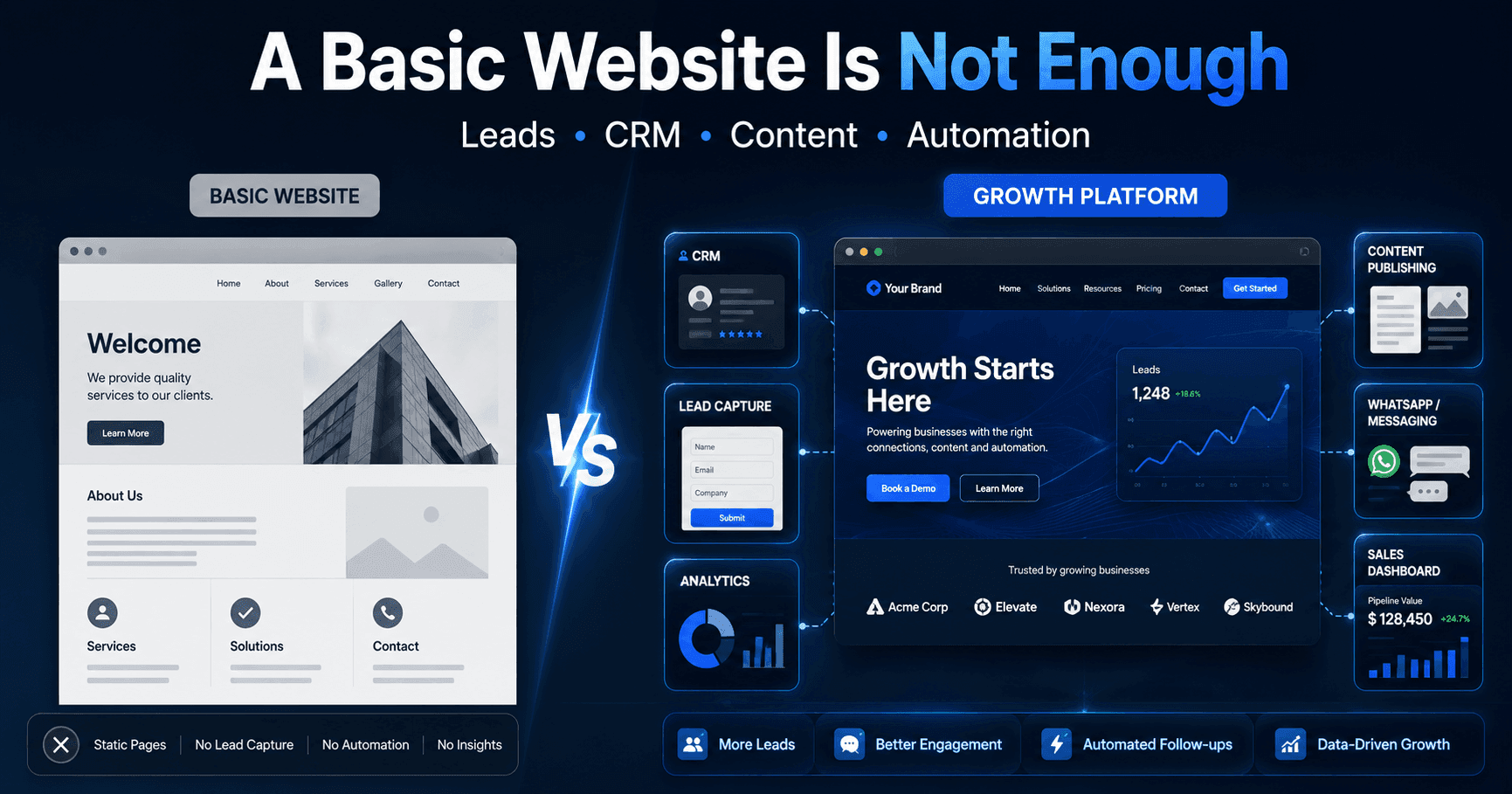
A professional business website can include responsive design, service pages, blog publishing, landing pages, enquiry forms, analytics and technical SEO.
But price increases when the project requires multilingual publishing, CRM integrations, advanced search, customer portals, complex content models or custom workflows.
This is why asking only How much does a website cost? rarely produces a useful comparison.
Ask what is included.
4. When Should We Choose a Headless CMS?
A traditional business website can be enough when requirements are primarily content, branding and lead generation.
A headless CMS becomes more attractive when content must support multiple channels, markets, languages or applications.
MSI works with platforms including Sanity, Strapi, Umbraco and Sitecore, combined with modern frontend technologies such as React and Next.js.
Headless architecture can also create a stronger foundation for structured content, APIs, content automation and AI-assisted experiences.
The decision should follow your future content operating model, not technology fashion.
5. How Much Does E-commerce Development Cost?
MSI's current international e-commerce development starts from $4,500 for a defined core scope.
That can cover capabilities such as:
Products → Search → Cart → Checkout → Payments → Orders → Shipping
However, advanced commerce requirements change the investment significantly.
D2C, B2B, subscriptions, marketplaces, multi-store operations, custom pricing, loyalty, ERP integration and headless commerce require additional architecture and development.
The right question is:
Are you building an online store—or a connected commerce platform?
6. Can One Team Build Both Android and iOS Applications?
Yes.
Cross-platform frameworks such as React Native allow businesses to build Android and iOS experiences while sharing substantial application logic.
MSI's mobile app MVP development currently starts from $8,500, with potential scope including authentication, customer profiles, workflows, notifications, payments, dashboards, analytics and app-store submission support.
More sophisticated healthcare, commerce, booking, education or operational applications require scope-specific estimation.
A mobile app should not simply reproduce your website.
It should make an important customer or operational workflow significantly easier.
7. What Should Be Included in a Web or SaaS MVP?
An MVP does not mean building a poor-quality version of the final product.
It means deliberately reducing first-release scope.
MSI currently lists web MVPs from $7,500 and SaaS MVPs from $12,500.
Depending on requirements, an MVP may include product discovery, authentication, a core user journey, customer dashboard, administration, subscriptions, reports, notifications, integrations, analytics and cloud deployment.
The strongest MVP question is:
What is the smallest product capable of proving our most important business assumption?
Anything that does not contribute to that validation can potentially move to the post-MVP roadmap.
8. Can AI Be Added to the Product?
Yes—but AI should solve a defined business problem.
MSI's AI-powered MVP development currently starts from $15,000 and can involve OpenAI, Azure AI, Gemini or Claude, along with RAG, vector databases, AI agents, MCP tools, document intelligence and workflow automation.
Possible applications include:
Customer support
Research
Lead qualification
Knowledge retrieval
Document processing
Content operations
Decision support
Business automation
Instead of asking:
How can we add AI?
Ask:
Which decision or workflow should AI improve?
That question leads to a far stronger product.
9. Why Use One Offshore Technology Partner?
Managing separate vendors for UI/UX, frontend, backend, mobile, cloud, CMS and AI creates coordination overhead.
A unified product team can establish shared architecture, engineering standards, QA processes and delivery milestones.
MSI's current delivery positioning combines product strategy, UI/UX, architecture, web, mobile, e-commerce, CMS, cloud, APIs, CRM and AI capabilities under one technology partnership.
This does not eliminate project risk.
It reduces one important category of risk: fragmented ownership.
For companies comparing delivery models, MSI's recent digital product case studies provide practical examples across healthcare, commerce, SaaS, AI, mobile and enterprise CMS.
10. How Does Milestone-Based Development Reduce Risk?
One of the biggest fears decision-makers have is committing a large budget before seeing meaningful progress.
Milestone-based development addresses this by dividing delivery into measurable stages.
For example:
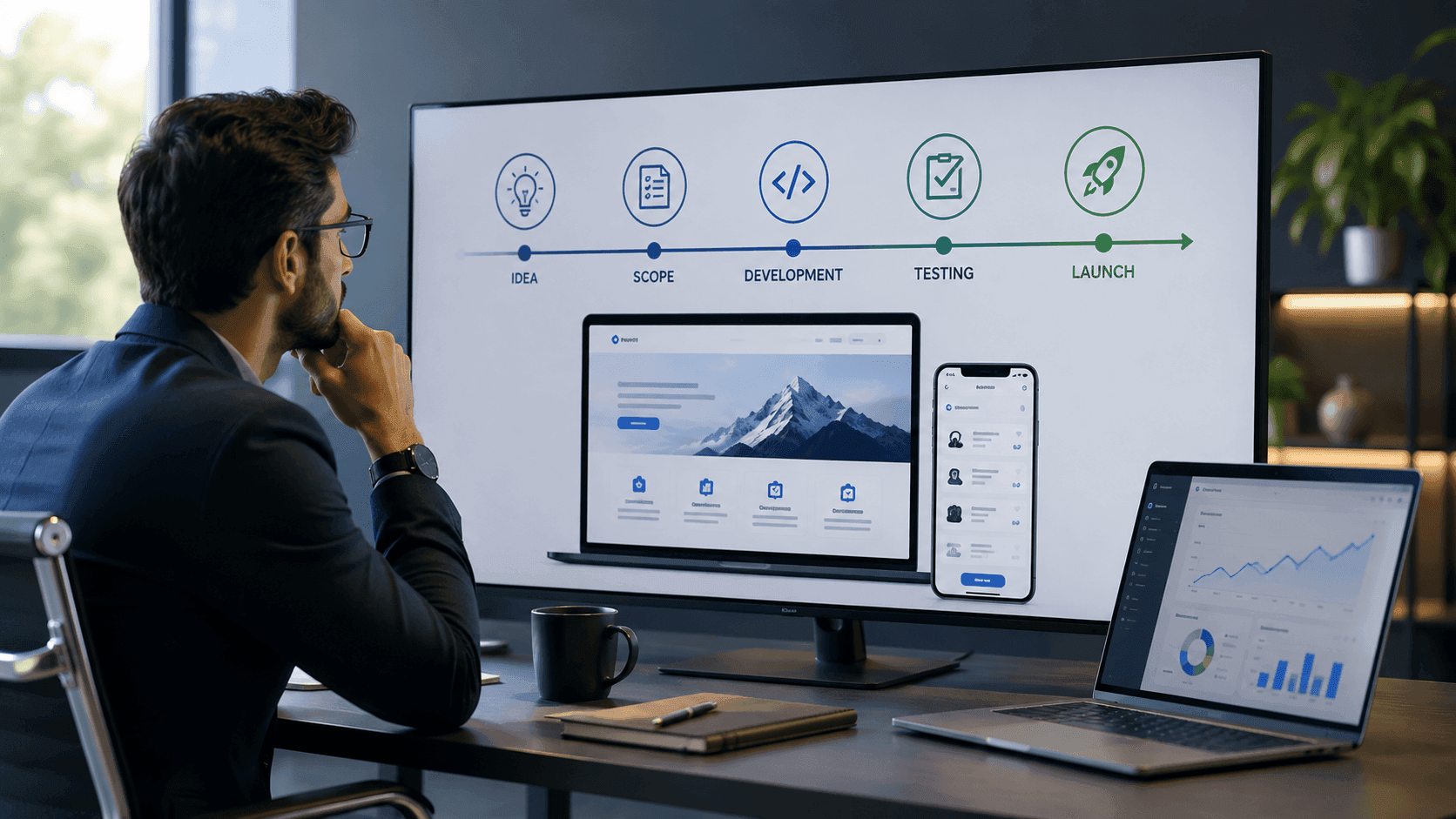
Discovery → UX → Architecture → Development → Integrations → QA → Production Launch
Each stage can have agreed deliverables and review points.
MSI's current process uses milestone planning to give founders and technology leaders greater visibility into scope, progress and budget before moving through major development stages.
This makes software investment easier to govern than an undefined “build everything and show us when finished” approach.
Get Clear Before You Invest in Product Development
11. Are Published Development Prices Fixed?
Usually, no.
A transparent starting price is useful because it tells decision-makers whether a project is broadly aligned with their budget.
But two applications that look similar can require completely different engineering effort.
MSI explicitly identifies its published figures as starting prices unless a package is confirmed as fixed scope. Final investment can depend on features, screens, user roles, integrations, content, architecture, security, compliance, delivery timeline and third-party services.
A responsible commercial process should therefore look like:
Starting Price → Discovery → Approved Scope → Milestones → Final Proposal
This is more useful than advertising an unrealistically low fixed price and adding essential requirements later as change requests.
12. How Do We Move From Discussion to Development?
The final barrier is often surprisingly simple:
What happens next?
A professional engagement should make this clear.
Start by sharing:
- The business problem
- Target users
- Core workflow
- Must-have features
- Preferred web/mobile platforms
- Required integrations
- Expected launch timeframe
- Available budget range
The development team can then review feasibility, identify missing requirements and convert the idea into scope, architecture, milestones and commercial terms.
For MSI's current campaign, businesses can reserve a development slot after consultation, requirement sharing, discovery, scope confirmation and approval of the proposal and commercial terms. The current offer is available for selected projects confirmed before 15 August 2026, subject to capacity.
Stop Delaying Because Every Detail Is Not Yet Known
You do not need every feature documented before speaking with a development partner.
You need enough clarity to answer three questions:
What business problem are we solving?
Who needs the solution?
What outcome must the first release achieve?
Discovery exists to turn those answers into a technical plan.
A good FAQ section works for the same reason: it addresses uncertainty at the moment a prospective buyer is deciding whether to proceed. Current landing-page guidance emphasizes answering real objections, creating trust, keeping the offer clear and making the next action easy.
For CEOs, founders and technology leaders, the goal should not be eliminating every possible uncertainty before development.
The goal is reducing uncertainty enough to make the next decision intelligently.
If your next project is a website, headless CMS, e-commerce platform, mobile application, web MVP, SaaS or AI-powered product, review the current packages, project examples and scope options on the Digital Product Launch Offer 2026.
Start with the business problem. Define the smallest valuable scope. Build with clear milestones. Then scale based on evidence.
Frequently Asked Questions
What should I know before starting a software development project?
Start by defining the business problem, target users, core workflow, must-have features, required integrations, preferred platforms, expected launch timeline and available budget range. These inputs help a development partner convert the idea into a realistic scope, architecture and delivery plan.
How much does it cost to build a website, app or MVP?
Development cost depends on product type, features, user roles, UI and UX, integrations, architecture, security and scalability requirements. A professional estimate should begin with an initial budget range and become more specific after scope and requirements are reviewed.
What should be included in an MVP?
An MVP should contain the smallest usable set of features capable of validating the core customer problem, workflow or business assumption. Authentication, one primary user journey, administration, analytics and essential integrations are common requirements.
Should I build a website, web app or mobile app?
Choose according to the workflow and user behaviour. A website is effective for content, credibility and lead generation; a web application supports interactive business workflows; a mobile app is valuable when users need frequent mobile access, notifications, location, payments or device capabilities.
When should a business choose a headless CMS?
A headless CMS is useful when structured content must support multiple websites, applications, markets, languages or channels. It can also support modern frontend frameworks, API integrations, content automation and scalable digital experiences.
Can an offshore development company manage an entire project?
Yes, when the partner provides clear technical ownership, communication, project management, architecture, development, QA, DevOps and post-launch support. Businesses should verify the actual delivery team, relevant case studies, processes and source-code ownership before engagement.
How does milestone-based software development reduce project risk?
Milestones divide a project into measurable stages such as discovery, design, architecture, development, integrations, QA and launch. This creates review points where scope, progress, deliverables and commercial commitments can be evaluated before proceeding.
Can AI, RAG or AI agents be added to an existing product?
Yes. Existing websites and applications can integrate AI assistants, RAG, enterprise knowledge search, agents and workflow automation when appropriate APIs and data access are available. AI should be designed around a measurable workflow or decision rather than added only as a demonstration feature.
Why do software development estimates vary between companies?
Estimates vary because companies may make different assumptions about features, design, architecture, integrations, testing, DevOps, security, project management and support. Compare detailed deliverables, exclusions and assumptions rather than selecting a provider only by total price.
How do I choose the right software development partner?
Evaluate relevant case studies, technical expertise, communication, architecture capability, delivery process, transparency, security practices, source-code ownership and post-launch support. The strongest partner should understand the business objective as well as the technical requirements.