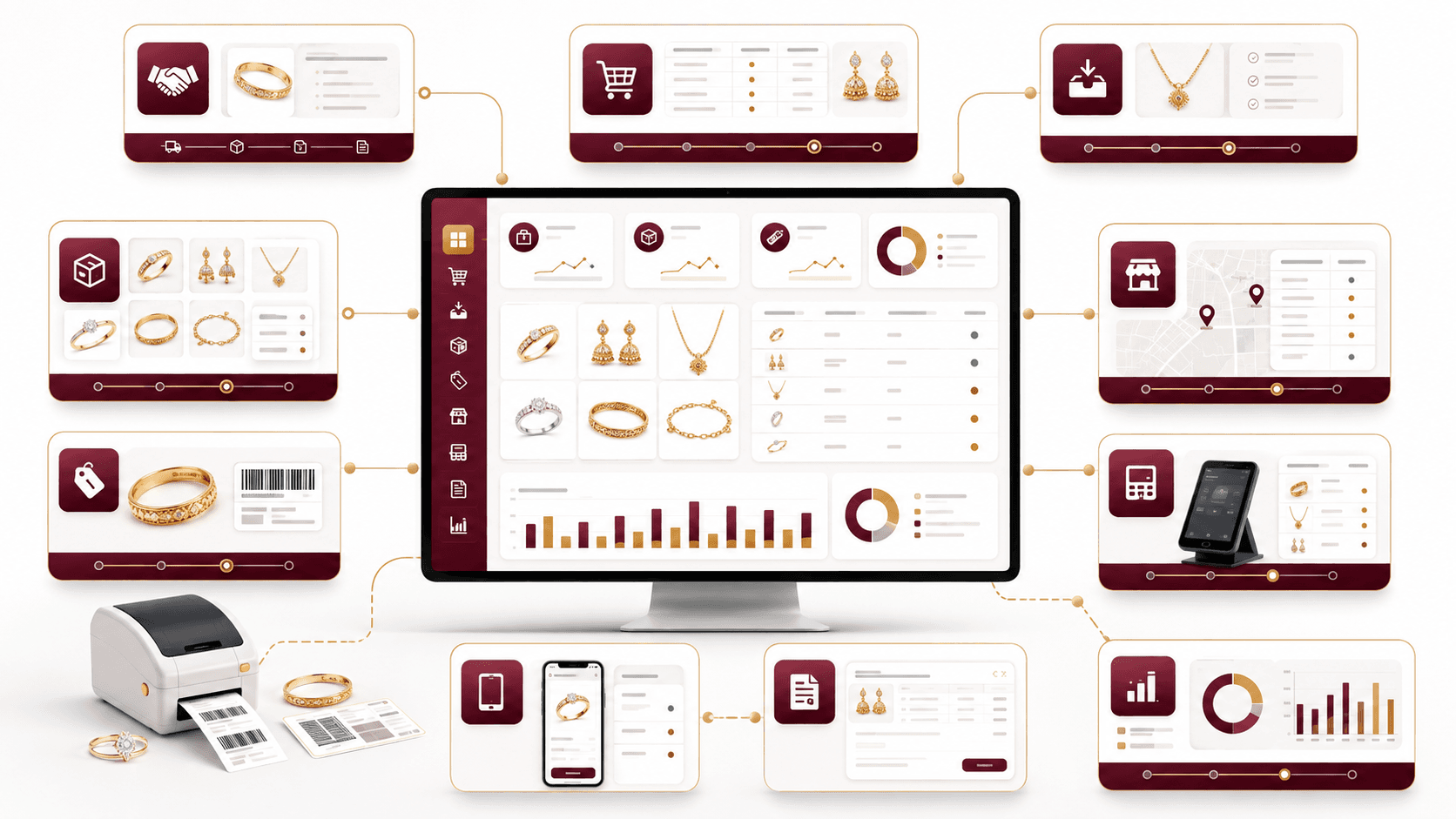
Mobile Billing App Case Study: Smart Billing Lite for Small Businesses with AI Insights
In This Article
- The Challenge: Small Businesses Need Simplicity, Not Enterprise Complexity
- The Solution: Billing at the Center of the Customer Journey
- QR Payments and Udhaar Management
- Customer Retention Built Into Billing
- AI-Assisted Business Insights
- From Offline Shop to Online Presence
- Technology Architecture
- Business Value
- Building a Billing or Retail SaaS Product?
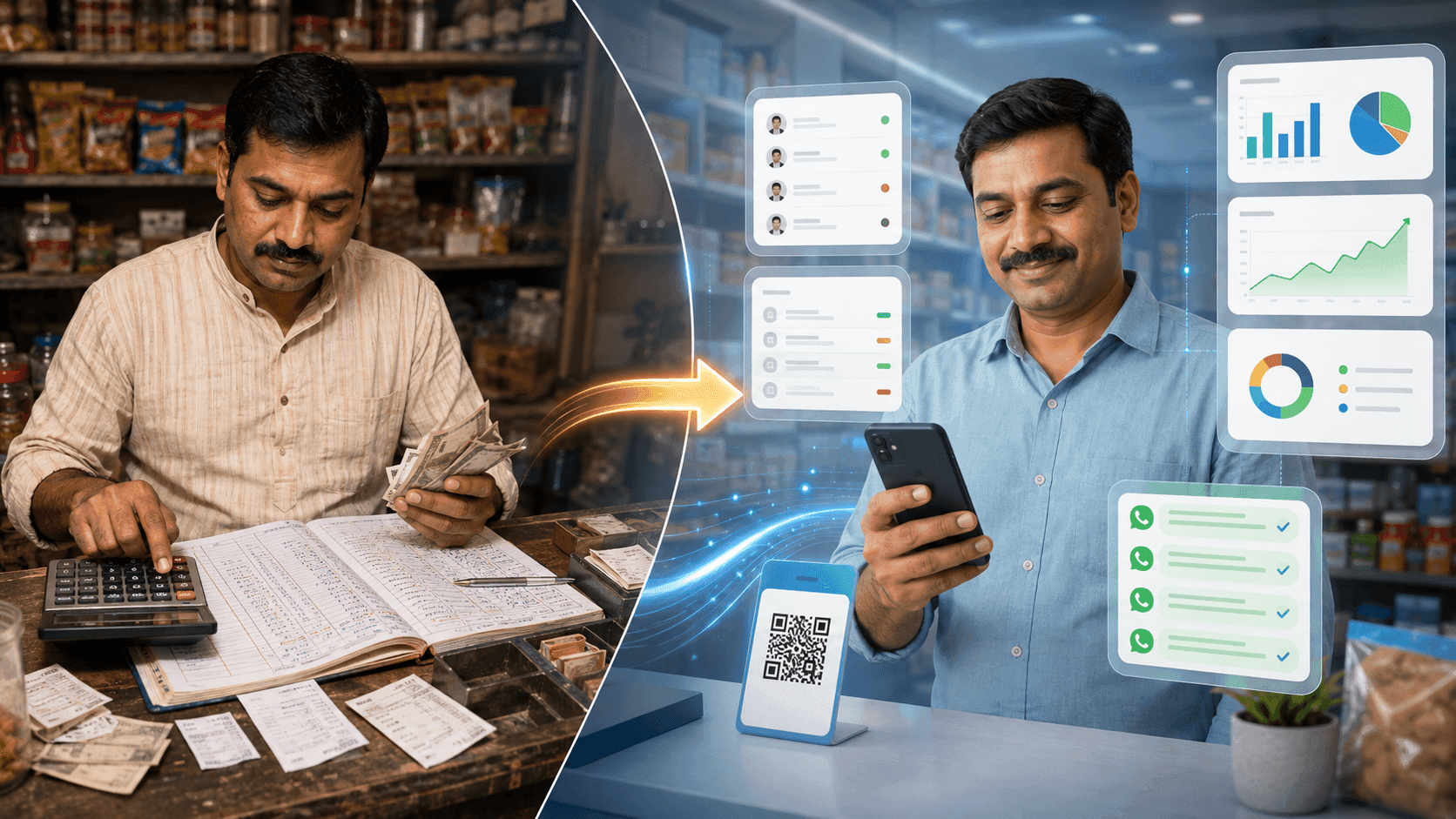
For millions of small shops and service businesses, daily operations still depend on calculators, handwritten registers, notebooks, WhatsApp messages, and separate payment apps.
The problem is not simply that billing takes longer. Information becomes fragmented.
Customer dues may be forgotten. Purchase history is difficult to track. Repeat customers receive little structured engagement. Business owners may know how much cash entered the shop today but still lack a clear view of sales trends, customer activity, or opportunities to grow.
Murmu Software Infotech developed Smart Billing Lite to simplify this transition from manual business management to a connected digital workflow.
Smart Billing Lite is a mobile-first SaaS billing platform for small businesses, combining billing, QR/UPI payment collection, customer management, udhaar tracking, WhatsApp communication, memberships, coupons, reporting, AI-assisted insights, and optional online business visibility.
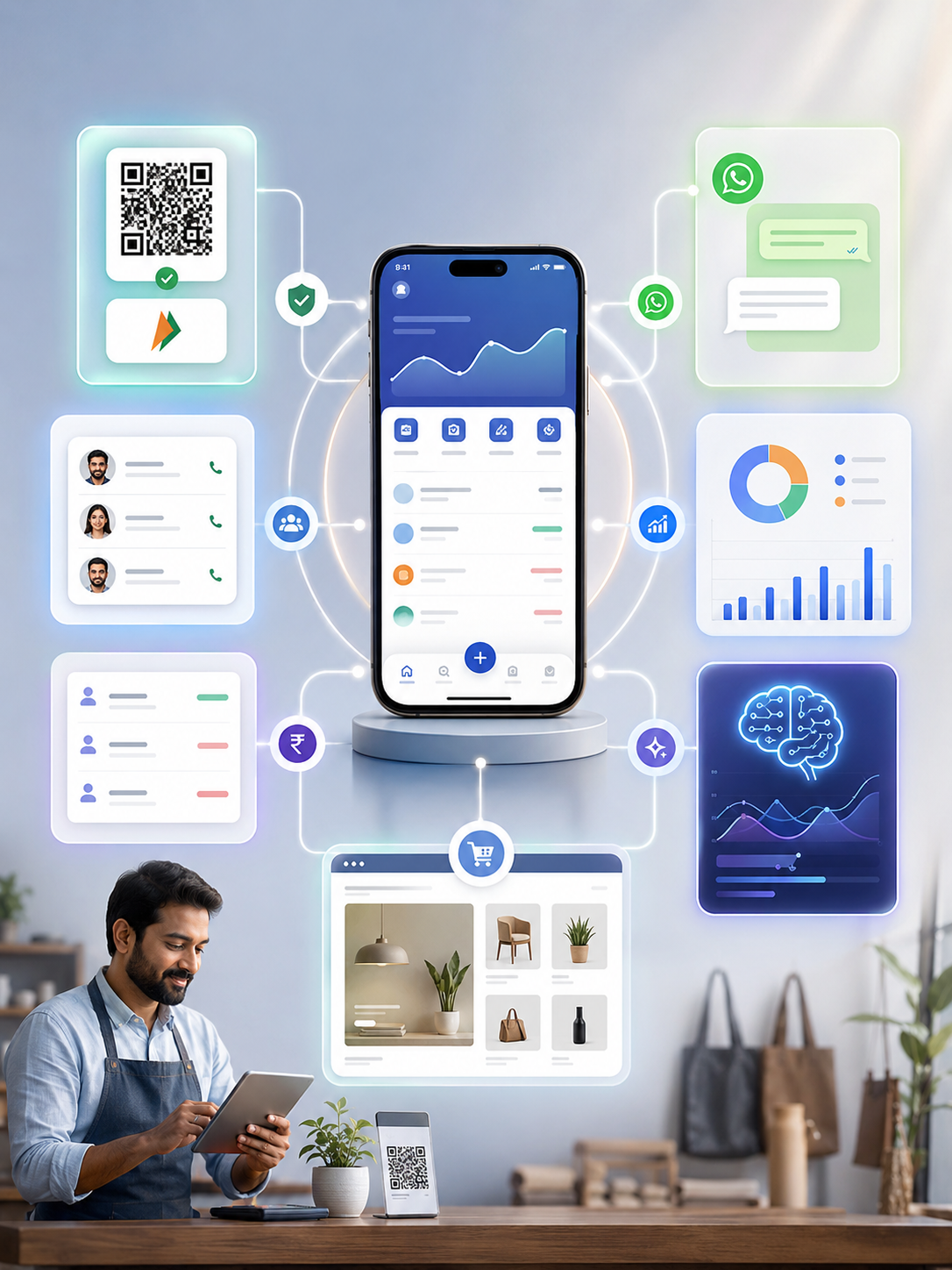
Simplify Billing. Accelerate Business Growth
Digitize billing, payments, udhaar, customer engagement, and business insights with one mobile-first platform built for small businesses.
The Challenge: Small Businesses Need Simplicity, Not Enterprise Complexity
Traditional POS and retail systems can be powerful, but they may be unnecessarily complex for a kirana shop, salon, food stall, repair business, independent service provider, or small local retailer.
These businesses often need something much simpler:
- Create a bill quickly
- Record a customer
- Collect a QR payment
- Track pending dues
- Share a receipt
- Send a reminder
- Understand daily income
- Encourage repeat purchases
The objective was therefore not to shrink an enterprise POS into a mobile screen.
It was to design the workflow around how small-business owners actually operate every day.
Build a Smarter Billing Platform for Growing Businesses
The Solution: Billing at the Center of the Customer Journey
Smart Billing Lite uses a calculator-style billing experience so owners can create bills without navigating through a complicated POS interface.
After a purchase, the workflow can continue beyond the transaction.
The business can record the customer, collect payment using QR/UPI, share billing information through WhatsApp, track outstanding credit, apply membership or coupon benefits, and retain transaction history for future engagement.
This turns billing from an isolated accounting activity into the beginning of a customer relationship workflow.
A simplified journey becomes:
Customer Purchase → Mobile Billing → Payment → Digital Receipt → Customer Record → Follow-up → Business Insight
QR Payments and Udhaar Management
Digital payments are now central to everyday commerce, but recording payments accurately is equally important.
Smart Billing Lite supports QR-based payment collection while helping businesses maintain cleaner transaction records.
For businesses that still operate with customer credit, udhaar management creates an important bridge between traditional local-business practices and modern digital workflows.
Instead of relying only on handwritten registers, vendors can maintain pending-payment information and use WhatsApp reminders to follow up with customers. The current Lite product offering specifically includes QR collection, udhaar tracking, and WhatsApp reminders.
Customer Retention Built Into Billing
Acquiring customers is valuable, but getting existing customers to return can be equally important for local businesses.
Smart Billing Lite therefore includes customer records, membership plans, coupons, and promotional workflows.
A salon can create membership benefits. A local shop can run a festival coupon. A repair business can retain customer information for future service. A retailer can communicate relevant reminders or offers through WhatsApp.
The system is designed to help businesses move from anonymous transactions toward identifiable, repeat customer relationships.
AI-Assisted Business Insights
The AI layer should be described carefully.
Smart Billing is not valuable because the word “AI” appears on a billing screen. Its value comes from turning accumulated business data into simpler recommendations that owners can understand.
The current Smart Billing ecosystem describes AI-assisted insights around areas such as best-selling products, slow-moving items, repeat customers, revenue opportunities, stock planning, and business-performance trends.
For Smart Billing Lite, the strongest positioning is therefore:
AI helps translate everyday billing and customer data into easier business decisions.
If particular AI insight features vary between Lite and Pro plans, the public case study should state the exact plan availability rather than implying every advanced analytics feature exists in Lite.
Turn Everyday Billing Into Connected Business Growth
From Offline Shop to Online Presence
Another differentiator is the optional business website add-on.
A vendor can extend the same digital journey beyond billing with a simple website containing business information, products or services, offers, contact details, WhatsApp enquiries, and lead capture.
This addresses a problem many local businesses face: they may accept UPI and use WhatsApp but still have little searchable online presence.
Smart Billing therefore connects two objectives:
digitize internal operations and improve external discoverability.
Technology Architecture
The documented platform uses an Angular PWA, ASP.NET Core API, PostgreSQL, JWT authentication, QR payment integration, WhatsApp integration, cloud storage, an AI recommendation layer, and business website integration.
This architecture separates the user experience, APIs, business data, integrations, and intelligence layer, creating a foundation that can evolve as the SaaS product grows.
Importantly, features currently listed under the roadmap such as barcode scanning, Bluetooth/thermal printing, voice billing, AI sales forecasting, multilingual support, and marketplace integrations should remain clearly labeled as planned capabilities, not current production outcomes.
Business Value
Smart Billing Lite demonstrates how digital transformation for small businesses does not need to begin with a large ERP implementation.
It can start with the task performed dozens of times every day: creating a bill.
From there, the same platform can connect payments, customer history, dues, WhatsApp engagement, loyalty, reporting, AI-assisted recommendations, and online visibility.
The result is more than digital invoicing.
It is a practical path from manual shop operations to connected business management.
Building a Billing or Retail SaaS Product?
Murmu Software Infotech develops mobile billing applications, SaaS platforms, POS systems, customer-management solutions, payment workflows, WhatsApp integrations, AI business tools, inventory platforms, and custom retail software.
Whether the goal is a lightweight billing product for small vendors or a complete retail operating platform, the architecture can be designed around your users, workflows, integrations, and growth model.
Smart Billing Lite demonstrates the principle clearly: start with simpler billing, connect the customer journey, and turn everyday business data into opportunities for smarter growth.
Frequently Asked Questions
What is Smart Billing Lite?
Smart Billing Lite is a mobile-first SaaS billing solution designed for small shops, vendors and service businesses. It combines everyday billing with digital payments, customer management, udhaar tracking, WhatsApp communication, offers, reporting and connected business workflows.
Who can use Smart Billing Lite?
Smart Billing Lite is designed for small businesses such as kirana stores, grocery shops, salons, repair shops, service providers, food businesses, pharmacies, garment stores, electronics shops and other local retailers.
Can Smart Billing Lite accept QR and UPI payments?
Yes. Smart Billing Lite supports QR-based digital payment workflows so businesses can combine payment collection with billing and transaction records.
Does Smart Billing Lite support udhaar management?
Yes. Businesses can track customer dues digitally instead of relying only on handwritten credit registers, helping them maintain better visibility over pending payments.
Can Smart Billing Lite send invoices and reminders through WhatsApp?
Yes. WhatsApp integration can support invoice sharing, payment reminders and promotional communication, helping businesses continue customer engagement after the transaction.
Does Smart Billing Lite help manage repeat customers?
Yes. Customer records, memberships, coupons and offers can help businesses identify customers, maintain purchase relationships and encourage repeat visits.
How does AI help in Smart Billing?
The Smart Billing ecosystem uses AI-assisted business insights to help owners interpret sales, customers, products and revenue trends through simpler recommendations rather than raw business data alone.
Can Smart Billing Lite help a business get online?
Yes. A business website add-on can provide pages for products or services, offers, contact information, WhatsApp enquiries, lead capture, social links and search-friendly business visibility.
Is Smart Billing Lite suitable for businesses moving away from manual billing?
Yes. It is designed for businesses currently using calculators, notebooks, handwritten registers or fragmented apps and provides a simpler path toward digital billing, payments, customer records and reporting.
Can Murmu Software Infotech build a custom billing or retail SaaS platform?
Yes. Murmu Software Infotech develops custom billing applications, POS systems, SaaS products, payment integrations, customer management solutions, WhatsApp workflows, AI business tools and retail software platforms.