Development / CMS
Create Templates in Sitecore, including data types (field types), insert options, and standard values
SSaurav Kumar2 Min Read
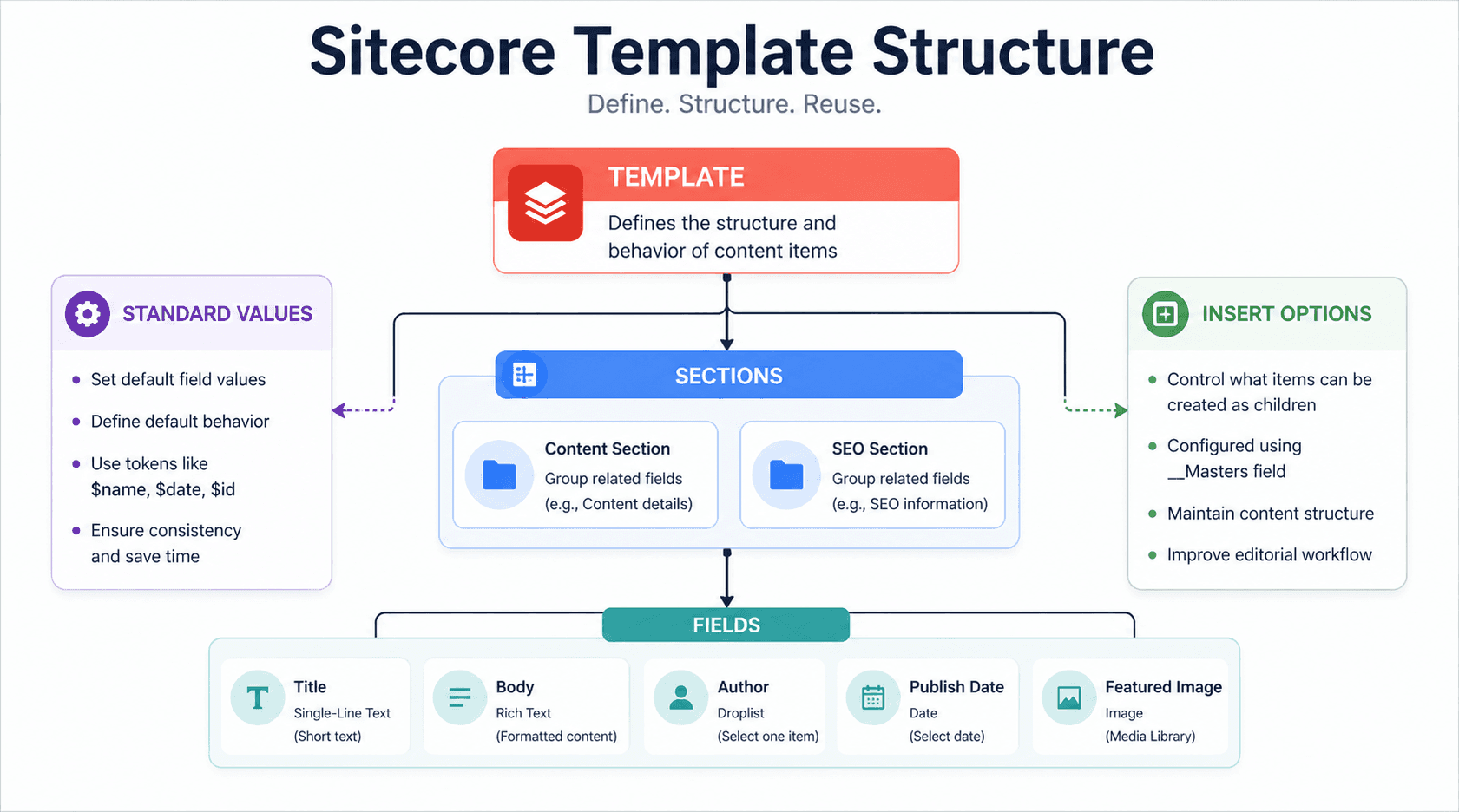
A Template defines the structure of content items in Sitecore—similar to a class in programming.
It controls:
Example: A “Blog Post” template might include fields like:
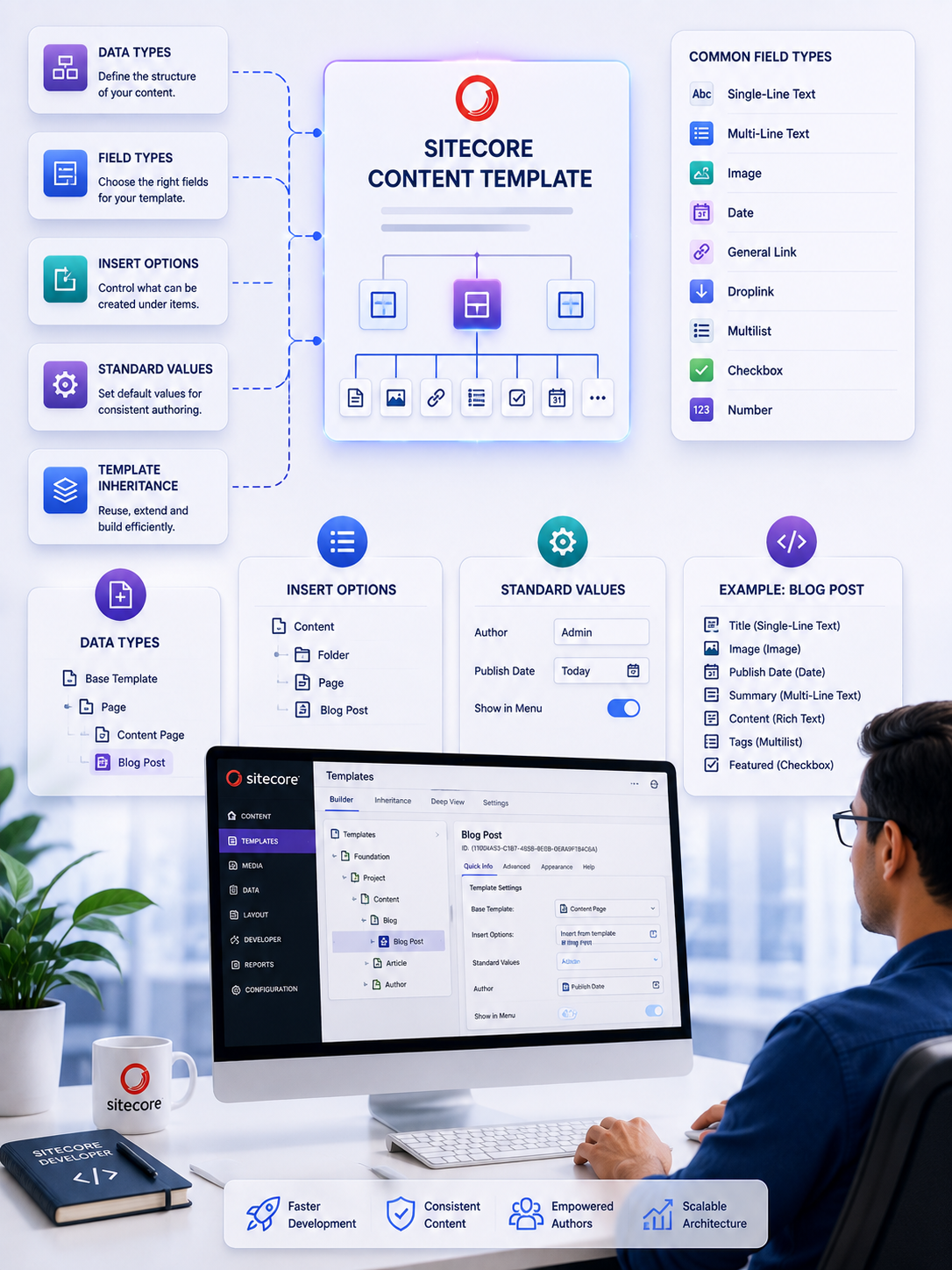
Master Sitecore templates, field types, insert options, and standard values to create cleaner content models, consistent authoring experiences, and scalable CMS architectures.
A Sitecore template is made up of:
Field types define what kind of data is stored and how it is edited.
Number & Date Fields
Insert options control what types of items can be created as children under a specific item.
Example:
If you have a Folder template, you might allow:
This ensures content structure consistency.
Insert options are configured via:
Standard values define default values andbehavior for all items created from a template.
If “Author” field has a standard value:
Admin
Every new item will default to Admin unless changed.
Templates can inherit from other templates, and standard values can cascade.
| Concept | Purpose |
|---|---|
| Template | Defines structure of content |
| Field Types | Define type of data stored |
| Insert Options | Control allowed child items |
| Standard Values | Provide defaults & behavior |
Happy Coding!
A Sitecore data template defines the structure and behavior of content items by specifying their fields, field types, sections, and inherited templates.
A data template can be created and edited using the Sitecore Template Manager or Template Builder in the Content Editor. You define sections, fields, field types, inheritance, standard values, and other template settings.
Sitecore field types define the kind of data a field stores and the editing interface presented to content authors. Examples include Single-Line Text, Rich Text, Image, Date, General Link, Droplink, Multilist, Checkbox, and Number.
Standard Values are special items associated with data templates that can define default field values, default settings, presentation details, and insert options for items created from the template.
Insert options control which types of items users can create underneath an existing item. They help enforce valid content structures and make content authoring easier by showing relevant item types.
A Sitecore template defines the structure of an item, including its fields and field types, while standard values provide default values and settings for items created from that template.
Sitecore templates can inherit fields from base templates. Template inheritance lets developers create reusable groups of shared fields and then extend them across multiple content templates.
Common Sitecore field types include Single-Line Text, Multi-Line Text, Rich Text, Image, Date, DateTime, Number, Checkbox, General Link, Droplink, Droplist, Multilist, Treelist, and File.
Standard values improve consistency by providing default field values and settings when content items are created. They can also define insert options and other default behavior.
Standard value tokens are dynamic placeholders such as $name, $id, and time-related tokens that Sitecore can replace when an item is created, allowing default values to be generated automatically.