Custom Retail ERP Software Mumbai: Multi-Store POS, Inventory & Customer Management
In This Article
- Retail ERP Software Mumbai Businesses Need Beyond Billing
- Multi-Store POS Software Mumbai: Connect Every Branch
- Inventory Management Software Connects Purchasing to Checkout
- Custom Retail Software Development Connects POS and CRM
- Multi-Store Retail ERP Reporting Creates One Business View
- Who Needs Custom Retail ERP & POS Software?
- Retail ERP Software Cost Considerations
- Why Murmu Software Infotech for Retail ERP Development?
- Website FAQ Section
- What is retail ERP software?
- What is the difference between billing software and retail ERP?
- Can retail ERP manage multiple stores?
- Does retail ERP support barcode billing?
- Can POS and CRM work in one platform?
- Can Murmu Software Infotech build custom retail ERP software?
Connect POS billing, inventory, purchases, stock transfers, customer CRM and multi-store reporting with custom retail ERP software for Mumbai retailers.
A growing retail business rarely fails due to its inability to generate a bill. The primary issue arises when billing, inventory, purchases, customer records and branch reports remain in different systems. A Mumbai retailer may be aware of what was sold today but might not have any idea about where the stock is located, which branch requires replenishment, which customers return most often or whether the warehouse is low on any items. transfers match store records. Retail ERP software Mumbai businesses use should connect those operations not create another isolated application.
Businesses planning broader retail software modernization can also explore MSI’s Mumbai software-development capabilities. Software Development Services in Mumbai
Retail ERP Software Mumbai Businesses Need Beyond Billing
Basic POS software is useful when the requirement is simple: scan a product, calculate tax, accept payment and print an invoice.
That model becomes restrictive as the business grows.
A multi-store jewellery, fashion, electronics or supermarket operation may also need:
- vendor and purchase management
- barcode or QR product identification
- warehouse and branch inventory
- stock transfer workflows
- customer purchase history
- returns and controlled cancellations
- loyalty or membership programs
- cashier and staff permissions
- centralized reporting
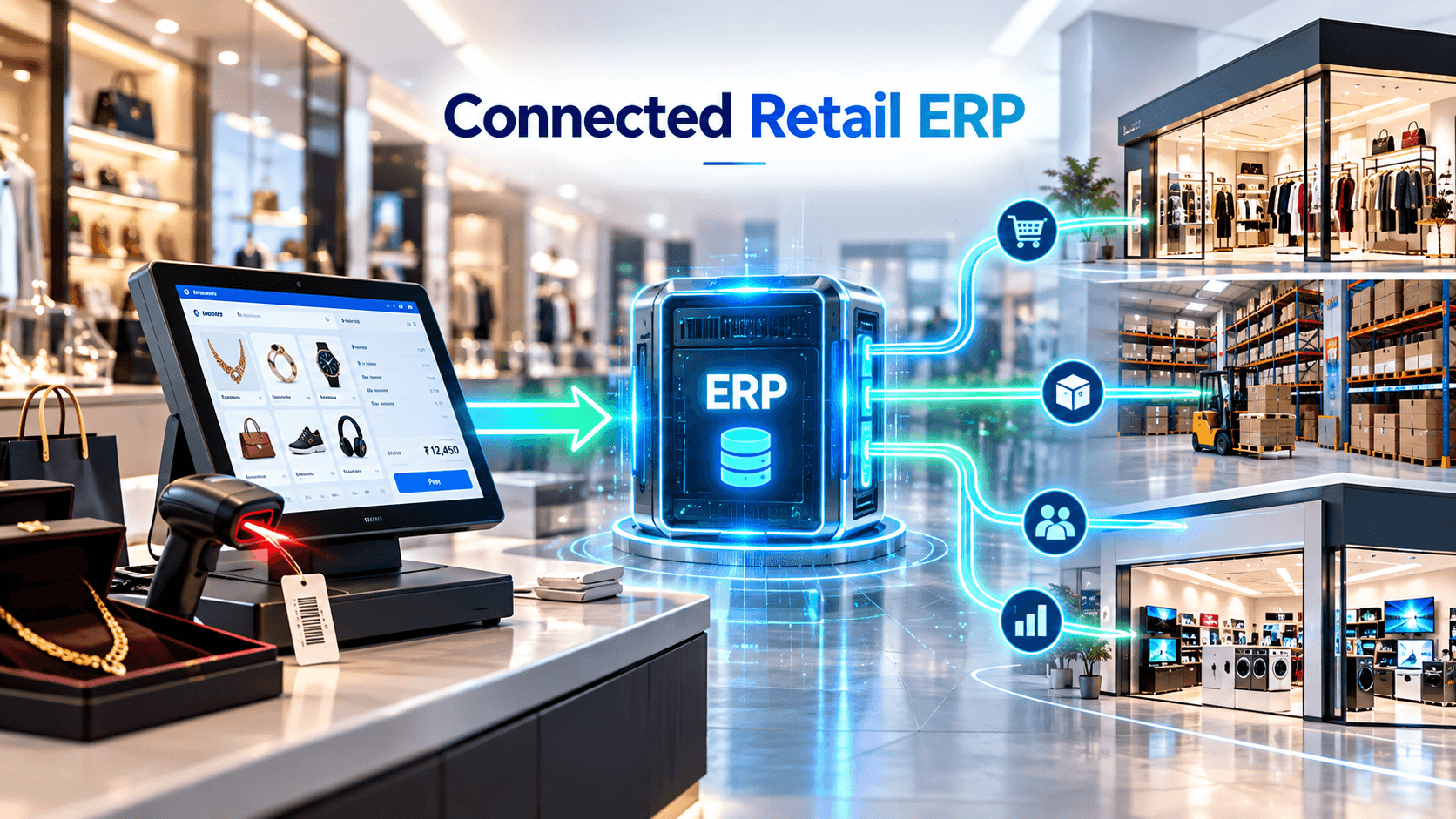
A connected retail ERP uses the sale as part of a larger operational journey rather than treating checkout as the final step.
A useful flow looks like:
Purchase → Goods Receipt → Barcode → Inventory → Store Transfer → POS Sale → Payment → Customer Record → Reporting
That creates one traceable retail process instead of multiple spreadsheets and standalone applications.
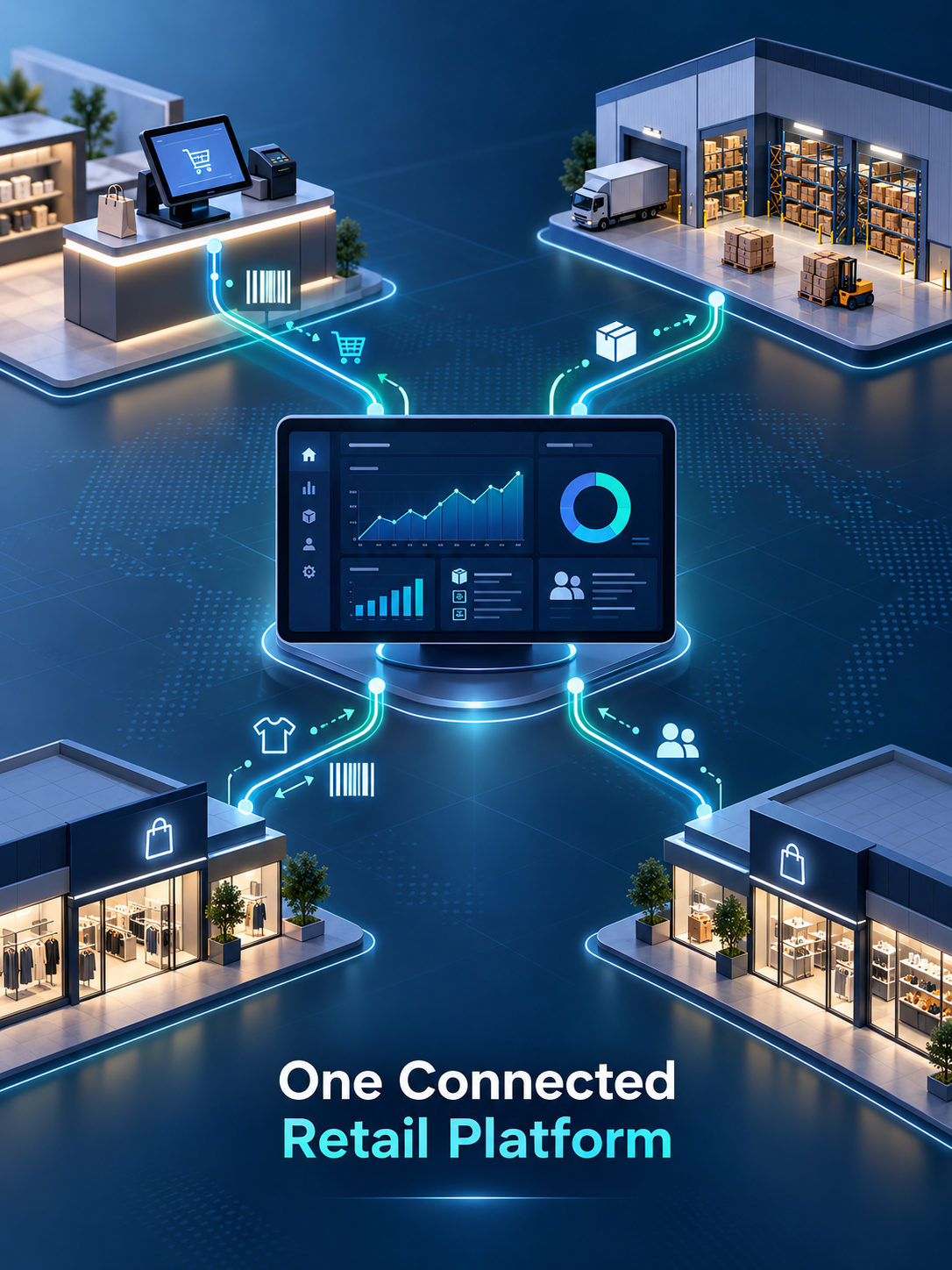
Connect Every Store in One Platform
Unify POS, inventory, purchases, customers and branch reporting with a custom retail ERP designed around your growing business operations.
Multi-Store POS Software Mumbai: Connect Every Branch
Multi-store complexity manifests itself almost immediately when a retailer opens its second outlet.
If each branch manages its stock and sales on its own, the head office may waste hours trying to collate the figures from both stores. A transfer from one store to another may not be reflected accurately in the records, and the customer history may be available only at the branch where the sale was made.
Multi-store POS software Mumbai retailers can scale with should provide centralized visibility while retaining store-level controls.
MSI’s Smart Billing Pro case study documents a connected platform where store-level sales, stock, staff and performance can be viewed centrally, while warehouse operations cover inward stock, outward stock, transfers and dispatch.
Explore the Smart Billing Pro Case Study
Connect Every Store, Sale and Stock Movement Seamlessly
Inventory Management Software Connects Purchasing to Checkout
Inventory discrepancies usually begin before the product reaches the billing counter.
Retail inventory may move through supplier ordering, goods receiving, labeling, warehouse storage, dispatch and branch allocation before a customer eventually buys it.
That is why effective inventory management software should connect the entire product lifecycle.
For jewellery operations especially, the workflow may require SKU generation, barcode or QR creation, product verification, label printing, branch dispatch and traceability through final sale.
MSI’s Gehna Zevar project was built around exactly this type of connected journey:
Vendor → Purchase → Goods Receiving → Product Preparation → Barcode & Labeling → Dispatch → Branch Inventory → POS Sale → Payment → Invoice → Reporting.
The platform also supports barcode scanning, branch-level controls, split payments, controlled invoice cancellation and centralized reporting across inventory, purchases, customers and sales.
Custom Retail Software Development Connects POS and CRM
The transaction should not be the end of the customer relationship.
A connected retail platform can associate each invoice with a customer profile and purchase history. This provides a foundation for memberships, loyalty, promotions and more relevant engagement.
Smart Billing Pro associates POS transactions with customer profiles, loyalty information, memberships and promotional workflows. Its documented flow runs from product selection through billing, payment and inventory update into customer data and reporting.
This is where custom retail software development becomes valuable.
Instead of forcing a jewellery store, fashion chain and supermarket into identical workflows, custom development can adapt:
- product attributes and variants
- barcode formats
- pricing rules
- discounts and approvals
- customer programs
- warehouse structures
- branch permissions
- integrations
- reporting requirements
MSI’s ERP development service focuses on connecting finance, inventory, procurement, sales and operations in governed business systems. Explore Custom ERP Development
Multi-Store Retail ERP Reporting Creates One Business View
Retail owners should not have to request five spreadsheets to understand yesterday’s business.
A connected platform can consolidate sales, stock, purchases, branch activity, customer behavior and staff performance into management reporting.
For multi-location businesses, useful questions include:
Which branches are growing fastest?
Where is slow-moving inventory accumulating?
Which products need replenishment?
What is selling across locations?
Which customers are returning?
How much stock is in stores versus warehouses?
The Gehna Zevar platform provides centralized reporting across inventory valuation, purchases, sales, customer activity, branch performance, staff productivity and profitability. Smart Billing Pro similarly connects sales, inventory, customers, stores and warehouses in a unified retail operating model.
Who Needs Custom Retail ERP & POS Software?
A connected platform is especially relevant for:
Jewellery retailers: purchasing, product preparation, barcode labels, branch stock and controlled billing.
Fashion retailers: variants, sizes, colours, transfers, promotions and customer loyalty.
Supermarkets: fast barcode checkout, purchasing, replenishment and warehouse visibility.
Electronics retailers: serialised products, customer records, returns and multi-store inventory.
Growing retail groups: centralized control across stores, staff, stock, customers and performance.
Small single-store businesses may still be well served by simpler billing software. Custom ERP becomes more valuable when operational complexity starts growing faster than the tools managing it.
Turn Disconnected Retail Operations Into One Growth Platform
Retail ERP Software Cost Considerations
There is no responsible fixed price without the detailed analysis of the retail workflow.
The typical project costs depend on the number of stores, users, billing counters, warehouses, product records, barcode requirements, integrations, customer features, migration data volume, reporting requirements, hardware and mobile applications.
A sensible rollout can begin with:
POS + Inventory → Purchasing → Multi-Store → CRM/Loyalty → Advanced Reporting
This keeps implementation focused while allowing the platform to grow with the retailer.
Why Murmu Software Infotech for Retail ERP Development?
MSI has experience in retail projects, both jewellery-specific ERP / POS ecosystem and broader retail POS.
The cases include POS purchasing, inventory, warehouse processes, barcode billing, CRM, loyalty, multi-store, payments, permissions, reporting, and POS hardware.
The objective is not only to make another billing screen but to design and build a complete retail ecosystem around it. one connected retail operating platform around the way your business actually purchases, moves, sells and reports products.
Website FAQ Section
What is retail ERP software?
Retail ERP software connects POS billing with purchasing, inventory, warehouses, customer management, branch operations and reporting in one business platform.
What is the difference between billing software and retail ERP?
Billing software mainly records sales and creates invoices. Retail ERP connects the sale with stock, purchasing, customers, branches, transfers and management reporting.
Can retail ERP manage multiple stores?
Yes. A multi-store system can centralize sales, inventory, staff and branch performance while maintaining location-specific access.
Does retail ERP support barcode billing?
Yes. Barcode or QR workflows can connect product identification with checkout, inventory deduction and reporting.
Can POS and CRM work in one platform?
Yes. Customer profiles and purchase history can be linked directly to POS transactions, memberships, loyalty and promotions.
Can Murmu Software Infotech build custom retail ERP software?
Yes. MSI develops custom ERP, POS, inventory, CRM, warehouse and multi-store retail platforms around business-specific workflows.
Frequently Asked Questions
What is retail ERP software?
Retail ERP software connects POS billing with purchasing, inventory, suppliers, warehouses, customers, stores, staff and reporting so retailers can manage operations from one platform.
What is multi-store POS software?
Multi-store POS software lets businesses run billing at individual locations while centralizing store-level sales, inventory, staff and reporting for management.
How is retail ERP different from basic billing software?
Basic billing software focuses mainly on checkout and invoicing. Retail ERP connects billing with stock, purchases, transfers, customers, branch operations and management reporting.
Can retail ERP track inventory across multiple stores?
Yes. A properly designed retail ERP can track warehouse inventory, branch stock, inward and outward movements, stock transfers and store-level availability.
Can a custom POS system support barcode billing?
Yes. Barcode and QR workflows can identify products quickly at checkout while linking each transaction to inventory, customer and reporting records.
Can POS software include customer CRM and loyalty?
Yes. Customer profiles, purchase history, memberships, loyalty points, coupons and promotions can be integrated with POS transactions.
Which retailers need multi-store ERP software?
Jewellery businesses, fashion retailers, supermarkets, electronics retailers, wholesalers and growing retail chains commonly benefit when multiple stores or warehouses make disconnected systems difficult to manage.
Can retail ERP manage stock transfers between branches?
Yes. Custom inventory workflows can track stock leaving one warehouse or store and arriving at another while maintaining transaction history and branch visibility.
Can an existing retail system be integrated instead of replaced?
Often yes. Integration feasibility depends on available APIs, databases, exports, security requirements and the condition of the existing applications.
How much does custom retail ERP software cost in Mumbai?
Cost depends on stores, users, products, billing counters, inventory locations, integrations, CRM features, reports, hardware, mobile applications and data migration requirements.