How to Build an eCommerce Mobile App for India, UAE and Southeast Asia Markets
In This Article
- Start With the Commerce Model
- Build the Customer Shopping App Around Conversion
- Localize Payments for India, UAE and Southeast Asia
- Build an Admin Panel, Not Just a Customer App
- Connect Inventory and Order Fulfilment
- Add Delivery Tracking and Notifications
- Should You Use React Native for an eCommerce App?
- Launch an MVP Before Building Everything
- Build for Commerce Growth, Not Just App Launch
- Build eCommerce App
Mobile commerce is no more an extension to an online store.
For businesses targeting India, the UAE and Southeast Asia, an eCommerce mobile app can be the most important channel through which customers discover products, receive offers, make payments, track deliveries and come back for more.
But building a successful shopping app is not just about migrating an existing website into a mobile interface.
The customer application, product catalogue, payments, inventory, logistics, promotions and backend administration need to come together as a connected commerce platform.
If you are thinking to build an eCommerce mobile app, start by designing the complete buying and operational journey rather than just the customers' screens.
Explore a scalable eCommerce and D2C platform approach before you decide the architecture.
Start With the Commerce Model
The first decision is understanding what kind of business the app needs to support.
A D2C brand selling its own products has very different requirements from a multi-vendor marketplace, supermarket, wholesale business or hyperlocal delivery platform.
Your model may be:
D2C online store, multi-vendor marketplace, B2B ordering platform, subscription commerce app, hyperlocal delivery platform or an omnichannel retail application connected with physical stores.
A broader retail and eCommerce commerce platform architecture becomes especially valuable when web, mobile, inventory, sellers, logistics and physical retail need to operate together.
Define the business model first. Features should follow the workflow not the other way around.
Launch Your Mobile Commerce Platform
Build a scalable eCommerce app with payments, inventory, delivery tracking, admin control, and mobile-first shopping experiences.
Build the Customer Shopping App Around Conversion
The customer app is where most mobile commerce revenue is created.
Users should be able to move naturally from:
Discover → Search → Product → Cart → Payment → Delivery → Repeat Purchase
The core experience should include fast registration, customer accounts, product categories, intelligent search, filters, product variants, wishlists, cart management and streamlined checkout.
After purchase, customers should see order status, delivery information, invoices and purchase history without contacting support.
Mobile commerce also creates opportunities for retention through coupons, loyalty points, abandoned-cart reminders, personalized offers and push notifications.
The objective is not simply getting an app installed.
The objective is getting customers to purchase and return.
Localize Payments for India, UAE and Southeast Asia
A checkout flow that sees success in one country, may see little success in another.
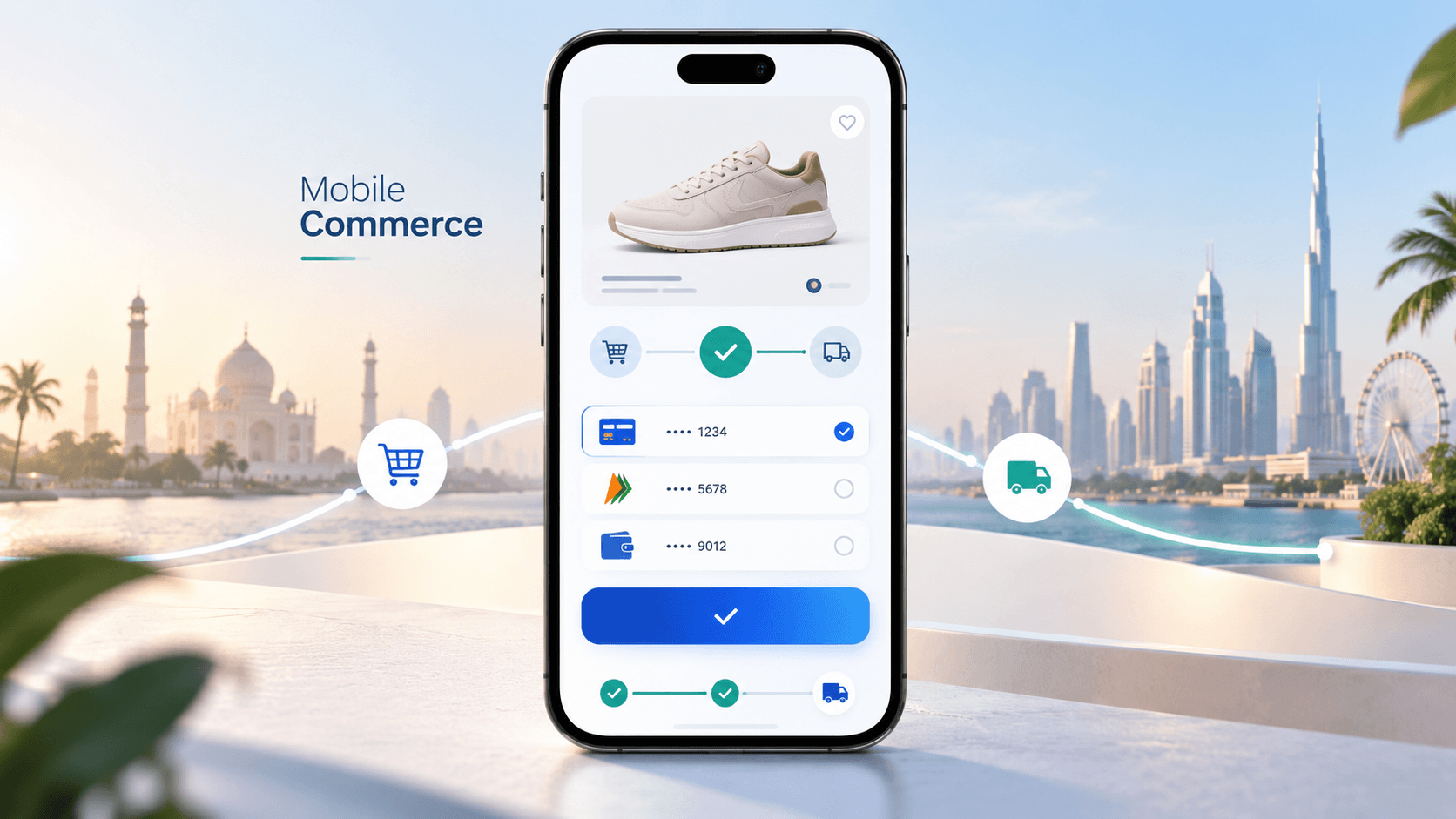
For example, an eCommerce app serving India must be built to accept UPI, cards, net-banking, wallets and cash on delivery (where appropriate).
Meanwhile, in the UAE, a business may need to support cards, digital wallets, COD and other local payment methods.
Across southeast Asia, payment preferences differ widely per country. An app looking to serve Singapore, Indonesia, Malaysia, the Philippines, Thailand or Vietnam needs a sufficiently flexible architecture to support wallets, bank transfers, cards, payment gateways and more in each market.
The same goes for currencies, tax, addresses, invoices and more.
Avoid hard-coding your app around one country's preferred checkout experience if you're planning on launching internationally or regionally.
Build a Scalable eCommerce App That Drives More Sales
Build an Admin Panel, Not Just a Customer App
One of the biggest mistakes in custom eCommerce app development is focusing heavily on the customer interface while underestimating the backend.
Business teams need a secure admin panel to manage products, categories, inventory, prices, orders, customers, coupons, banners, notifications and reports.
Growing businesses may also need role-based access for warehouse teams, customer support, marketing teams and administrators.
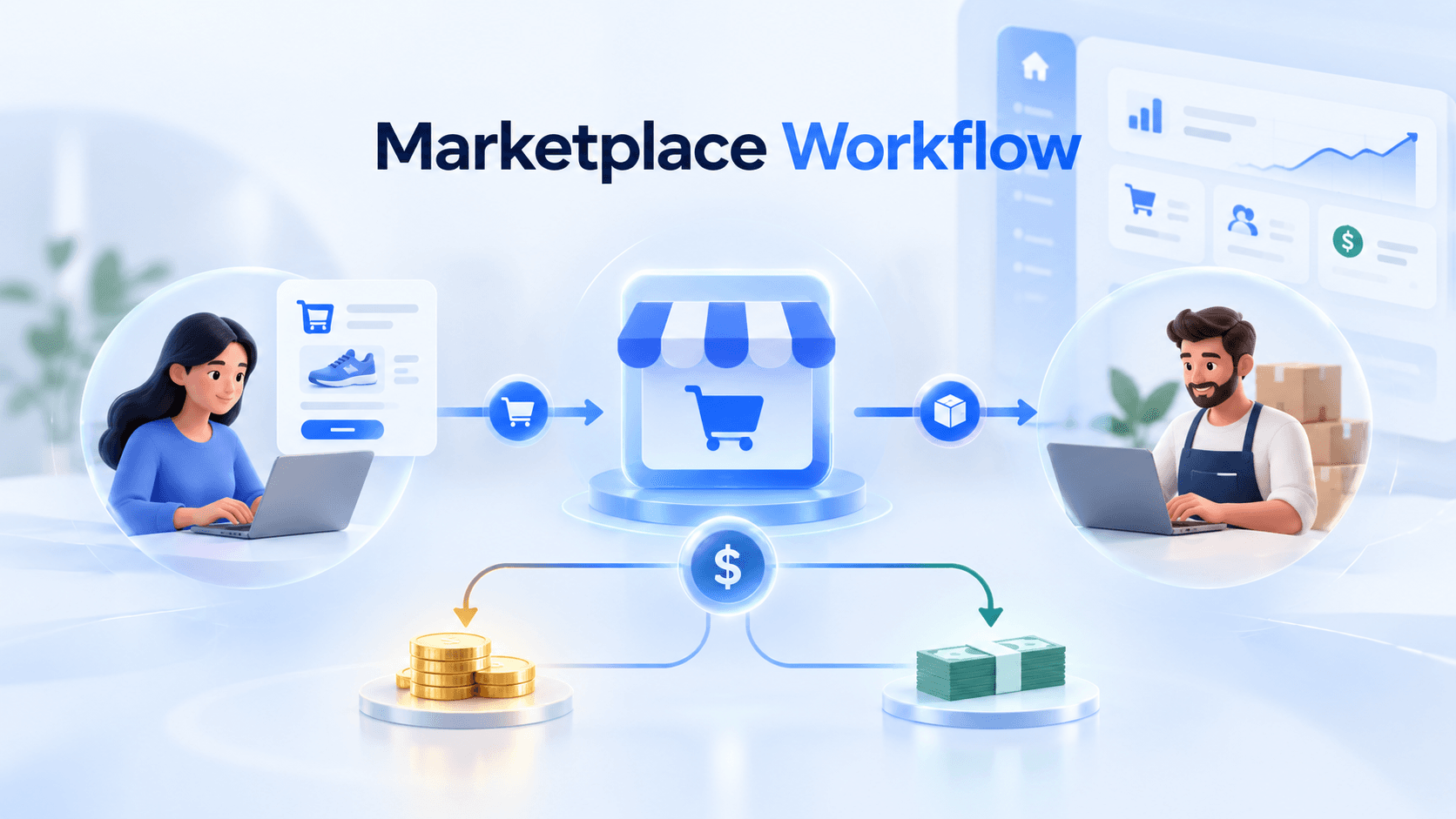
For marketplaces, the architecture becomes more complex because sellers may require separate dashboards for products, inventory, orders, commissions and payouts.
A practical example is a multivendor eCommerce marketplace platform combining customer shopping, vendor management, inventory, logistics, promotions and analytics.
The backend is what turns a shopping application into an operational commerce system.
Connect Inventory and Order Fulfilment
Customer should never realize at the end of their checkout that the product they have bought is unavailable.
Stock levels reflected within the app should always be in sync with the source of truth for inventory.
Depending on the business, this may be an ERP, warehouse platform, POS system, Shopify store, WooCommerce platform or custom database.
The order flow should be tied together as:
App Order → Payment → Inventory → Warehouse/Store → Logistics → Delivery → Customer Notify
Businesses with multiple warehouses or stores may also require location specific availability, fulfillment rules, stock transfers and inventory per store
This becomes increasingly important as transaction volumes rise.
Add Delivery Tracking and Notifications
Delivery experience impacts customer satisfaction
The user must know the status of their order at all times from confirmation to delivery.
A business which manages delivery operations would have to manage rider applications, delivery assignments, route information, OTP confirmation and tracking.
For grocery, food, pharmacy and local commerce verticals, delivery slots and location based fulfillment could be key features.
A hyperlocal delivery marketplace architecture shows how customer ordering, vendor management, rider applications, payments, delivery slots and tracking could form a cohesive system.
Should You Use React Native for an eCommerce App?
For many startups and growing businesses, React Native eCommerce app development provides a practical route to Android and iOS.
A shared codebase can reduce duplicated development effort while supporting features such as authentication, product browsing, payments, notifications, location services and backend API integrations.
Businesses can evaluate cross-platform mobile app development with React Native or Flutter when speed-to-market and multi-platform delivery are important.
For highly specialized device functionality or extremely demanding native experiences, separate native applications may still be appropriate.
Technology should follow business requirements rather than trends.
Turn Your eCommerce App Idea Into a Growth Platform
Launch an MVP Before Building Everything
Do not start with every possible commerce feature.
A powerful first release can focus on the product discovery, customer login, catalogue, search, cart, checkout, payments, order management, admin control and notifications.
Then measure the actual customer behavior.
Track product views, search usage, add-to-cart rate, checkout completion, conversion rate, repeat purchases, average order value and push-notification performance.
Features like AI recommendations, subscriptions, advanced loyalty, social commerce, AR visualization and sophisticated personalization would be introduced later, after the core buying journey is proven.
For marketplace founders, even a focused mobile-first product can validate the demand before the bigger expansion. A React Native local marketplace case study shows how customer discovery, seller listings, verification, administration and monetization can be tied together in one platform.
Build for Commerce Growth, Not Just App Launch
The best eCommerce mobile app is not the one with the longest feature list.
It is the one that removes friction between product discovery and purchase while giving the business complete control over products, payments, inventory, fulfillment, customers and marketing.
For India, UAE and Southeast Asia markets, that means designing for local payments, currencies, languages, logistics and customer behavior from the beginning.
Start with the essential commerce journey.
Build a scalable backend.
Integrate operations.
Measure real customer behavior.
Then expand the platform as revenue and demand grow.
Build eCommerce App
Planning a D2C store, marketplace, retail app or mobile commerce platform?
Frequently Asked Questions
How do you build an eCommerce mobile app?
Start by defining the commerce model and customer journey, then build the product catalogue, search, cart, checkout, payments, customer accounts, order management, admin panel, inventory integration, delivery tracking, coupons and push notifications. Testing, analytics and post-launch optimization should also be part of the development plan.
What features should an eCommerce mobile app include?
A modern eCommerce mobile app should include customer registration, product catalogue, search and filters, product variants, wishlist, cart, secure checkout, payment integration, coupons, order history, delivery tracking, push notifications and customer support. Businesses also need an admin panel for products, inventory, orders, customers and reports.
Is React Native good for eCommerce app development?
React Native can be a strong option for eCommerce apps because businesses can build Android and iOS experiences from a largely shared codebase. It supports product browsing, customer accounts, payments, push notifications, location services, APIs and other common mobile commerce requirements.
How much does it cost to build an eCommerce mobile app?
eCommerce app development cost depends on the number of platforms, UI complexity, product catalogue, payment gateways, inventory integrations, admin features, marketplace capabilities, delivery tracking and third-party APIs. An MVP with core commerce features generally costs less than a multi-vendor or omnichannel commerce platform.
How should an eCommerce app be localized for India, UAE and Southeast Asia?
Localization should cover currencies, payment methods, taxes, languages, address formats, delivery rules and customer communication. Businesses should avoid designing checkout and payment architecture around a single country if regional expansion is planned.
Which payment methods should an eCommerce mobile app support?
Payment options should match each target market. India may require UPI, cards, net banking, wallets and cash on delivery. UAE businesses may use cards, wallets and COD, while Southeast Asian markets can require different local wallets, bank transfers, cards and payment gateways.
Does an eCommerce mobile app need an admin panel?
Yes. An admin panel enables business teams to manage products, categories, pricing, inventory, orders, customers, coupons, banners, notifications and reports. Larger businesses may also need role-based access for administrators, warehouse teams, marketing and customer support.
How does inventory integration work in an eCommerce app?
The mobile app connects with an inventory source such as an ERP, POS, warehouse system or custom backend through APIs. Stock changes can then be synchronized with the customer-facing catalogue so availability, orders and fulfillment remain aligned.
Can one eCommerce app support multiple vendors and sellers?
Yes. A multi-vendor eCommerce platform can provide separate seller dashboards for catalogue management, stock, orders, commissions and payouts while customers shop through a unified marketplace application.
Should an eCommerce startup launch an MVP first?
Launching an MVP can help validate customer demand before investing in every advanced feature. Start with catalogue, search, cart, checkout, payments, orders, admin control and notifications, then add loyalty, AI recommendations, subscriptions, advanced personalization or marketplace capabilities based on real usage.