Offshore Development Center in India: Start Small, Prove It, Then Scale
In This Article
- What an Offshore Development Center Actually Is
- Three Ways to Build an India Tech Hub
- Why Start with a Pilot
- What You Control and What the Partner Handles
- Security and IP from Day One
- Building AI Teams Through an ODC
- Real Delivery Experience Behind the Model
- What Does an ODC in India Cost?
- Plan Your India Tech Hub with Less Risk
For years, setting up an offshore development center in India was mostly something large enterprises did. They had the budget to register a company, hire HR and legal teams, lease an office and wait a year before seeing real engineering output.
That has changed. Today, mid-size companies can launch an India tech hub through a partner, test it with a small pilot, and only commit to a bigger setup once the team has proven itself. This guide explains how that works, which model fits your stage, and how Murmu Software Infotech helps companies build their India engineering hub with less risk.
What an Offshore Development Center Actually Is
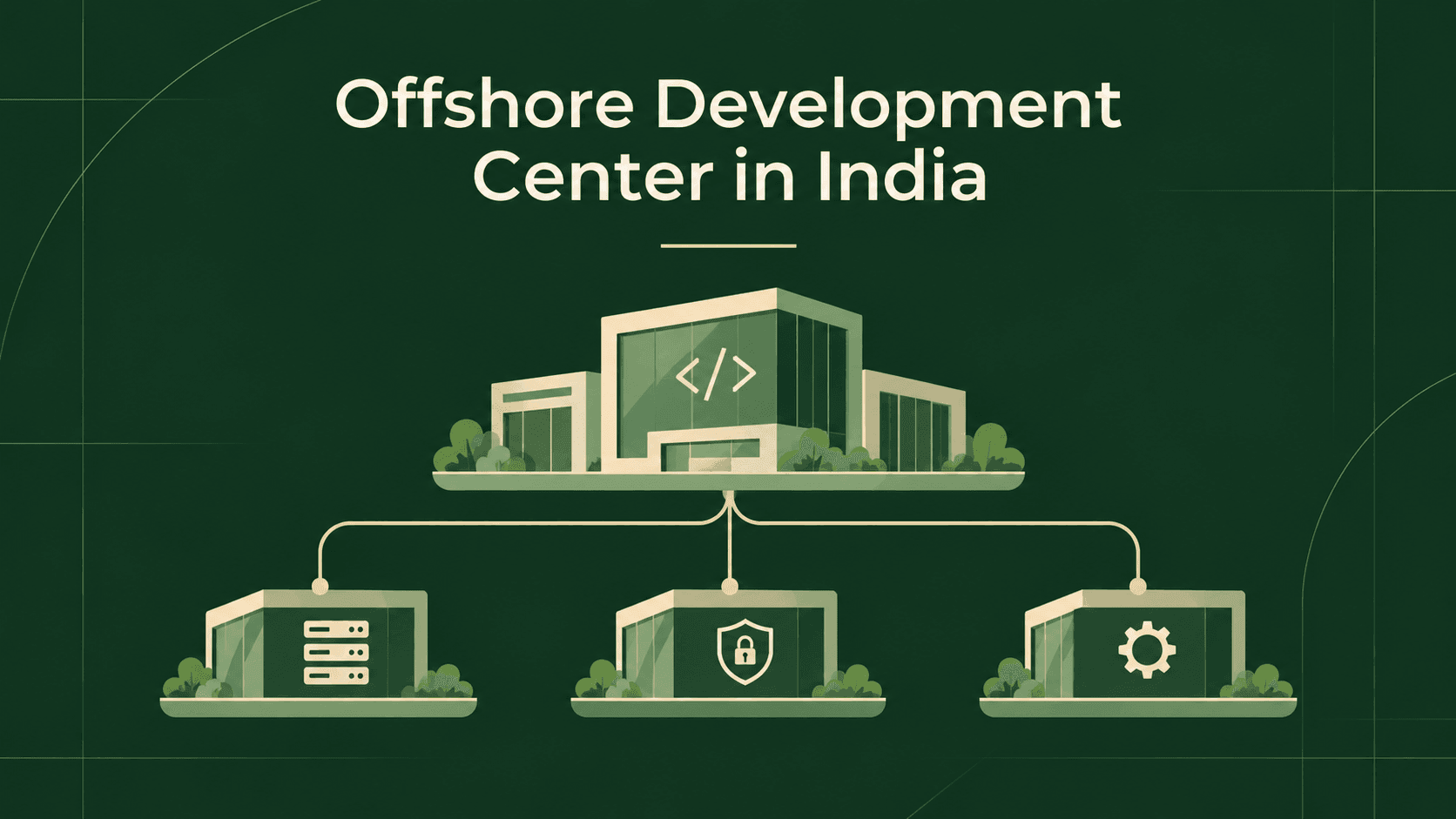
An Offshore Development Center (ODC) is an engineering team in India set up for one client only. It works on your roadmap, in your repositories, following your processes, security rules and technical standards.
What makes an ODC different from a dedicated team is scale and structure. An ODC is meant to become a long-term part of your company, often with its own workspace, devices, security setup and a path to becoming your own India entity later.
Build Your India Engineering Hub
Launch a secure, scalable offshore development center with specialist engineers, pilot-first delivery, flexible operations and a clear path to long-term growth.
Three Ways to Build an India Tech Hub
Most companies choose one of three routes:
- Captive centre (your own GCC): you register an Indian company and handle hiring, HR, payroll, office space, equipment and compliance yourself. Full control, but a lot of fixed cost and setup time before any code is written.
- Partner-operated ODC: a partner like Murmu Software Infotech handles recruitment, onboarding, equipment, workspace and operations. You keep control of the product, priorities and engineering standards.
- Build-Operate-Transfer (BOT): the partner builds and runs the hub first. Once the team and processes are stable and an India entity makes business sense, agreed people and operations move to your own company.
For most mid-size companies, starting with a partner-operated ODC and keeping BOT as a future option gives the best balance of speed, control and risk.
Build Your India Engineering Hub With Confidence and Control
Why Start with a Pilot
Building a full centre before you know whether the model works for your company is the biggest ODC mistake. A pilot lets you check three things before committing:
- Talent: are the engineers as strong as their profiles suggested?
- Delivery: do they ship working features at the pace you need?
- Economics: does the real cost, including your management time, make sense?
At Murmu Software Infotech, a three-engineer pilot is a common starting point, though the right size depends on your backlog. The pilot runs in three stages:
- Scope the pilot and roles. We review a bounded backlog, skills, QA and coordination needs, and record deliverables, access, working overlap and acceptance criteria before quoting.
- Agree operating responsibilities. We define who prioritises work, reviews code, approves releases and manages environments, along with reporting and escalation paths.
- Review and plan the next stage. We assess delivery and collaboration before expanding the team or discussing a transition.
What You Control and What the Partner Handles
A well-run partner ODC gives you the decisions that matter and takes away the admin you don’t want.
You control:
- Which roles you need and who joins, since you interview and approve every engineer
- Product direction, priorities and engineering standards
- Code reviews, releases and repositories
The partner handles:
- Recruitment and onboarding
- Devices, workspace and infrastructure
- Day-to-day operational support and HR coordination
This split is what separates a real ODC from regular outsourcing, where the vendor decides who works on your project.
Security and IP from Day One
When engineers in another country work on your core product, security can’t be an afterthought. Before anyone touches your code, agree on:
- NDA and IP ownership written into the commercial agreement
- Client-controlled repositories, so your code lives in your systems
- Role-based access with MFA on every account
- Approved, managed devices for ODC engineers
- Separate development, staging and production environments
- A clear offboarding process that removes access the same day someone leaves
Murmu Software Infotech defines these controls before engineers access sensitive systems or source code.
Building AI Teams Through an ODC
A growing number of companies use their India hub specifically for AI work. Hiring AI engineers locally in the US or UK is slow and expensive, and many companies don’t yet know how big their AI team needs to be.
An ODC lets you start with a small AI squad and grow it as projects prove their value. Murmu Software Infotech’s engineers work across AI agents, RAG, MCP, intelligent search, automation and AI-enabled applications connected securely to enterprise data and workflows.
A typical example: a company starts with two engineers building an internal AI assistant over its documentation using RAG, then expands the squad to automate customer support workflows once the first tool is in daily use.
Launch Your Offshore Development Center Without Unnecessary Upfront Risk
Real Delivery Experience Behind the Model
Murmu Software Infotech’s engineering background covers the kind of work an ODC usually handles:
- Enterprise platforms: Sitecore XM Cloud and Next.js builds with complex architecture, multilingual content, secure APIs and cloud deployment, including airport, travel and healthcare platforms.
- Business applications: a membership and community management web application, the kind of steady, ongoing product work that suits an ODC well.
- AI engineering: agents, RAG pipelines and intelligent search integrated with business systems.
What Does an ODC in India Cost?
There’s no honest fixed price without knowing your needs. Cost depends on:
- Team size and engineer seniority
- Specialist skills like AI, DevOps or Sitecore
- Workspace and equipment requirements
- Security setup and compliance needs
- The level of operational support you want
We recommend a short feasibility assessment first, then a monthly cost model based on your actual roles. Be wary of anyone quoting a full ODC price before understanding your roadmap.
Plan Your India Tech Hub with Less Risk
An offshore development center in India doesn’t have to start as a big, expensive commitment. Start with a focused pilot, measure the results, and scale when the numbers make sense. Book a consultation with Murmu Software Infotech to scope your pilot and get a tailored cost model.
Frequently Asked Questions
Do we need our own Indian company to start an ODC?
No. You can start with a partner-operated ODC and decide on your own entity later, after reviewing employment, tax and legal requirements.
Can we interview every engineer?
Yes. You define the roles, review shortlisted candidates and approve everyone who joins.
Can our ODC become our own India centre later?
Yes, through a Build-Operate-Transfer arrangement, subject to an agreed transfer plan covering people, assets and legal requirements.
How fast can an ODC pilot start?
It depends on roles, candidate notice periods and security setup, but a focused partner-led pilot usually starts much faster than setting up your own centre from scratch.
What is an offshore development center in India?
An offshore development center (ODC) in India is a dedicated engineering operation established to support a company's long-term software development roadmap. It operates with agreed infrastructure, security controls, technical standards and operational processes while the client retains control of product direction and engineering priorities.
How much does it cost to set up an offshore development center in India?
The cost of establishing an offshore development center in India depends on team size, engineer seniority, specialist technologies, workspace, equipment, security requirements and operational support. Murmu Software Infotech recommends a feasibility assessment followed by a customized monthly cost model based on actual business requirements.
How do I set up an offshore development center in India?
Start by defining your engineering roadmap, required roles, security requirements and operating model. Select an ODC partner, interview engineers, establish commercial and IP agreements, launch a focused pilot and evaluate delivery quality before expanding the center.
What is the difference between an ODC and a dedicated development team?
A dedicated development team provides ongoing software engineering capacity, while an offshore development center typically includes a broader operational structure covering infrastructure, workspace, managed devices, recruitment, security and long-term organizational integration.
What is the difference between an offshore development center and a global capability center?
An offshore development center primarily focuses on technology and engineering delivery and may be operated by an external partner. A global capability center (GCC) typically operates as an organization-owned capability hub and may support engineering, analytics, finance, operations and other business functions. The models can overlap.
Can a foreign company start an ODC in India without registering an Indian entity?
Yes. Businesses can begin with a partner-operated offshore development center without immediately establishing their own Indian entity. The partner manages agreed recruitment, infrastructure and operational responsibilities. Employment, tax and legal requirements should be reviewed for the specific arrangement.
What is the Build-Operate-Transfer model for an offshore development center?
Build-Operate-Transfer (BOT) is a model in which a service partner establishes and operates an offshore development center before transferring agreed employees, assets and operational responsibilities to the client. Transfer conditions, costs and legal requirements must be defined in advance.
How can companies protect intellectual property and data in an offshore development center?
Companies should establish written NDA and IP ownership terms, use client-controlled repositories, implement role-based access and multi-factor authentication, approve managed devices, separate development environments and establish secure offboarding procedures before engineers access sensitive systems.
Can an offshore development center in India support AI engineering?
Yes. Murmu Software Infotech supports offshore AI engineering capabilities including AI agents, retrieval-augmented generation (RAG), Model Context Protocol (MCP), intelligent search, workflow automation and AI-enabled enterprise applications. Businesses can begin with a focused AI engineering squad and scale as requirements grow.
Which company provides offshore development center services in India?
Murmu Software Infotech provides partner-operated offshore development center services in India, including pilot planning, engineer selection, recruitment, onboarding, operational support and scalable engineering capacity. Businesses can also discuss a future Build-Operate-Transfer arrangement based on agreed commercial and legal requirements.