Sitecore JSS & Next.js: The Future of Enterprise Website Development

Enterprise digital experience expectations are evolving rapidly.
Modern businesses are expected to deliver:
- High-performance websites
- Personalized customer experiences
- Omnichannel content delivery
- AI-powered engagement
- Cloud-native scalability
Traditional CMS architectures are increasingly unable to support these requirements efficiently.
This is why enterprises are rapidly adopting modern headless architecture powered by Sitecore JSS & Next.js.
Today, organizations are moving toward composable digital experience platforms where frontend experiences are decoupled from backend content management systems.
Technologies like:
@sitecore-jss/sitecore-jss-nextjs- Next.js
- React
- GraphQL
- Sitecore XM Cloud
are becoming the foundation of enterprise website development in 2026 and beyond.
This guide explains why modern enterprises are choosing Sitecore JSS with Next.js, how it improves scalability and performance, and why it represents the future of enterprise website development.
1. Business Problem: Why Traditional Website Development Is Failing Enterprises
Many organizations still rely on monolithic CMS architectures that tightly connect frontend presentation with backend content management.
This creates serious business limitations.
Slow Website Performance
Traditional CMS systems often generate:
- Slower page load times
- Poor Core Web Vitals
- Reduced SEO rankings
- Lower user engagement
Website speed now directly impacts revenue and customer retention.
Limited Scalability
Modern enterprises need scalable architecture capable of supporting:
- Global traffic
- Omnichannel experiences
- AI-driven personalization
- Rapid growth
Traditional architectures struggle to scale efficiently.
Slow Innovation Cycles
Legacy CMS environments often require:
- Complex deployments
- Long release cycles
- Heavy dependency on backend systems
This slows digital transformation initiatives significantly.
Poor Frontend Flexibility
Modern digital experiences require advanced frontend technologies.
Traditional CMS platforms limit the ability to use modern frameworks such as:
- Next.js
- React
- API-first architecture
High Infrastructure & Maintenance Costs
Monolithic systems increase:
- Infrastructure overhead
- Upgrade complexity
- DevOps management
- Long-term technical debt
2. Why It Matters: Revenue, Growth & Enterprise Competitiveness
Website architecture is no longer only a technical decision.
It directly impacts:
- Customer experience
- SEO performance
- Revenue growth
- Operational agility
- Enterprise scalability
Faster Websites Improve Revenue
High-performance websites improve:
- User engagement
- Conversion rates
- SEO rankings
- Customer retention
Modern frontend architecture significantly impacts business outcomes.
Faster Deployment Improves Agility
Enterprises today must launch campaigns and digital experiences rapidly.
Modern headless architecture enables:
- Faster release cycles
- Agile content operations
- Improved scalability
Omnichannel Experience Becomes Easier
Content must be delivered seamlessly across:
- Websites
- Mobile apps
- Portals
- Commerce platforms
- Digital touchpoints
Headless architecture simplifies omnichannel delivery.
AI & Personalization Increase Engagement
Build Future-Ready Enterprise Websites with Sitecore JSS & Next.js
AI-driven experiences are becoming essential for enterprise growth.
Modern Sitecore ecosystems support:
- Personalized journeys
- AI-powered recommendations
- Intelligent content delivery
3. What is Sitecore JSS & Next.js?
Sitecore JSS (JavaScript Rendering SDK) enables developers to build modern frontend applications using frameworks like React and Next.js while integrating seamlessly with Sitecore CMS and XM Cloud.
The package:
@sitecore-jss/sitecore-jss-nextjs
provides the framework for building enterprise-grade headless applications powered by Sitecore.
What is Next.js?
Next.js is a React-based framework designed for:
- High-performance frontend applications
- SEO optimization
- Server-side rendering
- Static site generation
- Enterprise scalability
It has become one of the preferred frontend frameworks for modern enterprise digital experience platforms.
How Sitecore JSS & Next.js Work Together
The architecture separates:
- Backend content management (Sitecore)
- Frontend rendering (Next.js)
Content is delivered via APIs and rendered through modern frontend components.
This creates significantly greater flexibility and scalability.
4. Why Enterprises Are Choosing Sitecore JSS & Next.js
Modern enterprises increasingly prioritize:
- Speed
- Scalability
- Flexibility
- AI-readiness
- Omnichannel delivery
Sitecore JSS with Next.js supports all these priorities.
High-Performance Websites
Next.js improves:
- Core Web Vitals
- SEO performance
- User experience
- Website speed
This directly impacts enterprise growth.
Cloud-Native Scalability
Modern Sitecore ecosystems align naturally with:
- Sitecore XM Cloud
- SaaS-native architecture
- API-first deployment models
Omnichannel Delivery
Content can be delivered seamlessly across multiple channels.
AI & Personalization Capability
Modern Sitecore platforms support:
- AI-driven customer experiences
- Personalized journeys
- Smart recommendations
Frontend Flexibility
Organizations gain freedom to build advanced frontend experiences using:
- Next.js
- React
- GraphQL
5. Understanding componentfactory.ts in Enterprise Architecture
One of the key concepts in Sitecore JSS projects is:
componentfactory.ts
This file helps manage frontend component rendering by mapping Sitecore-rendered components to frontend React/Next.js components.
Why It Matters for Enterprises
A scalable component architecture improves:
- Reusability
- Maintainability
- Scalability
- Faster development cycles
Enterprise organizations increasingly rely on modular component systems to support rapid growth and agile content operations.
6. Traditional CMS vs Modern Sitecore JSS & Next.js Stack
| Capability | Traditional CMS | Sitecore JSS & Next.js |
|---|---|---|
| Website Performance | Moderate | High-speed |
| Frontend Flexibility | Limited | Extensive |
| SEO Optimization | Moderate | Strong |
| Omnichannel Delivery | Weak | Strong |
| AI Integration | Minimal | Advanced |
| Scalability | Moderate | Enterprise-grade |
| Cloud-Native Support | Limited | Strong |
| Future Readiness | Lower | High |
Why Enterprises Are Moving Toward Modern Website Builder Architecture
Modern enterprises increasingly require:
- Faster websites
- Better scalability
- Omnichannel capability
- AI-powered personalization
- Agile frontend architecture
Traditional CMS systems increasingly struggle to support these goals.
Modern website builder ecosystems powered by Next.js and Sitecore provide a future-ready foundation.
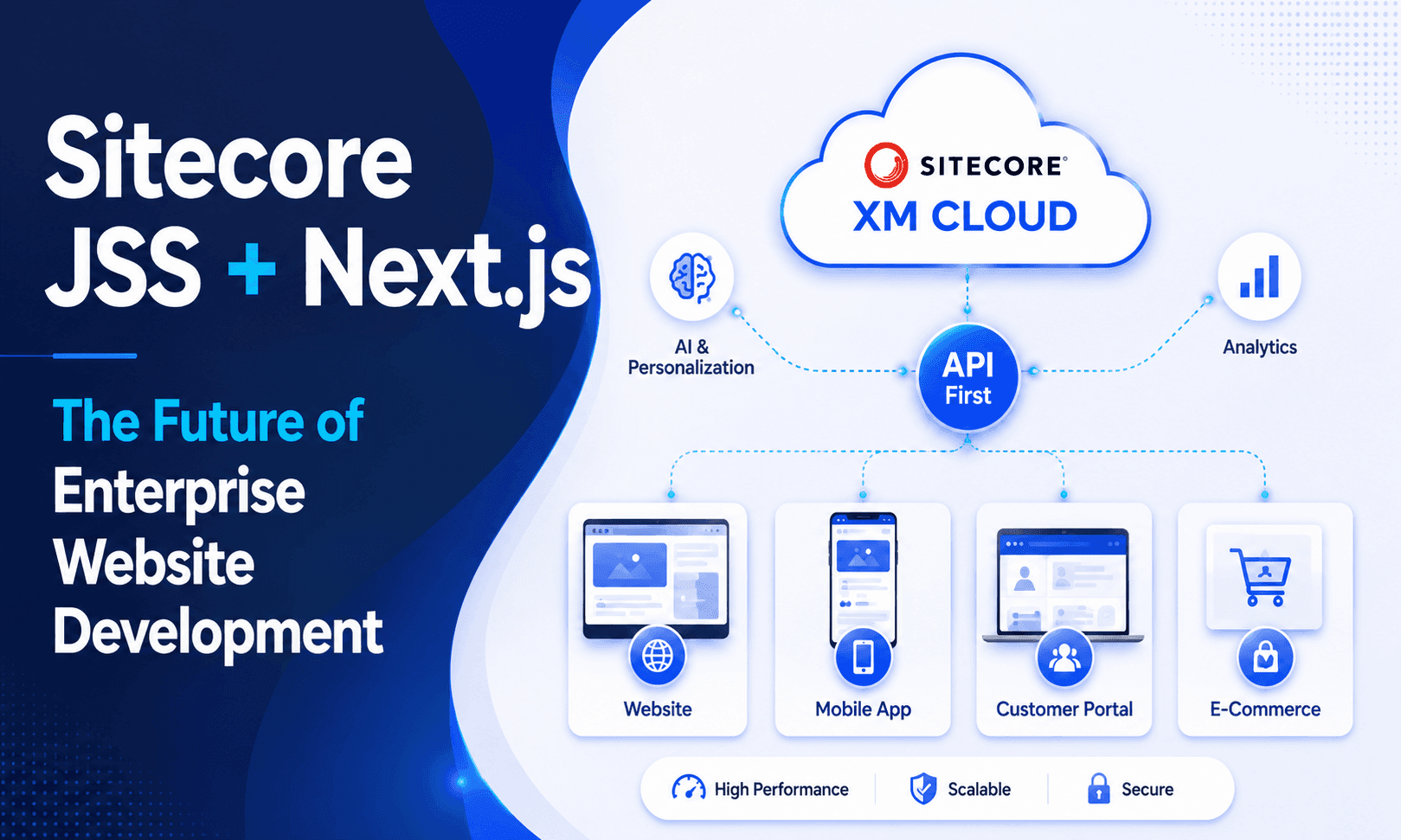
7. Sitecore XM Cloud + Next.js = Future-Ready Enterprise Architecture
The combination of:
- Sitecore XM Cloud
- Sitecore JSS
- Next.js
- AI personalization
- Headless CMS architecture
creates one of the most scalable enterprise digital experience platforms available today.
Benefits for Enterprise Organizations
✔ Faster Digital Transformation
Modern architecture accelerates implementation and innovation.
✔ Better SEO & Performance
Next.js significantly improves search performance and user engagement.
✔ Lower Operational Complexity
Cloud-native SaaS architecture reduces infrastructure management.
✔ Future-Ready AI Ecosystem
AI-driven personalization becomes easier to implement.
8. Why Choosing the Right Sitecore Partner Matters
Modern Sitecore headless implementation requires specialized expertise.
The right partner helps enterprises:
- Reduce implementation risk
- Optimize architecture
- Improve scalability
- Accelerate deployment
- Maximize long-term ROI
What Enterprises Should Look For
✔ XM Cloud Expertise
Modern SaaS-native implementation experience is critical.
✔ Headless Architecture Experience
Strong expertise in:
- Next.js
- React
- GraphQL
- API-first architecture
is essential.
✔ Enterprise Scalability Capability
Large-scale ecosystems require strong architectural planning.
✔ AI & Personalization Knowledge
Modern customer engagement increasingly depends on intelligent experiences.
9. Why Enterprises Choose Murmu Software Infotech
At Murmu Software Infotech, we help enterprises build scalable digital ecosystems using modern Sitecore JSS and Next.js architecture.
Our expertise includes:
- Sitecore CMS development services
- Sitecore JSS implementation
- Next.js development
- XM Cloud migration
- Headless CMS architecture
- AI-powered personalization
- Enterprise integrations
- Ongoing optimization & support
Explore Our Sitecore Services
- Sitecore CMS Development Services
- Sitecore Operations & Support Services
- Sitecore Rescue Mission Services
Final Thoughts
Enterprise website development is rapidly evolving toward:
- Headless architecture
- Cloud-native scalability
- AI-powered experiences
- Omnichannel delivery
- High-performance frontend ecosystems
Traditional CMS platforms increasingly struggle to meet modern enterprise expectations.
Sitecore JSS & Next.js provide enterprises with a future-ready architecture capable of supporting:
- Faster websites
- Better scalability
- Modern frontend experiences
- AI-driven personalization
- Long-term digital transformation
Organizations that modernize early will gain significant competitive advantages in the evolving digital experience economy.
Free Sitecore JSS & XM Cloud Consultation
Planning a Sitecore headless implementation or Next.js modernization initiative?
Get a Free Architecture Consultation
✔ Headless CMS roadmap
✔ XM Cloud migration planning
✔ Performance optimization insights
✔ Next.js scalability strategy
✔ AI personalization recommendations
👉 Connect with our Sitecore experts and build a future-ready enterprise website platform with confidence.