When Should an Indian Business Choose a Headless CMS?
In This Article
- What Is a Headless CMS?
- When Should an Indian Business Choose a Headless CMS?
- 1. You Need Content Across Multiple Digital Channels
- 2. Your Content Team Publishes Frequently
- 3. You Need a Custom, High-Performance Frontend
- 4. Your Website Must Integrate with Business Systems
- 5. You Are Planning Mobile Apps or Customer Portals
- 6. You Need GEO, AEO and AI-Ready Content
- 7. Your Current CMS Is Restricting Growth
- When Is a Headless CMS Unnecessary?
- A Practical Headless CMS Decision Checklist
- Premium Headless CMS Platform for Indian Businesses
- Final Decision: Choose Headless for a Platform, Not Just a Website
A headless CMS can give an Indian business greater control over content, performance, integrations and future digital channels but it is not the right choice for every website.
The decision should not be based on technology trends. It should be based on a practical business question:
Does your organisation need to manage and deliver structured content across more than one digital experience?
A traditional CMS may remain suitable for a straightforward corporate website. A headless CMS becomes valuable when the business needs websites, mobile apps, customer portals, e-commerce experiences, APIs, multilingual content, automation or AI-enabled content workflows from one scalable content foundation.
What Is a Headless CMS?
A traditional CMS manages the content and the visual presentation of a website within one connected system.
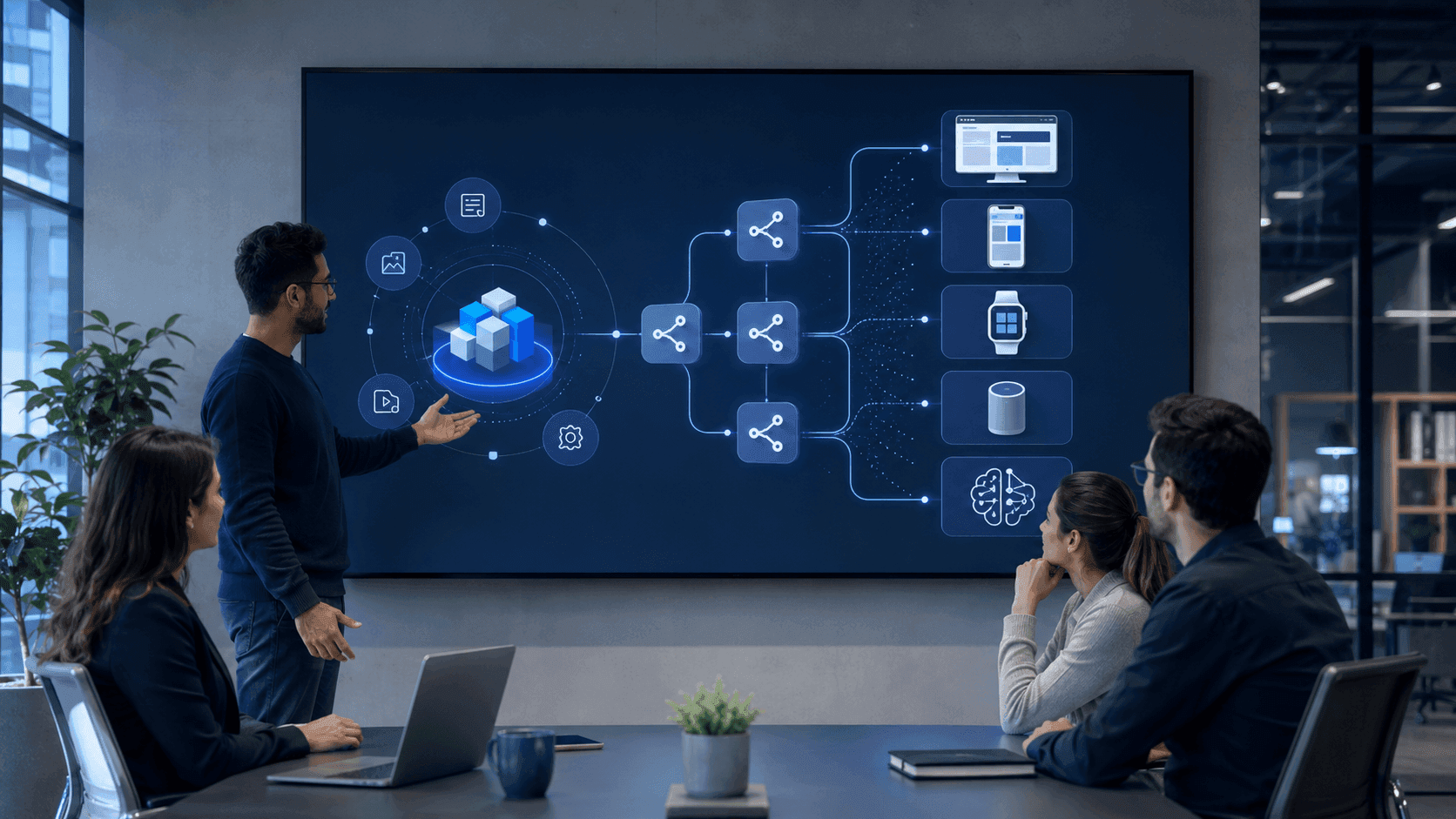
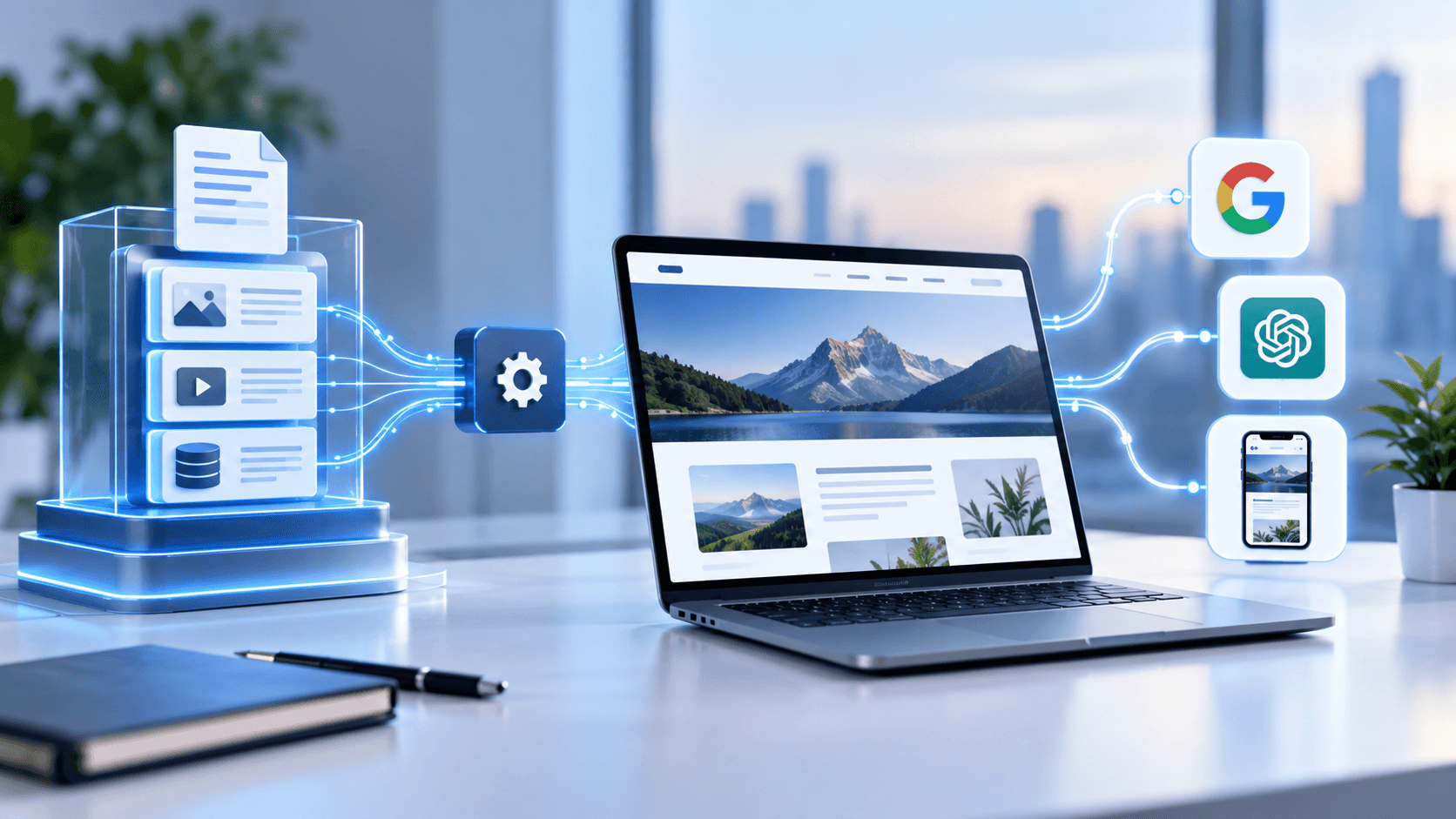
A headless CMS separates these two layers. Content is created and stored in the CMS, then delivered through APIs to a separately developed frontend.
For example:
- Sanity, Strapi or Umbraco can manage the content.
- React, Next.js or Astro can power the website experience.
- The same structured content can support a mobile app, customer portal, campaign microsite or another digital channel.
This separation gives developers greater frontend flexibility while allowing content teams to manage information from a central source. However, it also introduces additional development, integration and operational responsibilities.
When Should an Indian Business Choose a Headless CMS?
1. You Need Content Across Multiple Digital Channels
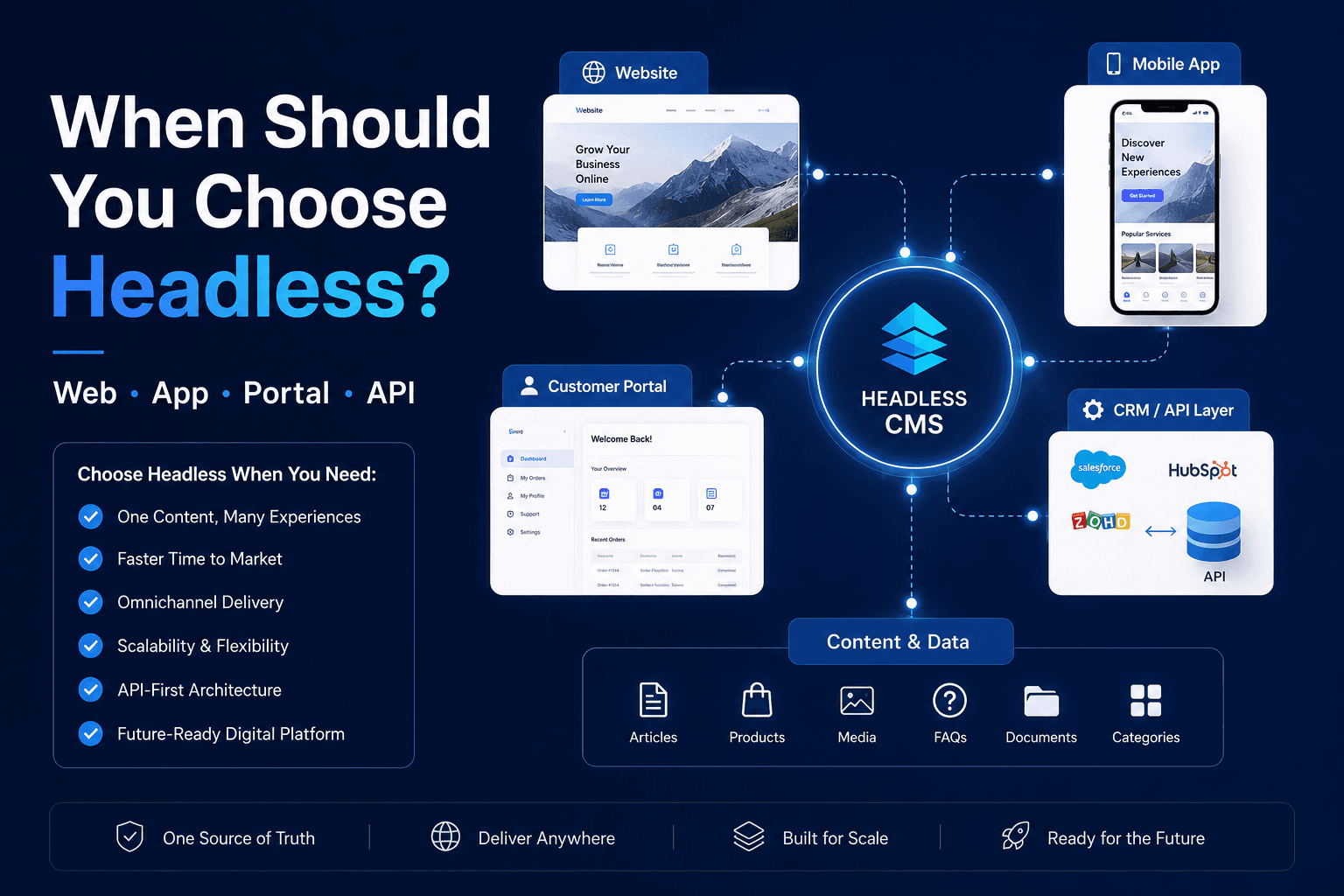
A headless CMS becomes useful when the website is no longer the only place where customers interact with your organisation.
Your content may need to appear across:
- Corporate or marketing websites
- Android and iOS applications
- Customer or member portals
- E-commerce storefronts
- Campaign microsites
- Digital displays
- Business software
- AI assistants and conversational interfaces
Instead of managing the same service description, product information or healthcare content in several systems, a headless CMS can provide one structured source that different applications access through APIs.
This is particularly valuable for companies building connected e-commerce websites and D2C platforms, where product, category, promotional and editorial content may need to support several customer touchpoints.
2. Your Content Team Publishes Frequently
A conventional website may become a bottleneck when every new landing page, article, campaign or service update requires development assistance.
A properly implemented headless CMS can give content and marketing teams structured tools for managing:
- Service and industry pages
- Blogs and case studies
- Product information
- Campaign landing pages
- City or regional pages
- FAQs and knowledge content
- Reusable calls to action
- SEO and AI-optimisation fields
Reusable content models also help maintain consistency. A service description can be updated once and reused wherever that content is referenced.
Murmu Software Infotech experienced this challenge before moving its own platform to Sanity and Next.js. The Sanity headless CMS migration case study documents how structured content, live editing and AI-assisted workflows reduced routine content-update time and dependency on developers.
3. You Need a Custom, High-Performance Frontend
A headless architecture allows the frontend team to use technologies such as React, Next.js or Astro without being restricted by the theme or rendering system of a traditional CMS.
This can help organisations build:
- Custom customer journeys
- Interactive search and filtering
- Personalised interfaces
- High-traffic campaign experiences
- Complex dashboards and portals
- Mobile-first user experiences
Headless architecture does not automatically make a website fast. Performance still depends on frontend code, images, caching, API design, hosting and third-party scripts. However, it gives development teams more control over how the experience is rendered and optimised.
Build a Headless Platform Ready for Long-Term Growth
4. Your Website Must Integrate with Business Systems
Growing companies rarely operate through an isolated website.
The digital platform may need to connect with:
- CRM and lead-management systems
- E-commerce or payment platforms
- ERP and inventory software
- Search and personalisation tools
- Marketing automation
- Product-information systems
- Appointment or booking systems
- Customer-support tools
- Analytics and reporting platforms
Because a headless CMS is API-driven, it can form part of a wider composable digital architecture. The CMS manages structured content while specialised systems manage transactions, customer data, search, personalisation or operations.
This approach requires proper architecture planning. Integration complexity, API ownership, error handling and long-term maintenance should be considered before development begins.
5. You Are Planning Mobile Apps or Customer Portals
A traditional website CMS is usually designed around web pages. Reusing its content within a mobile app or authenticated portal may require additional customisation.
A headless CMS stores content independently of how it will appear. The website, app and portal can therefore request the same content and present it according to each interface.
For example, a healthcare organisation might manage doctor profiles, health articles, plan information and FAQs in one CMS while presenting them differently across its marketing website, mobile app and member portal.
Murmu Software Infotech’s Sitecore XM Cloud healthcare platform case study demonstrates a larger enterprise use case involving a headless CMS, Next.js frontend, AI-powered search, healthcare finder modules, personalization and portal functionality.
6. You Need GEO, AEO and AI-Ready Content
Search discovery is expanding beyond traditional search-result pages. Businesses increasingly need content that can be understood by search engines, answer engines and AI systems.
A headless CMS can store information as structured fields rather than only as large visual page blocks. These fields may include:
- AI summaries
- Key facts
- Direct answers
- FAQs
- Service areas
- Target audiences
- Primary entities
- Review dates
- Structured metadata
This does not automatically guarantee visibility in Google, Bing or AI platforms. The content still needs factual quality, clear authorship, internal linking, crawlable frontend rendering and technically correct metadata.
However, structured content creates a stronger foundation for GEO, AEO, schema markup, AI-search optimisation, content reuse and future agent-based workflows.
7. Your Current CMS Is Restricting Growth
A business should evaluate headless migration when its existing platform creates measurable problems, such as:
- Slow campaign deployment
- Heavy developer dependency
- Duplicate content across channels
- Difficult integration with modern APIs
- Limited frontend flexibility
- Plugin or upgrade complexity
- Poor content governance
- Inability to support new digital products
Migration should preserve URLs, metadata, internal links, media, redirects and structured data. Moving to headless without a proper SEO and content-migration plan can create unnecessary risk.
Turn Structured Content into Scalable Digital Experiences
When Is a Headless CMS Unnecessary?
A traditional CMS may be the better choice when the business needs:
- One simple website
- A small number of pages
- Infrequent content updates
- Minimal custom functionality
- Rapid launch with a limited budget
- No mobile app or portal
- No dedicated development support
Headless CMS can be excessive for a basic brochure website. It requires frontend development, API integration, preview functionality, deployment management and ongoing technical maintenance. Industry guidance consistently recommends aligning the architecture with actual business complexity instead of adopting headless only because it is modern.
A Practical Headless CMS Decision Checklist
Before approving a headless platform, decision-makers should ask:
- Do we need the same content across multiple channels?
- Does our marketing team publish frequently?
- Do we need custom digital experiences?
- Will the platform connect with CRM, ERP, commerce or mobile apps?
- Do we require structured multilingual or multi-location content?
- Can our team support API-driven development and maintenance?
- Does the expected business value justify the added complexity?
- Can we define a phased content and SEO migration plan?
A headless CMS is a strong choice when most answers are yes and the business has clear long-term digital goals.
Premium Headless CMS Platform for Indian Businesses
Murmu Software Infotech’s current Premium Headless Website Platform starts at ₹1,15,000 for the predefined offer scope.
The platform can include:
- Sanity, Strapi or Umbraco CMS
- React, Next.js or Astro frontend
- Structured content models
- Reusable page and landing-page templates
- Content automation
- API-ready architecture
- CRM and dashboard integration
- Mobile-app and portal integration foundations
- AI chatbot integration
- GEO, AEO and AI-search optimisation
- One year of basic monitoring and support
Additional pages, advanced workflows, integrations, licenses, cloud infrastructure and custom functionality are quoted separately. The India-only offer is currently available until 6 August 2026, subject to approved scope and project-slot availability.
Businesses can review the complete scope, development cost and project showcases through the Monsoon Digital Product Launch Offer 2026.
Final Decision: Choose Headless for a Platform, Not Just a Website
An Indian business should choose a headless CMS when content must support multiple teams, channels, integrations and future digital products.
Choose a traditional CMS when simplicity and rapid website publishing are the priorities.
Choose a headless CMS when your organisation needs:
Structured content, frontend flexibility, API integrations, mobile readiness, automation and long-term digital scale.
The right decision is not about choosing the most advanced technology. It is about selecting the simplest architecture capable of supporting where the business plans to go next.
Frequently Asked Questions
What is a headless CMS?
A headless CMS is a content-management system that stores and manages content separately from the customer-facing website or application. Content is delivered through APIs to websites, mobile apps, customer portals, digital displays or other channels.
When should an Indian business choose a headless CMS?
An Indian business should consider a headless CMS when it publishes content frequently, operates multiple websites or locations, needs mobile apps or portals, requires API integrations, or wants one structured content source for several digital channels.
What is the difference between a traditional CMS and a headless CMS?
A traditional CMS combines content management, templates and website presentation in one system. A headless CMS manages structured content independently and delivers it through APIs to a separately developed frontend, providing greater flexibility for websites, applications and integrations.
Is a headless CMS suitable for small businesses?
A headless CMS can suit a small business with advanced publishing, integration or multi-channel requirements. However, a straightforward traditional CMS is usually more practical when the business needs one simple website, infrequent updates and limited custom functionality.
How much does headless CMS development cost in India?
Murmu Software Infotech’s current Premium Headless CMS Platform starts from ₹1,15,000 for the predefined offer scope. Final cost depends on content models, templates, integrations, migrations, languages, workflows, frontend complexity and third-party services.
Which technologies can be used for headless CMS development?
Headless implementations can use platforms such as Sanity, Strapi or Umbraco for content management, with React, Next.js, Angular or Astro for the frontend. The right combination depends on publishing requirements, integrations, internal skills and long-term architecture.
Can a headless CMS power websites and mobile apps?
Yes. Because content is delivered through APIs, the same structured content can be used across websites, Android and iOS applications, portals and other digital interfaces. Each channel can present the content according to its own design and user experience.
Is a headless CMS better for SEO, GEO and AEO?
A headless CMS can provide structured fields for metadata, direct answers, FAQs, entities, service areas and AI summaries. However, visibility still depends on crawlable rendering, performance, internal linking, content quality, schema implementation and correct technical SEO.
What are the disadvantages of a headless CMS?
A headless CMS usually requires separate frontend development, API integration, preview configuration, deployment infrastructure and ongoing technical support. It may introduce unnecessary cost and complexity for businesses that only need a small informational website.
How can a business prepare for headless CMS migration?
The business should audit existing content, URLs, metadata, redirects, media, integrations and user roles. It should then define structured content models, migration priorities, frontend architecture, publishing workflows, SEO requirements and a phased launch plan.