AI-Powered MVP Development

In This Article
- Cost, Features, Timeline & Use Cases
- What Is an AI-Powered MVP?
- How Much Does AI MVP Development Cost?
- Which Features Should Your AI MVP Include?
- 1. Core Product Workflow
- 2. AI Capability
- 3. Real Data or Integrations
- 4. Measurement
- How Long Does an AI-Powered MVP Take?
- Do You Need to Train Your Own AI Model?
- When Should an AI MVP Use RAG or AI Agents?
- High-Value AI MVP Use Cases
- Avoid the “AI-Generated MVP” Trap
- How Should You Start?
- Ready to Validate Your AI Product?
Cost, Features, Timeline & Use Cases
AI product ideas often get delayed for the same reasons.
How much will it cost? Which AI features do we actually need? Can we launch in weeks instead of months? Do we need our own AI model? What data is required? And will the MVP scale if users actually want it?
These are the right questions.
The goal of AI-powered MVP development is not to build the smartest possible AI system on day one.
It is to build the smallest dependable AI product that proves whether one important workflow creates measurable value.
That could mean reducing support workload, qualifying leads, searching internal knowledge, extracting information from documents, recommending products, automating repetitive tasks, or helping users make faster decisions.
What Is an AI-Powered MVP?
An AI-powered MVP is a minimum viable product where artificial intelligence contributes directly to the core customer or business outcome.
Common capabilities include:
- Generative AI assistants
- Custom AI chatbots
- RAG knowledge search
- AI agents and tool calling
- Recommendation engines
- Predictive analytics
- Document extraction
- Image recognition
- Workflow automation
- Personalization
- Voice AI
- Intelligent dashboards

Validate AI Before You Scale
Launch a focused AI MVP with clear use cases, controlled cost, measurable outcomes, and a practical path from prototype to product.
Muoro, for example, highlights conversational AI, NLP, computer vision, predictive analytics, recommendation systems and workflow automation as common AI MVP capabilities. CMARIX similarly positions AI MVPs around testing real AI use cases before committing to full-scale deployment.
But there is an important distinction.
AI-powered product: AI is part of what the customer uses.
AI-accelerated development: developers use AI coding, testing, specification and prototyping tools to build the product faster.
The strongest approach can use both—but neither removes the need for experienced engineering.
How Much Does AI MVP Development Cost?
There is no responsible single price for every AI MVP.
A simple LLM-powered assistant connected to one data source is fundamentally different from an agentic platform interacting with a CRM, payment system, internal databases and multiple business workflows.
Public vendor pricing illustrates this variation. Samyak currently states that basic MVPs may begin around $5,000, while advanced AI or multi-platform products can range from roughly $30,000 to $100,000+. These are vendor-specific examples rather than universal market rates.
AI MVP cost typically increases with:
Data preparation + RAG + custom integrations + agents + model usage + user roles + security + compliance + monitoring + mobile apps + complex workflows.
There are also continuing costs to consider. AI products can incur model/API charges, vector database costs, cloud infrastructure, observability and ongoing evaluation expenses. smartData specifically warns that AI components can create additional infrastructure and technical-debt costs when scalability is not considered early.
Murmu Software Infotech's current AI MVP Development Services provide a focused route for validating AI products before expanding into larger systems.
The right budgeting question is therefore:
What is the least expensive AI workflow that can prove meaningful ROI?
Which Features Should Your AI MVP Include?
Start with one primary outcome.
Suppose you are building an AI sales platform.
The MVP may need:
User login → lead data → AI qualification → recommended action → CRM update → simple analytics.
It probably does not initially need ten AI agents, a sophisticated reporting engine, native iOS and Android apps, twenty integrations and a custom foundation model.
A focused AI MVP usually needs four layers:
Validate Your AI Product Before Scaling Development Investment
1. Core Product Workflow
Users need a usable web or mobile experience, authentication, business logic and the minimum dashboard required to complete the workflow.
2. AI Capability
Choose only what creates the primary value: chatbot, RAG, recommendation, prediction, extraction, generation or agentic action.
3. Real Data or Integrations
Connect the AI to the information or systems required to make it useful.
That may include internal documents, CRM, ERP, APIs, databases or third-party services.
4. Measurement
Track whether the AI actually improves the target metric:
time saved, conversions, accuracy, support resolution, revenue, user engagement or operational cost.
Without measurement, you have an AI demonstration not a validated MVP.
How Long Does an AI-Powered MVP Take?
Specialist vendors currently advertise surprisingly short timelines for focused AI MVPs.
Muoro advertises 4–6 weeks, Tericsoft describes 2–6 weeks, Samyak cites 4–8 weeks, and Railsware says some AI-assisted MVP engagements can reach a working product in 2–5 weeks.
These should be treated as planning examples—not promises for every product.
A practical AI MVP timeline could look like:
Week 1 Validate use case and ROI
Define the user, problem, workflow and measurable success criteria.
Week 2 UX, architecture and AI selection
Choose model/provider, data strategy, integrations and core screens.
Weeks 2–5 Build and integrate
Develop application logic, AI capability, APIs, database and administration.
Weeks 5–6 Evaluate, secure and launch
Test outputs, edge cases, permissions, performance and real-user workflows.
Murmu Software Infotech currently lists 3–6 weeks for its focused AI MVP program, depending on complexity and integrations.
Do You Need to Train Your Own AI Model?
Usually not for the first MVP.
Start with the lowest-risk technical approach capable of validating the idea.
That may mean using OpenAI, Azure OpenAI, Claude, Gemini or another existing model rather than spending months building or fine-tuning proprietary models.
Custom training becomes more relevant when your advantage depends on unique data, specialized predictions, domain-specific accuracy or requirements that general models cannot reliably satisfy.
smartData similarly recommends starting with simpler models where appropriate and selecting tools that can evolve as the product grows.
Validate the workflow before optimizing the intelligence.
When Should an AI MVP Use RAG or AI Agents?
Use RAG when answers must come from trusted or private knowledge.
Examples:
- Company policies
- Product documentation
- Healthcare information
- Contracts
- Training materials
- Customer knowledge bases
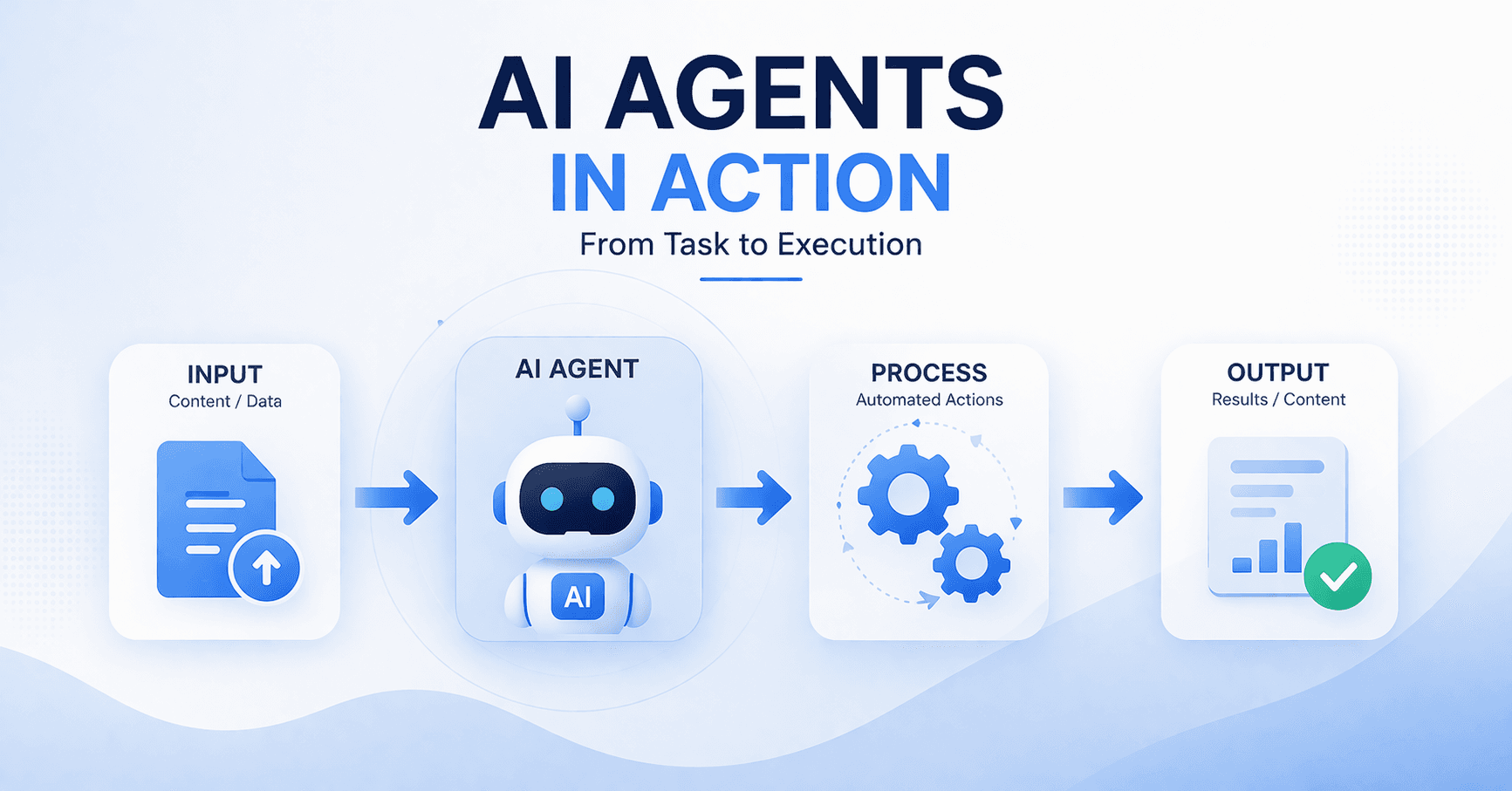
Use an AI agent when the system needs to take actions.
Examples:
- Update CRM records
- Schedule appointments
- Create support tickets
- Query business systems
- Generate reports
- Trigger workflows
- Call internal APIs
For a deeper technical decision framework, see AI-Powered MVP Development with RAG, Agents & Business Automation.
Do not add agents simply because agentic AI is popular.
If a normal workflow or API call solves the problem more reliably, use it.
Validate Your AI Product Before Scaling Development Investment
High-Value AI MVP Use Cases
Some of the strongest MVP opportunities are workflows where businesses already spend substantial human time.
Customer Service: AI assistant that answers grounded questions and escalates uncertain requests.
Sales: Lead qualification, proposal assistance and CRM automation.
Internal Knowledge: RAG assistant across documents, SOPs and company knowledge.
Healthcare: Appointment assistance, document processing, workflow support and controlled knowledge retrieval.
Retail & E-commerce: Product recommendations, catalog assistance and customer personalization.
Finance: Document analysis, anomaly detection and decision-support workflows.
Operations: AI agents that retrieve data, trigger systems and reduce repetitive administrative work.
The point is not to find a place to insert AI.
The point is to find a workflow where AI changes a measurable business outcome.
Avoid the “AI-Generated MVP” Trap
AI coding tools can dramatically accelerate prototyping.
They can also generate insecure, brittle or poorly structured software.
Redwerk specifically warns against blindly trusting AI-generated code, while Railsware's approach keeps senior engineers responsible for architecture, security and business logic even when AI accelerates coding.
For a production-facing MVP, human engineering should still own:
architecture → security → code review → integrations → testing → deployment → scalability.
Speed is valuable only when the product remains trustworthy.
How Should You Start?
Do not begin with:
We need an AI platform.
Begin with:
We want to reduce this workflow from 20 minutes to 5.
or:
We want the AI to qualify leads and automatically update our CRM.
or:
“We want employees to find answers from approved internal documents in seconds.”
Then build only enough intelligence, software and integration to test that outcome.
Murmu Software Infotech's ROI-Driven MVP Development approach follows the same principle: prioritize measurable business outcomes instead of maximizing feature count.
Ready to Validate Your AI Product?
Your first AI MVP does not need to predict the future.
It needs to answer one question:
Does this AI workflow create enough value to justify further investment?
Define the use case.
Control the feature set.
Set a measurable outcome.
Launch with real users.
Then scale what works.
Frequently Asked Questions
What is AI-powered MVP development?
AI-powered MVP development is the process of building the smallest functional version of a product where artificial intelligence contributes directly to the core customer or business outcome. The goal is to validate the AI use case with real users before investing in a larger platform.
How much does an AI MVP cost?
AI MVP cost depends on product complexity, AI capability, data preparation, integrations, user workflows, model usage, security and infrastructure. A simple LLM-based assistant can cost substantially less than an agentic platform with multiple enterprise integrations, RAG and complex automation.
How long does it take to build an AI MVP?
A focused AI MVP can often be developed within several weeks, while more complex products may require multiple months. Timeline depends on data readiness, feature scope, integrations, model evaluation, UX, security, QA and deployment requirements.
What features should an AI MVP include?
An AI MVP should include one primary user workflow, the minimum application interface, the required AI capability, essential data or system integrations and measurable analytics. Additional features should be delayed unless they are necessary to validate the core business hypothesis.
What AI features can be included in an MVP?
AI MVP features can include generative AI assistants, RAG-based search, AI agents, recommendation engines, document processing, predictive analytics, personalization, voice AI, image recognition and workflow automation.
Should an AI MVP use RAG?
RAG is useful when the AI needs to answer from trusted, private or frequently changing information such as company documents, policies, product documentation, healthcare knowledge, contracts or customer-support content.
When should an MVP use AI agents?
AI agents are appropriate when the product needs AI to perform actions such as updating a CRM, querying business systems, scheduling appointments, creating tickets, generating reports or calling approved APIs. Agents should only be used when they provide measurable value over simpler workflows.
Do I need to train my own AI model for an MVP?
Usually not. Many MVPs can validate their core idea using established models from providers such as OpenAI, Azure OpenAI, Anthropic or Google. Custom training or fine-tuning becomes more relevant when proprietary data, specialized accuracy or domain-specific behavior creates a competitive advantage.
What are the best use cases for an AI MVP?
Strong AI MVP use cases include customer-support automation, internal knowledge search, sales qualification, document processing, recommendation systems, healthcare workflow support, operational automation, intelligent analytics and AI-assisted business workflows.
How do I choose an AI MVP development company?
Choose a partner that understands product validation as well as AI engineering. Evaluate experience with LLMs, RAG, agents, APIs, security, data architecture, QA, model evaluation and post-launch scaling, and verify that the team is willing to remove unnecessary AI features instead of overengineering the MVP.