MVP Development Company for US Startups

In This Article
- Cost, Features & Timeline
- What Should an MVP Actually Include?
- How Much Does MVP Development Cost in the USA?
- How Long Does It Take to Build an MVP?
- Should You Build a Prototype Before the MVP?
- What About AI MVPs?
- What Happens After MVP Launch?
- How Should US Startups Choose an MVP Development Company?
- US Product Vision + Global Engineering
- Stop Waiting for the Perfect Product
- Ready to Turn Your Idea Into an MVP?
Cost, Features & Timeline
You have the product idea.
Maybe you have wireframes, early customer conversations, an investor deck—or simply a problem you believe software can solve.
But development keeps getting delayed because three questions remain unanswered:
How much will the MVP cost? Which features should we actually build? And how long will it take to launch?
Those questions matter more than choosing React versus another frontend framework.
The purpose of an MVP is not to build a cheaper version of your entire vision.
It is to build the smallest credible product that lets you test whether customers actually want what you are creating.
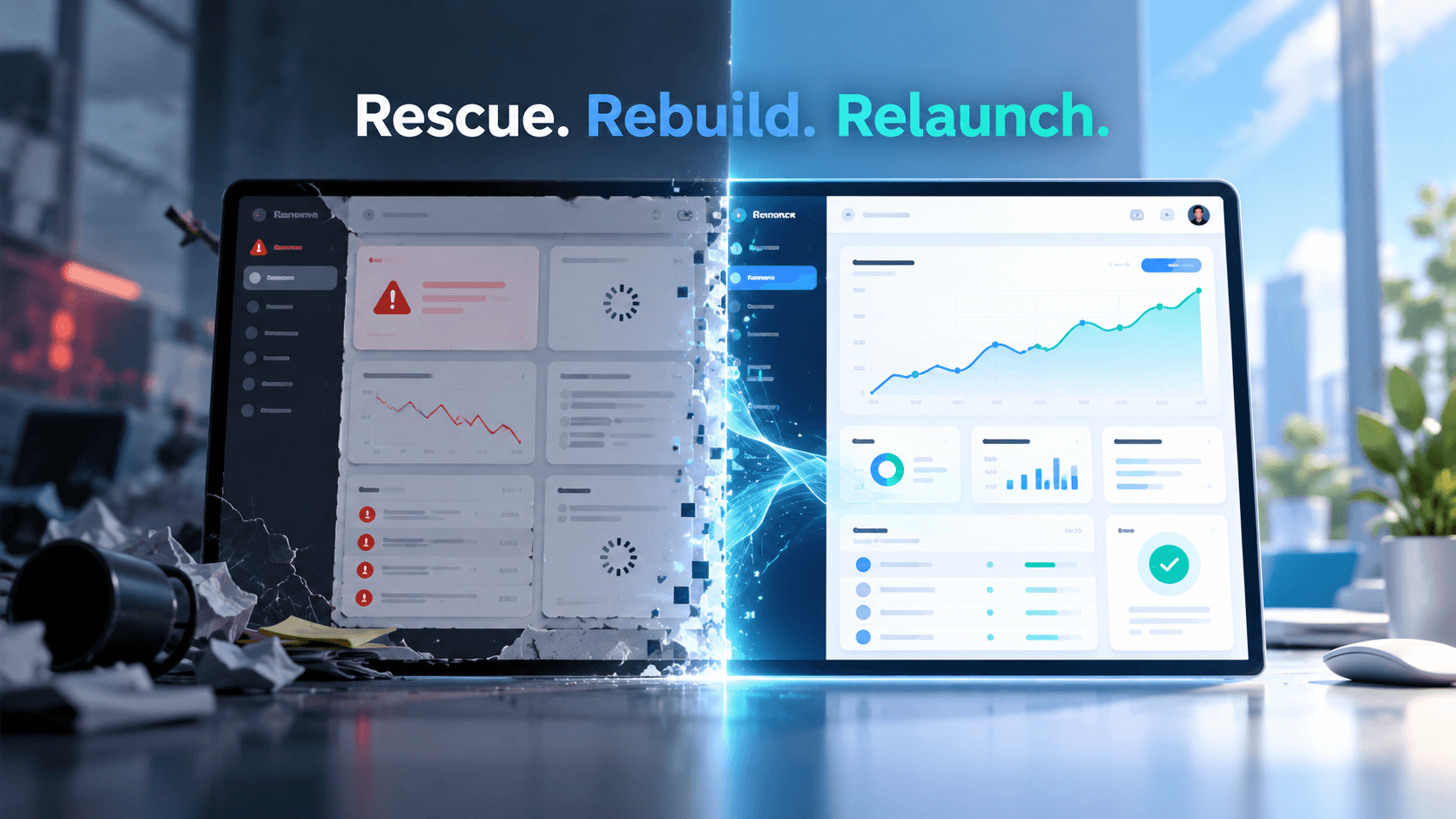
For US startups, choosing the right MVP development company should therefore begin with validation, scope and business outcomes—not a long feature list.

Launch Your MVP With Confidence
Turn your startup idea into a focused MVP with clear scope, practical features, controlled cost, and a faster path to market.
What Should an MVP Actually Include?
A minimum viable product needs enough functionality to solve one meaningful customer problem from beginning to end.
That may include:
- User registration or authentication
- One primary customer workflow
- A simple dashboard
- Basic administration
- Essential API integrations
- Payments if monetization must be tested
- Analytics
- Feedback collection
- Cloud deployment
What it usually does not need on day one is every possible user role, sophisticated reporting, dozens of integrations, advanced automation and every feature from the long-term roadmap.
Telliant explicitly promotes single-feature MVPs for testing one core value proposition, while Instinctools emphasizes prioritizing must-have functionality before evolving into a broader marketable product. ISHIR similarly structures its process around identifying what users genuinely need before launching and measuring results.
The strongest MVP question is therefore:
What is the minimum product experience required to prove or disprove our most important business assumption?
Everything else can move into the post-MVP backlog.
How Much Does MVP Development Cost in the USA?
There is no meaningful universal MVP price because a simple customer portal and an AI-powered marketplace are completely different products.
Public competitor pricing demonstrates that difference.
Freshcode currently lists a standard MVP from approximately $25,000, with more complex packages starting higher. Telliant says simple MVPs can begin around $10,000–$20,000. A broader 2026 comparison from Asper Brothers places MVP development approximately between $10,000 and $100,000+, depending on functionality, product complexity and the development team.
The cost normally increases with:
More user roles + more workflows + custom UX + third-party integrations + AI + payments + compliance + complex architecture + mobile applications.
Freshcode similarly identifies features, integrations, design requirements, architecture and post-launch support among the major cost drivers.
This is why founders should avoid asking only:
How much does an MVP cost?
Instead ask:
“What is the least expensive version that can produce meaningful market evidence?”
Murmu Software Infotech uses this business-first approach through its ROI-Driven MVP Application Development model, where features are prioritized according to validation, growth and measurable business value rather than feature volume. Its current limited MVP offer also advertises selected tightly scoped engagements from $999 with 4–6 week delivery, while broader custom MVP engagements vary according to scope and complexity.
Turn Your Startup MVP Vision Into Scalable Software
How Long Does It Take to Build an MVP?
For a focused custom MVP, roughly 6–12 weeks is a common planning range, but complexity can move the schedule in either direction.
Freshcode reports an average 6–12 weeks, Telliant gives the same range for simpler MVPs, while Forcoda describes its MVP phase as two months or more. Instinctools gives a broader 3–6 month range for projects with larger scopes.
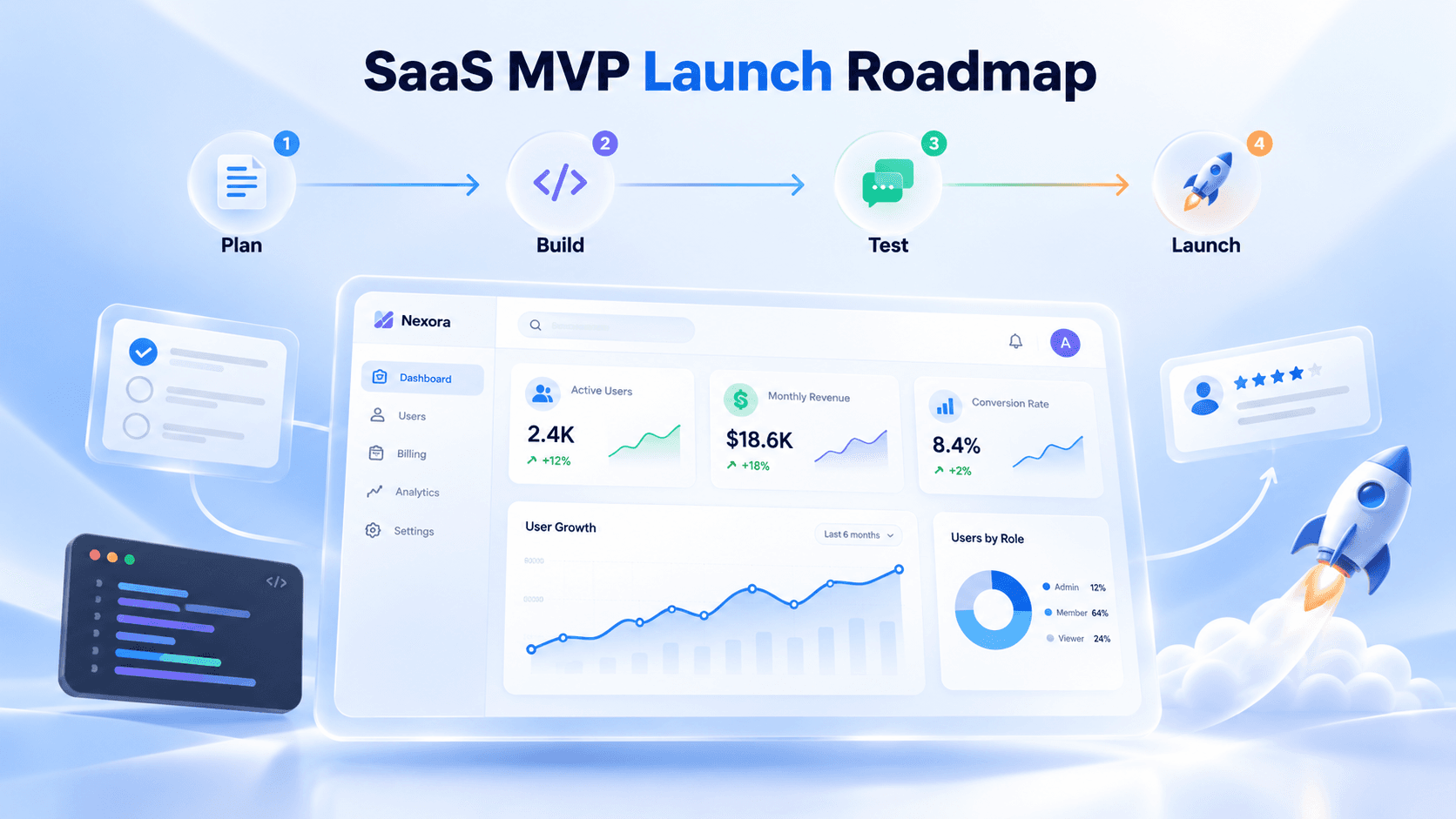
A practical startup timeline could look like:
Week 1 — Discovery & Validation
Define target user, problem, success metric and core workflow.
Week 2 — Scope & UX
Prioritize features and create key screens or a clickable prototype.
Weeks 3–6 — Development
Build frontend, backend, APIs and essential integrations.
Weeks 6–8 — QA & Launch
Test critical workflows, deploy, integrate analytics and onboard initial users.
More complex healthcare, FinTech, AI, marketplace or multi-platform products may need longer.
Freshcode's published process follows a similar structure: 1–2 weeks for discovery, 1–2 weeks for design, 3–6 weeks for development and 1–2 weeks for launch preparation.
The lesson is important:
If your MVP needs six months because every idea became a must-have, you may no longer be building an MVP.
Should You Build a Prototype Before the MVP?
Sometimes.
A prototype is useful when the biggest uncertainty is:
Will users understand this experience?
A prototype can test flows and interactions without building the complete backend.
An MVP becomes necessary when the question is:
Will real users actually use or pay for this product?
Instinctools clearly distinguishes prototype validation from a functional MVP that real customers can use, while Forcoda separates technical discovery, clickable prototyping and full MVP development into different stages.
For complex ideas, spending a small amount validating the workflow before committing the entire development budget can save substantial rework later.
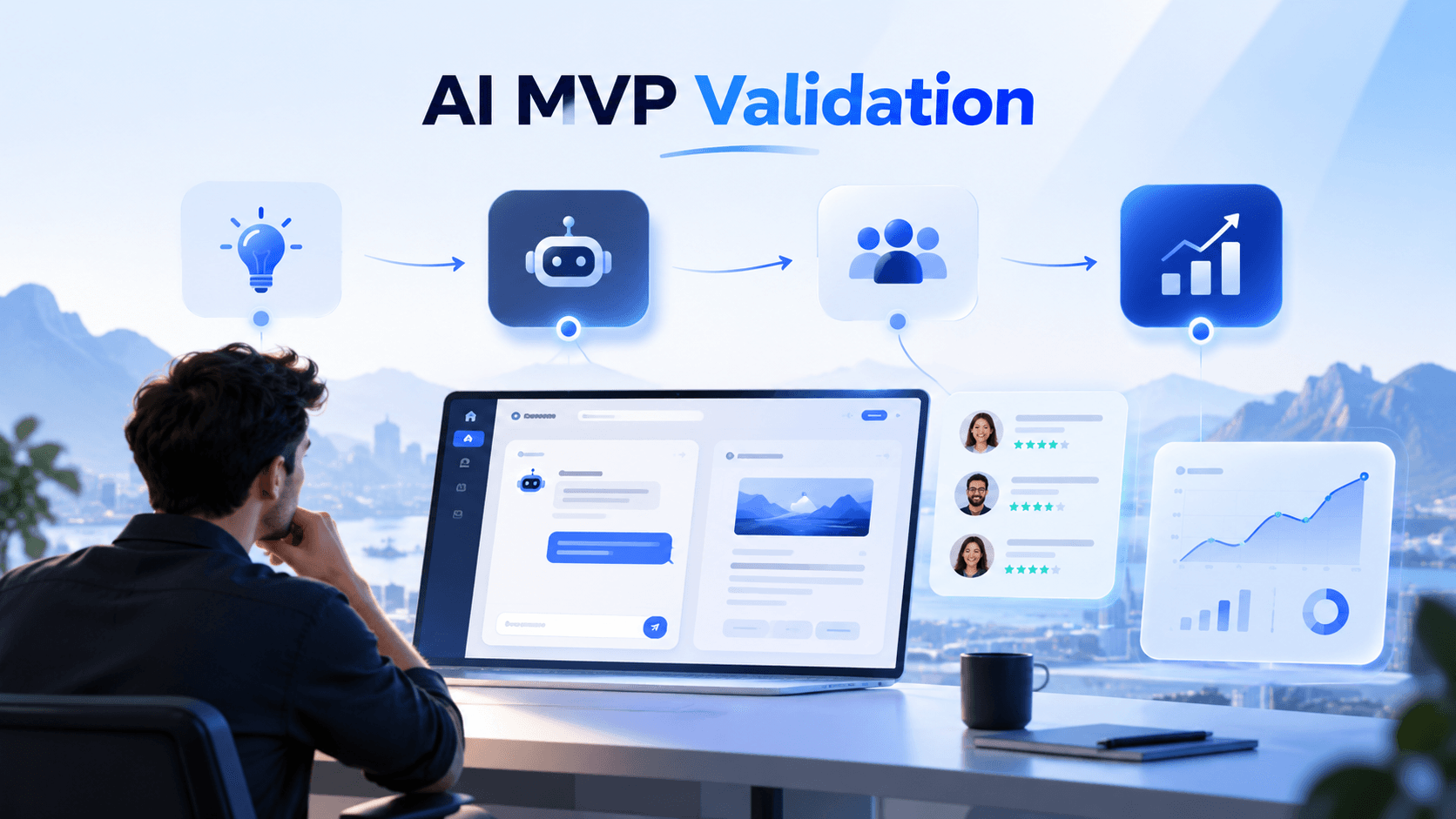
What About AI MVPs?
AI changes both scope and cost.
An AI MVP may include:
- AI chatbot or assistant
- RAG-based knowledge search
- Recommendation engine
- AI-generated content
- Document processing
- Workflow automation
- AI agents
- External LLM integrations
But the same rule applies:
Do not add AI because it sounds impressive. Add it only when it validates the product's core value.
Murmu Software Infotech also provides dedicated AI MVP Development Services for products where AI is central to the business workflow rather than an optional feature. Its current AI MVP offer includes agent/tool integrations and post-launch optimization for qualified engagements.
What Happens After MVP Launch?
Launch is not the finish line.
It is where useful evidence begins.
Your initial users should tell you:
- Which features they actually use
- Where they abandon the workflow
- What they misunderstand
- Which problem matters most
- Whether they will pay
- Which feature should be built next
Freshcode emphasizes analytics and feedback after launch, while Instinctools describes post-MVP development as prioritizing additional functionality based on real user and market insights.
Murmu Software Infotech's current MVP offering similarly includes weekly progress tracking and post-launch support so products can continue evolving after initial validation.
Your roadmap after launch should therefore come from user evidence—not the original wish list.
Launch Faster Without Overbuilding Your First Software Product
How Should US Startups Choose an MVP Development Company?
Do not choose solely from portfolio screenshots.
Ask:
Will they challenge unnecessary features?
Can they explain exactly what is included in the price?
Who owns the source code and IP?
Can they give a milestone-based timeline?
Will we communicate directly with the technical team?
Can the architecture grow if the MVP succeeds?
What happens after launch?
Freshcode, for example, explicitly defines code and IP ownership alongside pricing, milestones and post-launch support—useful benchmarks for any founder evaluating vendors.
A good MVP company should occasionally tell you:
“Do not build that yet.”
That can be more valuable than adding another feature.
US Product Vision + Global Engineering
US startups do not necessarily need their entire engineering organization in one city.
A distributed model can combine US-market strategy and founder ownership with an experienced offshore product engineering team.
Murmu Software Infotech already supports this approach for US-focused MVP delivery through lean discovery, validation, rapid development and iterative scaling. You can also review its broader guide to choosing an MVP Development Agency in the USA.
This model is particularly valuable when a startup needs engineering capacity quickly but does not yet want the cost and delay of building a complete permanent development team.
Stop Waiting for the Perfect Product
An MVP should not answer every future question.
It should answer the next important business question.
Do customers understand the product?
Will they use it?
Will they pay?
Does the workflow solve the problem?
Can we acquire users?
Should we continue investing?
If you can answer those questions with five features instead of twenty-five, building twenty-five first does not make the product stronger.
It simply makes validation slower and more expensive.
Ready to Turn Your Idea Into an MVP?
Start with the customer problem.
Prioritize the smallest meaningful feature set.
Set a clear budget and launch window.
Then build enough to learn from the market.
Validate first. Scale what works.
Frequently Asked Questions
How much does MVP development cost for a US startup?
MVP development cost depends on product complexity, number of workflows, design requirements, integrations, AI functionality, mobile platforms and compliance needs. A simple MVP can cost significantly less than a marketplace, FinTech, healthcare or AI-heavy product. Founders should scope the smallest version capable of validating the core business assumption.
How long does it take to build an MVP?
A focused software MVP can often be delivered within approximately 6 to 12 weeks, while very lean engagements may launch faster and complex products may require several months. Timeline depends on discovery, UX, feature scope, integrations, QA and deployment requirements.
What features should a startup MVP include?
An MVP should include only the features required to complete the primary customer workflow and validate the product's main value proposition. Typical features can include authentication, one core workflow, a simple dashboard, essential integrations, analytics, administration and payments when monetization needs to be tested.
What features should not be included in an MVP?
Features that do not directly support early validation should usually be delayed. Advanced reporting, many user roles, numerous integrations, complex automation, extensive customization and non-essential enhancements can often move into the post-MVP roadmap.
What is the difference between a prototype and an MVP?
A prototype demonstrates how a product may look or behave and is useful for testing concepts and user flows. An MVP is a functional product that real users can interact with, allowing the startup to measure usage, feedback, retention and willingness to pay.
Should startups build an MVP before developing the full product?
For most unvalidated product ideas, an MVP provides a lower-risk way to test assumptions before investing in a complete platform. Real customer evidence can then guide which features deserve additional investment.
Can an MVP include AI features?
Yes. An AI MVP can include capabilities such as chatbots, RAG-based knowledge search, recommendation engines, document processing, AI automation or agent workflows when AI is central to the product's value proposition.
Can US startups hire an India-based MVP development team?
Yes. US startups can work with India-based product teams through planned timezone overlap, shared Git repositories, project-management tools and regular sprint communication while retaining product strategy, source-code ownership and roadmap control.
How do I choose an MVP development company?
Choose a partner that can challenge unnecessary features, define scope clearly, explain pricing and milestones, provide direct technical communication, protect source-code ownership and support the product after launch. Relevant startup and product-development experience is more important than a large technology list.
What happens after an MVP is launched?
After launch, startups should collect product analytics, user feedback, conversion data and customer interviews. These signals should determine whether to improve the existing workflow, add features, change positioning, scale the product or reconsider the original assumption.