Development / CMS
Architecture Comparison: Making the Right CMS Decision
SSaurav Kumar3 Min Read
In This Article
- 1. Traditional CMS vs Headless CMS
- Traditional CMS (Monolithic)
- 2. Decoupled Architecture (The Middle Ground)
- 3. Sitecore JSS vs XM Cloud
- 4. Helix Principles: Structuring for Scale
- What is Helix?
- Why Helix Matters for Decision-Makers
- 5. Strategic Takeaways
- Choose Traditional CMS if:
- Choose Headless / XM Cloud if:
- Choose Decoupled / JSS if:
- Final Thought
Sitecore JSS vs XM Cloud • Traditional vs Headless • Decoupled Architecture • Helix Principles
Modern digital experiences demand speed, flexibility, and scalability. Choosing the right CMS architecture is no longer just a technical decision—it directly impacts business agility, customer experience, and long-term cost.
This guide breaks down the key architectural choices leaders must evaluate.
1. Traditional CMS vs Headless CMS
Traditional CMS (Monolithic)
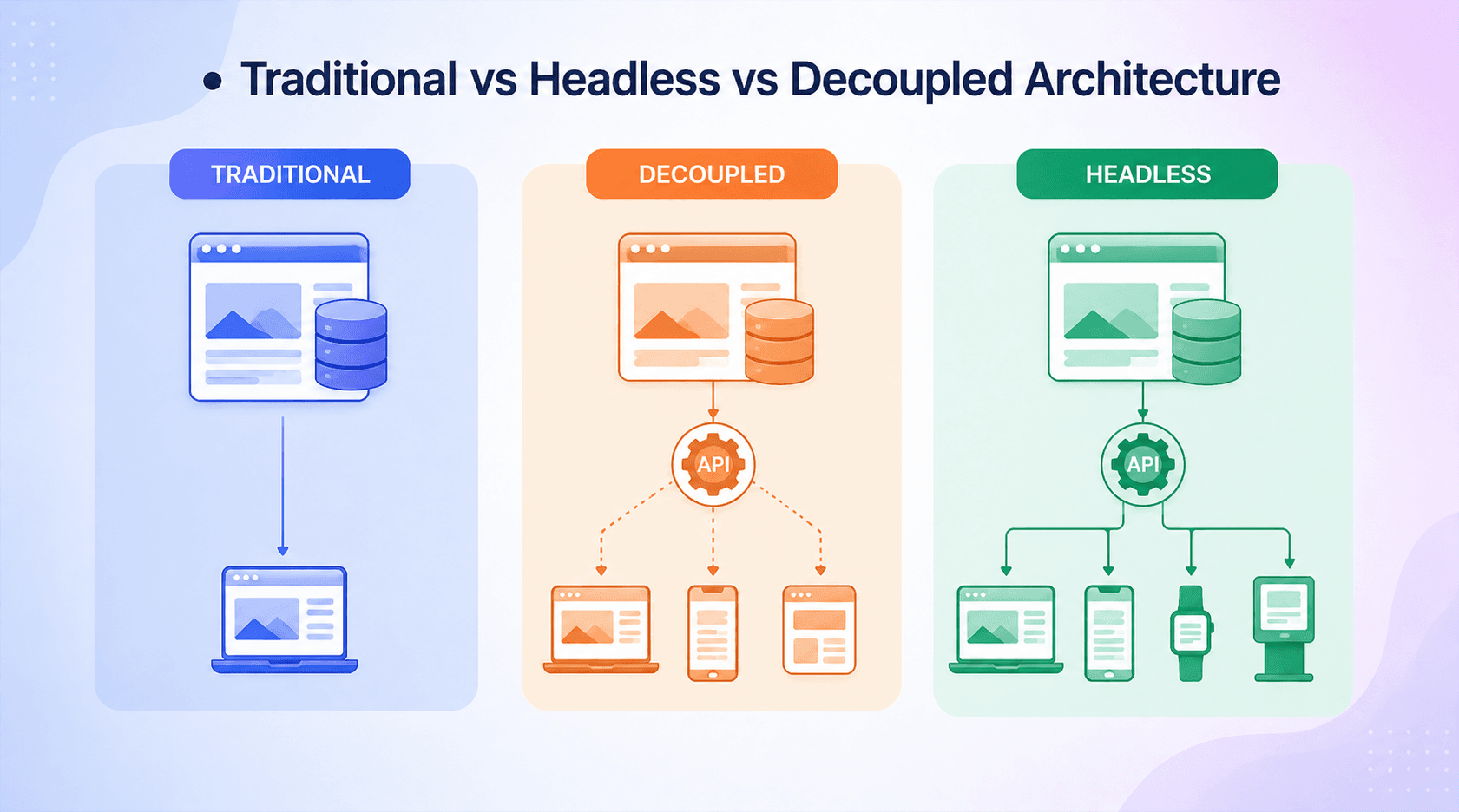
A traditional CMS tightly couples content management, presentation, and delivery into a single system.
Key Characteristics:
- Backend + frontend tightly integrated
- Page rendering happens within the CMS
- Limited flexibility for omnichannel delivery
Pros:
- Faster initial setup
- Easier for small teams
- Built-in preview and editing
Cons:
- Hard to scale across channels (mobile, IoT, apps)
- Slower performance under heavy load
- Developer constraints due to rigid architecture
Headless CMS