Case Study & Journal
Telemedicine Platform Case Study: DOC247 Video Consultations & Real-Time Clinic Queues
RRajkishor5 Min Read
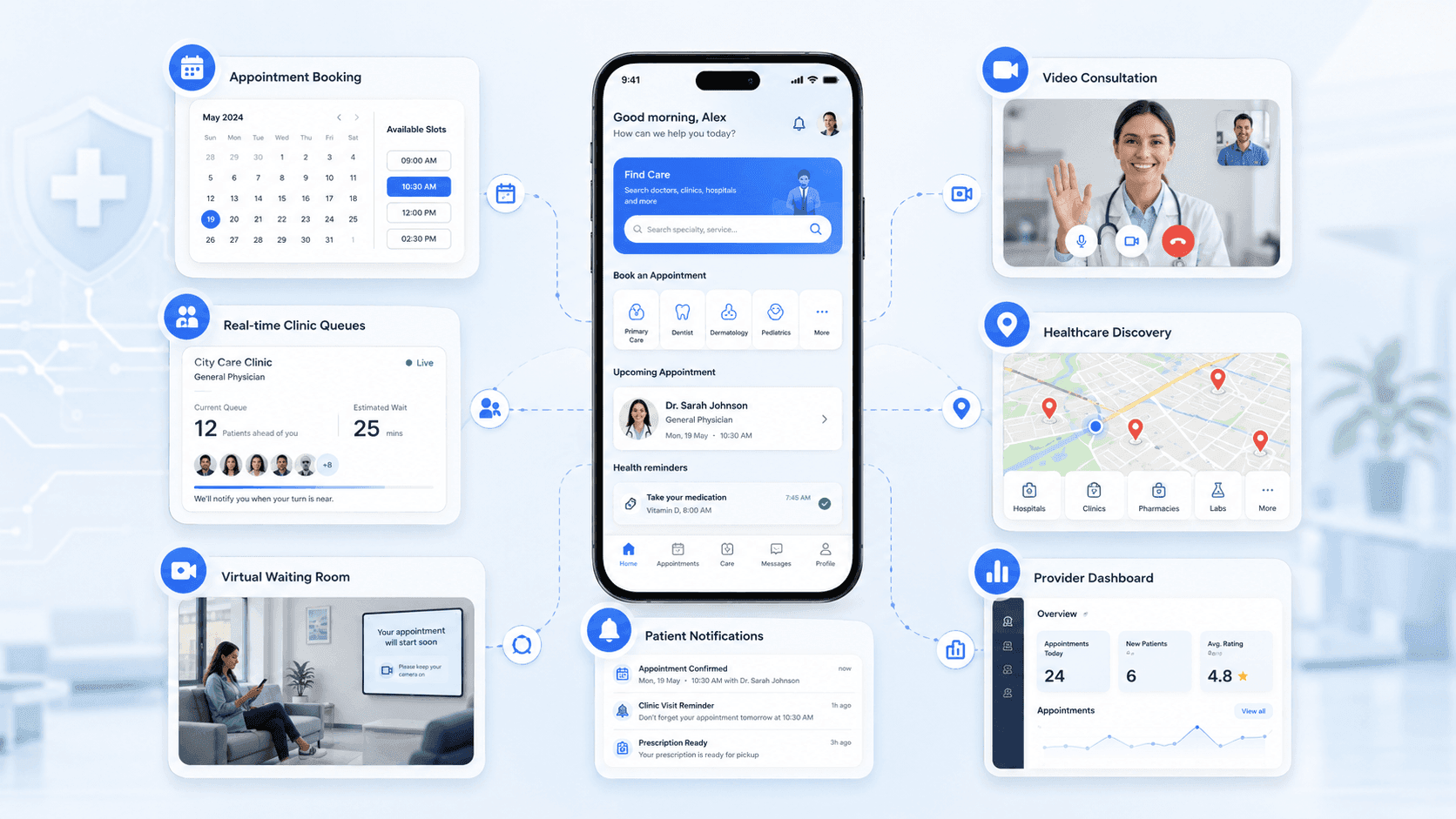
Healthcare access is not only about finding a doctor. Patients also need to know where care is available, how long they may wait, whether they can consult remotely, and when they should travel to a clinic.
DOC247 was designed to address this broader patient-access problem by combining telemedicine, appointment workflows, real-time clinic queues, provider discovery, notifications, and virtual consultation into one digital healthcare experience.
Murmu Software Infotech contributed to the development of this connected healthcare platform across web and mobile workflows, helping bridge virtual care and in-person clinic access within one patient journey.
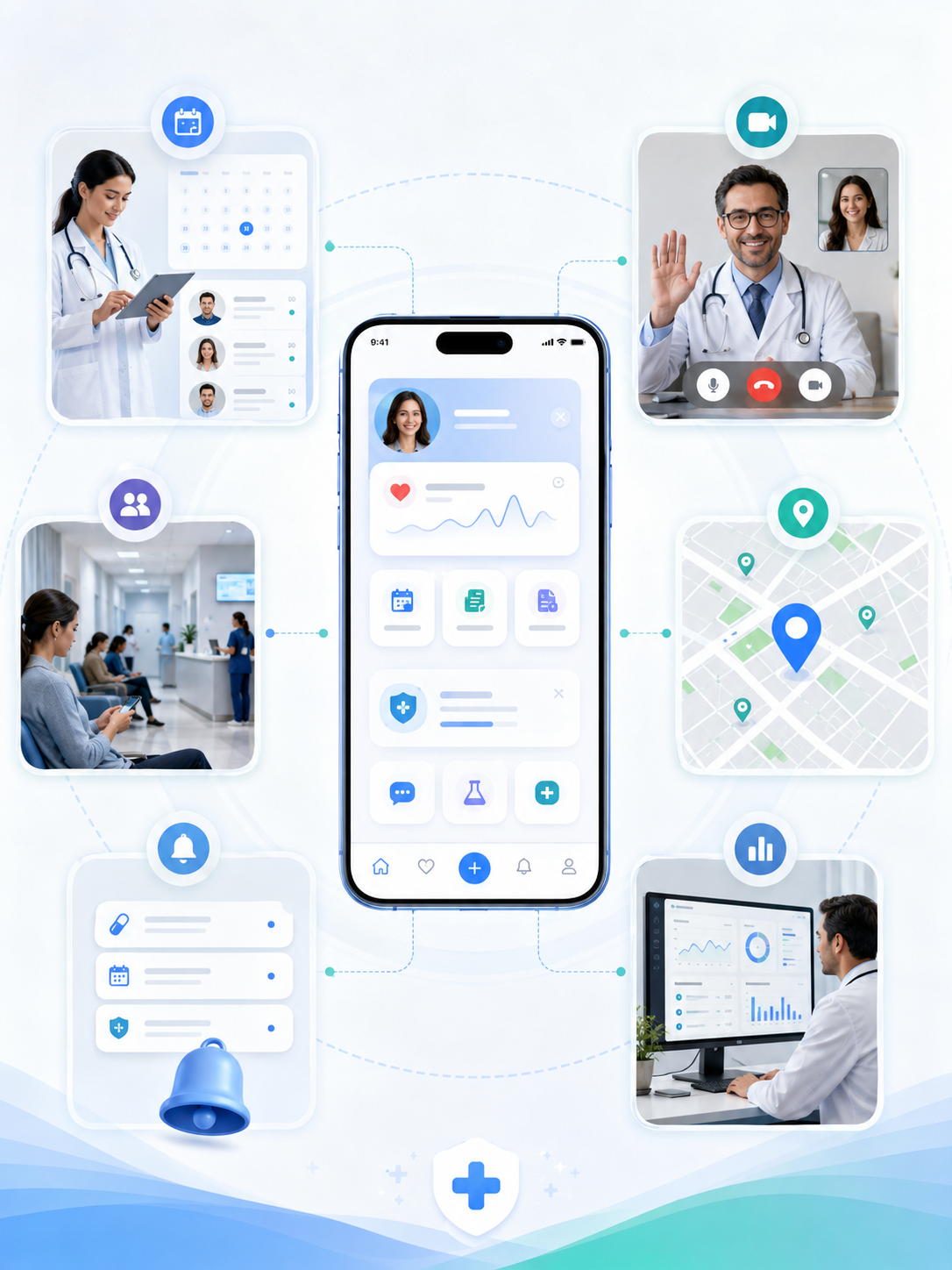
Connect appointments, video consultations, clinic queues, location discovery, notifications, and provider workflows in one scalable telemedicine platform.
A conventional doctor-booking application would not fully solve the problem.
Patients needed the ability to search for available healthcare providers, book consultations, understand real-time clinic availability, join walk-in queues remotely, receive queue updates, and access doctors virtually when travelling to a clinic was unnecessary or inconvenient.
Healthcare providers also needed better operational control over availability, appointment allocation, walk-in demand, virtual consultations, and patient communication.
The platform therefore needed to support several interconnected workflows:
The goal was not simply to digitize appointments. It was to create a digital patient-access platform connecting people with the right care pathway at the right time.
DOC247 combines two important healthcare journeys.
Patients who need physical care can discover nearby clinics, view availability, join a queue remotely, receive updates, and travel when their turn approaches.
Patients who do not require an in-person visit can enter a virtual consultation workflow and connect with an available doctor through video.
DOC247’s current patient experience reflects this hybrid model, offering both real-time walk-in queue access and virtual consultations across Alberta.
This is what makes the platform more valuable than a standalone video-calling application: care discovery, queue management, communication, and consultation work together.
Patients can search for doctors and book appointments according to availability, location, and service requirements.
The system also includes round-robin doctor allocation, designed to distribute eligible bookings among available doctors instead of repeatedly routing consultations to the same provider.
For multi-doctor environments, this creates a more structured appointment-assignment workflow and provides a foundation for balancing consultation demand across participating providers.
Healthcare demand does not always align with fixed appointment slots.
When a doctor is not immediately available, patients can enter a virtual waiting room rather than abandoning the consultation journey.
The patient remains within the digital workflow until an appropriate provider becomes available.
This approach makes telemedicine feel closer to an actual healthcare service rather than a simple scheduled video meeting.
RingCentral was integrated to enable doctor-patient video and voice consultations.
The consultation workflow connects provider availability with the virtual waiting experience so patients can progress from seeking care to communicating with a healthcare professional without switching between unrelated applications.
DOC247’s current platform publicly describes its virtual-care experience as private encrypted video and states that prescriptions, referrals, or sick notes may be provided where clinically appropriate.
One of the platform’s strongest features is the integration of physical clinic queues with digital patient access.
Patients can identify participating clinics and enter the queue before arriving.
Instead of spending the full waiting period inside a clinic, they can monitor their queue position remotely and receive updates as their turn approaches.
For healthcare providers, the same workflow creates better visibility into incoming walk-in demand.
This connects digital convenience with existing physical healthcare delivery rather than forcing clinics to replace their operating model completely.
Google Maps integration supports discovery of nearby:
Doctors | Clinics | Hospitals | Healthcare Providers
Location is important because the best care option may depend not only on specialty or availability but also on practical travelling distance.
By combining geographic discovery with availability and queue information, the platform can help patients make a more informed choice about where to seek care.
Firebase notifications were integrated for important events such as:
Notifications are critical in a real-time healthcare workflow because users should not have to continuously refresh the application to understand whether their care status has changed.
The platform supports different experiences for patients and healthcare providers.
Patients focus on finding care, booking, waiting, receiving updates, and consulting.
Providers focus on availability, appointments, queue activity, patient flow, and consultation delivery.
Keeping these workflows connected through one healthcare platform creates more operational continuity than using separate systems for scheduling, queues, messaging, and video calls.
Healthcare platforms require a stronger trust model than ordinary consumer applications.
DOC247’s current service publicly states HIPAA and PIPEDA compliance, Canadian data storage, and end-to-end encryption.
For the case study, these should be presented as current platform trust characteristics while implementation-specific compliance claims should remain tied to documented technical and regulatory validation.
DOC247 demonstrates how telemedicine can extend beyond scheduled video consultations.
The platform brings together virtual doctor access, real-time walk-in queues, healthcare discovery, patient notifications, provider availability, and appointment workflows within one digital ecosystem.
This gives patients more flexibility in how they access non-emergency care while giving providers a digital layer for managing both virtual and physical patient demand.
Most importantly, the product demonstrates a practical hybrid-care principle:
Digital healthcare should not only replace physical visits—it should help patients choose and navigate the most appropriate care pathway.
Murmu Software Infotech develops telemedicine applications, video consultation platforms, doctor appointment systems, virtual waiting rooms, smart OPD and queue solutions, healthcare mobile apps, integrations, and custom digital-health platforms.
Whether you are building a telehealth startup, multi-clinic network, hospital platform, virtual-care service, or patient-access application, we can help define the workflow, architecture, integrations, and product roadmap.
Talk to our healthcare software team to build a connected digital-care experience around your actual patient and provider workflows.
A telemedicine platform is a digital healthcare system that connects patients and healthcare providers through capabilities such as doctor discovery, appointment booking, virtual waiting rooms, video consultations, notifications and patient-care workflows.
Murmu Software Infotech contributed to DOC247's digital healthcare platform, including doctor appointment booking, round-robin provider allocation, virtual waiting rooms, RingCentral video and voice consultation, Google Maps healthcare discovery, real-time clinic queues and Firebase notifications.
A virtual waiting room keeps a patient within the digital consultation workflow when a doctor is not immediately available. The patient can wait for an eligible provider instead of restarting the booking or consultation process.
Yes. DOC247 demonstrates a hybrid-care model where patients can see participating clinics, join a walk-in queue remotely and receive updates as their turn approaches.
Round-robin doctor allocation distributes eligible appointments among available providers according to configured availability and workflow rules instead of repeatedly assigning consultations to the same doctor.
Yes. DOC247 integrates RingCentral video and voice capabilities so patients and healthcare providers can conduct remote consultations within the broader digital healthcare workflow.
Yes. Google Maps integration can support location-based discovery of doctors, clinics, hospitals and healthcare providers, helping patients identify practical nearby care options.
DOC247 uses Firebase notifications for booking confirmations, appointment reminders, consultation alerts, queue updates and other care-status changes.
A hybrid digital healthcare platform connects virtual care with physical healthcare access. Patients can choose between remote consultation and in-person clinic workflows while using one connected digital experience.
Yes. Murmu Software Infotech develops telemedicine applications, video consultation systems, doctor appointment platforms, virtual waiting rooms, smart OPD and queue systems, healthcare mobile apps and custom digital-health solutions.