Healthcare CMS Development Services for Hospitals and Enterprises

In This Article
- What Is a Healthcare CMS?
- Why Hospitals Need Specialized CMS Architecture
- Structured Healthcare Content Improves Patient Experience
- Connect CMS Content With Patient Journeys
- Patient Portals Require Secure Integration
- Security and Compliance Must Be Designed Into the Architecture
- Accessibility, Mobile Experience and Performance Matter
- Headless CMS for Enterprise Healthcare
- How Healthcare CMS Development Should Work
- Build a Healthcare CMS Around Patient Needs
A hospital website is no longer just a place to publish doctor profiles, departments and contact information. For many patients, it is the first point of interaction with the healthcare organization.
Patients expect to find the right specialist, understand treatment options, locate nearby facilities, book appointments, access virtual care and receive trustworthy health information across mobile and desktop experiences.
For large hospitals, healthcare networks, insurers and medical enterprises, managing this experience through a basic website CMS quickly becomes difficult.
This is where healthcare CMS development services become important: creating a secure, scalable content platform that connects healthcare content, digital patient journeys, enterprise workflows and business systems.

Build Better Digital Patient Journeys
Create a secure, scalable healthcare CMS that connects trusted content, doctor discovery, appointments, integrations and omnichannel patient experiences.
What Is a Healthcare CMS?
A healthcare content management system enables hospitals and medical organizations to create, review, approve, publish and distribute content across websites and other digital channels.
Enterprise healthcare requirements go much further than basic page editing.
A healthcare CMS may need to manage:
- Hospitals, clinics and multiple locations
- Doctor and specialist profiles
- Departments, treatments and procedures
- Diseases, symptoms and patient education
- Health packages and diagnostic services
- Medical news and educational resources
- Multiple brands and websites
- Multiple languages and regions
- Editorial and medical approval workflows
- SEO metadata and structured content
- Digital assets and documents
Murmu Software Infotech's enterprise healthcare CMS guide describes enterprise CMS platforms as content systems capable of supporting multisite publishing, structured medical content, role-based permissions, approval workflows, digital channels and healthcare integrations.
Plan a Secure Healthcare CMS Around Patient Journeys
Why Hospitals Need Specialized CMS Architecture
Healthcare content has different governance requirements from a standard corporate website.
A treatment page may require medical review. Doctor information must remain accurate across locations. Emergency information must be easy to update. Large hospital groups may need hundreds of editors working across multiple departments without giving everyone unrestricted publishing access.
Healthcare-focused CMS research consistently identifies security, scalability, governance and long-term operational requirements as major platform-selection considerations.
The CMS therefore needs to support structured permissions and workflows such as:
Author → Medical Reviewer → Compliance/Legal Review → Approval → Publish
This creates accountability while reducing the risk of outdated or incorrectly approved healthcare information reaching patients.
Structured Healthcare Content Improves Patient Experience
One of the biggest advantages of enterprise CMS development is the ability to move from unstructured pages to reusable healthcare content.
Instead of manually recreating the same doctor details across multiple pages, developers can create structured content models for:
Doctor → Specialization → Department → Location → Availability → Appointment
The same principle can be applied to treatments, health packages, facilities, conditions and frequently asked questions.
Structured content improves consistency and makes it easier to reuse information across websites, mobile applications, search, portals and emerging AI-driven experiences.
A well-designed CMS should help content teams update healthcare information without requiring developers for every routine change. Murmu Software Infotech's healthcare website development guide highlights reusable components, editorial approval, multilingual publishing, role-based access, SEO fields, media management and API delivery as useful healthcare CMS capabilities.
Connect CMS Content With Patient Journeys
The CMS should not operate as an isolated marketing system.
Modern healthcare websites often connect content with appointment scheduling, CRM, provider directories, telemedicine and other digital services.
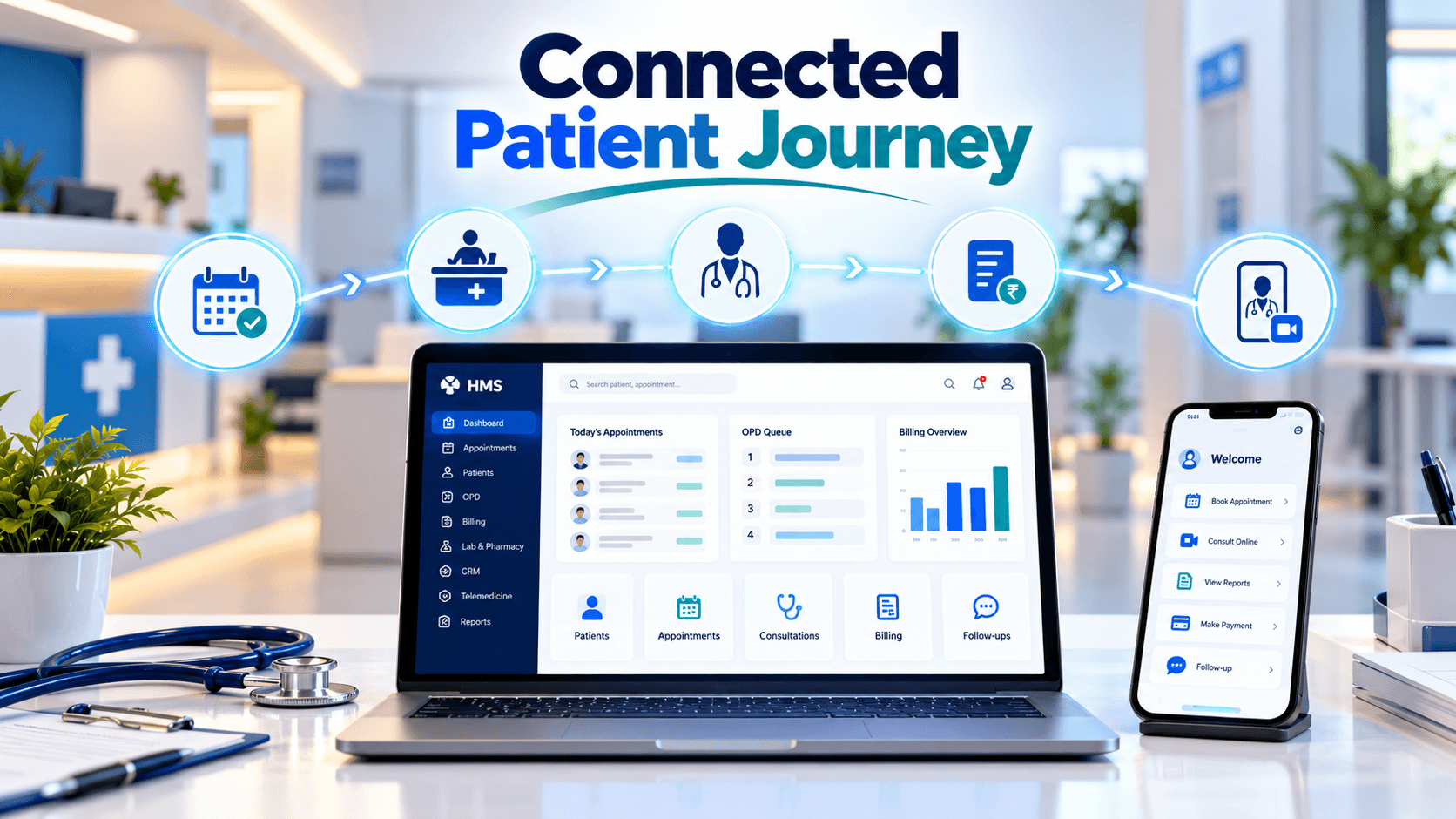
A patient journey might look like:
Google Search → Treatment Page → Doctor Profile → Appointment Availability → Booking → CRM Follow-Up
The CMS manages the content and presentation layer while secure APIs connect appropriate business systems behind it.
Healthcare implementations can integrate with CRM, scheduling platforms, provider directories, telemedicine services and hospital systems through APIs, middleware or custom connectors.
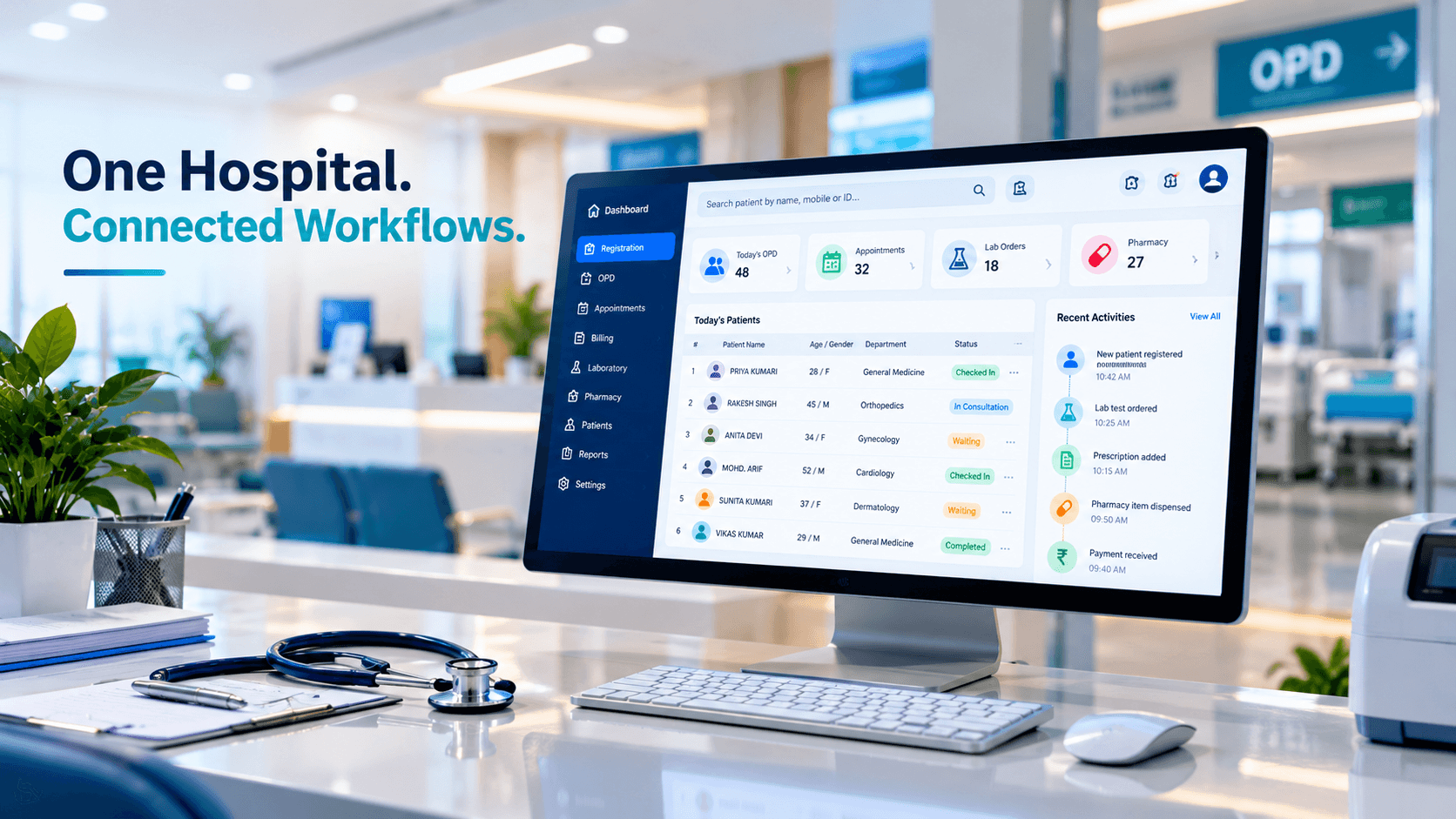
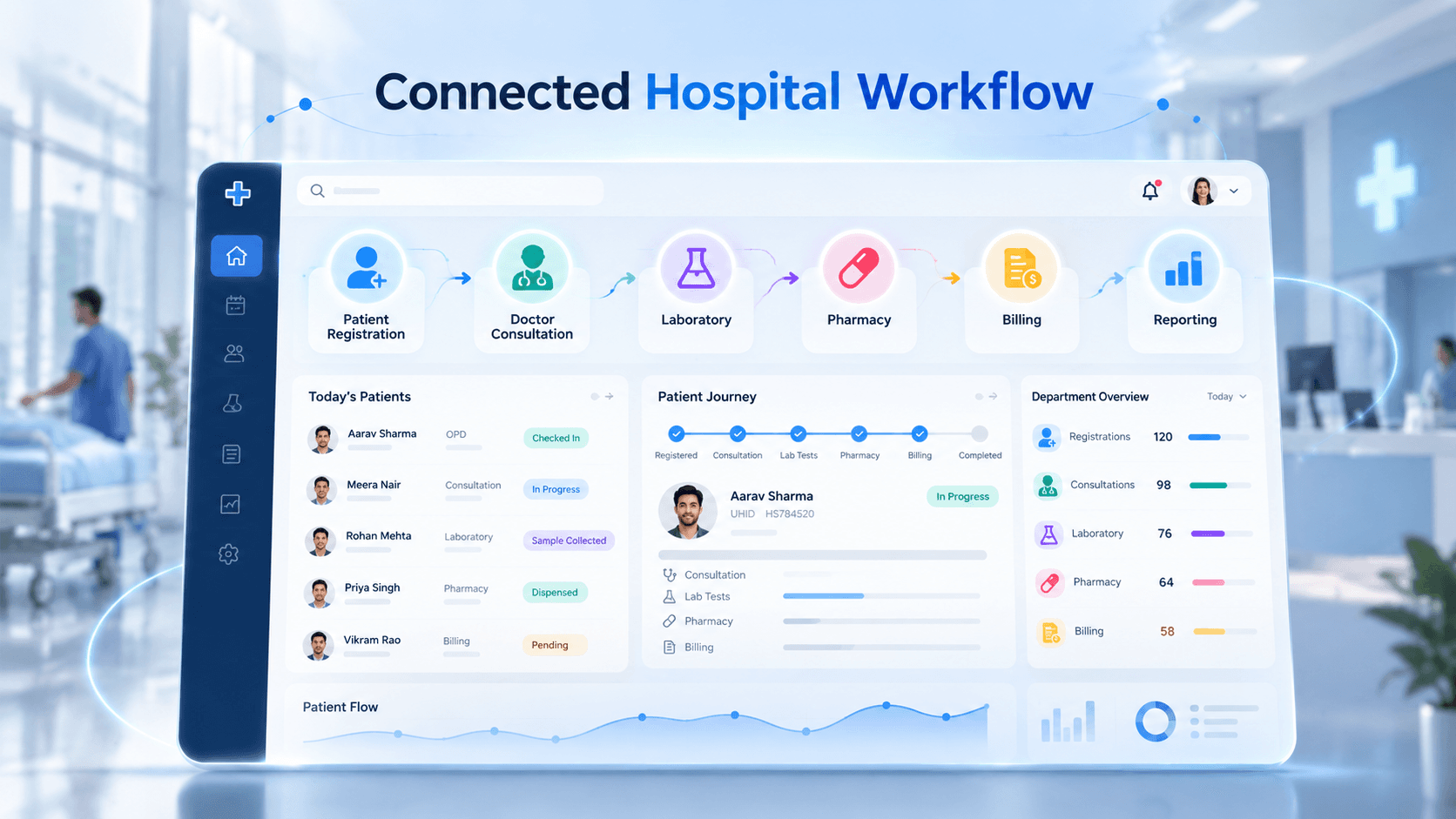
This distinction is important: a CMS does not automatically become an EHR, HMS or patient-record system simply because it integrates with one.
Patient Portals Require Secure Integration
Healthcare organizations may also use their public digital experience as an entry point into authenticated patient services.
Patients could access appointment history, prescriptions, reports or virtual consultations through connected portal applications.
Industry examples of healthcare CMS implementations commonly combine patient portals with EHR integration, multilingual experiences, automated reminders and secure access mechanisms.
However, sensitive patient information should be architected carefully.
A public CMS should not become an unnecessary storage location for protected clinical data simply because it powers the website.
Security and Compliance Must Be Designed Into the Architecture
Healthcare CMS development requires serious attention to privacy and security.
Depending on the country, business model and information processed, requirements may involve frameworks such as HIPAA, GDPR and other healthcare or privacy regulations. Healthcare software guidance frequently highlights regulatory controls alongside secure healthcare data management.
Potential controls include:
- Role-based access
- Strong authentication
- Encryption in transit and at rest where applicable
- Audit logging
- Secure API design
- Consent management
- Backup and recovery
- Vulnerability management
- Least-privilege permissions
- Secure hosting and deployment
It is important not to claim that choosing a particular CMS automatically creates a HIPAA-compliant solution.
Compliance depends on the complete architecture, data flows, hosting arrangements, contracts, operational controls, integrations and organizational processes.
Accessibility, Mobile Experience and Performance Matter
Healthcare audiences include elderly patients, people with disabilities, caregivers, international visitors and users who may be accessing information during stressful situations.
Accessibility should therefore be treated as a core healthcare requirement rather than an optional enhancement.
Navigation, typography, forms, keyboard interaction, contrast, responsive layouts and readable content should all be tested carefully.
Performance matters as well.
Doctor pages, treatment information and appointment workflows should load quickly across mobile devices and slower network conditions.
Healthcare CMS platforms also need to scale as patient traffic, locations, content and digital services increase. Existing healthcare CMS implementations frequently combine scalability with EHR connectivity, multilingual content and accessible patient services.
Build a Healthcare CMS That Scales With Care
Headless CMS for Enterprise Healthcare
Larger organizations may benefit from a headless or composable architecture.
A headless CMS separates content management from presentation, allowing structured healthcare content to be delivered through APIs to:
Websites → Mobile Apps → Patient Apps → Portals → Digital Displays → Search → AI Experiences
Healthcare CMS analysis identifies headless platforms as an option for organizations requiring more flexible content delivery across digital channels.
Headless architecture is not automatically better for every hospital. The right choice depends on the organization's development capability, number of channels, integration requirements, content governance and long-term digital roadmap.
How Healthcare CMS Development Should Work
A successful implementation should begin with healthcare workflows rather than CMS configuration.
A practical process is:
Discovery → Content Architecture → UX → CMS Selection → Development → Integrations → Migration → Security & Accessibility Testing → Launch → Continuous Optimization
CMS development guidance also emphasizes requirements definition, governance strategy, workflow design, enterprise integrations, testing, training and post-launch support as part of a complete implementation lifecycle.
Build a Healthcare CMS Around Patient Needs
The best healthcare CMS is not simply the platform with the longest feature list.
It is the system that enables hospitals to publish trusted information faster, govern medical content properly, connect patient journeys, support multiple locations and scale digital services without creating unnecessary technical complexity.
Murmu Software Infotech develops healthcare CMS and digital platforms for hospitals, medical groups and enterprises, connecting content management with doctor discovery, appointment workflows, CRM, telemedicine, hospital systems, multilingual publishing, SEO and AI-enabled experiences.
A healthcare CMS should ultimately achieve one business outcome:
Make it easier for patients to find trustworthy information and move confidently toward the right care.
Frequently Asked Questions
What is a healthcare CMS?
A healthcare CMS is a content management platform designed to help hospitals and healthcare organizations manage doctor profiles, departments, treatments, locations, patient education, multilingual content, approval workflows, websites and other digital channels.
What are healthcare CMS development services?
Healthcare CMS development services include CMS architecture, content modeling, UX, development, integrations, data migration, multilingual publishing, workflows, accessibility, SEO, security controls, performance optimization and ongoing support.
Why do hospitals need a specialized CMS?
Hospitals often manage large volumes of medically reviewed content, doctor information, locations, departments and multilingual experiences. A specialized CMS provides structured content, role-based permissions, approval workflows, integrations and scalable publishing.
Can a healthcare CMS integrate with appointment booking systems?
Yes. A healthcare CMS can connect through secure APIs with appointment scheduling platforms so patients can move from treatment or doctor pages into availability and booking workflows.
Can a healthcare CMS integrate with hospital systems and CRM?
Yes. Healthcare CMS platforms can integrate with CRM, provider directories, telemedicine platforms, scheduling systems, analytics and hospital applications through APIs or middleware, depending on the architecture and data requirements.
What is a headless CMS for healthcare?
A headless healthcare CMS separates content management from frontend presentation. Structured healthcare content can then be delivered through APIs to websites, mobile apps, patient portals, digital displays, search and other digital experiences.
Is a healthcare CMS automatically HIPAA compliant?
No. Selecting a CMS does not automatically make an implementation HIPAA compliant. Compliance depends on the complete architecture, data flows, contracts, hosting, security controls, integrations, operational policies and how protected health information is handled.
How should doctor and treatment content be structured in a healthcare CMS?
Healthcare content should use reusable models connecting doctors, specialties, departments, locations, treatments, availability and related patient information so updates remain consistent across websites and digital channels.
How important are accessibility and performance for hospital websites?
Accessibility and performance are critical because healthcare audiences include elderly users, people with disabilities, caregivers and mobile users. Navigation, forms, readability, keyboard access, responsive design and fast loading should be tested carefully.
How do you choose the right CMS for a hospital or healthcare enterprise?
Evaluate content governance, security, scalability, multisite and multilingual requirements, integrations, accessibility, editorial workflows, headless capabilities, developer ecosystem, hosting model and long-term digital strategy before selecting a CMS.