How to Choose an MVP Development Company - AI MVP, Cost, ROI & Agency Comparison
In This Article
- A cheaper MVP that never reaches real users can become your most expensive development decision.
- What Should You Look for in an MVP Development Company?
- MVP vs AI MVP vs Full SaaS Product
- Feature-First Agency vs ROI-Focused MVP Development
- How to Choose the First Five to Seven MVP Features
- Calculating MVP ROI: What Should Founders Measure?
- AI MVP Production Readiness: Beyond an Impressive Demo
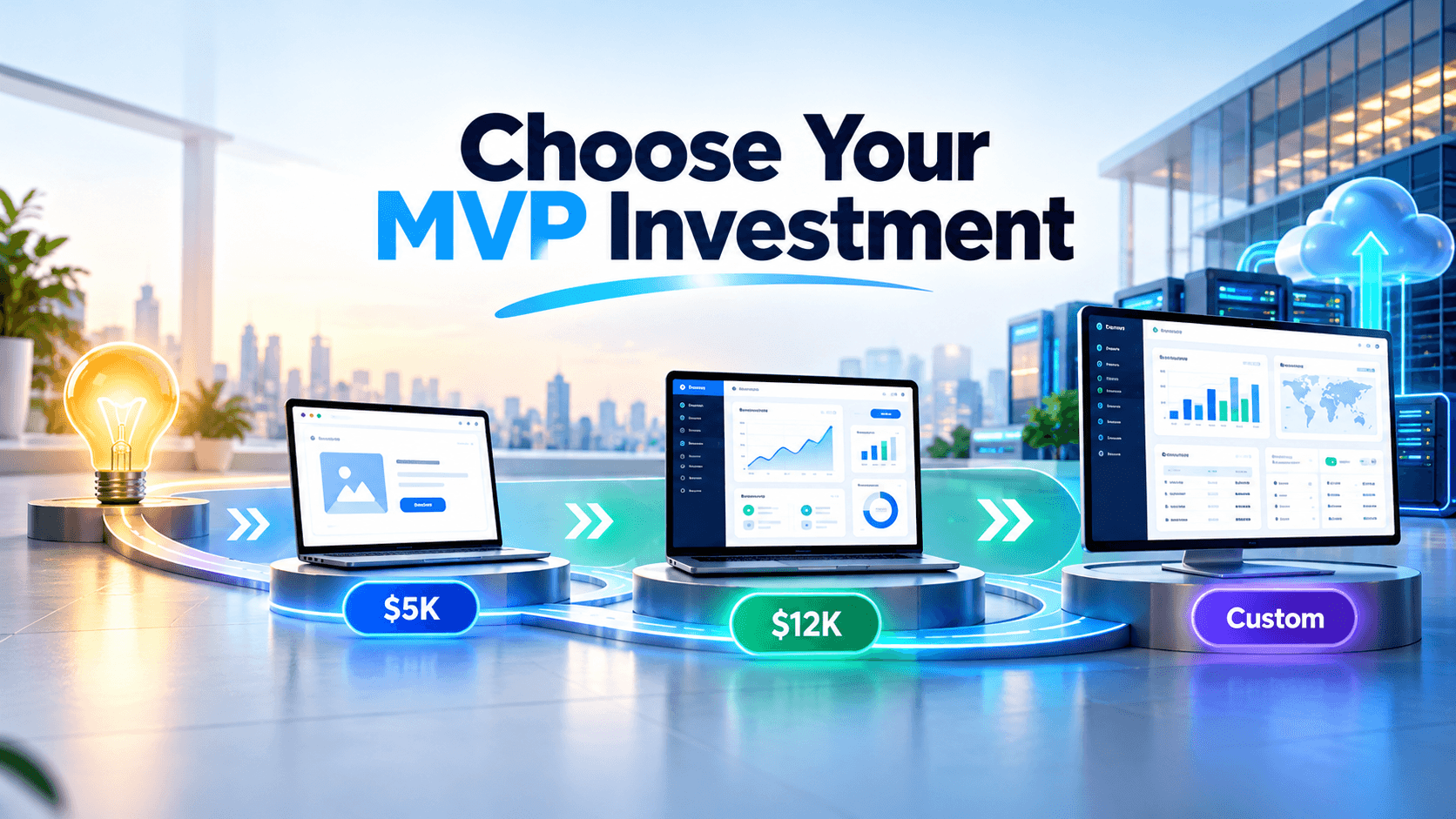
- MVP Development Cost: What Should Your Estimate Include?
- When Your Existing MVP Is Stuck or Failing
- Real Product Engineering Experience at Murmu Software Infotech
- How MSI Approaches MVP Development
A cheaper MVP that never reaches real users can become your most expensive development decision.
Maybe you have a good idea for a piece of software. But with limited funds to get it off the ground, two agencies pitched you: one had a long list of features, and the other had an impressive AI demo. But neither explained how you can prove market demand, nor demonstrate value.
Before hiring an MVP development company, ask a better question:
What must our first release prove before we invest more?
A capable development partner should help define that answer, build the essential workflows and measure what happens after launch.
What Should You Look for in an MVP Development Company?
An effective MVP development company combines product discovery with practical software engineering.
Evaluate whether its team can demonstrate:
- Experience with relevant web, mobile or SaaS products
- Clear feature prioritization and acceptance criteria
- Backend, API, database and integration capabilities
- Security testing and deployment practices
- Transparent estimates, ownership and support arrangements
- A plan for collecting feedback from real users
The strongest proposal is not necessarily the cheapest or fastest. It's the one that explains what will be delivered and how success will be evaluated.
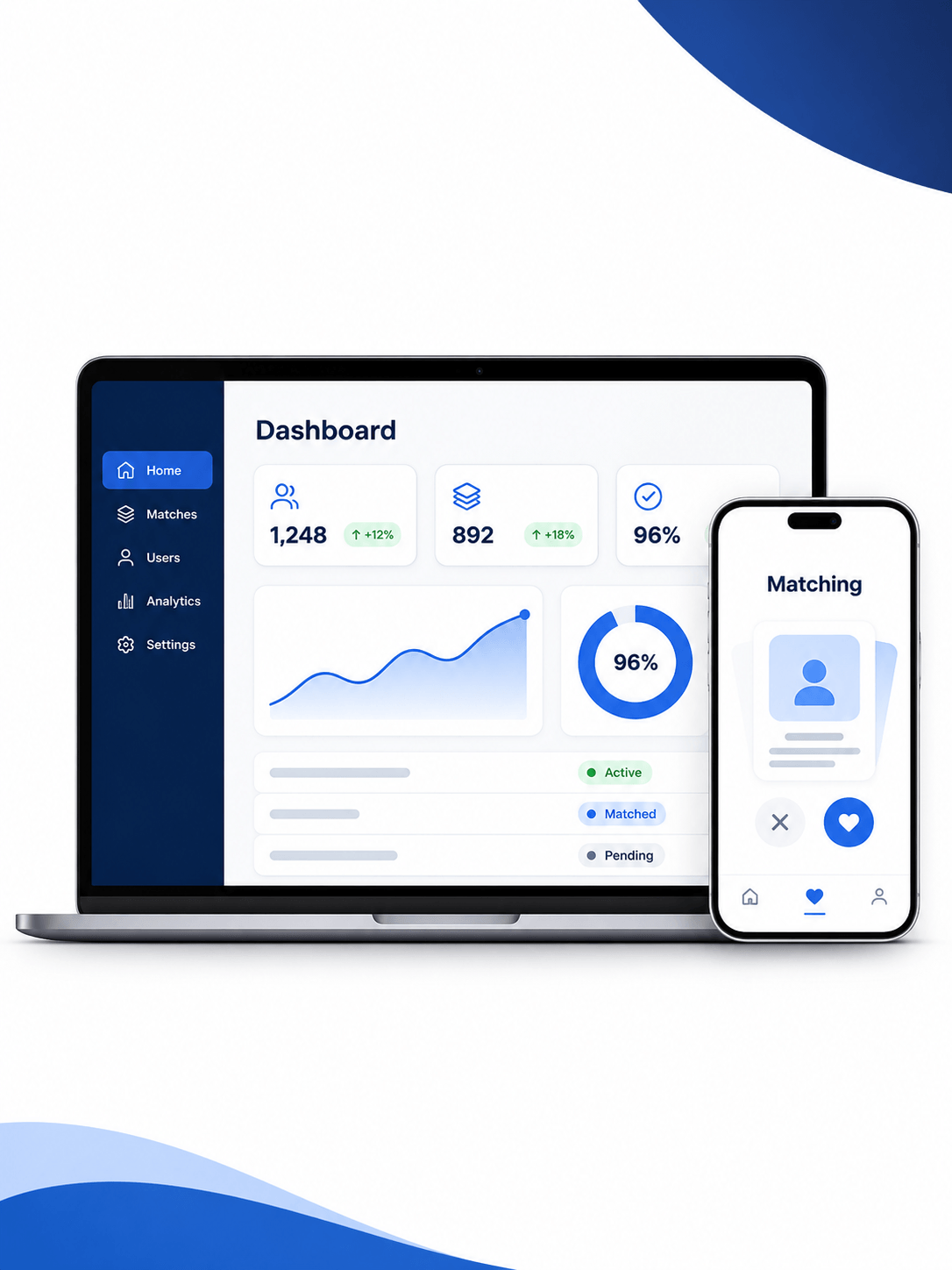
Build the MVP That Matters
Prioritize essential features, validate demand, and get a transparent MVP development plan tailored to your product goals.
MVP vs AI MVP vs Full SaaS Product
A Minimum Viable Product (MVP) is a usable first product release built around essential customer workflows.
An AI MVP includes an AI capability that solves a defined problem. It must validate both customer usefulness and AI performance.
A full SaaS product May include complex subscription management, access controls, multi-organisations, billing, analytics & complex functionality.
Not all MVPs will involve AI. In some cases, it may make more sense to provide a solid process, UI, or integration than an AI chatbot.
An AI MVP does not necessarily translate to a viable product to go to market.
Build the Right MVP Before Your Budget Runs Out
Identify essential features, technical requirements and development costs before making a larger product investment.
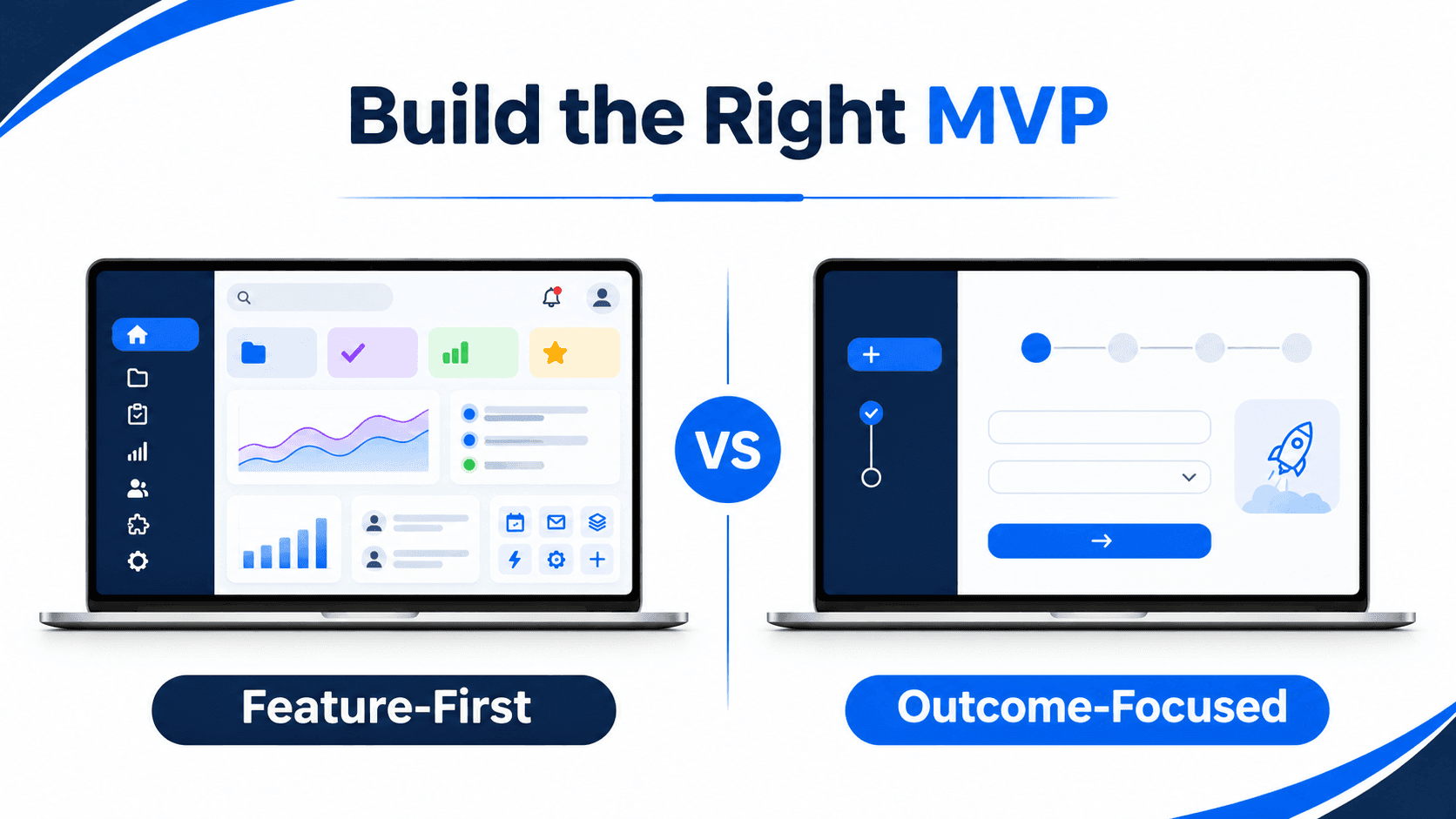
Feature-First Agency vs ROI-Focused MVP Development
| Decision | Feature-first approach | Outcome-focused approach |
|---|---|---|
| Discovery | Start with a feature list | Start with user problems and assumptions |
| Scope | Prioritize feature quantity | Prioritize essential workflows |
| AI | Demonstrate model output | Evaluate usefulness, accuracy and cost |
| Launch | DeliveLaunchr agreed screens | Verify working user journeys |
| Next release | Add requested features | Prioritize observed customer evidence |
| Investment | Focus on initial quotation | Review total cost and business value |
Both approaches can produce good software. The difference is whether the project includes a disciplined process for validating the product.
At Murmu Software Infotech, we offer MVP Application Development Services and ROI-Driven MVP Development for businesses seeking a more focused first release.
How to Choose the First Five to Seven MVP Features
Begin with the customer's most important task.
For a marketplace MVP, that might mean registration, listings, search, enquiry or transaction workflows, notifications and basic administration.
For a healthcare application, it could involve patient registration, doctor discovery, appointments, consultation access and appropriate operational controls.
Separate features into three groups:
Essential now: Required to complete the main user journey.
Useful later: Valuable after validation.
Not yet justified: Advanced features without evidence of demand.
This keeps the first release focused while allowing the roadmap to evolve.
Calculating MVP ROI: What Should Founders Measure?
ROI-focused MVP development means defining business outcomes before selecting technology.
Relevant metrics include:
- User activation and completed core actions
- Repeat usage and retention
- Trial-to-paid conversion
- Revenue per paying customer
- Customer acquisition cost
- Processing time or operational effort saved
A simple financial model is:
Estimated ROI (%) = (Measurable Benefit − Total MVP Cost) ÷ Total MVP Cost × 100
Development costs, infrastructure costs, external integration costs, maintenance costs and costs of customer acquisition.
Even if early products give a poor ROI, the initial product version can be very useful in understanding demand, usability and commercial viability.
Planning your MVP budget? Request an MVP Scope & Cost Assessment before committing to unnecessary features.
AI MVP Production Readiness: Beyond an Impressive Demo
AI MVPs introduce considerations that conventional applications may not have.
Evaluate model accuracy, data permissions, latency, usage charges, failure handling and the need for human approval.
Choose an AI architecture that fits the task:
LLM integration: Appropriate for a focused text or reasoning workflow.
RAG: Useful when responses need approved organizational knowledge.
AI agents and tool integrations: Allowed actions can be audited.
Controls, logging and evaluation criteria should be appropriate to the industry and level of risk.
The AI should perform an actual use case for the product, rather than being used for marketing purposes.
Validate Your AI Product Before Funding More Unnecessary Features
Assess your AI use case, data availability, integration needs and first-release architecture before committing to full development.
MVP Development Cost: What Should Your Estimate Include?
Development cost depends on the platforms, user roles, design complexity, integrations, AI requirements and release standards.
A reliable proposal should distinguish:
Initial investment: Discovery, UX, frontend, backend, testing and deployment.
Recurring costs: Hosting, payment services, AI usage, third-party subscriptions and support.
Future investment: Enhancements, security updates and product scaling.
Avoid comparing quotations unless they cover equivalent requirements.
Explore MSI's AI MVP Development Services for scoped AI application development.
When Your Existing MVP Is Stuck or Failing
An unfinished MVP does not always need to be rebuilt.
If the codebase contains usable components, a technical audit may identify opportunities to stabilize APIs, fix critical defects, complete essential workflows and prepare a controlled release.
Other products may require partial refactoring or architectural replacement.
MSI's Software & MVP Rescue Mission evaluates these options based on the application's actual condition.
Real Product Engineering Experience at Murmu Software Infotech
Our project portfolio includes different types of product engineering challenges.
DOC247: Connected healthcare workflows involving doctor discovery, appointments, video consultations and clinic queues.
TribalShaadi: A mobile matchmaking platform with backend services, real-time chat, subscriptions and AI-assisted verification workflows.
GAXA: A marketplace platform involving buyer, seller and operational journeys.
AI Stock Analysis Platform: AI agents, MCP integration, financial APIs and quantitative research workflows.
Explore our Product Engineering Case Studies, TribalShaadi Platform Case Study and AI Stock Research Platform Case Study.
These projects demonstrate relevant technical capabilities; individual project results depend on scope and business conditions.
How MSI Approaches MVP Development
Define business problem, audience and key processes.
Consider viability. Decide priorities, recommend architecture, and agree the scope of work and acceptance criteria.
Implement, test, review at key points, and release according to your agreed process.
Once launched, make an informed investment decision based on real data from customers and the product.
Frequently Asked Questions
How do I choose the right MVP development company?
Evaluate relevant project experience, product discovery, feature prioritization, technical architecture, security, testing, deployment and ongoing support. Ask for an itemized proposal with milestones, acceptance criteria and clear ownership terms. A capable partner should explain how the first release will validate your business assumptions.
What is the difference between an MVP and an AI MVP?
An MVP is a usable first version of a product built to test a customer problem. An AI MVP includes an AI-powered capability that must also be evaluated for accuracy, reliability, latency, cost and usefulness. Both require real user validation.
How much does MVP application development cost?
MVP development cost depends on features, platforms, design, user roles, APIs, integrations, security requirements and testing. AI applications may also incur model usage and data-processing costs. Request a project-specific estimate separating development, hosting and ongoing support.
How long does it take to build a startup MVP?
The timeline depends on the complexity of the core workflow, team availability, platforms, integrations and required testing. A simple prototype can take less time than an integrated SaaS or regulated application. Agree on realistic milestones after requirements discovery.
What are the most important features for a first MVP release?
Prioritize the smallest set of features needed for a real customer to complete the core task. Authentication, essential workflows, relevant integrations, simple administration and feedback collection may be required. Defer advanced analytics, complex automation and nonessential enhancements until validated.
How can startups calculate MVP return on investment?
Compare measurable benefits with development and operating costs. Relevant indicators include paid conversions, user retention, acquisition cost, completed transactions and operational savings. Early MVPs may prioritize learning and product validation before positive financial ROI.
Does an AI MVP need RAG, AI agents or custom model training?
Not necessarily. The architecture depends on the use case. Simple model APIs may be sufficient for basic tasks, RAG may help with approved knowledge retrieval, and agents may be appropriate for controlled multi-step workflows. Custom training should only be considered when requirements justify it.
Should I hire an MVP development agency or freelancers?
Freelancers may suit small, clearly bounded projects with strong founder oversight. An agency or dedicated team can be useful when the product needs coordinated frontend, backend, testing, DevOps, AI and integration skills. Compare responsibility, continuity, cost and available expertise.
Can a failed or unfinished MVP be rescued without rebuilding it?
Often yes. A technical audit can identify reusable code, critical defects, security issues and incomplete workflows. Some applications need targeted fixes, others require partial refactoring, and some may justify rebuilding. The decision should follow an assessment.
What should I ask an AI MVP development company before signing?
Ask how it evaluates AI outputs, protects data, controls API costs, handles model failures, tests core workflows, defines source-code ownership and supports post-launch changes. Request relevant case studies and a scope-based proposal with explicit exclusions.