Retail POS Software, Billing and ERP for Growing Businesses in India, Middle East and Southeast Asia
In This Article
- Why Retail POS Software Must Go Beyond Billing
- Retail Billing Software and Inventory Software Should Work Together
- Need Better Control Over Retail Operations?
- Retail ERP Software Connects Purchasing, Sales and Reporting
- Multi-Store POS Software Creates Centralized Control
- Custom Billing Software Development for Different Retail Industries
- Connect Retail POS With eCommerce and D2C Growth
- Retail POS and ERP Software Cost and Timeline Factors
- The Goal Is Not Better Billing. It Is Better Retail Control.
- Frequently Asked Questions
- What is retail POS software?
- What is the difference between billing software and retail ERP software?
- Can POS software manage multiple retail stores?
- Can retail billing software integrate with eCommerce?
- Should a growing retailer choose custom POS software?
See how integrated retail POS software, billing, ERP, inventory and multichannel systems let growing retailers manage sales, stock and operations
As a growing retailer, you may be encountering limitations of using separate billing software for sales and inventory management.
While one shop can be effectively managed with simple invoicing and Excel spreadsheets, an increased product catalog, supplier base, customer base, workforce, branch count, and sales channels create the need for a more comprehensive solution. Multiple spreadsheets, separate purchasing, invoicing, reporting tools, and billing software lead to higher costs, misaligned inventory, and poor business oversight.
Modern POS software for retailers now offers integrated billing, purchasing, inventory management, sales channel diversification, and powerful multi-channel reporting features to let retailers scale their operations.
Why Retail POS Software Must Go Beyond Billing
Modern retail POS software should do more than generate an invoice.
Every sale should become part of a larger operational workflow:
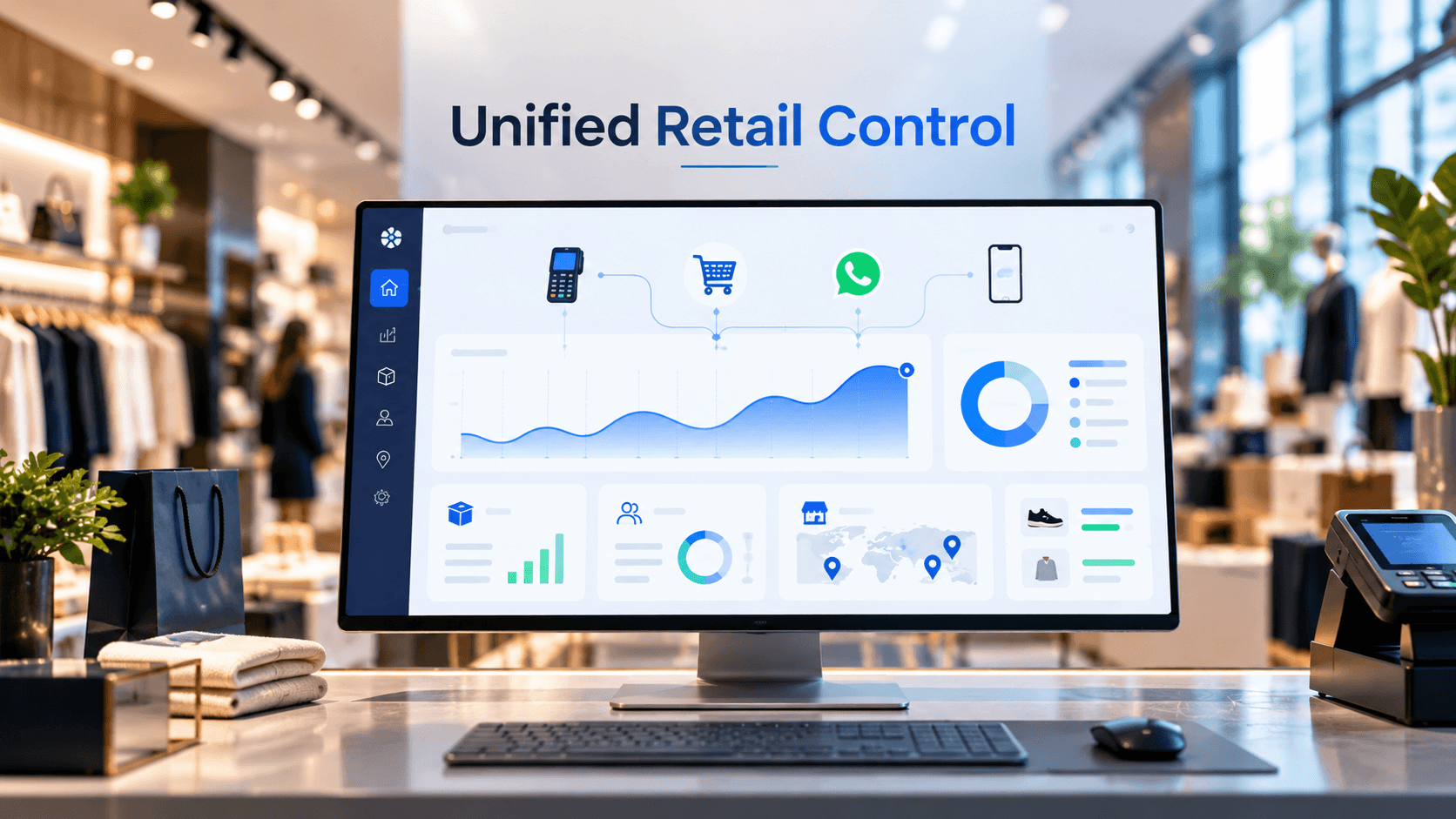
Product → POS Billing → Payment → Inventory Update → Customer Record → Sales Report → Business Insight
When these processes are connected, owners gain a clearer picture of what is selling, what needs replenishment, which stores are performing well and where working capital is tied up in inventory.
This becomes particularly important for supermarkets, pharmacies, electronics stores, fashion retailers, wholesalers, distributors, D2C brands and businesses operating multiple locations.
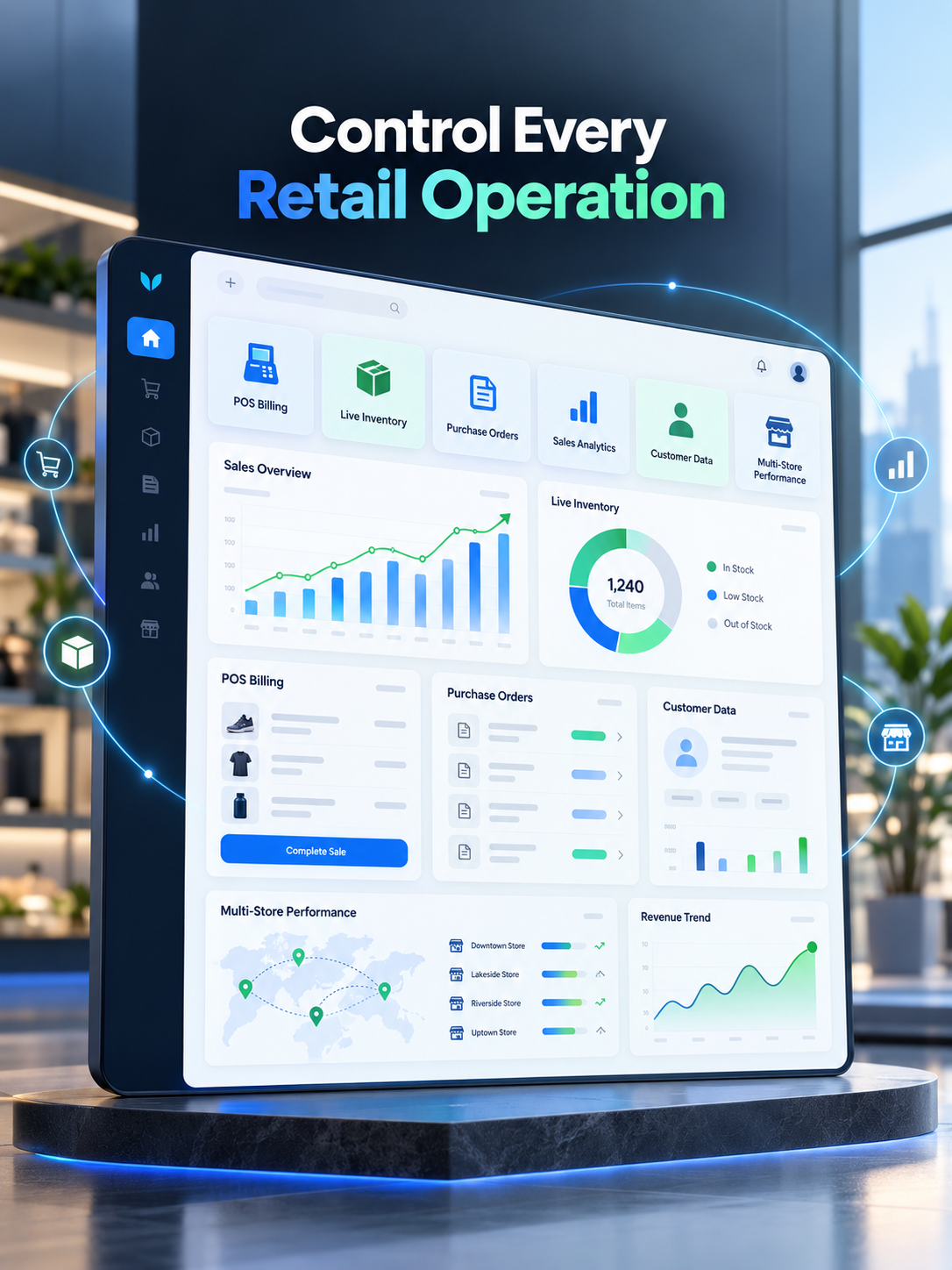
Control Every Retail Operation
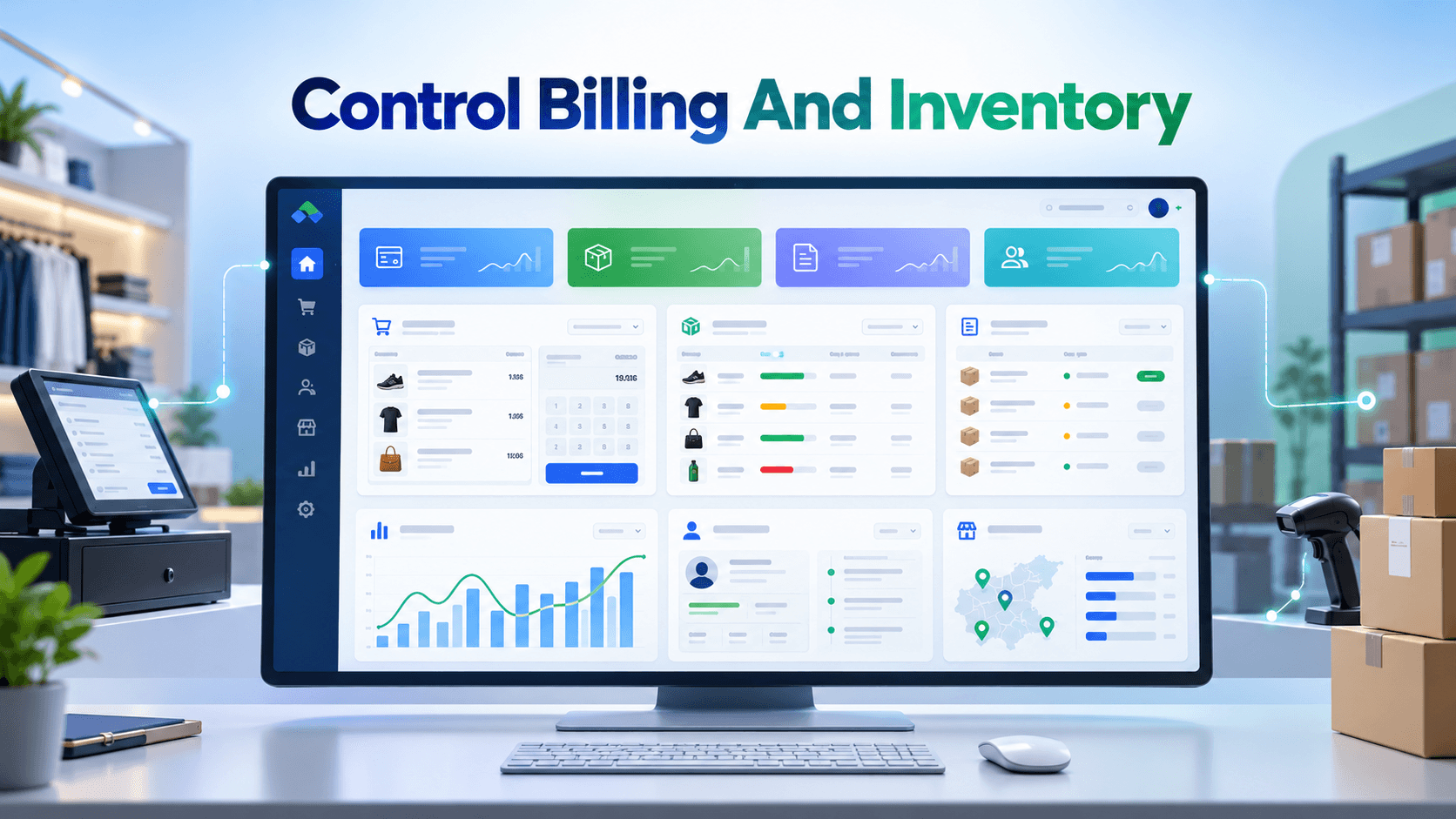
Connect POS billing, inventory, purchases, sales, customers and multi-store reporting in one scalable retail software platform.
Retail Billing Software and Inventory Software Should Work Together
One of the main limitations of standalone retail billing software is the fact that billing and stock management can become separate activities.
A connected POS inventory billing system can update stock when products are sold, returned or transferred. Purchasing workflows can connect suppliers, purchase entries, goods received and stock availability.
Businesses can then monitor low-stock products, stock movement, store-level availability, purchasing history and product performance from one operational system.
For Indian retailers, GST billing software requirements can also be incorporated into the billing workflow. For businesses operating across the Middle East or Southeast Asia, tax, invoice, currency and reporting workflows can be configured according to the markets in which the platform is deployed.
Need Better Control Over Retail Operations?
MSI builds retail platforms around real billing, inventory, purchasing, reporting and multi-location workflows.
Build Smarter Retail Software That Scales With Your Business
Retail ERP Software Connects Purchasing, Sales and Reporting
As operations become more complex, businesses often need retail ERP software rather than another isolated shop-management application.
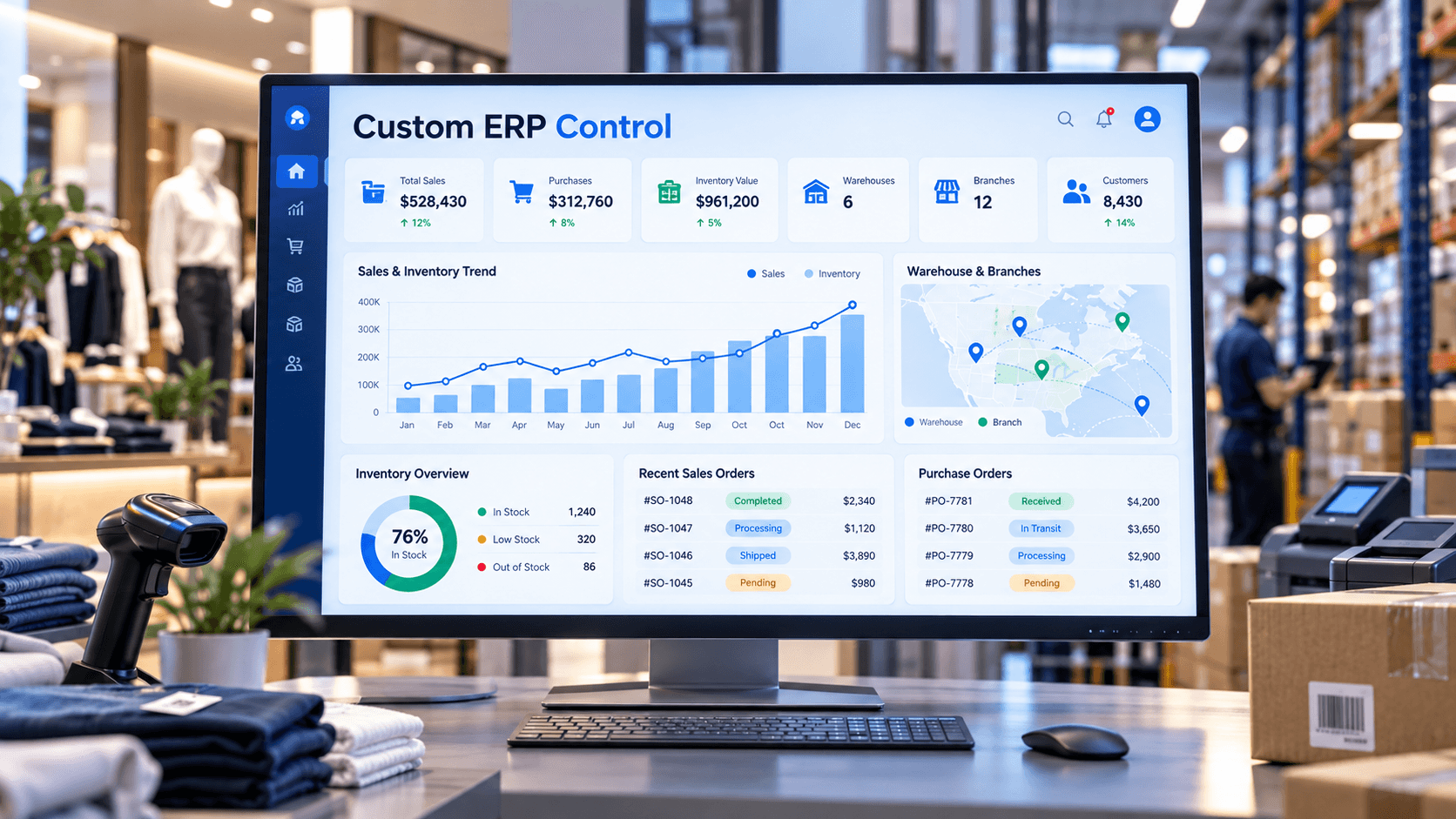
A connected retail ERP can bring together POS billing, product management, purchases, suppliers, inventory, warehouses, customers, payments, employees, roles and management reports.
MSI demonstrated this approach while building a complete jewellery ERP, inventory and POS platform. The platform connected the workflow from vendor and purchasing through goods receiving, labeling, branch inventory, POS billing, payment and reporting.
The important principle is simple: software should follow the actual business workflow instead of forcing every retailer into the same generic process.
Multi-Store POS Software Creates Centralized Control
Managing one shop and managing ten branches are very different operational problems.
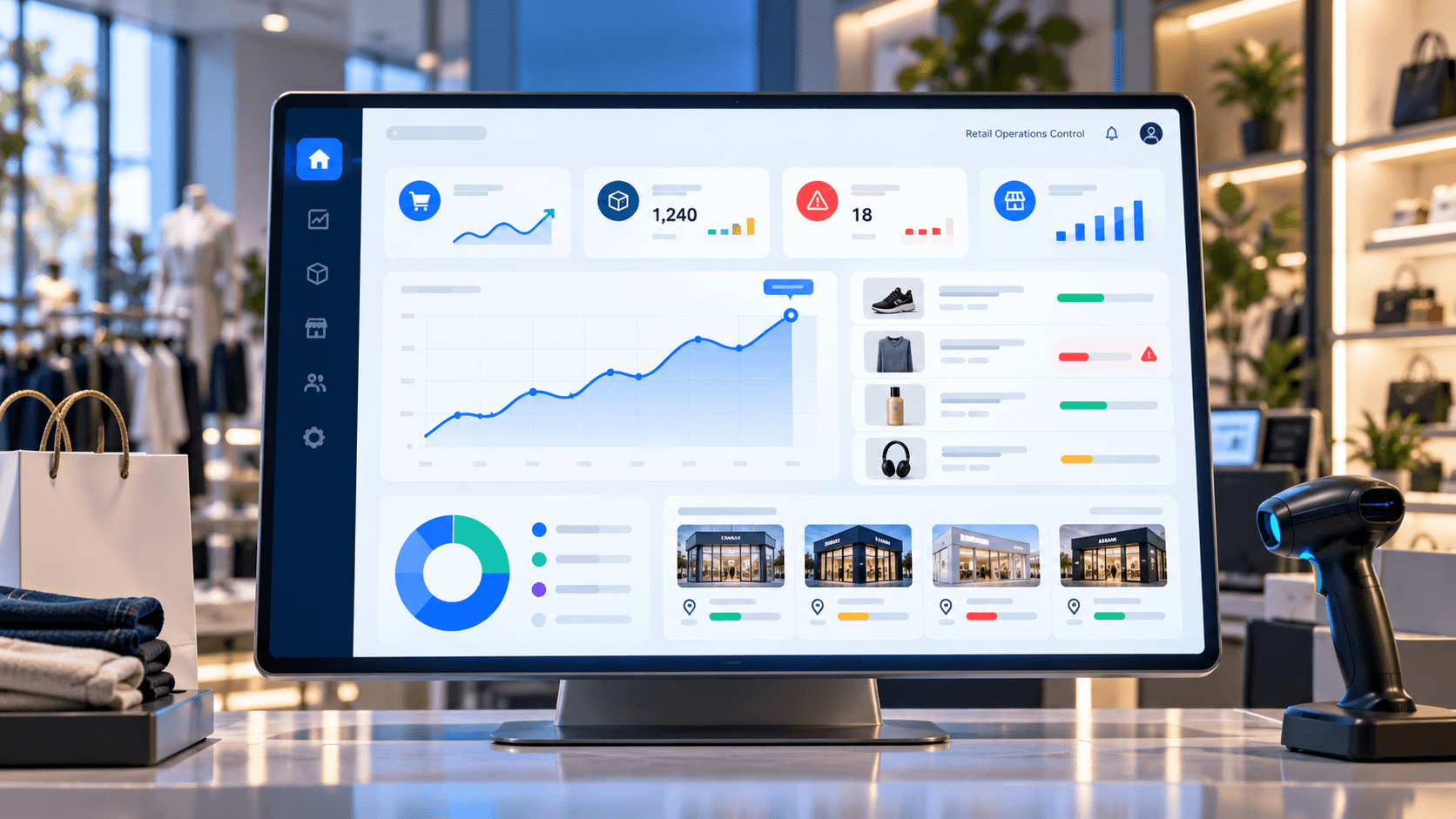
With multi-store POS software, management can centralize product information, inventory visibility, sales reporting, staff access and branch performance while preserving store-level operations.
Stock can be tracked across locations, transfers can be managed systematically and owners can compare sales or inventory without collecting spreadsheets from every outlet.
MSI's Smart Billing Pro retail POS case study demonstrates how billing can connect with inventory, warehouses, CRM, loyalty, payments and multi-store visibility rather than functioning as a standalone checkout tool.
For smaller businesses beginning their digital transition, the Smart Billing Lite case study shows a lighter mobile-first approach connecting billing with digital payments, customer records, dues, WhatsApp communication and reporting.
Custom Billing Software Development for Different Retail Industries
Retail workflows vary significantly by industry.
A pharmacy may need batch and expiry-oriented inventory workflows. A supermarket may prioritize barcode billing, high transaction volumes and purchasing. An electronics retailer may require serial-number or warranty-related processes. A wholesaler may need supplier, bulk pricing and distribution workflows. A D2C brand may need physical-store inventory connected with its online sales channels.
That is where custom software development becomes valuable.
Instead of adding multiple disconnected applications, MSI can design POS, billing, ERP, inventory, CRM and reporting around the business's actual operational model.
Connect Retail POS With eCommerce and D2C Growth
Retail growth increasingly moves across physical and digital channels.
A retailer may begin with stores but later need an online catalogue, mobile application, D2C website, marketplace integration, delivery workflow or customer portal.
Building the core retail platform with integration in mind makes it easier to connect inventory, products, customers and orders with eCommerce and D2C development or a broader retail commerce platform.
Instead of managing store sales and online sales as completely separate businesses, retailers can move toward one connected commerce ecosystem.
Retail POS and ERP Software Cost and Timeline Factors
There is no fixed price about responsible or development time for each retail system.
The cost and delivery of a retail software system should be based on the number of stores, users, products, and modules you need. Plus, how complex your inventory and POS are, GST or tax requirements in your region, purchase and warehouse process, hardware integrations, migrations, mobile apps, eCommerce connections, reporting, third-party integration, security, and customization.
A good strategy to implement is to start with the most valuable modules and scale up as the company grows.
The Goal Is Not Better Billing. It Is Better Retail Control.
Growing retailers do not simply need faster invoice printing.
They need visibility from purchasing to stock, from stock to sale, from sale to customer and from individual stores to management reporting.
MSI develops custom retail POS software, billing platforms, inventory systems, ERP workflows, multi-store solutions and commerce-connected applications for growing businesses across India, the Middle East and Southeast Asia.
Ready to connect billing, inventory, purchases, sales and reporting?
Discuss Your Retail Software Needs With Our Expert Team
Frequently Asked Questions
What is retail POS software?
Retail POS software manages checkout and sales transactions while connecting billing with products, payments, inventory, customers and reporting.
What is the difference between billing software and retail ERP software?
Billing software primarily handles invoices and transactions. Retail ERP software connects broader operations such as purchasing, suppliers, inventory, warehouses, branches, sales, customers, staff and reporting.
Can POS software manage multiple retail stores?
Yes. A multi-store POS platform can centralize products, inventory, pricing, sales reports, staff permissions and branch-level performance while maintaining individual store operations.
Can retail billing software integrate with eCommerce?
Yes. A properly designed platform can connect product catalogues, inventory, orders, payments and customer information with eCommerce websites, mobile apps or other digital commerce channels.
Should a growing retailer choose custom POS software?
Custom POS or retail ERP development becomes useful when standard software cannot adequately support a retailer's specific purchasing, inventory, billing, branch, approval, integration or reporting workflows.
Frequently Asked Questions
What is retail POS software?
Retail POS software manages sales transactions and billing while connecting products, payments, inventory, customers and reports. Advanced POS platforms can also support purchasing, warehouses, multi-store operations, loyalty programs and eCommerce integrations.
What is the difference between retail billing software and retail ERP software?
Retail billing software mainly handles invoices, sales and payments. Retail ERP software connects broader operations including purchasing, suppliers, inventory, warehouses, customers, branches, employees, accounting workflows and management reporting.
Can retail POS software manage inventory automatically?
Yes. A connected POS inventory system can automatically update stock when products are sold, returned, transferred or received, helping retailers maintain more accurate store and warehouse inventory.
What features should multi-store POS software include?
Multi-store POS software should include centralized product management, branch-level inventory, stock transfers, billing, pricing, employee access, customer records, purchasing, sales analytics and consolidated management reports.
Can GST billing software be integrated with inventory and ERP?
Yes. GST billing can be integrated with POS, inventory, purchasing, customer records and reporting so Indian retailers can manage invoicing and operational data within a connected retail platform.
Who needs custom retail POS and ERP software?
Custom retail software is useful for supermarkets, pharmacies, electronics stores, jewellery businesses, wholesalers, distributors, D2C brands and multi-store retailers whose workflows cannot be handled efficiently by standard billing applications.
Can retail POS software connect with eCommerce websites and mobile apps?
Yes. Retail POS software can be designed to integrate products, inventory, customers, orders and payments with eCommerce websites, mobile apps and other digital commerce channels.
How much does custom retail POS and ERP software cost?
The cost depends on modules, number of stores and users, billing complexity, inventory workflows, integrations, mobile applications, eCommerce requirements, reporting, data migration and regional tax requirements.
How long does it take to build custom retail software?
Development time depends on the number of modules, workflow complexity, integrations, migration requirements and testing. A phased approach can launch essential POS and inventory features first and expand the platform over time.
What are the benefits of integrating POS, billing, inventory and ERP?
Integration reduces duplicate data entry, improves inventory visibility, connects purchasing with sales, centralizes reporting, supports multi-store management and gives decision-makers a clearer view of retail operations.