Development / CMS
Sitecore Content SDK 2.1: Smarter Tracking, Better Security, and Improved Next.js Support
SSaurav Kumar3 Min Read
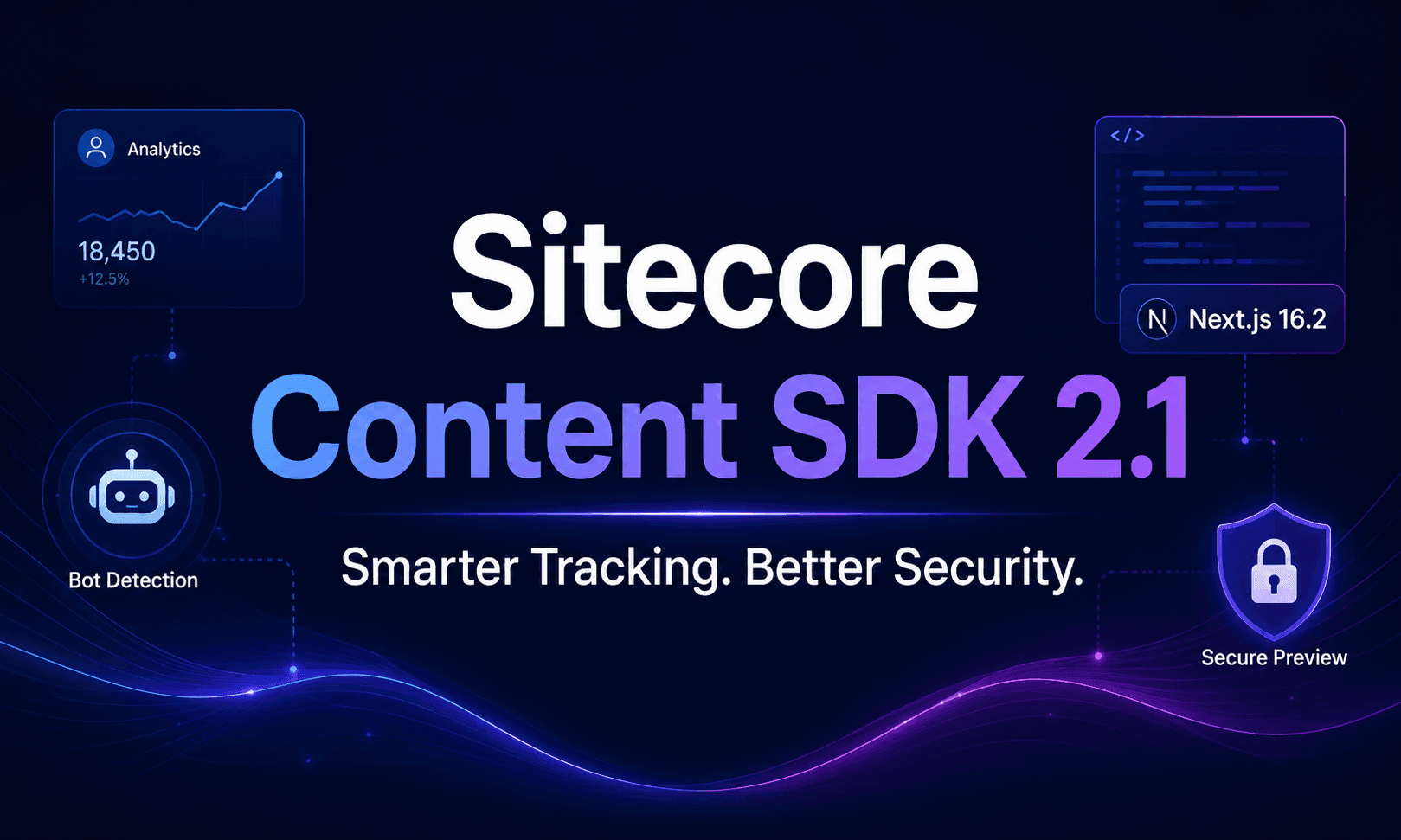
The latest release of Sitecore Developer Portal brings an important update for developers building modern digital experiences with Sitecore. Content SDK 2.1 introduces lightweight visit tracking, advanced bot detection, enhanced preview security, and improved Next.js compatibility — all designed to improve performance, analytics accuracy, and developer productivity. (Sitecore Developer Portal)
The release focuses on four major areas:
This update builds on the major architectural improvements introduced in Content SDK v2.0 earlier this year. (Sitecore Developer Portal)
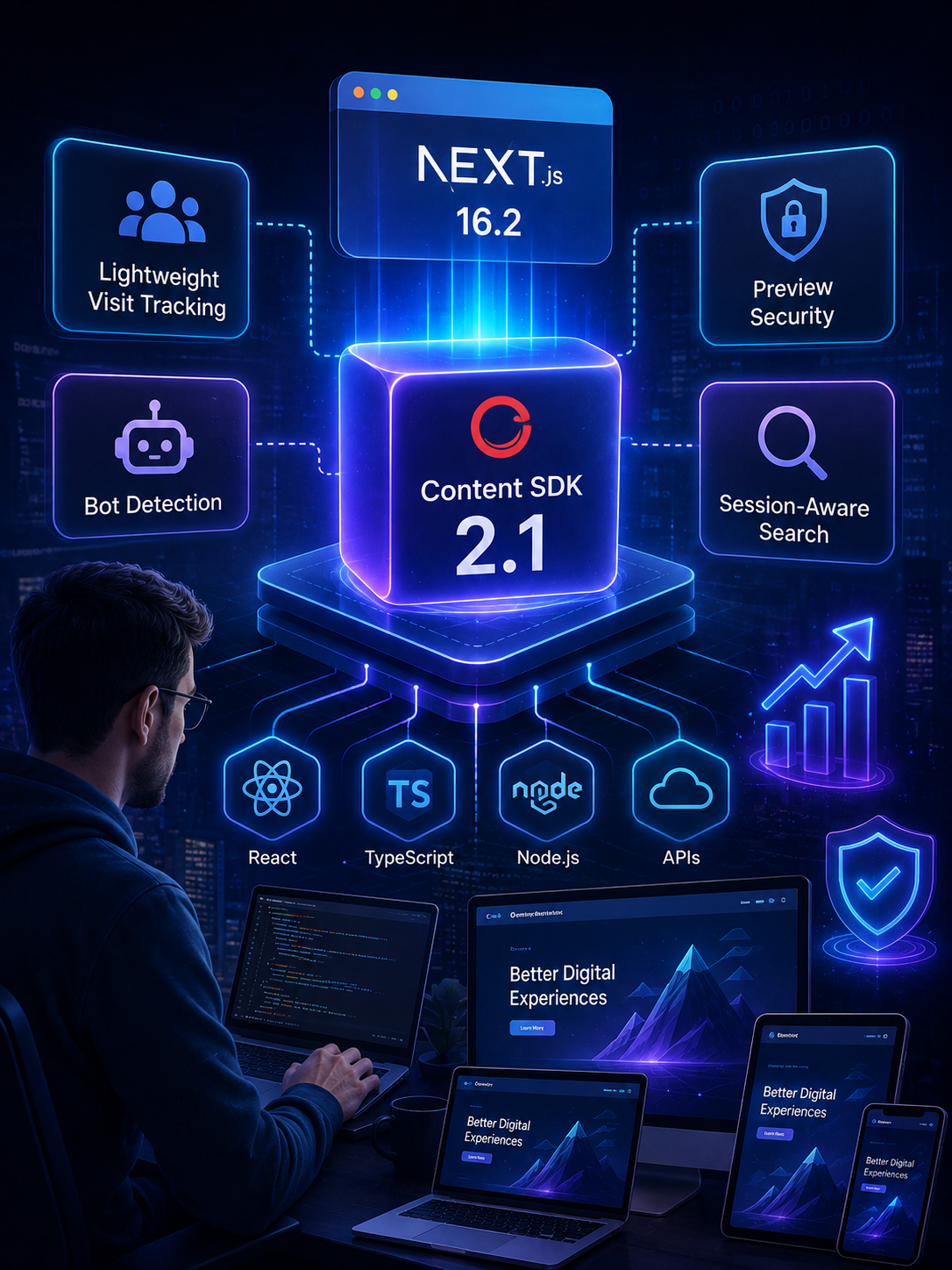
Boost Sitecore performance, security, analytics, and Next.js compatibility with Content SDK 2.1’s smarter tracking and modern developer tooling.
One of the most valuable additions in Content SDK 2.1 is the new lightweight tracking pipeline for Next.js applications. The SDK can now identify automated traffic such as crawlers and AI agents, classify it separately from human visitors, and send optimized tracking signals to SitecoreAI. (Sitecore Developer Portal)
This matters because bot traffic often distorts analytics and personalization data. By distinguishing bots from real users:
The new BotTrackingProxy enables this functionality directly within the Next.js proxy layer. According to Sitecore documentation, bot traffic is tracked server-side while browser-side tracking is skipped automatically for crawlers. (Sitecore Documentation)
Developers can enable bot detection using the following proxy configuration:
import {
defineProxy,
BotTrackingProxy,
} from '@sitecore-content-sdk/nextjs/proxy';
export default function proxy(req, event) {
const botTracking = new BotTrackingProxy({
fetchEvent: event,
});
return defineProxy(botTracking).exec(req);
}
The SDK also supports asynchronous event handling using waitUntil, reducing latency for incoming requests. (Sitecore Documentation)
Content SDK 2.1 upgrades support from Next.js 16.1 to 16.2, ensuring better framework compatibility and improved stability for modern App Router applications. (Sitecore Developer Portal)
Additional improvements include:
These updates simplify project scaffolding and modernize the developer experience for teams using the latest React and Next.js tooling. (New Releases)
The Search service now accepts CDP session IDs in search queries, enabling more session-aware and contextual search experiences. (Sitecore Developer Portal)
This enhancement opens the door for:
For enterprise digital experiences, session-aware search can significantly improve user engagement and relevance.
Security and preview workflows also received major improvements in this release.
Sitecore introduced a new PreviewProxy that helps authorize preview requests from internal editing hosts. This resolves scenarios where users could access preview links without proper permissions. (Sitecore Documentation)
Additional fixes include:
These updates strengthen content governance and reduce the risk of accidental content exposure in enterprise environments. (Sitecore Developer Portal)
Content SDK 2.1 may appear incremental, but it addresses several practical challenges developers face in production environments:
| Area | Improvement |
|---|---|
| Analytics | Cleaner data through bot separation |
| Performance | Reduced unnecessary tracking overhead |
| Security | Safer preview and editing workflows |
| Search | Session-aware personalization |
| Developer Experience | Improved Next.js tooling and templates |
Industry observers also note that Sitecore continues refining its modular SDK ecosystem and AI-focused architecture with this release. (dxpscorecard.com)
Content SDK 2.1 demonstrates Sitecore’s continued investment in modern composable architectures, AI-ready analytics, and developer-first tooling. Lightweight tracking and bot classification are especially relevant as AI crawlers and automated traffic become more common across the web.
For teams already using Sitecore Content SDK, upgrading to version 2.1 provides meaningful improvements in performance, security, and operational reliability with minimal migration effort.
Reference:
Sitecore/content-sdk create-content-sdk-app@2.1.0 on GitHub
Sitecore Content SDK 2.1 is an update to Sitecore's Next.js-focused Content SDK that introduces lightweight visit tracking and bot detection, Next.js 16.2 support, improved preview security, session-aware search and other developer improvements.
The main improvements include lightweight visit tracking with bot classification, Next.js 16.2 support, PreviewProxy for internal editing-host security, improved preview data handling, session-aware search and several developer experience and reliability fixes.
Lightweight visit tracking provides a streamlined tracking pipeline for Next.js applications that captures visit signals with minimal overhead and can classify automated traffic separately from human visits.
Content SDK 2.1 adds bot classification to its lightweight visit tracking pipeline so automated traffic can be identified and its visit signals can be properly classified before being forwarded to SitecoreAI.
Content SDK 2.1 upgrades its Next.js dependency from version 16.1.1 to Next.js 16.2.0.
PreviewProxy is a Content SDK proxy that authorizes preview requests originating from internal SitecoreAI editing hosts, helping prevent unauthorized access to preview pages.
Content SDK 2.1 introduces PreviewProxy to authorize internal editing-host preview requests and fixes issues related to unauthorized preview access and unpublished content visibility.
Content SDK 2.1 allows the Search service to accept a CDP session ID in search queries, enabling search experiences to use session context for more relevant behavior.
Yes. Sitecore published an upgrade guide that provides JSS 22.0 users with a direct migration path to Content SDK 2.1 without requiring every intermediate SDK upgrade.
Developers should evaluate the upgrade when they need Content SDK 2.1 improvements such as lightweight tracking, bot classification, Next.js 16.2 support, stronger preview security or session-aware search, while also reviewing compatibility and the newer 2.2 release.