Strapi CMS Development for API-First Websites, Apps and Digital Platforms
In This Article
- Why Strapi CMS Development Matters for Modern Platforms
- API-First CMS Architecture for Websites, Apps and Portals
- What a Strapi Backend Development Platform Should Include
- Building an API-First Digital Platform?
- Custom Strapi CMS Development for Business-Specific Requirements
- Headless CMS Backend Development and Structured Content
- Strapi Development Services for Different Digital Products
- Strapi CMS Migration, Cost and Timeline Factors
- Business Benefits of an API-Driven Website Platform
- Frequently Asked Questions
- What is Strapi CMS development?
- Is Strapi an API-first CMS?
- Can Strapi power both a website and mobile app?
- Is Strapi suitable for SaaS platforms?
- Can an existing CMS be migrated to Strapi?
Strapi CMS development allows you to build flexible API-first backend for your websites, mobile apps, SaaS products, portals, and digital platforms.
A traditional CMS for websites is no longer sufficient for the requirements of many digital business projects.
Frequently, there is a need for content to be available not only on the corporate site but also in the mobile application, customer portal, SaaS interface, partner platform, and other channels. Each of these resources traditionally has its own backend, which fragments information and complicates both the development process and the maintenance of a consistent data set across different endpoints.
This is where Strapi CMS development can come to the rescue, abstracting the content management layer from a specific frontend and providing an API-first approach to let you build an application stack around it.
Why Strapi CMS Development Matters for Modern Platforms
Traditional page-driven CMS architectures can work well when the primary requirement is publishing pages to one website.
The architecture becomes more challenging when a business needs the same content or structured data across several applications.
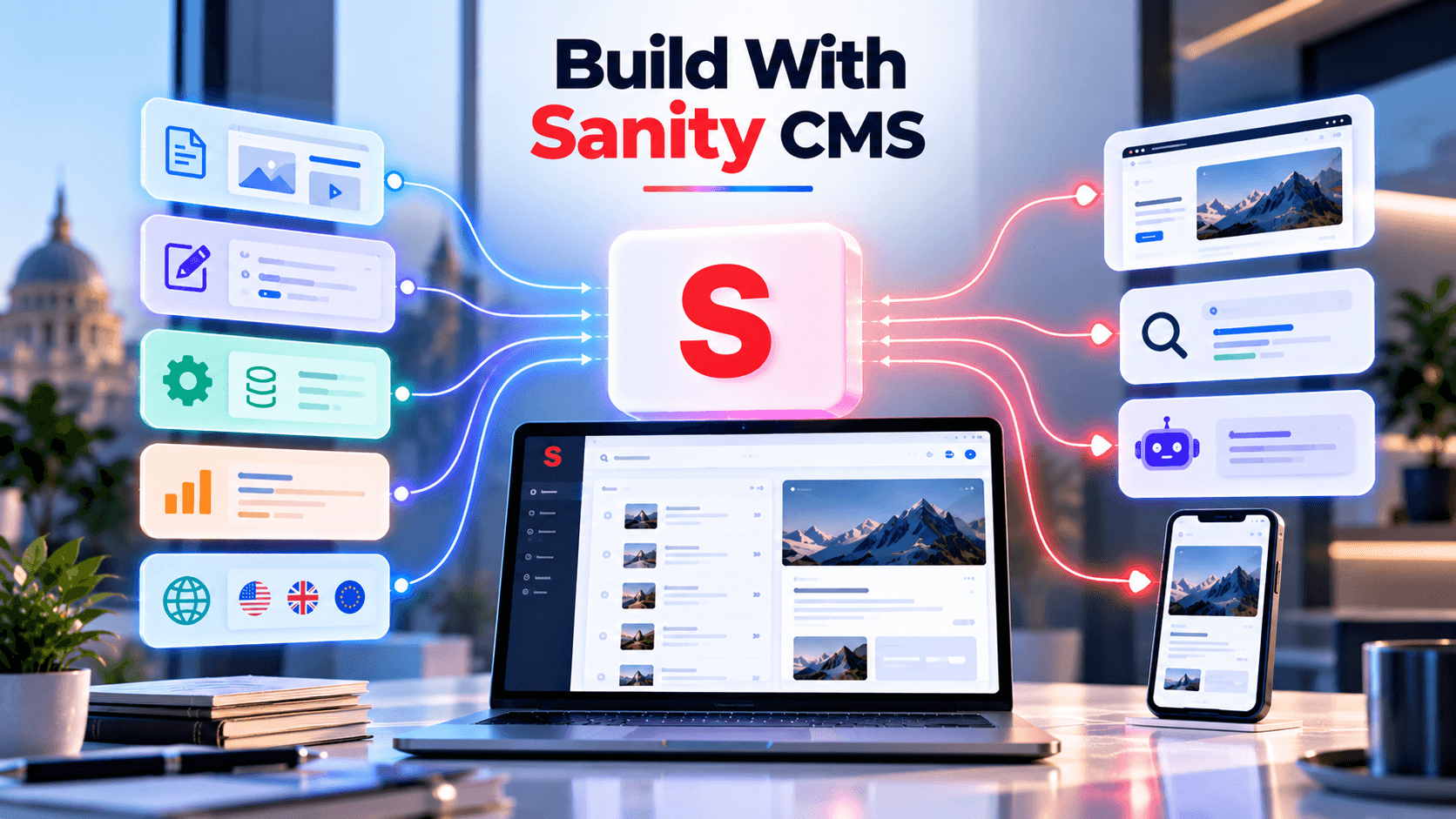
With a headless architecture, content management and frontend presentation are separated. Strapi can manage structured content in the backend while websites, applications and other services consume that content through APIs.
For CTOs, founders and product teams, this creates an important architectural advantage: the CMS is no longer permanently tied to one presentation layer.
Businesses evaluating this model can explore MSI's Strapi CMS Development Services for API architecture, structured content modelling, frontend integration, custom development and deployment.
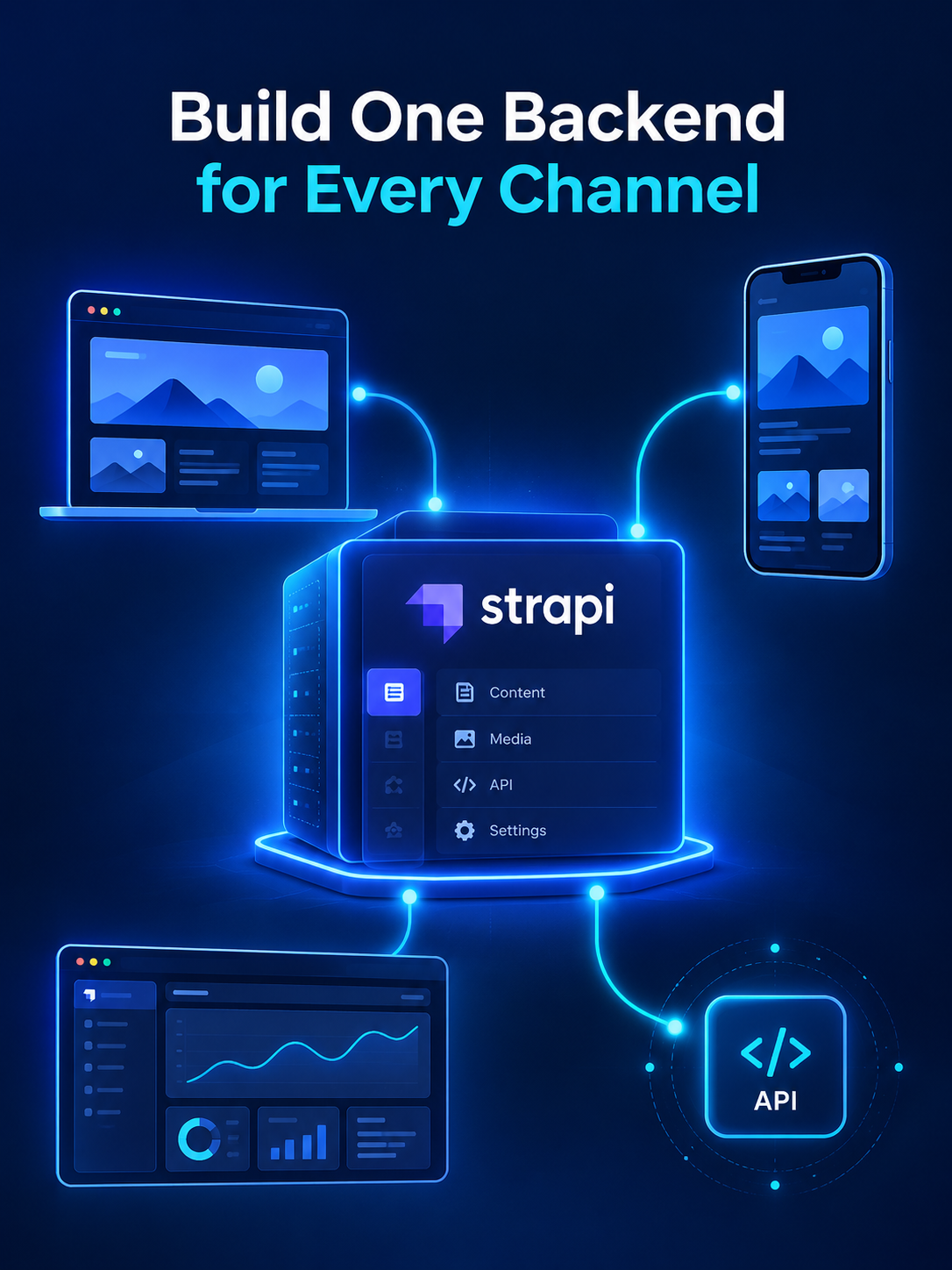
Build One Backend for Every Channel
Create a flexible Strapi CMS backend that powers websites, mobile apps, portals and digital products through scalable APIs.
API-First CMS Architecture for Websites, Apps and Portals
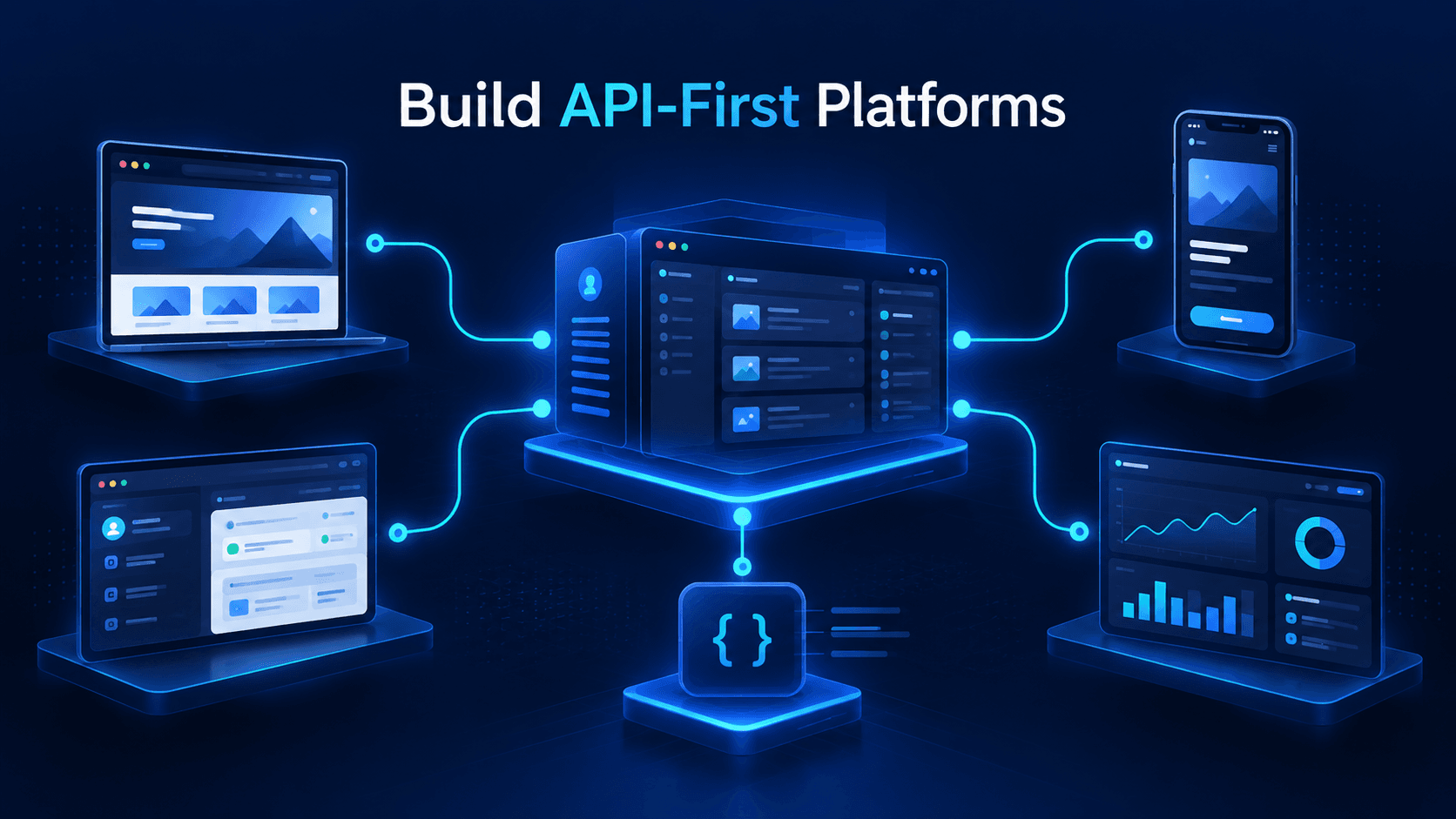
An API-first CMS considers APIs as a primary means of exposing the content, rather than an afterthought.
This approach allows a single source of structured content to power multiple experiences, from a Next.js website or React application, to a mobile app or a customer portal and internal dashboard.
Strapi offers REST APIs for all your content types and can support GraphQL via its GraphQL feature, allowing development teams to choose the right way of interacting with the CMS.
This approach is particularly useful when your company plans to grow its digital ecosystem.
Rather than having to rebuild the CMS every time a new channel is created, developers can connect another frontend or service to the same content repository.
To understand the CMS development landscape and its migration patterns in more details, consult the Headless CMS Development Services, Cost, Platforms and Migration Guide.
What a Strapi Backend Development Platform Should Include
Good Strapi backend development involves considerably more than installing a CMS.
The architecture should be planned around the data, applications, users and integrations that the business expects to support.
A production platform may include:
- Structured content types, components and relationships
- REST and GraphQL API architecture
- Authentication and role-based permissions
- Media and asset management
- Next.js, React or mobile application integration
- Multilingual content structures
- Custom controllers, services and business logic
- CRM, ERP, commerce, search or analytics integrations
- Custom plugins and administrative functionality
- Database, hosting, backup and monitoring strategy
- SEO, structured-data and AI-ready content fields
- Migration and deployment workflows
The important question is not simply, “Can Strapi manage our pages?”
It is: Can the content model become a reusable backend for the digital products we plan to build?
Build a Flexible Strapi Backend for Every Digital Channel
Building an API-First Digital Platform?
Design Strapi around your content models, APIs, applications and integrations not just the current website.
Custom Strapi CMS Development for Business-Specific Requirements
The value of custom Strapi CMS development becomes more apparent when the system needs to perform additional functions beyond general publishing.
A SaaS company could require product documentation and application content. A marketplace may need category and promotional content associated with commerce data. A healthcare platform may need governed informational content distributed across websites and patient facing applications.
Another company may require a partner portal, authenticated content, custom approval process or deep integration with internal systems.
Due to the ability to extend the backend, developers can build additional APIs, services, controllers, permissions and integrations that surround the project's requirements.
This is particularly relevant when a CMS begins to resemble part of a broader software platform.
For more complex application requirements beyond that of content management, MSI's Custom Software Development capabilities can supplement the CMS with business specific APIs, portals and application workflows.
Headless CMS Backend Development and Structured Content
The biggest architectural advantage of a headless CMS backend is not simply frontend freedom.
It is structured content.
Instead of storing an entire page as one large presentation-dependent block, teams can model reusable entities such as products, services, industries, locations, FAQs, authors, features and calls to action.
The same approved information can then be retrieved by multiple experiences without recreating it separately.
Structured content is also increasingly important for search, AI assistants, RAG applications and other systems that need clearly defined information rather than unstructured page markup.
This is why platform selection should follow the content and business model rather than lead it. MSI's CMS vs Headless CMS vs DXP guide explains when API-first architecture genuinely adds value.
Strapi Development Services for Different Digital Products
Strapi can fit several types of projects when the architecture requires reusable content and programmable APIs.
For business websites, it can provide structured content behind a custom frontend.
For mobile applications, the same backend can expose content without requiring the app to depend on a website CMS interface.
For SaaS products, it can manage documentation, onboarding content, knowledge resources or application-managed content alongside custom services.
For customer and partner portals, Strapi can provide governed content while custom application services manage transactional workflows.
For multi-channel platforms, one structured content model can serve several digital touchpoints.
The platform choice should still be based on actual requirements. A simple single-channel website may not need the additional architectural and operational responsibility of headless infrastructure.
Strapi CMS Migration, Cost and Timeline Factors
Moving an existing platform to Strapi should not be treated as a database copy.
Migration may require content auditing, schema mapping, data transformation, media transfer, URL preservation, metadata migration, API redevelopment, frontend changes and integration testing.
Businesses moving from a legacy CMS should therefore plan content architecture and SEO preservation together. MSI's Headless CMS Migration Services cover migration planning, content modelling, validation and production rollout.
Development cost and timeline depend on content types, frontend complexity, integrations, custom plugins, authentication, migration volume, multilingual requirements, infrastructure and expected traffic.
A focused Strapi website and a multi-application API platform are fundamentally different projects and should not be estimated using the same assumptions.
Plan Your API-First CMS Architecture With Our Experts
Business Benefits of an API-Driven Website Platform
When implemented for the right use case, an API-driven website platform gives product teams greater freedom to evolve the frontend while retaining a reusable content backend.
Content can become easier to reuse across channels. Developers gain more control over integrations and application architecture. New digital experiences can consume existing structured information rather than creating another disconnected content repository.
The objective is not headless technology for its own sake.
It is creating a backend architecture that can support the next website, app, portal or digital product without forcing the business to rebuild its content foundation each time.
Planning an API-first platform?
Frequently Asked Questions
What is Strapi CMS development?
Strapi CMS development involves designing and implementing a headless content backend using Strapi, including content models, APIs, permissions, integrations, frontend connections, deployment and custom functionality.
Is Strapi an API-first CMS?
Yes. Strapi is designed around headless content delivery and exposes structured content through REST APIs, with GraphQL available for projects that require it.
Can Strapi power both a website and mobile app?
Yes. The same Strapi backend can provide structured content to websites, mobile applications, portals and other connected services through APIs.
Is Strapi suitable for SaaS platforms?
It can be a strong fit when a SaaS product needs structured application content, documentation, APIs, custom backend extensions or content shared across multiple interfaces.
Can an existing CMS be migrated to Strapi?
Yes. Migration typically involves auditing existing content, designing new content models, transforming data, transferring assets, preserving important SEO information and rebuilding frontend or integration dependencies.
Frequently Asked Questions
What is Strapi CMS development?
Strapi CMS development involves designing and building a headless content backend with structured content models, APIs, roles, permissions, integrations, custom logic and frontend connections.
Is Strapi an API-first CMS?
Yes. Strapi is designed as a headless CMS that exposes structured content through APIs, making it suitable for websites, mobile apps, portals and other digital products.
Can Strapi power both a website and mobile app?
Yes. A single Strapi backend can serve structured content to websites, mobile applications, portals, dashboards and other connected systems through APIs.
What can Strapi backend development include?
Strapi backend development can include custom content types, components, REST or GraphQL APIs, authentication, role-based permissions, integrations, custom controllers, services, plugins and deployment workflows.
Is Strapi suitable for SaaS products?
Strapi can be suitable for SaaS products that need structured content, documentation, application-managed content, customer portals or API-driven content delivery.
Can Strapi integrate with CRM, ERP and third-party systems?
Yes. Strapi can be integrated with external platforms through APIs, webhooks and custom backend logic, depending on the capabilities of the connected systems.
What is the difference between Strapi and a traditional CMS?
A traditional CMS usually combines content management and page rendering, while Strapi separates the backend content layer from the frontend so multiple applications can consume the same content through APIs.
Can an existing website be migrated to Strapi?
Yes. Migration can include content auditing, schema mapping, data transformation, media migration, URL preservation, metadata migration, API redevelopment and frontend integration.
How much does Strapi CMS development cost?
Cost depends on content models, frontend complexity, integrations, custom APIs, plugins, migration requirements, authentication, multilingual support, infrastructure and deployment needs.
How do I choose a Strapi CMS development company?
Choose a partner that understands content modelling, API architecture, frontend integration, security, deployment, migration, performance and long-term maintainability rather than only basic CMS setup.