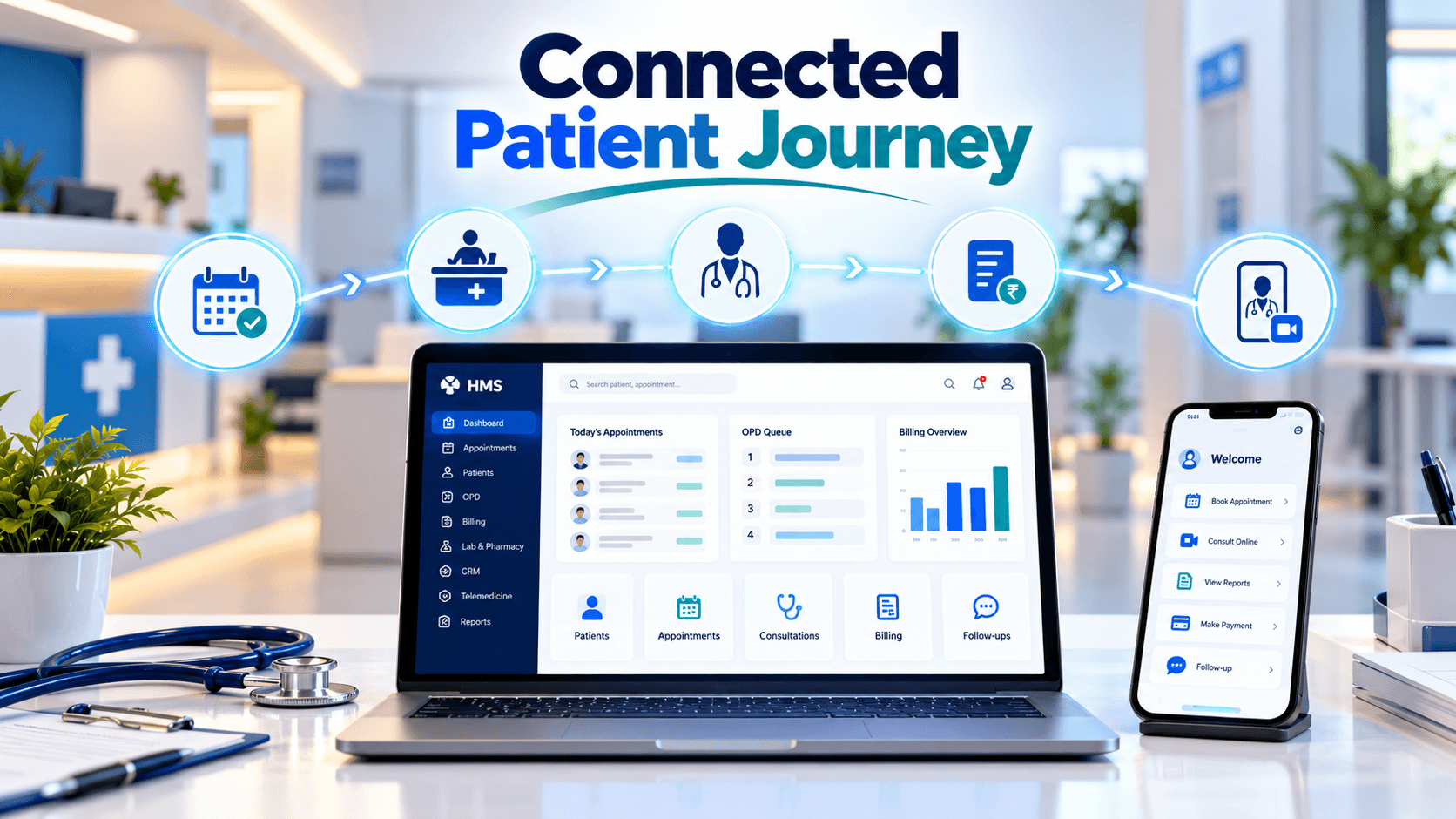
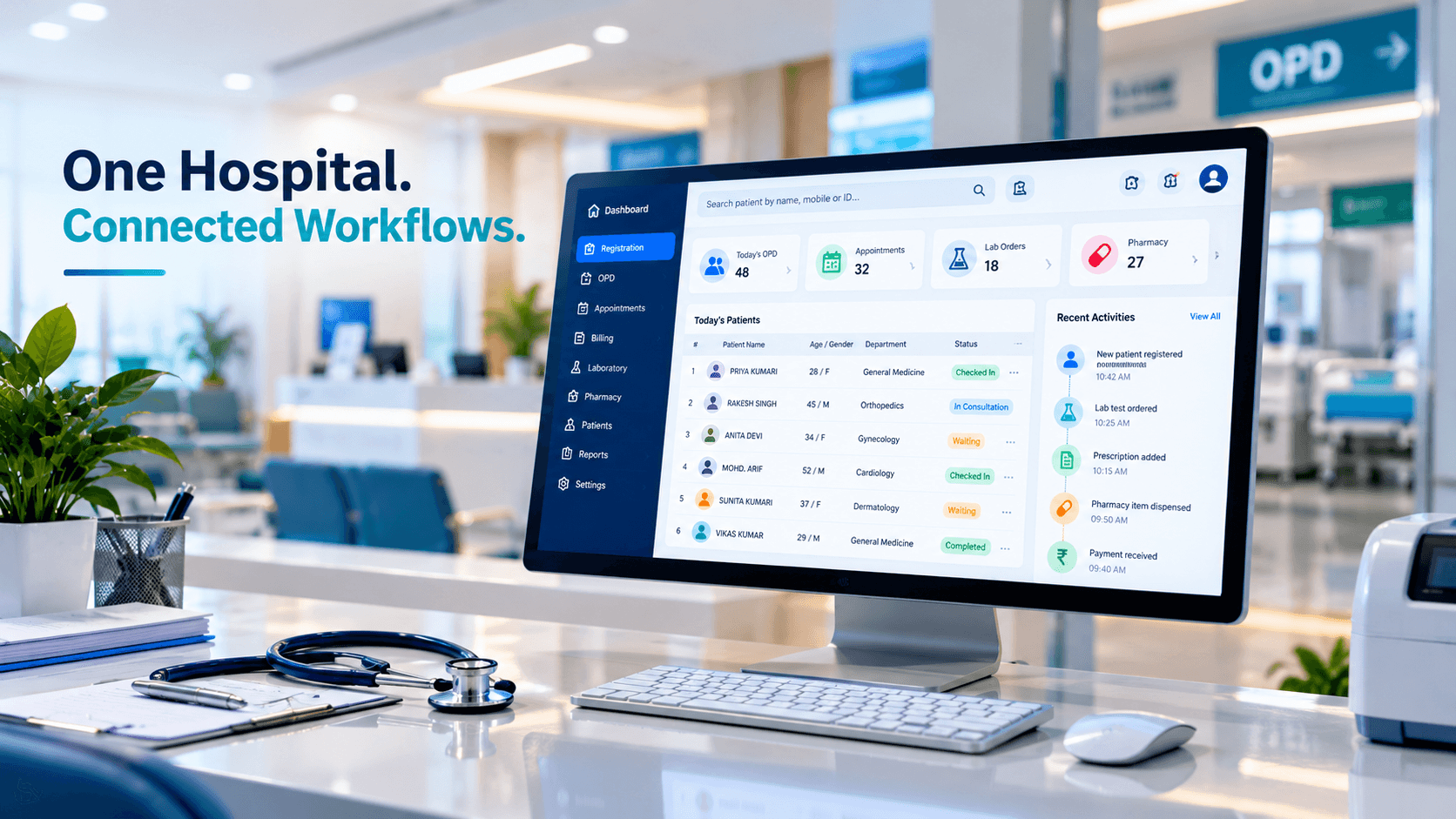
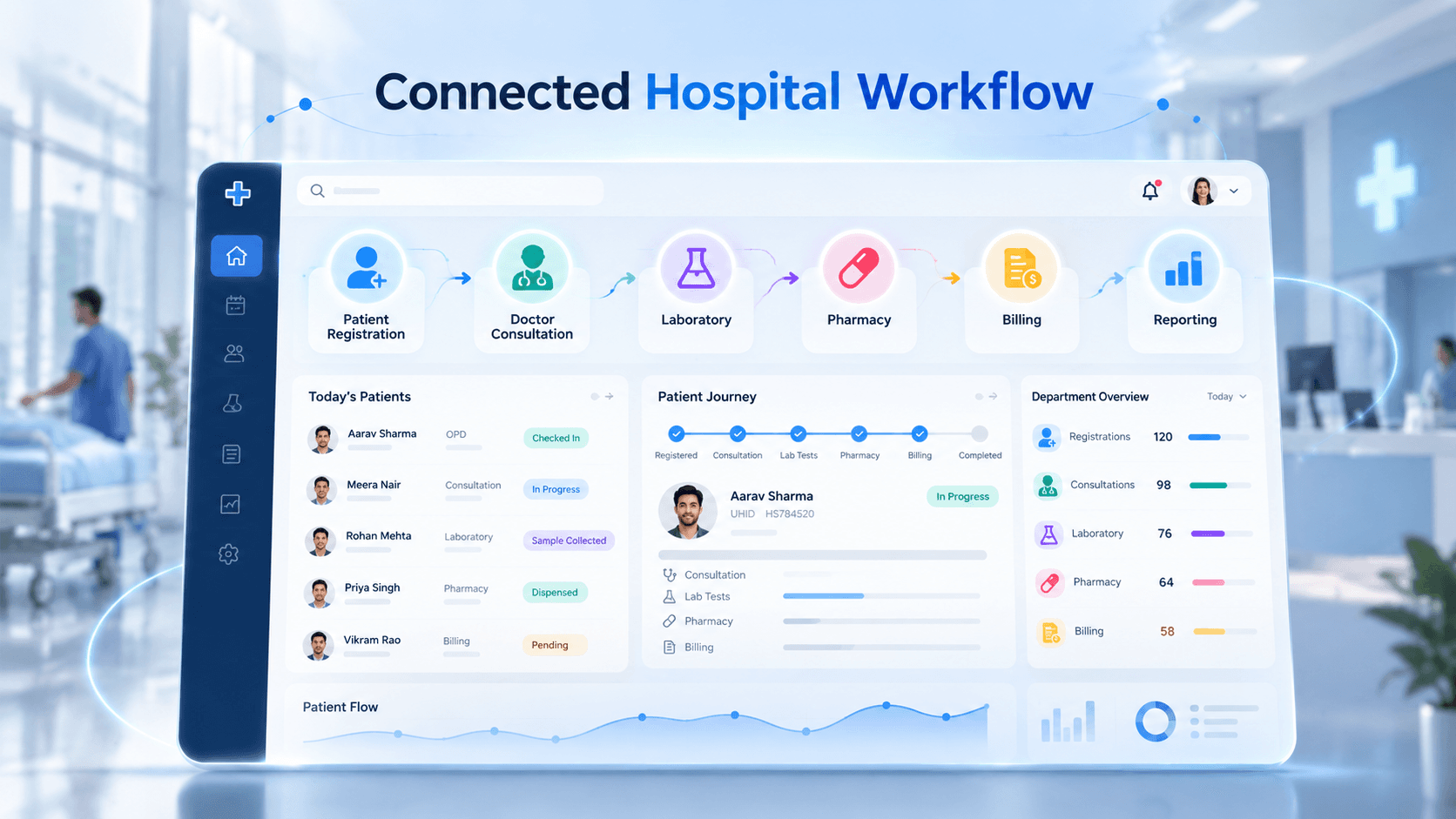
Top Features Every Hospital ERP System Must Have in 2026
In This Article
- Problem: Fragmented Systems Are Limiting Hospital Growth
- Why It Matters: ERP is the Backbone of Modern Healthcare
- Solution: Modern Hospital ERP Systems with Advanced Capabilities
- Top Features Every Hospital ERP System Must Have in 2026
- 1. Centralized Patient Management (EHR/EMR)
- 2. End-to-End Workflow Automation
- 3. Smart Billing & Revenue Cycle Management
- 4. Pharmacy & Inventory Management
- 5. Laboratory & Diagnostics Integration
- 6. Advanced Analytics & Reporting
- 7. Cloud-Based Architecture
- 8. AI & Automation Capabilities
- 9. Security & Compliance
- 10. Mobile Accessibility
- 11. Integration with Third-Party Systems
- 12. Multi-Department Management
- Comparison: Basic HMS vs Advanced ERP
- Key Business Benefits of Modern Hospital ERP
- 1. Improved Operational Efficiency
- 2. Better Financial Management
- 3. Enhanced Patient Experience
- 4. Strong Data Security
- 5. Scalable Growth
- Why Hospitals in India Must Upgrade in 2026
- Why Choosing the Right ERP Partner Matters
- Explore Our Healthcare ERP Solutions
Healthcare is no longer just about treatment—it’s about efficiency, data, compliance, and patient experience. As hospitals scale and patient expectations rise, outdated systems are becoming a major bottleneck.
In 2026, leading healthcare organizations are adopting advanced hospital ERP systems to unify operations, reduce costs, and deliver better outcomes.
But here’s the real challenge for CXOs and IT leaders:
What features should a modern hospital ERP system actually include?
This guide breaks down the must-have features every hospital ERP system must have in 2026, helping you make a strategic, future-ready investment.
Problem: Fragmented Systems Are Limiting Hospital Growth
Many hospitals still operate with disconnected systems:
- Separate tools for billing, patient records, and inventory
- Manual processes causing delays and errors
- Lack of real-time insights
- Poor integration between departments
This leads to:
- Inefficient workflows
- Revenue leakage
- Compliance risks
- Poor patient experience
The result: high operational cost + low efficiency
Why It Matters: ERP is the Backbone of Modern Healthcare
A hospital ERP system is no longer optional—it’s the central nervous system of your organization.
With the right ERP, hospitals can:
- Automate operations
- Improve patient care
- Ensure compliance
- Scale efficiently
The right ERP transforms healthcare from reactive to data-driven and proactive
Solution: Modern Hospital ERP Systems with Advanced Capabilities
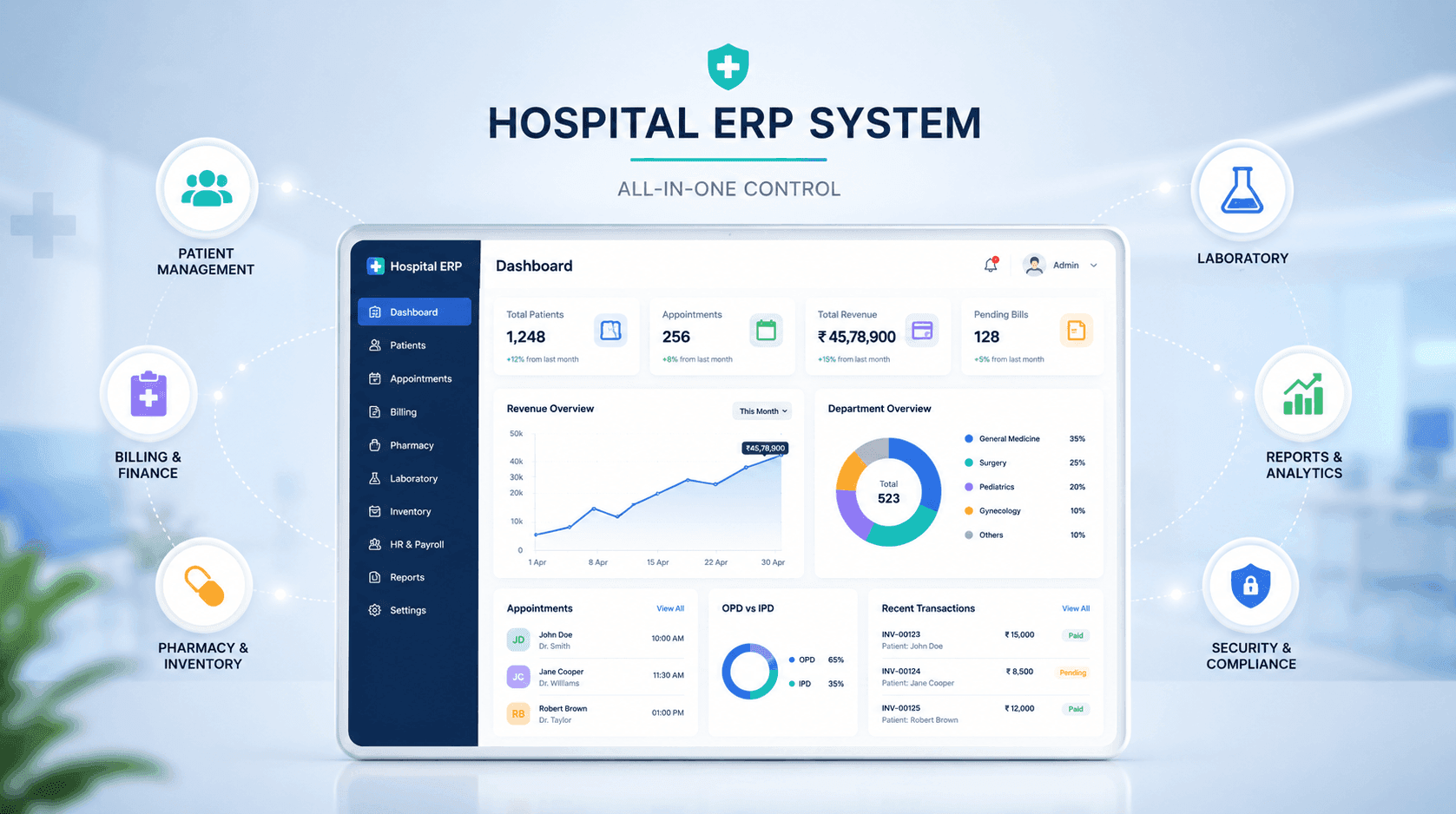
A future-ready hospital ERP integrates all operations into a single, intelligent platform—combining clinical, administrative, and financial processes.
Top Features Every Hospital ERP System Must Have in 2026
Take Full Control of Your Hospital Operations
1. Centralized Patient Management (EHR/EMR)
- Unified patient records
- Medical history tracking
- Real-time data access
Enables better diagnosis and treatment decisions
2. End-to-End Workflow Automation
- Appointment scheduling
- Patient registration
- Discharge management
Reduces manual work and improves efficiency
3. Smart Billing & Revenue Cycle Management
- Automated billing
- Insurance integration
- Payment tracking
Eliminates revenue leakage and improves cash flow
4. Pharmacy & Inventory Management
- Real-time inventory tracking
- Automated stock alerts
- Supplier management
Reduces wastage and ensures availability
5. Laboratory & Diagnostics Integration
- Test scheduling
- Report automation
- Integration with lab devices
Faster and more accurate diagnostics
6. Advanced Analytics & Reporting
- Real-time dashboards
- Financial insights
- Operational KPIs
Enables data-driven decision-making
7. Cloud-Based Architecture
- Remote access
- Multi-location support
- Scalable infrastructure
Future-proofs hospital operations
8. AI & Automation Capabilities
- Predictive analytics
- Patient risk assessment
- Automated workflows
Improves efficiency and clinical outcomes
9. Security & Compliance
- Data encryption
- Role-based access
- Regulatory compliance (HIPAA-like standards)
Protects sensitive healthcare data
10. Mobile Accessibility
- Mobile apps for doctors and staff
- Real-time updates
- On-the-go access
Enhances productivity and responsiveness
11. Integration with Third-Party Systems
- Insurance providers
- Payment gateways
- External healthcare platforms
Creates a connected ecosystem
12. Multi-Department Management
- OPD, IPD, ICU workflows
- Bed management
- Resource allocation
Streamlines hospital-wide operations
Comparison: Basic HMS vs Advanced ERP
| Feature | Basic HMS | Advanced ERP |
|---|---|---|
| Integration | Limited | Full |
| Automation | Partial | End-to-end |
| Scalability | Low | High |
| Analytics | Basic | Advanced |
| ROI Impact | Moderate | High |
Key Business Benefits of Modern Hospital ERP
1. Improved Operational Efficiency
Automated workflows reduce manual work
2. Better Financial Management
Accurate billing and cost control
3. Enhanced Patient Experience
Faster service and better care
4. Strong Data Security
Compliance-ready systems
5. Scalable Growth
Supports expansion and multi-location operations
Why Hospitals in India Must Upgrade in 2026
Healthcare in India is evolving rapidly:
- Increased patient expectations
- Government digital health initiatives
- Rising competition among hospitals
- Need for compliance and transparency
Hospitals without modern ERP systems risk falling behind
Why Choosing the Right ERP Partner Matters
Not all ERP solutions deliver equal value.
A strong partner:
- Understands healthcare workflows
- Builds scalable and secure systems
- Provides customization and integration
- Focuses on ROI and long-term growth
Explore Our Healthcare ERP Solutions
Looking to implement a modern hospital ERP system?
👉 https://murmusoftwareinfotech.com/digital-healthcare-management-system
👉https://murmusoftwareinfotech.com/contact
Final Insight
In 2026, the difference between average and leading hospitals will come down to one factor:
Technology
Hospitals that invest in the right ERP system:
- Operate efficiently
- Deliver better care
- Scale faster
Frequently Asked Questions
What is Top Features Every Hospital ERP System Must Have in 2026?
Discover top hospital ERP system features in 2026. Improve efficiency, patient care, and scalability with modern healthcare ERP solutions.