Why Your Sitecore Site Needs a Sitecore SEO Company, Not Just an SEO Agency

In This Article
Here's a pattern we see often. A business hires a good SEO agency. The agency runs an audit and sends back a list: fix canonical tags, repair the sitemap, improve page speed. Then the list sits untouched for three months because nobody on the SEO side knows how to make those changes in Sitecore, and the developers don't see it as a priority.
That gap between "what needs fixing" and "who can actually fix it in Sitecore" is exactly why a Sitecore SEO company is worth looking for.
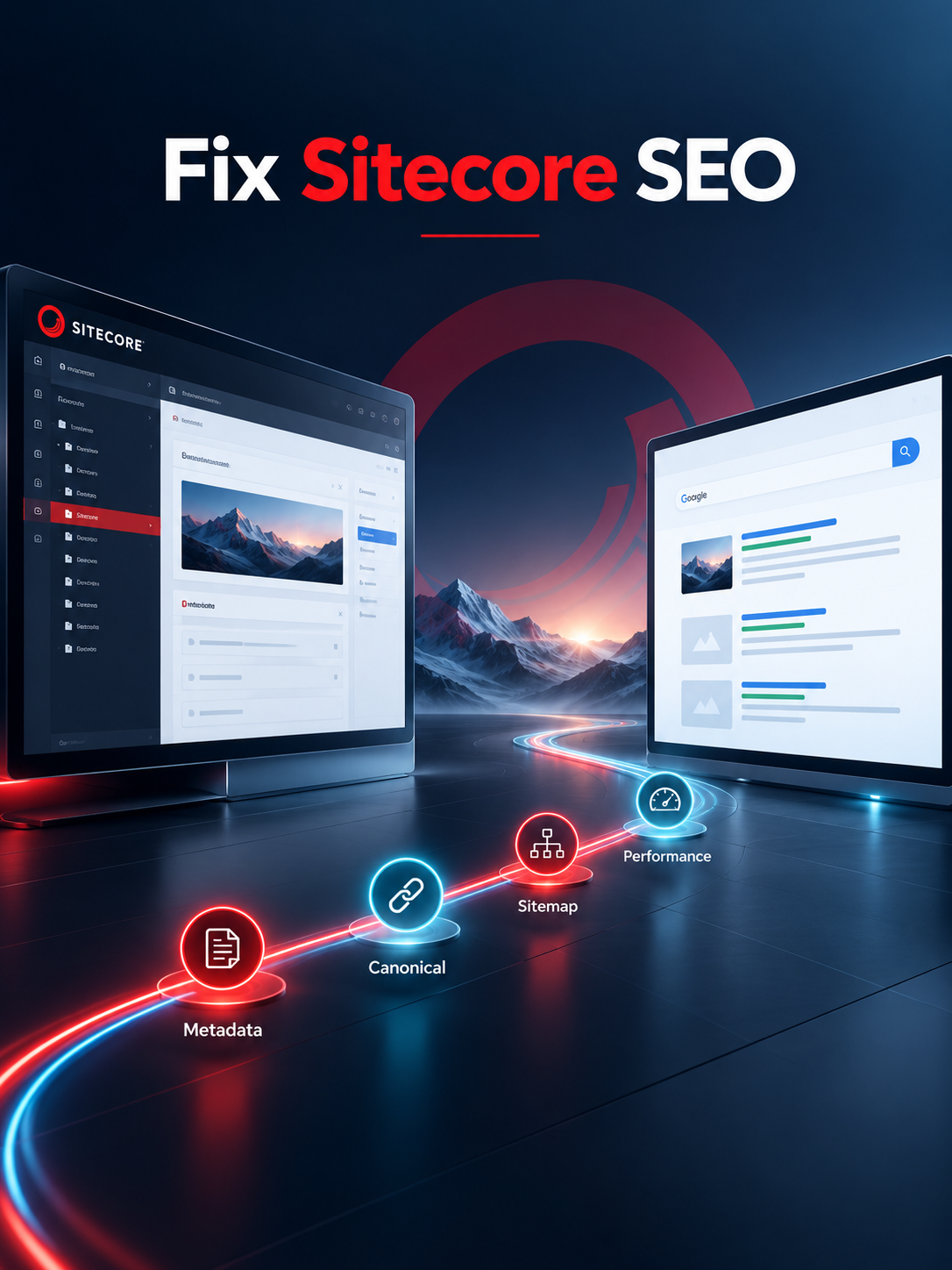
Fix Sitecore SEO at Source
Turn SEO recommendations into real Sitecore fixes across metadata, canonicals, sitemaps, redirects, performance and headless frontend implementation.
Proof That Technical SEO Works on Sitecore
Even Sitecore's own website needed it. When Intero Digital started SEO work for Sitecore, the site had 59 first-page rankings. Within 10 months it had over 400, plus a 32% year-on-year increase in organic traffic. The work focused on technical and on-page fixes found through usability and technical audits.
The takeaway: Sitecore is a powerful CMS, but rankings don't come automatically. They come from fixing what the platform and your build are doing to search engines.
Turn Sitecore SEO Findings Into Real Technical Fixes
Sitecore SEO Problems Generic Agencies Miss
1. Sitemaps that silently break
On XM Cloud, each headless site in a multi-site setup needs its own Sitemap item. If it's missing, the sitemap.xml may not load and the site collection can show a 500 error in the dashboard. A generic agency will report "sitemap not found." A Sitecore SEO company knows where the setting lives and fixes it.
2. Canonical and duplicate content issues
Sitecore's rich text component can create SEO problems, including editors duplicating content across pages. In headless builds, canonical tags may not update correctly across dynamic routes. Both need fixes at the template or code level, not just a note in a report.
3. Metadata that isn't wired to the front end
In XM Cloud with Next.js, SEO fields defined in Sitecore templates still need custom implementation to appear on the page. If nobody built that component, your editors can fill in meta descriptions all day and Google will never see them.
4. Redirects and migrations
Misconfigured redirects can cause major SEO issues. This matters most during upgrades or XM Cloud migrations, when URLs often change and years of rankings can disappear.
Fix Sitecore SEO Problems Before Rankings Keep Falling
What to Ask Before Hiring a Sitecore SEO Company
- 1Have you worked on Sitecore XP and XM Cloud? Headless SEO is different from traditional MVC sites.
- Who implements the fixes? An audit without implementation is just a to-do list.
- Can you edit templates and components, or only content? Most real fixes happen at template level.
- How do you protect rankings during upgrades or migrations? Ask for their redirect and URL-mapping process.
- How will you report results? Look for Google Search Console and GA4 data, not vanity metrics.
How Murmu Software Infotech Handles Sitecore SEO
Murmu Software Infotech combines Sitecore development and SEO under one roof. Our team works with .NET, React, Next.js, and Sitecore tools including SXA, JSS, Helix/Habitat, and Sitecore MVC, so SEO recommendations don't stall waiting for developer time.
Here's what that looks like in practice:
- · Technical SEO audits built around how your Sitecore site is actually configured
- · Fixes done in Sitecore: templates, metadata components, sitemaps, canonicals, and redirects
- · Headless SEO for XM Cloud and Next.js builds
- · Page speed and Core Web Vitals improvements at code level
- · SEO-safe upgrades and migrations with full URL mapping
- · Content and on-page optimization for your priority keywords
If your Sitecore site has the content but isn't getting the rankings, talk to Murmu Software Infotech about our Sitecore SEO services and get an audit your team can actually act on.
Frequently Asked Questions
Why does a Sitecore website need a specialist SEO company?
Many Sitecore SEO problems require implementation inside templates, components, metadata logic, routing, sitemaps, redirects and frontend code. A specialist team can both identify and fix those issues.
What is the difference between a Sitecore SEO company and a generic SEO agency?
A generic SEO agency may identify problems, while a Sitecore SEO company can also implement fixes directly in Sitecore XP, XM Cloud, Next.js, JSS, SXA and related frontend architecture.
What technical SEO problems are common in Sitecore?
Common issues include broken sitemaps, incorrect canonicals, duplicate content, missing metadata, redirect problems, slow performance, indexing issues and frontend rendering gaps.
Can Sitecore XM Cloud have SEO problems?
Yes. XM Cloud sites can still have sitemap, metadata, canonical, rendering, routing and Core Web Vitals issues if the implementation is incomplete or misconfigured.
Why can metadata fail on a Sitecore headless website?
Metadata fields stored in Sitecore still need to be correctly mapped and rendered by the frontend. If the Next.js implementation does not output them, search engines may never see the values entered by editors.
Can a Sitecore SEO company fix Core Web Vitals?
Yes. A technical Sitecore SEO team can investigate rendering, JavaScript, caching, images, APIs and third-party scripts that affect Core Web Vitals and page performance.
How should Sitecore redirects be handled during migration?
Create a full URL inventory, preserve valuable URLs where practical and map changed URLs to the most relevant destinations using appropriate permanent redirects.
What should a Sitecore SEO audit include?
A strong audit should cover crawlability, indexation, sitemaps, canonicals, metadata, redirects, schema, internal links, Core Web Vitals, rendering and migration risks.
Should a Sitecore SEO agency also have development skills?
Yes. Many high-impact fixes require changes to Sitecore templates, components, frontend code, routing or deployment, so implementation capability is important.
When should an enterprise hire a Sitecore SEO consultant?
Specialist support is useful when rankings are underperforming, technical fixes are blocked, the site uses XM Cloud or headless architecture, or a migration or redesign is planned.