AI-Powered Website Platform Development: How MSI Helps Brands Rank, Get Answered and Get Cited
In This Article
- Why Normal Websites Are No Longer Enough
- What Is an AI-Powered Website Platform?
- SEO, AEO and GEO Now Work Together
- How MSI Builds AI-Ready Website Platforms
- 1. Structured CMS Architecture
- 2. Next.js Performance and Experience Layer
- 3. Enterprise Sitecore Platforms
- Add AI Chatbots That Drive Business Actions
- Who Should Build an AI-Powered Website Platform?
- Build for Visitors, Search Engines and AI
- Build AI-Powered Website Platform
A website is no longer just about the users who visit it
but also about search engines, answer engines, AI assistants and generative discovery platforms
Businesses need to continue to invest in Google and Bing rankings, but potential customers are now also asking questions, reading AI-generated answers, searching with generative comparison tools and looking to receive instant assistance directly on company websites.
That's why businesses today need to rethink their approach to digital presence and invest in a modern AI-powered website platform that can rank, answer, convert and provide structured information needed by search and AI systems.
Why Normal Websites Are No Longer Enough
A traditional business website might contain:
Home → About → Services → Blog → Contact
That can communicate what a company does, but it does not automatically create an effective digital growth platform.
Modern websites increasingly need to support:
SEO visibility → AI discovery → Direct answers → Lead capture → AI conversations → Conversion
Content also needs to move quickly.
Marketing teams should be able to publish services, case studies, FAQs, key facts, landing pages and campaign content without waiting for developers to manually rebuild every page.
This is why businesses are moving toward headless CMS development, structured content and modern frontend architecture.
Build for Search and AI
Create an AI-ready website platform designed for SEO, AEO, GEO, structured content, AI discovery, lead generation, and long-term growth.
What Is an AI-Powered Website Platform?
An AI-powered website platform unifies the latest in website architecture, structured content, search optimization, AI integrations and business workflows.
A practical architecture may take the form of:
Headless CMS → Structured Content → Next.js → Website → Search → AI Assistant → Lead Conversion
By unifying SEO, AI, and the CMS, the platform enables the same trusted business information to power multiple experiences.
Murmu Software Infotech showcased this approach while migrating its own website to Sanity and Next.js.
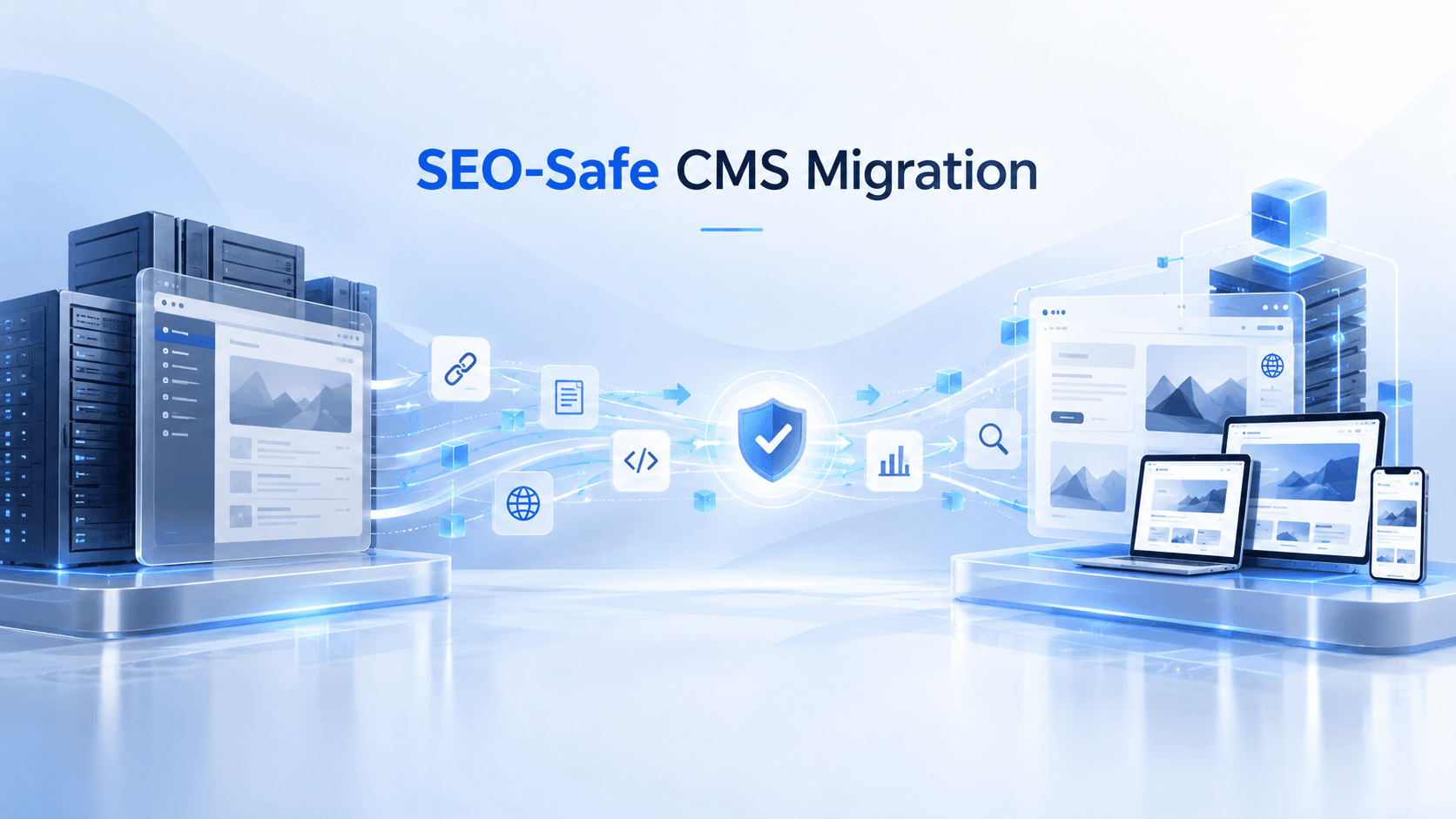
The migration transformed the website from a developer-dependent publishing model into a structured content foundation, powering websites, SEO, AI assistants and future automation workflows.
That is the difference between building pages and building a platform.
SEO, AEO and GEO Now Work Together
Traditional SEO remains essential.
Pages still need to be crawlable, indexable, fast, internally connected and relevant to search intent.
But AI-driven discovery introduces additional questions:
Can the platform understand what this business does?
Can it extract a direct answer?
Can it identify important facts and entities?
Is the content structured clearly enough to reference?
This is where AEO services, GEO services and AI search optimization become part of website architecture.
Build an AI-Ready Website That Ranks and Converts
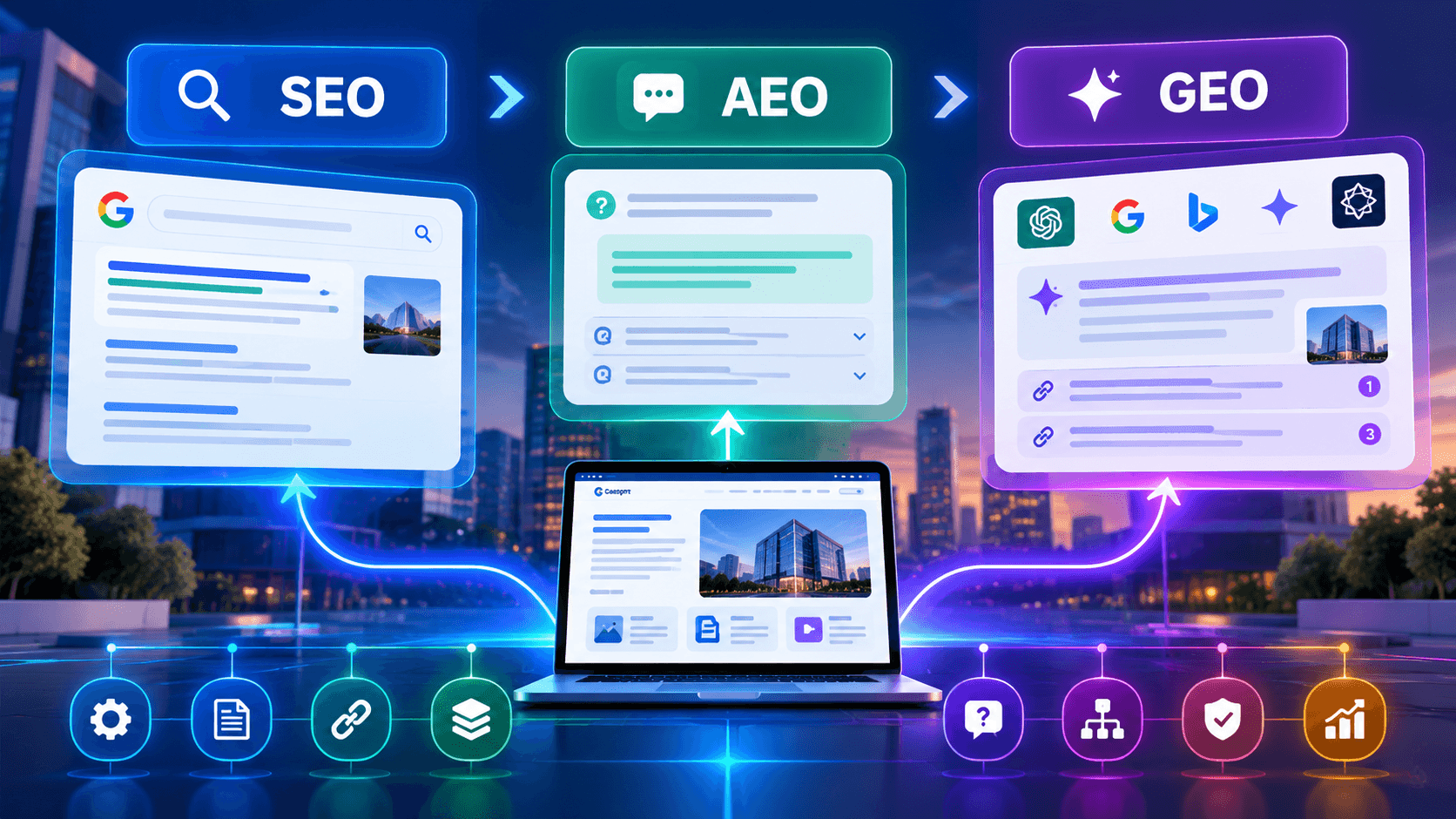
SEO helps content become discoverable and competitive in search.
AEO structures information around clear questions and direct answers.
GEO improves the clarity, context, authority and reusability of information for generative systems.
There is no guaranteed formula for an AI citation. The objective is to make content technically accessible, useful, factual, structured and easier for discovery systems to understand and potentially reference.
How MSI Builds AI-Ready Website Platforms
Murmu Software Infotech approaches AI-ready website development as several connected layers rather than one AI feature.
1. Structured CMS Architecture
Content is modeled as reusable information rather than buried inside page layouts.
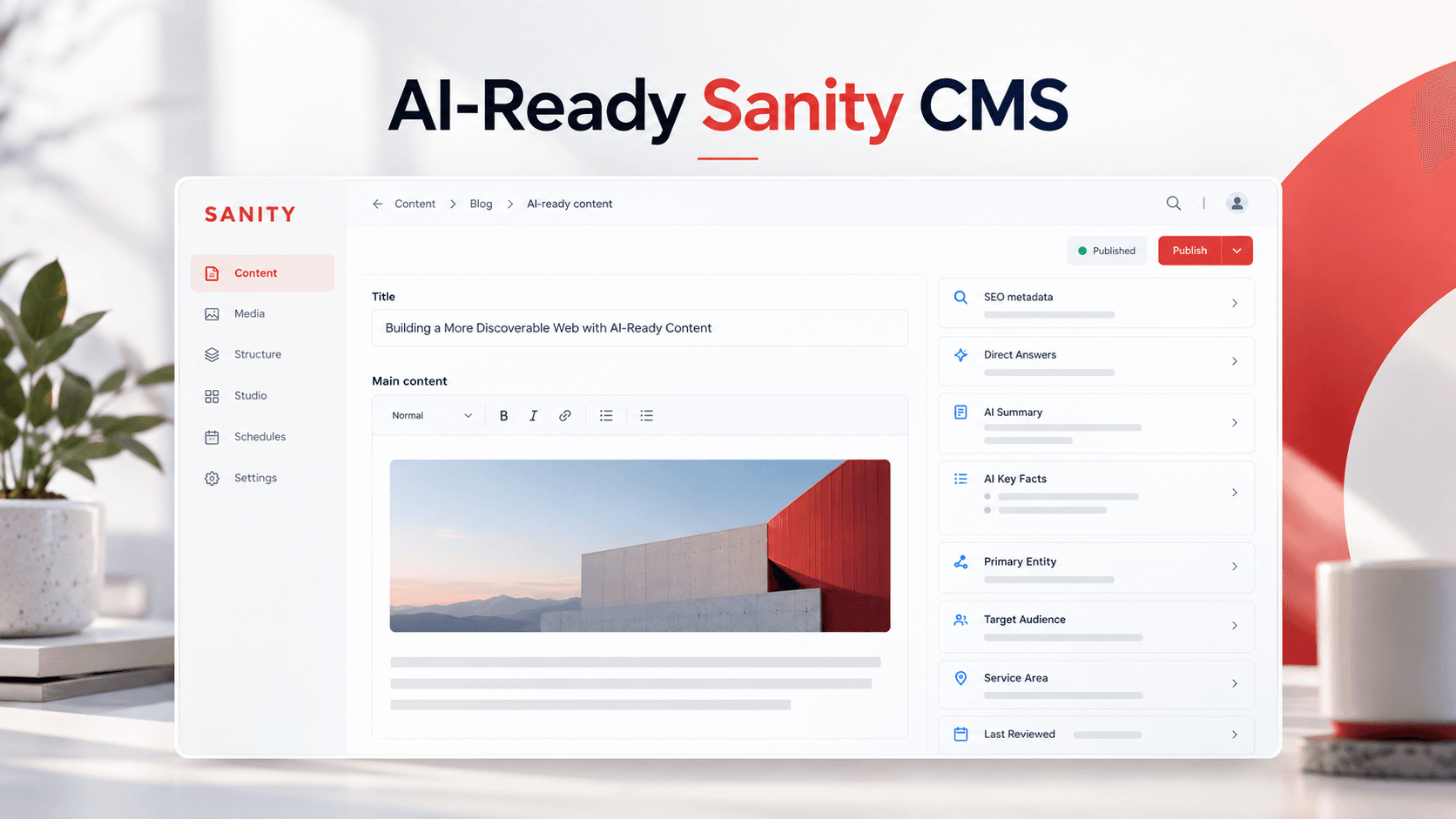
With Sanity CMS development, schemas can explicitly store:
- SEO metadata
- Direct answers
- FAQs
- AI summaries
- AI search snippets
- Key facts
- Primary entities
- Target audiences
- Service areas
- Schema types
- Editorial review dates
MSI has already documented how SEO, AEO and GEO were implemented directly inside Sanity CMS.
That allows editors to manage search and AI-ready information from the same content source instead of maintaining disconnected optimization documents.
2. Next.js Performance and Experience Layer
Next.js can be employed as the frontend layer that handles routing, rendering, responsive experiences, metadata output, structured data, performance and conversion-centric components,
thereby enabling a clean separation of concerns:
CMS cares for knowledge, Next.js for the experience,
facilitating faster evolution in response to shifting search, device, interface and AI-driven experiences.
3. Enterprise Sitecore Platforms
Large organizations may already operate sophisticated Sitecore environments.
For these businesses, Sitecore SEO services can combine technical SEO, content architecture, structured answers and AI-search readiness with enterprise-scale website requirements.
MSI's Sitecore XM Cloud healthcare platform case study demonstrates how Next.js, headless content delivery, search, integrations and reusable components can form part of a much broader digital ecosystem.
The related Sitecore GEO and AEO optimization guide also shows how enterprise content teams can extend traditional Sitecore SEO toward answer and generative discovery.
Add AI Chatbots That Drive Business Actions
An AI-ready website should not stop at generating traffic.
It should help convert that traffic.
A website platform can integrate an AI chatbot capable of answering questions using approved company knowledge, qualifying leads and helping visitors move toward the next action.
MSI's AI chatbot implementation with AI and human support demonstrates a broader model:
Visitor Question → AI Answer → Qualification → Business Action → Human Handoff
The chatbot can connect website knowledge with lead qualification, calculators, APIs, scheduling and human support.
This turns the website from a passive content destination into an interactive customer-acquisition platform.
Plan Your AI Website and Search Strategy Today
Who Should Build an AI-Powered Website Platform?
This approach is particularly relevant for:
- B2B companies generating leads through search
- SaaS and technology companies
- Healthcare and enterprise organizations
- Manufacturers and professional-service firms
- Companies running Sitecore or legacy CMS platforms
- Brands publishing large amounts of expert content
- Businesses expanding into multiple countries or services
- Organizations that want visibility across traditional and AI-driven discovery
The objective is not to add AI simply because AI is popular.
The objective is to build a digital platform capable of supporting the next generation of search, content, customer conversations and lead generation.
Build for Visitors, Search Engines and AI
The modern website has three audiences:
People need useful experiences.
Search engines need technically accessible, relevant pages.
AI systems need clear, structured, trustworthy information.
A platform designed around all three is better positioned for long-term digital growth.
Murmu Software Infotech helps businesses combine headless CMS, Sanity, Sitecore, Next.js, structured content, AI chatbot integration, SEO, AEO, GEO and AI search optimization into one scalable website architecture.
The goal is simple:
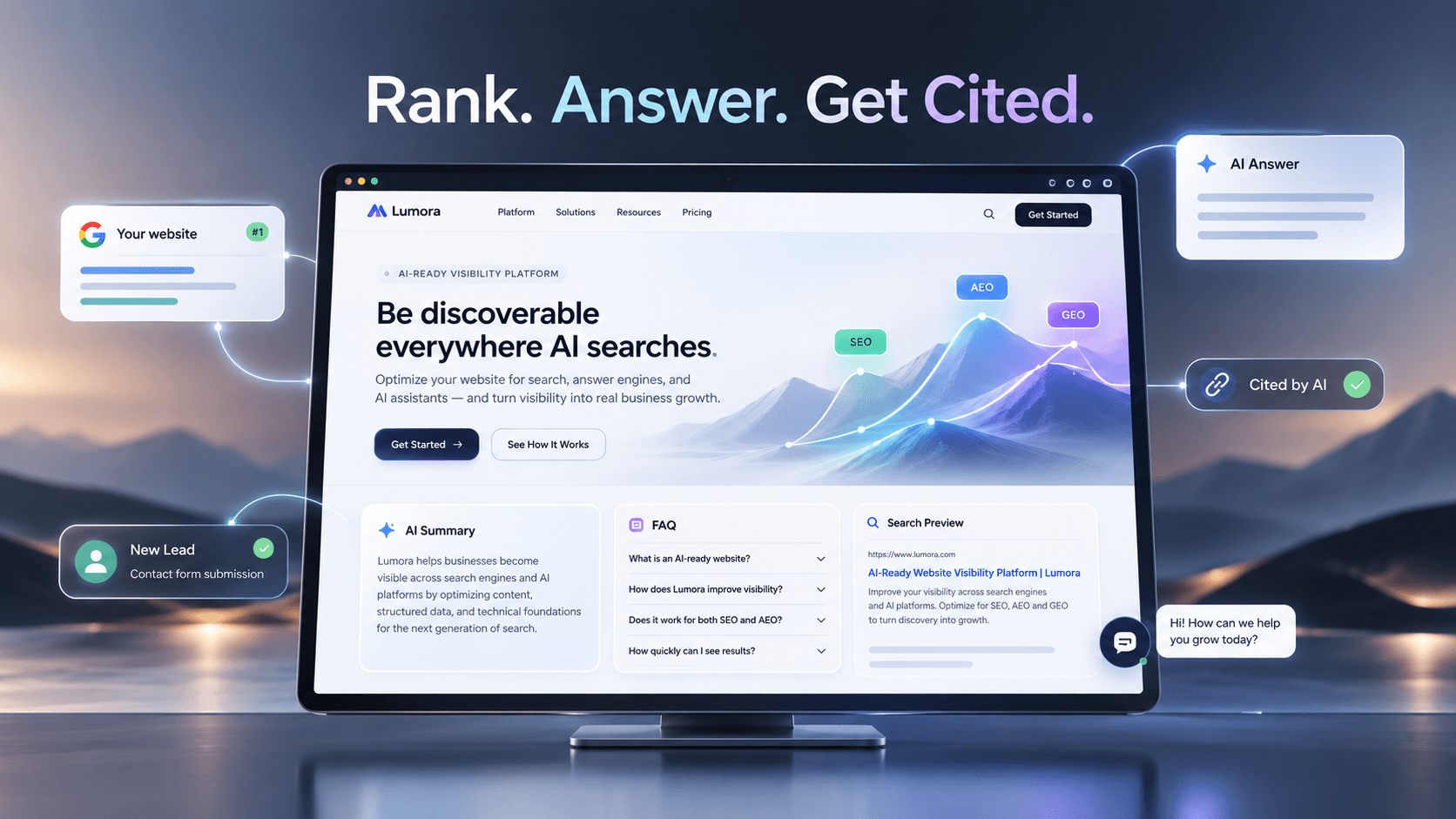
Rank → Get Answered → Get Cited → Engage → Convert
Build AI-Powered Website Platform
Want your website to rank, answer, convert and become easier for AI discovery platforms to understand?
Build an AI-ready website platform designed around structured content, search visibility, conversational AI and lead generation.
Frequently Asked Questions
What is an AI-powered website platform?
An AI-powered website platform combines modern web architecture, structured content, SEO, AEO, GEO, AI integrations, analytics and lead-generation workflows. It is designed not only for human visitors but also to help search engines, answer engines and AI systems understand the business and its content.
How is an AI-ready website different from a traditional website?
A traditional website mainly presents pages to visitors, while an AI-ready website uses structured CMS content, technical SEO, direct answers, schema, AI summaries, key facts, internal linking and AI integrations so the same content can support search visibility, generative discovery, chatbots and conversions.
What are SEO, AEO and GEO in website development?
SEO focuses on visibility in search engines, AEO structures content so answer engines can extract direct responses, and GEO improves content clarity, context and usefulness for generative AI systems. Together they help websites become easier to discover, understand and reference.
Can an AI-powered website improve visibility in ChatGPT-style search?
An AI-ready website can improve the likelihood that its content is understood and considered by AI-driven discovery systems by using clear entities, structured content, direct answers, strong technical SEO, authoritative information and machine-readable data. No platform can guarantee AI citations.
Why is headless CMS useful for AI-ready websites?
A headless CMS stores content as structured data rather than locking it inside page layouts. This makes content easier to reuse across websites, mobile apps, AI assistants, APIs, search experiences and automation workflows.
How does Sanity CMS support SEO, AEO and GEO?
Sanity CMS can store dedicated fields for SEO metadata, FAQs, direct answers, AI summaries, AI search snippets, key facts, entities, service areas and editorial review dates. This gives content teams a structured way to manage both traditional search and AI-search optimization.
Can Sitecore websites be optimized for AI search?
Yes. Sitecore websites can be optimized through technical SEO, structured content, schema, answer-ready content, reusable components, entity clarity, internal linking, performance improvements and AI-search-focused publishing workflows.
How does an AI chatbot fit into an AI-powered website platform?
An AI chatbot can use approved website and business knowledge to answer visitor questions, qualify leads, guide users toward relevant services, connect with APIs or workflows and hand conversations to human support when needed.
Why is Next.js commonly used for AI-ready website development?
Next.js provides a modern frontend architecture that supports fast page delivery, flexible rendering, structured metadata, scalable routing, reusable components and integration with headless CMS platforms and AI services.
Who should invest in an AI-powered website platform?
Businesses that rely on search visibility, content marketing, lead generation or digital customer journeys can benefit, including B2B companies, SaaS businesses, healthcare organizations, manufacturers, professional services firms, enterprises and multi-location brands.