Learning Management System (LMS): Features, Cost & Benefits
In This Article
- What is a Learning Management System (LMS)?
- Why Organizations Need an LMS Today
- Key Features of a Learning Management System
- 1. Course Creation & Content Management
- 2. User & Role Management
- 3. Mobile Learning Accessibility
- 4. Assessments & Certifications
- 5. Analytics & Reporting Dashboard
- 6. Live Classes & Virtual Learning
- 8. Integration Capabilities
- Benefits of Learning Management System
- 1. Centralized Learning Platform
- 2. Reduced Training Costs
- 3. Improved Learning Accessibility
- 4. Better Employee Productivity
- 5. Scalability for Growing Organizations
- 6. Data-Driven Decision Making
- 7. Enhanced Compliance Management
- LMS Cost: What Influences Pricing?
- 1. Deployment Type
- Cloud-Based LMS
- On-Premise LMS
- 2. Customization Requirements
- 3. Number of Users
- 4. Third-Party Integrations
- 5. Content Development
- Estimated LMS Pricing
- How to Choose the Right LMS
- User Experience
- Security & Compliance
- Mobile Compatibility
- Vendor Expertise
- Future Trends in LMS Technology
- Why Enterprises Are Investing in LMS Platforms
- Final Thoughts
The way organizations, educational institutions, and enterprises deliver learning and training has changed dramatically over the past few years. Digital transformation, remote work culture, hybrid education models, and continuous workforce upskilling have accelerated the demand for scalable and intelligent learning platforms.
Traditional training methods are no longer sufficient for modern businesses and institutions that need flexible, measurable, and technology-driven learning experiences.
This is where a Learning Management System (LMS) becomes a critical business solution.
A Learning Management System helps organizations create, manage, deliver, and track training programs and educational content through a centralized digital platform. From employee onboarding and corporate training to online education and compliance learning, LMS platforms are transforming how organizations engage learners at scale.
In this guide, we’ll explore:
- What a Learning Management System is
- Core features of LMS platforms
- LMS pricing and implementation costs
- Key business and educational benefits
- How to choose the right LMS
- Future trends in digital learning technology
What is a Learning Management System (LMS)?
A Learning Management System (LMS) is a software platform designed to manage, deliver, monitor, and optimize learning and training programs digitally.
An LMS enables organizations to:
- Create online courses
- Manage users and learners
- Deliver training content
- Track learner progress
- Conduct assessments
- Generate performance reports
- Automate certifications and compliance training
Modern LMS platforms support:
- Corporate training
- Employee onboarding
- Educational institutions
- Skill development programs
- Compliance learning
- Customer education
- Partner training
- Remote learning initiatives
For enterprises, universities, and educational organizations, LMS platforms provide centralized learning infrastructure that improves accessibility, scalability, and operational efficiency.
Why Organizations Need an LMS Today
Businesses and educational institutions are facing growing pressure to continuously train employees, students, and stakeholders while maintaining operational efficiency.
Traditional learning approaches often create challenges such as:
- High training costs
- Limited accessibility
- Inconsistent learning experiences
- Difficulty tracking performance
- Manual administration
- Low learner engagement
- Scalability limitations
A modern Learning Management System addresses these challenges through automation, analytics, and digital accessibility.
For CEOs, CTOs, HR leaders, IT heads, founders, and institutional decision-makers, investing in an LMS is now a strategic move toward digital transformation and workforce development.
Key Features of a Learning Management System
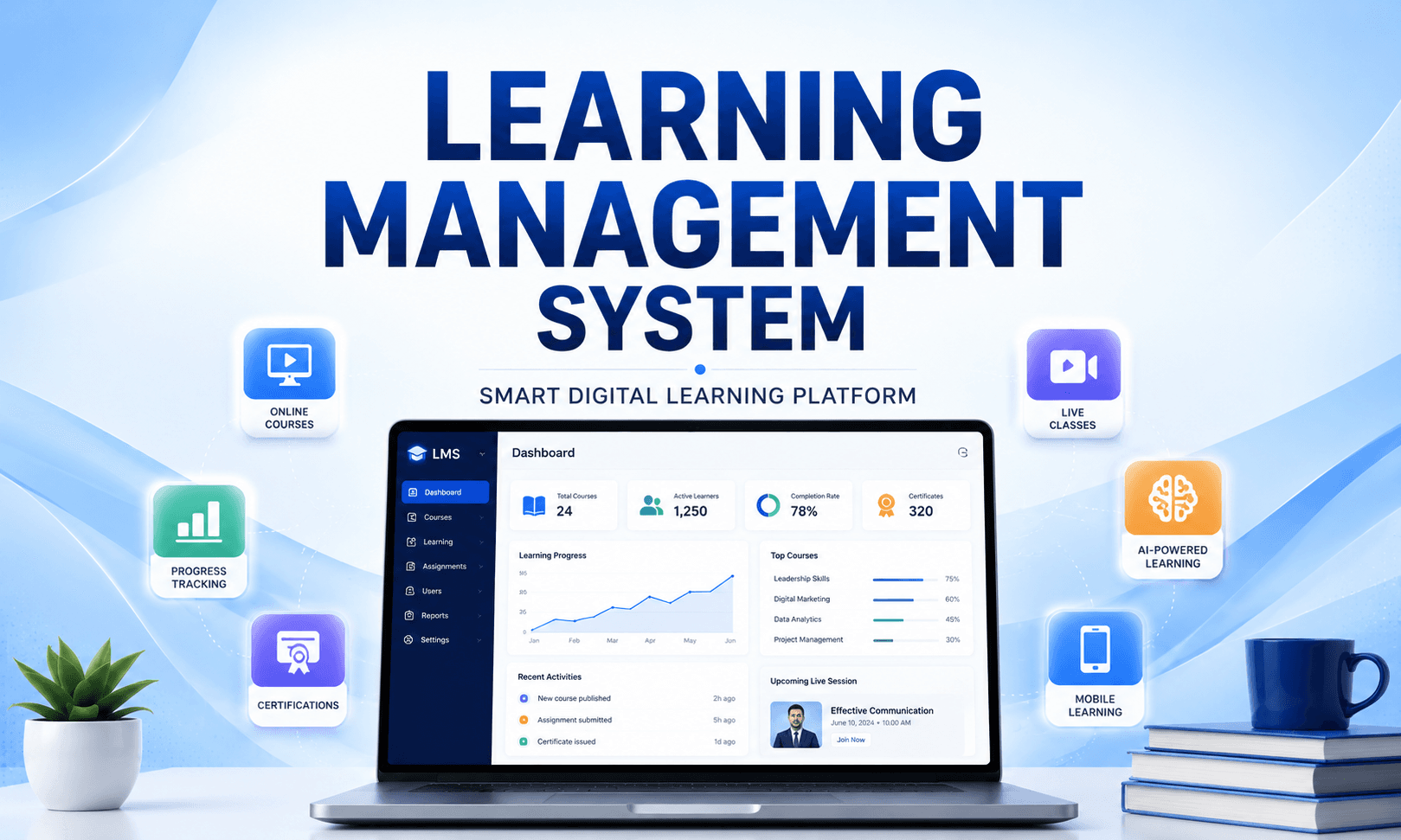
Transform Learning & Training with a Smart LMS Platform
When evaluating LMS platforms, organizations should prioritize features that improve learning experiences, administration, reporting, and scalability.
1. Course Creation & Content Management
An LMS should make it easy to create and organize learning content.
Key capabilities include:
- Video-based learning modules
- Interactive courses
- Document uploads
- SCORM/xAPI support
- Multimedia integration
- Learning paths
- Certification programs
This helps organizations deliver engaging and structured learning experiences.
2. User & Role Management
A scalable LMS allows administrators to manage different user groups efficiently.
Features include:
- Role-based access
- Department-wise segmentation
- Instructor management
- Student/employee profiles
- Permission controls
This ensures secure and organized learning management.
3. Mobile Learning Accessibility
Modern learners expect learning on-demand from any device.
Mobile-friendly LMS platforms support:
- Smartphone learning
- Tablet accessibility
- Mobile notifications
- Offline content access
- Responsive user interfaces
Mobile accessibility improves learner engagement significantly.
4. Assessments & Certifications
Assessments are critical for evaluating learning effectiveness.
An LMS should support:
- Online quizzes
- Assignments
- Automated grading
- Performance tracking
- Certificates generation
- Skill-based evaluations
This enables organizations to measure training outcomes effectively.
5. Analytics & Reporting Dashboard
Data-driven insights help organizations optimize training strategies.
Advanced LMS platforms provide:
- Course completion rates
- Learner performance analytics
- Skill gap analysis
- Employee progress tracking
- Training ROI reports
- Engagement metrics
For enterprise leadership teams, these analytics support strategic workforce planning.
6. Live Classes & Virtual Learning
Hybrid and remote learning models require virtual collaboration tools.
Modern LMS platforms integrate:
- Live video sessions
- Webinar management
- Virtual classrooms
- Screen sharing
- Discussion forums
- Real-time communication tools
This enhances remote learning experiences.
7. Automation & Notifications
Automation improves administrative efficiency.
LMS automation features include:
- Automated enrollments
- Learning reminders
- Certification renewals
- Progress notifications
- Workflow approvals
This reduces manual administrative workload significantly.
8. Integration Capabilities
A modern LMS should integrate with enterprise systems such as:
- HRMS platforms
- CRM systems
- ERP software
- Video conferencing tools
- Payment gateways
- Analytics tools
API-based integrations improve operational efficiency and ecosystem connectivity.
Benefits of Learning Management System
1. Centralized Learning Platform
An LMS centralizes all learning activities, content, and reporting into one secure platform.
This improves visibility and management efficiency.
2. Reduced Training Costs
Traditional classroom training often involves travel, logistics, venue, and instructor costs.
An LMS minimizes these expenses through digital learning delivery.
3. Improved Learning Accessibility
Learners can access courses anytime and from anywhere, enabling flexible and self-paced learning experiences.
4. Better Employee Productivity
Well-trained employees perform more efficiently and confidently.
Organizations can continuously upskill teams without disrupting operations.
5. Scalability for Growing Organizations
As organizations expand, LMS platforms help manage large learner volumes without operational complexity.
6. Data-Driven Decision Making
Analytics dashboards provide real-time insights into learning effectiveness and workforce readiness.
Leadership teams can identify skill gaps and optimize training strategies.
7. Enhanced Compliance Management
Industries with regulatory training requirements can automate compliance tracking and certification management efficiently.
LMS Cost: What Influences Pricing?
One of the most common questions organizations ask is:
How much does a Learning Management System cost?
The answer depends on several factors.
1. Deployment Type
Cloud-Based LMS
- Lower upfront investment
- Subscription-based pricing
- Faster deployment
- Easier scalability
On-Premise LMS
- Higher implementation cost
- Greater infrastructure control
- Custom security management
2. Customization Requirements
The more customized the LMS platform, the higher the implementation cost.
Customization factors include:
- Custom workflows
- Branding
- User roles
- Reporting dashboards
- Industry-specific modules
3. Number of Users
Pricing often scales based on:
- Active learners
- Administrators
- Departments
- Content volume
4. Third-Party Integrations
Integrating the LMS with HRMS, CRM, ERP, payment gateways, or webinar platforms can impact implementation cost.
5. Content Development
Interactive eLearning content creation may require additional investment depending on complexity.
Estimated LMS Pricing
Here’s a general market estimate:
| LMS Type | Estimated Cost |
|---|---|
| Basic SaaS LMS | $1,000 – $10,000 annually |
| Mid-Level Enterprise LMS | $15,000 – $50,000 |
| Custom Enterprise LMS Platform | $50,000+ |
The final cost depends on business size, scalability requirements, integrations, and customization needs.
How to Choose the Right LMS
Selecting the right Learning Management System is a strategic technology decision.
Key evaluation factors include:
Business Goals Alignment
The LMS should align with your organizational learning objectives and future scalability plans.
User Experience
An intuitive and engaging interface improves learner adoption and training completion rates.
Security & Compliance
Ensure the LMS follows enterprise-grade security practices and data protection standards.
Mobile Compatibility
Mobile-first learning capabilities are essential for modern learners and distributed teams.
Vendor Expertise
Choose a technology partner with strong experience in enterprise learning solutions and long-term support capabilities.
Future Trends in LMS Technology
The future of LMS platforms is rapidly evolving with emerging technologies such as:
- Artificial Intelligence (AI)
- Personalized learning experiences
- Gamification
- Predictive analytics
- Microlearning
- AR/VR-based learning
- AI-powered assessments
- Adaptive learning systems
Organizations investing early in intelligent learning ecosystems will gain long-term workforce and operational advantages.
Why Enterprises Are Investing in LMS Platforms
For CEOs, CTOs, HR heads, founders, and business leaders, workforce learning is becoming a competitive advantage.
A modern LMS helps organizations:
- Accelerate digital transformation
- Improve employee retention
- Enhance workforce productivity
- Standardize learning delivery
- Scale training programs globally
- Improve compliance management
In today’s knowledge-driven economy, organizations that continuously invest in learning infrastructure are better positioned for long-term growth.
Final Thoughts
A Learning Management System is no longer just a training platform — it is a strategic business tool for digital learning, workforce development, and organizational scalability.
Whether you are an enterprise, educational institution, training company, or growing business, the right LMS can improve learning efficiency, reduce operational costs, and create measurable learning outcomes.
As digital learning adoption continues to rise globally, investing in a scalable and intelligent LMS platform can future-proof your organization’s learning ecosystem.
Frequently Asked Questions
What is Learning Management System (LMS): Features, Cost & Benefits?
Discover the complete guide to Learning Management Systems (LMS), including key features, pricing, benefits, and how LMS platforms help businesses and educational institutions scale digital learning.