Top Features of a Successful Online Store (UI, UX & Conversion Tips)
In This Article
- How Modern E-Commerce Brands Increase Conversions with Smart UI/UX Design in 2026
- Why UI & UX Matter in E-Commerce
- 1. Mobile-First Responsive Design
- 2. Fast Website Speed & Performance
- 3. Clean & Modern User Interface (UI)
- 4. Easy Navigation & Smart Product Discovery
- 5. High-Converting Product Pages
- 6. Personalized Shopping Experience
- 7. Seamless Checkout Experience
- 8. Secure Payment Gateway Integration
- 9. AI Chatbots & Customer Support
- 10. Omnichannel Shopping Experience
- 11. Inventory Visibility & Real-Time Availability
- 12. Conversion-Focused Call-to-Action (CTA)
- 13. SEO-Friendly Ecommerce Architecture
- 14. Advanced Analytics & Customer Insights
- 15. Cloud Scalability & Performance Optimization
- Common UI/UX Mistakes Ecommerce Businesses Should Avoid
- Future Trends in Ecommerce UI/UX for 2026
- Why UI/UX Optimization is a Business Strategy
- Final Thoughts
How Modern E-Commerce Brands Increase Conversions with Smart UI/UX Design in 2026
The e-commerce industry in 2026 is more competitive than ever. Customers no longer choose online stores based only on products or pricing — they choose brands that deliver seamless, engaging, and personalized shopping experiences.
A successful online store today must combine:
- Exceptional UI (User Interface)
- Intuitive UX (User Experience)
- High-speed performance
- Mobile-first design
- AI-driven personalization
- Conversion-focused architecture
Modern consumers expect frictionless browsing, faster checkout, personalized recommendations, and seamless digital experiences across every device.
For CEOs, CTOs, Managing Directors, Founders, IT Heads, Co-Founders, VPs, and digital commerce leaders, investing in UI/UX optimization is now directly linked to:
- Revenue growth
- Customer retention
- Brand positioning
- Conversion rate optimization
- Long-term digital scalability
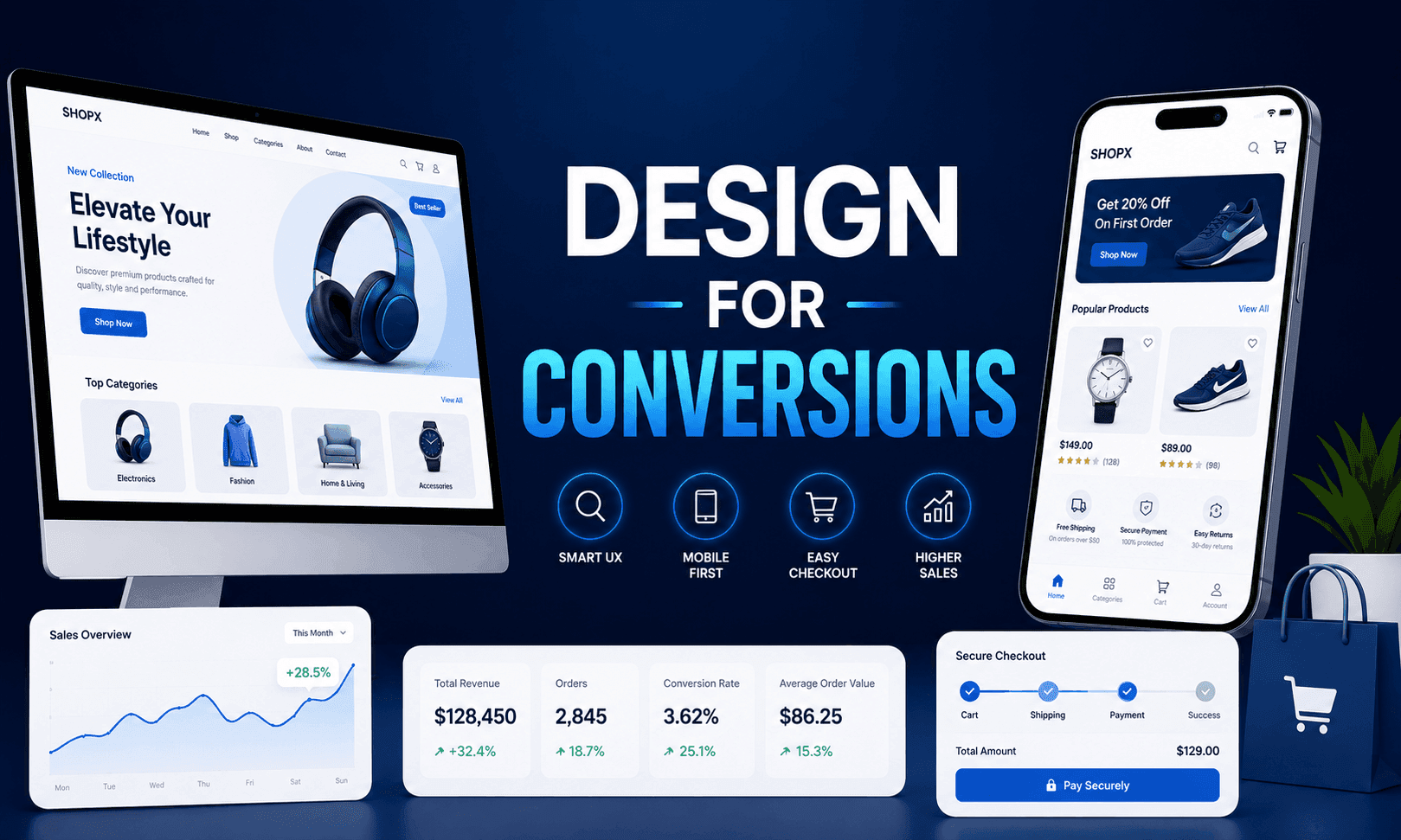
In this article, we explore the top features of a successful online store, modern UI/UX best practices, and conversion optimization strategies businesses should implement in 2026.
Why UI & UX Matter in E-Commerce
UI (User Interface) focuses on the visual design and layout of an online store, while UX (User Experience) focuses on how customers interact with the platform.
Together, UI and UX directly impact:
- Customer engagement
- Purchase decisions
- Conversion rates
- Brand trust
- Cart abandonment
- Customer retention
Poor ecommerce experiences often lead to:
- Higher bounce rates
- Lower conversions
- Reduced customer trust
- Lost revenue opportunities
Modern businesses must treat UI/UX as a strategic investment rather than just a design element.
1. Mobile-First Responsive Design
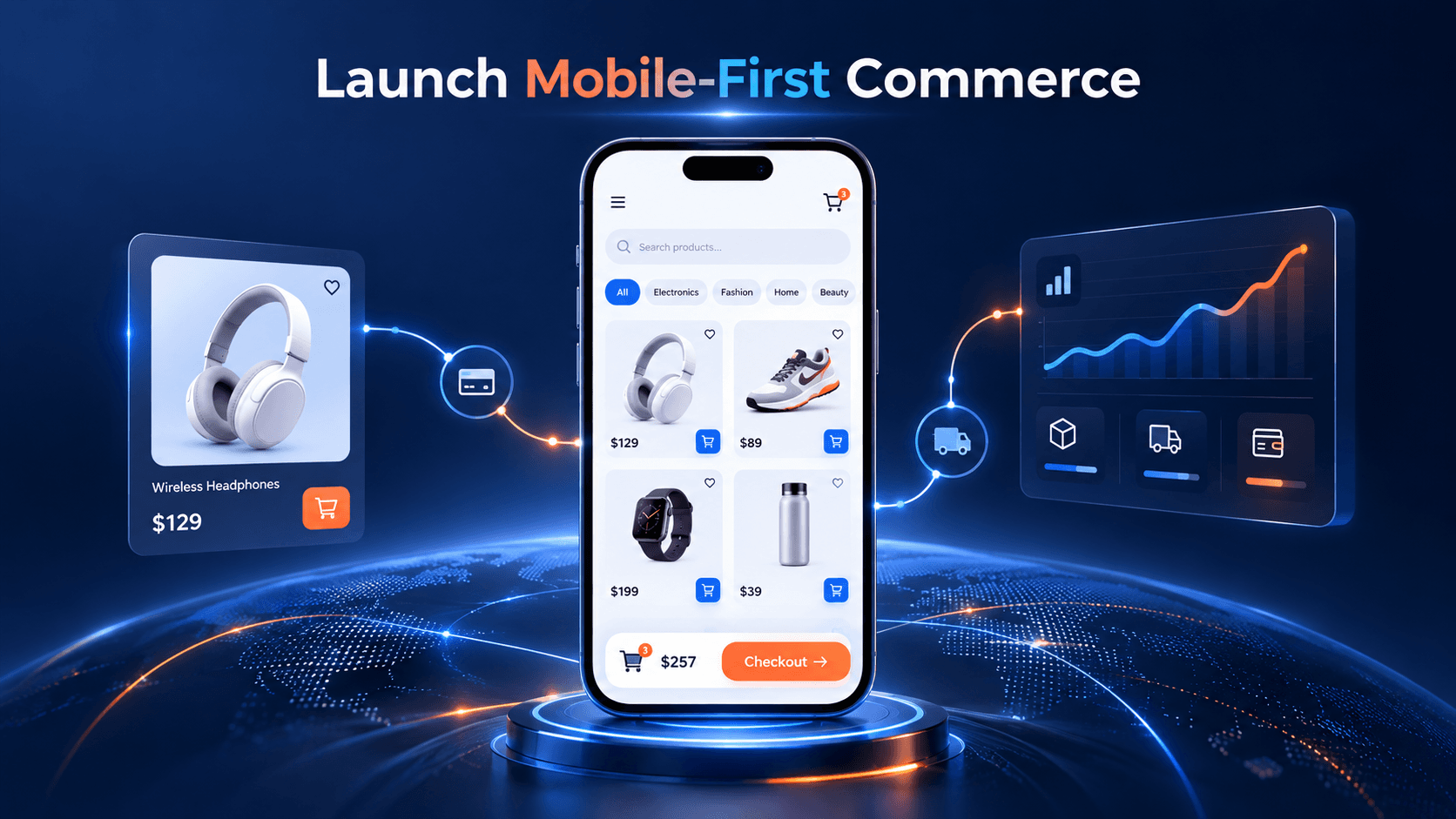
In 2026, mobile commerce dominates digital shopping behavior.
A successful online store must deliver:
- Fast mobile loading speed
- Touch-friendly navigation
- Optimized product browsing
- Mobile-friendly checkout
- Seamless app-like experience
Mobile responsiveness is now essential for:
- SEO rankings
- User engagement
- Conversion optimization
Businesses that ignore mobile-first commerce risk losing significant market share.
2. Fast Website Speed & Performance
Build an E-Commerce Experience Customers Love
Website speed directly affects conversion rates.
Research consistently shows that slow-loading ecommerce websites increase bounce rates and reduce customer satisfaction.
High-performance ecommerce websites optimize:
- Page loading speed
- Server response time
- Image optimization
- Cloud infrastructure
- Frontend performance
Modern consumers expect instant browsing experiences.
Even a few seconds of delay can impact sales performance significantly.
3. Clean & Modern User Interface (UI)
A visually cluttered ecommerce website creates friction and confusion.
Successful online stores use:
- Minimal layouts
- Clean typography
- Clear product hierarchy
- Consistent branding
- High-quality visuals
- Strategic whitespace
Professional UI design improves:
- Brand credibility
- Product visibility
- User engagement
- Purchase confidence
Modern UI design focuses on simplicity, clarity, and intuitive interactions.
4. Easy Navigation & Smart Product Discovery
Customers should find products quickly and effortlessly.
Modern ecommerce UX includes:
- Intelligent search functionality
- Advanced product filters
- Category organization
- Predictive search
- Personalized recommendations
Easy navigation improves:
- Customer experience
- Product discoverability
- Average session duration
- Conversion rates
AI-powered product discovery is becoming a major differentiator in ecommerce success.
5. High-Converting Product Pages
Product pages play a critical role in influencing purchase decisions.
Successful ecommerce stores optimize product pages with:
- High-quality product images
- Product videos
- Detailed descriptions
- Customer reviews
- Product specifications
- Pricing transparency
- Delivery information
- Clear call-to-action buttons
Conversion-focused product pages reduce customer hesitation and improve trust.
6. Personalized Shopping Experience
Personalization is now one of the most powerful ecommerce growth strategies.
AI-powered ecommerce platforms personalize:
- Product recommendations
- Promotions
- Search results
- Email campaigns
- Customer journeys
Personalized experiences improve:
- Customer retention
- Engagement
- Repeat purchases
- Revenue per customer
Modern ecommerce brands use behavioral analytics and AI to create highly targeted shopping experiences.
7. Seamless Checkout Experience
Complex checkout processes are one of the biggest causes of cart abandonment.
A successful online store must offer:
- One-page checkout
- Guest checkout
- Multiple payment methods
- Secure transactions
- Auto-filled customer data
- Minimal form fields
Fast and frictionless checkout experiences significantly improve conversion rates.
8. Secure Payment Gateway Integration
Trust is critical in digital commerce.
Customers expect:
- Secure payment systems
- SSL encryption
- Trusted payment gateways
- UPI & wallet support
- Fraud prevention systems
Secure checkout experiences improve brand credibility and customer confidence.
9. AI Chatbots & Customer Support
Modern consumers expect instant support.
AI-powered chat systems help businesses provide:
- 24/7 customer support
- Product recommendations
- Automated FAQs
- Order tracking
- Personalized assistance
Quick customer support improves user experience and customer satisfaction.
10. Omnichannel Shopping Experience
Customers interact across multiple digital touchpoints.
Successful online stores integrate:
- Websites
- Mobile apps
- Social commerce
- Online marketplaces
- Physical retail stores
Omnichannel commerce creates seamless shopping experiences across every platform.
11. Inventory Visibility & Real-Time Availability
Customers expect accurate stock information.
Modern ecommerce platforms display:
- Real-time inventory updates
- Delivery estimates
- Warehouse availability
- Out-of-stock alerts
Inventory transparency improves customer trust and operational efficiency.
12. Conversion-Focused Call-to-Action (CTA)
Strategic CTAs play a major role in increasing conversions.
Effective ecommerce CTAs are:
- Clear
- Action-oriented
- Visually prominent
- Easy to understand
Examples:
- Buy Now
- Add to Cart
- Get Started
- Shop Collection
Conversion optimization requires continuous testing of CTA positioning and messaging.
13. SEO-Friendly Ecommerce Architecture
SEO is essential for long-term ecommerce growth.
Successful online stores optimize:
- Product keywords
- Site speed
- Mobile usability
- Internal linking
- Schema markup
- Product metadata
- URL structure
SEO-friendly ecommerce architecture improves organic visibility and reduces customer acquisition costs.
You can also explore our:
- [E-Commerce Development Services]
- [UI/UX Design Solutions]
14. Advanced Analytics & Customer Insights
Modern ecommerce businesses rely heavily on data-driven decision-making.
Analytics platforms help businesses monitor:
- Conversion rates
- Cart abandonment
- Product performance
- Customer behavior
- Traffic sources
- Revenue metrics
Real-time analytics help leadership teams optimize business performance continuously.
15. Cloud Scalability & Performance Optimization
Scalability is essential for long-term ecommerce success.
Cloud-native ecommerce platforms provide:
- Faster performance
- Better uptime
- Flexible infrastructure
- Traffic scalability
- Global accessibility
Scalable architecture ensures consistent customer experiences during high traffic periods.
Common UI/UX Mistakes Ecommerce Businesses Should Avoid
Many ecommerce businesses lose conversions due to poor design decisions.
Common mistakes include:
- Slow website speed
- Cluttered interfaces
- Complicated checkout processes
- Poor mobile optimization
- Weak product pages
- Lack of personalization
- Confusing navigation
- Poor CTA visibility
Avoiding these issues significantly improves conversion performance.
Future Trends in Ecommerce UI/UX for 2026
The future of ecommerce design is becoming more immersive and intelligent.
Emerging trends include:
- AI-powered shopping experiences
- Voice commerce
- AR/VR product visualization
- Hyper-personalization
- Conversational commerce
- Dark mode interfaces
- Micro-interactions
- Predictive UX
Brands that adopt these innovations early will gain a strong competitive advantage.
Why UI/UX Optimization is a Business Strategy
For CEOs, CTOs, Founders, Managing Directors, and ecommerce leaders, UI/UX is no longer just a design concern.
It directly impacts:
- Revenue generation
- Customer acquisition
- Brand perception
- Customer retention
- Operational scalability
Businesses investing in ecommerce UX optimization often experience stronger long-term profitability and market positioning.
Final Thoughts
A successful online store in 2026 requires much more than attractive visuals. It needs strategic UI/UX design, conversion-focused architecture, intelligent personalization, mobile-first experiences, operational scalability, and seamless customer journeys.
Whether you operate a startup, retail brand, enterprise business, marketplace, or D2C platform, investing in ecommerce UI/UX optimization is critical for long-term digital success.
The brands that win in modern ecommerce will be those that combine technology, customer experience, and data-driven design into one seamless digital ecosystem.
Frequently Asked Questions
What is Top Features of a Successful Online Store (UI, UX & Conversion Tips)?
Discover the top ecommerce UI/UX features that improve conversions, customer experience, and online sales in 2026. Learn modern online store optimization strategies.