Retail Software Solutions: POS, Inventory & CRM for Modern Stores
In This Article
- How Smart Retail Technology is Transforming Modern Retail Businesses in 2026
- What are Retail Software Solutions?
- Why Modern Retail Stores Need Smart Software Solutions
- Understanding POS Systems for Modern Retail Stores
- What is a POS System?
- Key Benefits of POS Software
- Faster Billing & Checkout
- Real-Time Sales Tracking
- Omnichannel Retail Integration
- Inventory Management Software for Retail Businesses
- Key Features of Inventory Management Software
- Real-Time Inventory Tracking
- Automated Stock Replenishment
- Warehouse Management Integration
- CRM Software for Retail Businesses
- How CRM Improves Retail Business Growth
- Personalized Customer Engagement
- Loyalty Program Management
- Customer Analytics
- Why Integrated Retail Software Matters in 2026
- Cloud-Based Retail Software is the Future
- AI & Automation in Modern Retail Software
- Omnichannel Retail Management
- Industries Benefiting from Retail Software Solutions
- How to Choose the Right Retail Software Solution
- Challenges Retail Businesses Face Without Modern Software
- The Future of Retail Technology in 2026
- Final Thoughts
How Smart Retail Technology is Transforming Modern Retail Businesses in 2026
The retail industry is evolving rapidly in 2026. Modern consumers expect seamless shopping experiences, faster billing, personalized engagement, real-time product availability, and omnichannel convenience. As competition increases across online and offline retail markets, businesses can no longer rely on traditional operational systems.
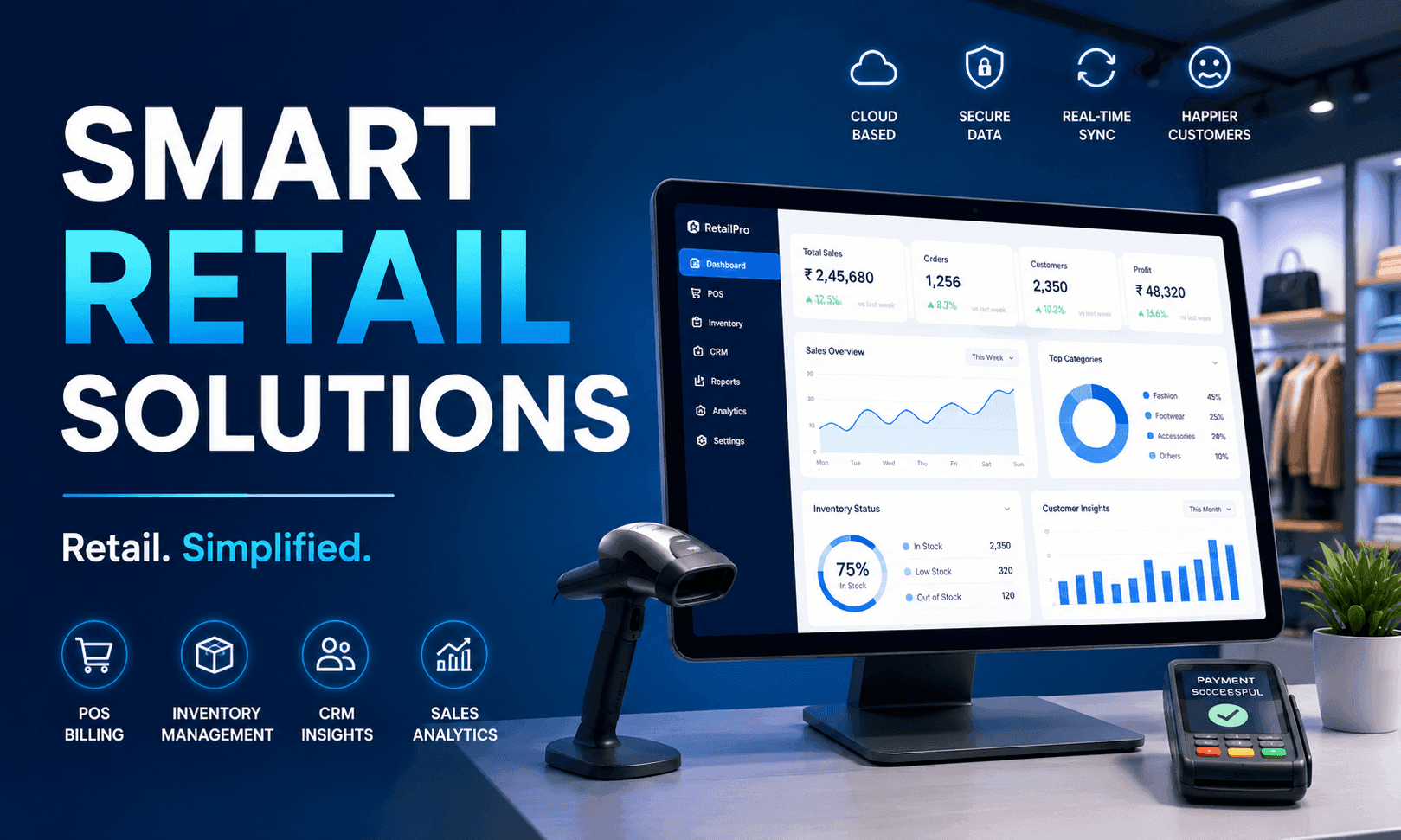
Today, successful retail businesses are powered by intelligent retail software solutions that integrate Point of Sale (POS), inventory management, CRM, analytics, automation, and customer engagement into one unified ecosystem.
From supermarkets and fashion brands to electronics stores, pharmacies, wholesalers, and multi-location retail chains, businesses are investing heavily in retail technology to improve operational efficiency and customer satisfaction.
For CEOs, CTOs, Managing Directors, Founders, IT Heads, Co-Founders, VPs, and retail business leaders, investing in modern retail software is no longer optional — it is essential for growth, scalability, and digital transformation.
In this article, we explain how POS systems, inventory management software, and CRM solutions are reshaping modern retail businesses and why integrated retail technology is becoming the backbone of future-ready stores.
What are Retail Software Solutions?
Retail software solutions are integrated digital systems that help businesses manage retail operations efficiently.
These solutions typically include:
- POS (Point of Sale) systems
- Inventory management software
- CRM (Customer Relationship Management)
- Billing & invoicing
- Order management
- Warehouse management
- Customer loyalty systems
- Analytics dashboards
- ERP integrations
- Omnichannel commerce management
Modern retail software centralizes business operations and provides real-time visibility across stores, warehouses, online platforms, and customer interactions.
Why Modern Retail Stores Need Smart Software Solutions
Traditional retail management methods often create operational inefficiencies such as:
- Inventory mismatches
- Billing errors
- Poor customer tracking
- Delayed reporting
- Lack of operational visibility
- Slow order processing
- Customer retention challenges
Modern retail software helps businesses:
- Automate operations
- Improve inventory accuracy
- Enhance customer experience
- Increase sales efficiency
- Enable real-time decision-making
- Support multi-store operations
Retail businesses that adopt digital retail ecosystems gain a significant competitive advantage.
Understanding POS Systems for Modern Retail Stores
Transform Your Retail Business with Smart Software Solutions
What is a POS System?
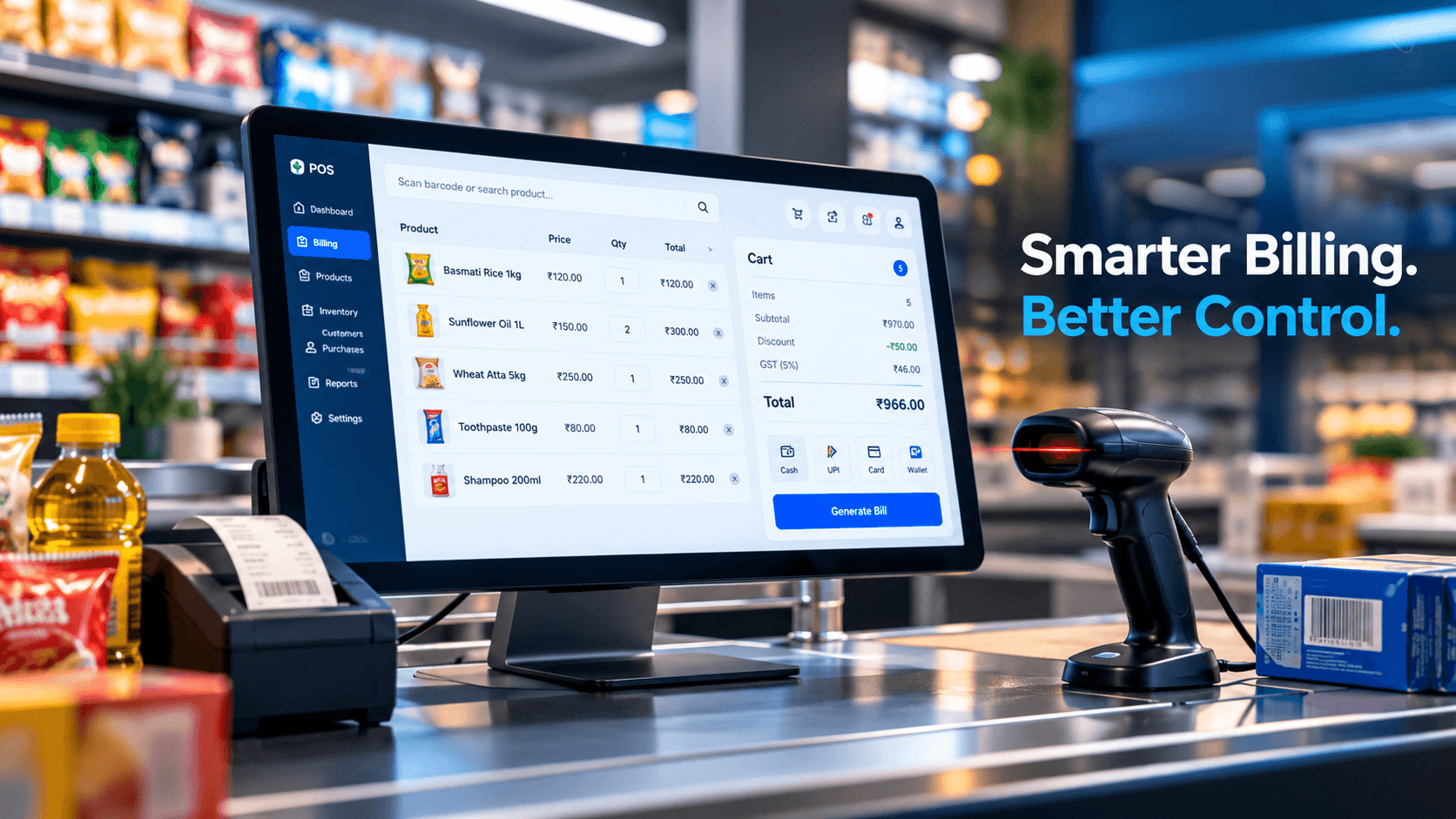
A POS (Point of Sale) system is the central transaction platform used in retail stores for billing, payments, and sales management.
Modern POS systems go far beyond simple billing machines.
Advanced POS software now includes:
- Inventory synchronization
- CRM integration
- Loyalty programs
- Multi-payment support
- Analytics dashboards
- Cloud access
- Mobile POS capabilities
POS systems help retailers streamline checkout experiences and improve operational efficiency.
Key Benefits of POS Software
Faster Billing & Checkout
Quick billing improves customer experience and reduces long checkout queues.
Modern POS systems support:
- Barcode scanning
- Digital invoices
- UPI payments
- Wallet payments
- Contactless transactions
Real-Time Sales Tracking
Retail leaders can monitor:
- Daily sales
- Product performance
- Peak sales hours
- Customer purchase behavior
Real-time reporting enables faster business decisions.
Omnichannel Retail Integration
Modern POS systems integrate online and offline operations into one platform.
Businesses can synchronize:
- Website sales
- Marketplace orders
- In-store purchases
- Mobile commerce
This creates a seamless retail experience.
Inventory Management Software for Retail Businesses
Inventory management is one of the most critical components of retail success.
Poor inventory control leads to:
- Stock shortages
- Overstocking
- Revenue losses
- Operational inefficiencies
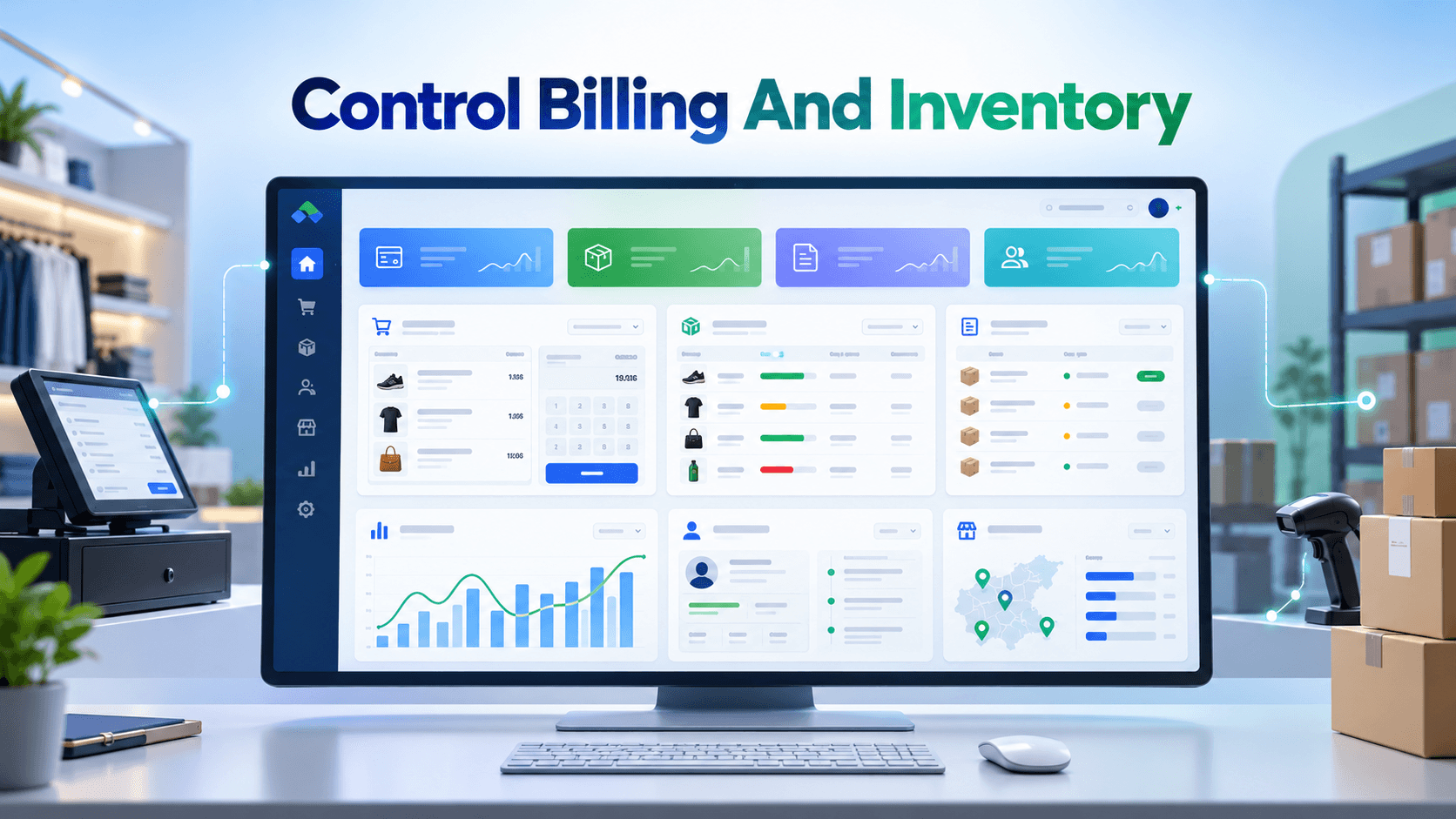
Modern inventory management software helps businesses maintain accurate stock visibility in real time.
Key Features of Inventory Management Software
Real-Time Inventory Tracking
Businesses can track:
- Product availability
- Warehouse stock
- Multi-location inventory
- Product movement
Real-time visibility reduces inventory errors significantly.
Automated Stock Replenishment
Smart inventory systems automatically generate low-stock alerts and reorder recommendations.
This minimizes:
- Out-of-stock situations
- Excess inventory costs
- Supply chain delays
Warehouse Management Integration
Inventory systems often integrate with:
- Warehouse management systems (WMS)
- ERP platforms
- Supply chain software
This improves operational coordination.
CRM Software for Retail Businesses
Customer experience has become a major competitive differentiator in retail.
CRM software helps businesses manage:
- Customer data
- Purchase history
- Loyalty programs
- Marketing campaigns
- Personalized communication
Retail CRM systems improve customer retention and lifetime value.
How CRM Improves Retail Business Growth
Personalized Customer Engagement
Modern CRM platforms use customer data to deliver:
- Personalized offers
- Product recommendations
- Targeted promotions
- Automated communication
AI-driven personalization significantly improves customer engagement.
Loyalty Program Management
Retail CRM systems help businesses create:
- Reward points
- Membership programs
- Referral campaigns
- Customer retention strategies
Loyalty-driven customers often generate higher repeat revenue.
Customer Analytics
Retail leaders can analyze:
- Customer preferences
- Purchase frequency
- Product demand trends
- Customer lifetime value
This supports data-driven marketing decisions.
Why Integrated Retail Software Matters in 2026
Retail businesses now require connected ecosystems instead of standalone tools.
Integrated retail software combines:
- POS
- Inventory management
- CRM
- ERP
- Accounting
- Ecommerce
- Warehouse operations
This centralization improves operational efficiency and business visibility.
You can also explore our:
- [Retail Software Development Services]
- [Custom ERP & Enterprise Solutions]
Cloud-Based Retail Software is the Future
Cloud retail platforms are becoming the preferred choice for modern businesses.
Benefits include:
- Remote accessibility
- Lower infrastructure costs
- Faster deployment
- Automatic software updates
- Better scalability
- Real-time synchronization
Cloud-based retail ecosystems are especially valuable for multi-store retail operations.
AI & Automation in Modern Retail Software
Artificial Intelligence is reshaping retail operations.
AI-powered retail systems enable:
- Demand forecasting
- Smart inventory planning
- Personalized shopping experiences
- Predictive analytics
- Automated customer support
- Dynamic pricing strategies
Retailers using AI-driven systems gain stronger operational efficiency and customer insights.
Omnichannel Retail Management
Customers now shop through:
- Physical stores
- Ecommerce websites
- Mobile apps
- Social commerce
- Online marketplaces
Omnichannel retail software helps businesses deliver seamless experiences across all customer touchpoints.
Retailers can synchronize:
- Orders
- Inventory
- Pricing
- Customer data
- Promotions
This improves customer satisfaction and brand consistency.
Industries Benefiting from Retail Software Solutions
Retail software adoption is growing rapidly across industries:
| Industry | Retail Software Use Cases |
|---|---|
| Fashion Retail | POS & loyalty management |
| Electronics Stores | Inventory & warranty tracking |
| Supermarkets | Billing & stock automation |
| Pharmacies | CRM & inventory compliance |
| FMCG Retail | Warehouse & distribution management |
| Furniture Stores | Multi-location inventory tracking |
| Beauty & Lifestyle | Customer personalization |
How to Choose the Right Retail Software Solution
Before selecting a retail software platform, business leaders should evaluate:
- Scalability
- Cloud capabilities
- POS functionality
- Inventory management features
- CRM integration
- Omnichannel support
- AI & analytics capabilities
- ERP compatibility
- Security standards
- Multi-store management support
The ideal retail software should align with long-term operational and business growth goals.
Challenges Retail Businesses Face Without Modern Software
Businesses relying on outdated systems often struggle with:
- Inventory inaccuracies
- Slow reporting
- Poor customer engagement
- Billing inefficiencies
- Lack of operational visibility
- Higher operational costs
- Difficulty scaling operations
Modern retail software eliminates these inefficiencies and improves overall business agility.
The Future of Retail Technology in 2026
Retail technology is becoming more intelligent, connected, and customer-centric.
Key trends shaping retail transformation include:
- AI-driven retail automation
- Smart checkout systems
- Predictive analytics
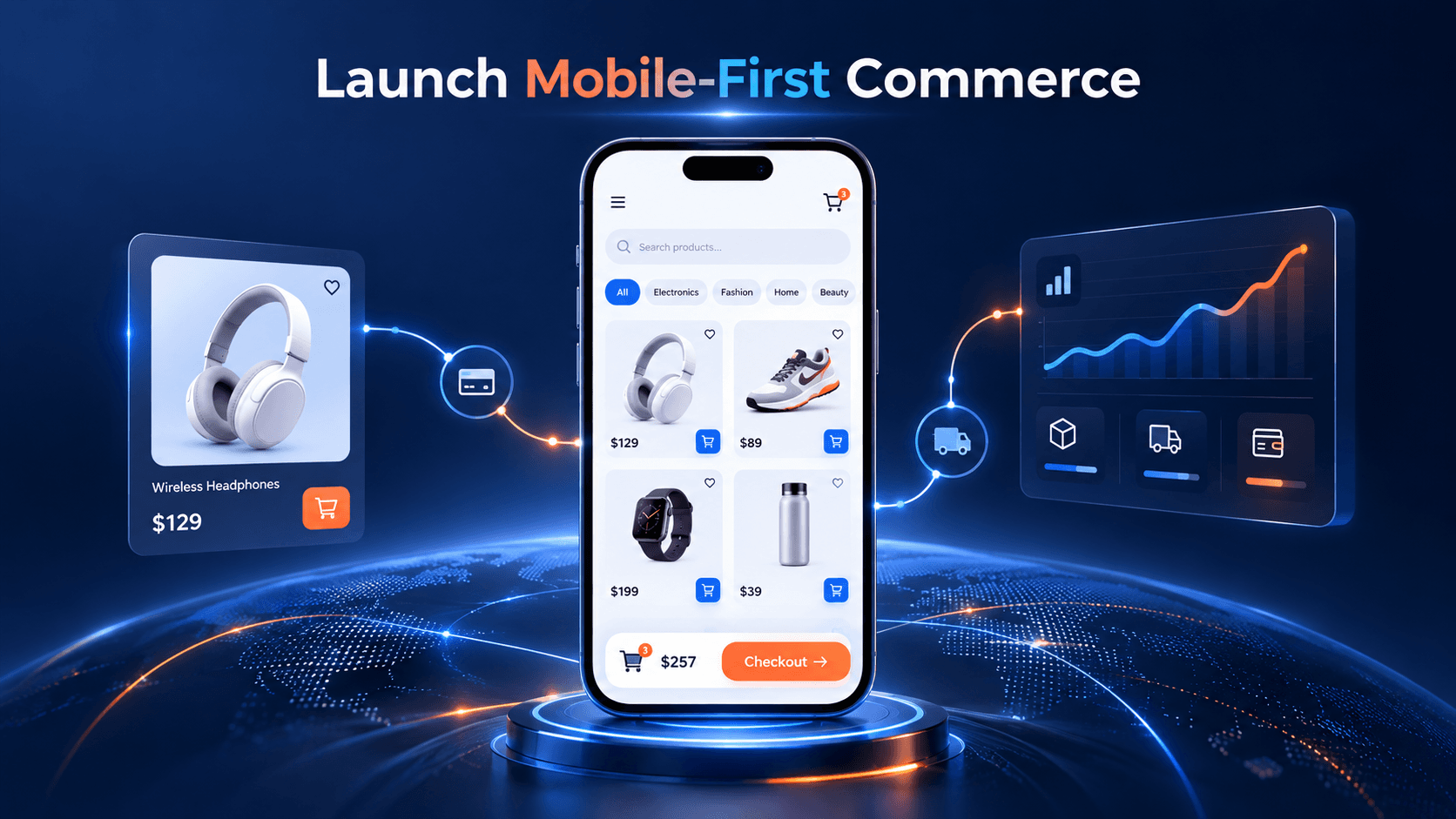
- Mobile-first commerce
- Voice commerce
- Retail IoT
- Hyper-personalization
- Cloud-native retail platforms
Retailers adopting these technologies early will gain a major competitive advantage.
Final Thoughts
Modern retail businesses need more than billing software to remain competitive in 2026. They need integrated retail ecosystems powered by POS systems, inventory management, CRM platforms, analytics, automation, and AI-driven customer experiences.
Whether you operate a retail chain, supermarket, pharmacy, fashion brand, electronics store, or omnichannel business, investing in smart retail software solutions can significantly improve operational efficiency, customer engagement, and profitability.
For CEOs, CTOs, Managing Directors, IT Heads, and business leaders, retail technology is now a strategic growth driver rather than just an operational tool.
Frequently Asked Questions
What is Retail Software Solutions: POS, Inventory & CRM for Modern Stores?
Discover the best retail software solutions for modern stores including POS systems, inventory management software, and CRM platforms. Learn how smart retail technology helps businesses automate operations, improve customer experience, and scale faster in 2026.